By Jake Peterson
Senior Technology Editor
November 6, 2026
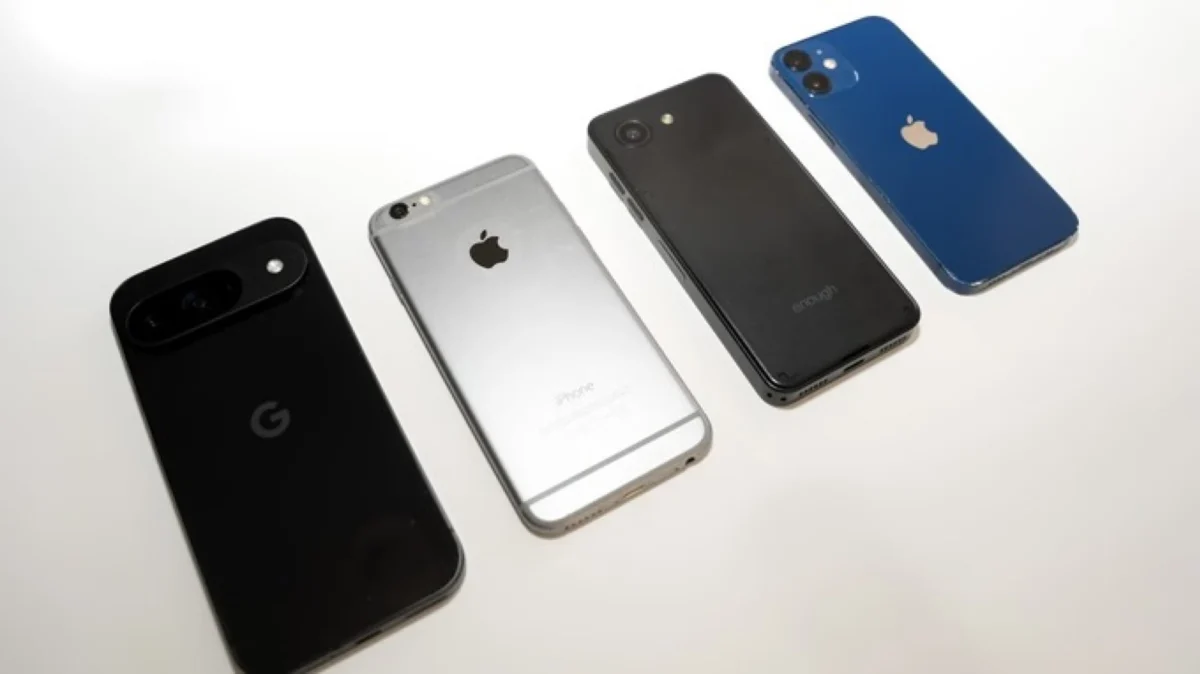
In an era where the smartphone has evolved into a pocket-sized tablet, the "phablet" has become the industry standard. With current flagships regularly exceeding 6.7 inches, the once-common luxury of one-handed operation has been relegated to a niche experience. While major manufacturers like Apple and Samsung have pivoted toward massive, immersive displays to accommodate streaming media and mobile gaming, a growing segment of the population is feeling the strain—quite literally—of these oversized devices.
Enter the "Enough Phone," a new hardware project currently seeking funding on Kickstarter. Its premise is deceptively simple: to provide a compact, modern, and repairable smartphone that rejects the "bigger is better" philosophy.
Main Facts: The Anatomy of the Enough Phone
The Enough Phone is designed for those who find the current market offerings cumbersome. Measuring approximately 133mm by 64mm (5.24 x 2.52 inches), the device occupies a footprint strikingly similar to the beloved, yet discontinued, iPhone 13 mini.
At its core, the device seeks to balance performance with minimalism. The prototype specifications include:
- Processor: MediaTek Dimensity 7500 (2.4GHz).
- Memory/Storage: 8GB RAM with 128GB internal storage, expandable via microSD—a rarity in today’s sealed-chassis smartphone market.
- Display: 5.3-inch screen with a 1520 x 720 resolution.
- Camera System: A high-resolution 50MP Sony IMX766 rear sensor paired with an impressive 32MP selfie camera.
- Connectivity: Full 5G support, Wi-Fi 6, and a dual-SIM setup (eSIM and physical SIM).
- Battery: A 3,500 mAh user-replaceable battery.
The philosophy behind the hardware is longevity. By utilizing standard screws and a modular-adjacent design, the company hopes to extend the lifecycle of the device, promising software support through 2032.
A Chronology of the Shrinking Market
To understand why the Enough Phone is making waves, one must look at the recent history of mobile design.

- 2010–2016 (The Golden Age of Small Phones): Devices like the original iPhone SE and early Sony Xperia Compact series proved that power did not require a massive chassis. Users prized pocketability and the ability to reach the top corner of the screen with a thumb.
- 2020 (The Last Hurrah): Apple launched the iPhone 12 mini, followed by the 13 mini. For a brief window, enthusiasts believed the "small phone" was a permanent fixture of the premium market.
- 2022–2023 (The Pivot): Due to lukewarm sales and a market trend shifting toward video consumption, Apple discontinued the mini line, effectively signaling the death of the small-form-factor flagship from major OEMs.
- 2026 (The Present): The market is almost exclusively dominated by screens 6.1 inches and larger. The "Enough Phone" emerges as a grassroots response to this vacuum, utilizing crowdfunding to gauge consumer demand before moving to full-scale production.
Supporting Data: Why Size Still Matters
The industry often cites sales data to justify the transition to larger devices, but this creates a "chicken and egg" scenario. Because consumers are rarely given a choice between a high-end small phone and a high-end large phone, the data is inherently skewed toward the larger options that receive the bulk of marketing spend.
According to ergonomic research, the average human thumb can comfortably reach only about 40–50% of a 6.7-inch screen without shifting the device in the hand. This physical limitation leads to increased instances of "drop damage" and repetitive strain. The Enough Phone’s 5.3-inch display targets the "Golden Ratio" of ergonomics, where the entire UI is reachable without the user needing to perform a "hand-gymnastics" routine.
Furthermore, the decision to include a microSD slot and a user-replaceable battery taps into the growing "Right to Repair" movement. While flagship devices have become increasingly difficult to open—often requiring specialized heat guns and proprietary adhesives—the Enough Phone’s commitment to an accessible 3,500 mAh battery represents a direct challenge to the planned obsolescence models currently favored by Silicon Valley.
Official Responses and Strategic Vision
The developers behind the Enough Phone have been clear about their positioning: this is not an iPhone, and it doesn’t aim to replicate the walled garden of iOS.
"We wanted to build a device that doesn’t demand your attention," says the lead designer. By offering a choice between a standard Android 17 installation and "OdysseyOS"—a minimalist, de-Googled operating system—the company is appealing to the "Digital Wellbeing" movement. OdysseyOS is designed for intentional usage, stripping away the notification-heavy interface of modern Android to reduce screen time.
Regarding the "mini" comparison, the company notes that while they cannot match the sheer R&D budget of Apple, they are focusing on the essentials. The hire of composer Brian Squillance to create custom, bespoke jingles suggests that the team is paying attention to the "human" experience of the phone, not just the raw technical specs.
Implications: The Future of Niche Hardware
The implications of the Enough Phone’s success—or failure—are significant for the mobile industry.

1. The Viability of "Dumb" Features
If the Enough Phone reaches its funding and manufacturing goals, it could prove that there is a viable market for "minimalist" technology. If users are willing to pay $449–$599 for a phone with a lower resolution and mid-range processor simply because of its size and repairability, it may force larger manufacturers to reconsider their product portfolios.
2. Software Longevity as a Selling Point
By promising software support through 2032, the project is placing the burden of proof on the giants. If a small startup can guarantee six years of updates, why can’t a company with a trillion-dollar market cap do the same? This could shift the conversation from "Which camera is better?" to "Which phone will last the longest?"
3. The "Mini" vs. "Refurb" Dilemma
For current iPhone mini users, the Enough Phone represents a crossroads. While you can currently purchase a refurbished iPhone 13 mini, it is a ticking clock. As iOS continues to evolve, the hardware will eventually struggle with new API requirements. The Enough Phone offers a bridge to a future where small, functional, and reparable devices still exist.
Conclusion: Is It Enough?
Whether the Enough Phone will successfully bridge the gap between retro-enthusiasm and modern needs remains to be seen. The device is currently in the prototype stage, and as with all Kickstarter projects, there are risks regarding final build quality, shipping timelines, and software stability.
However, for the segment of the population that is tired of carrying a slate of glass that barely fits in their pockets, the Enough Phone offers something that the current market does not: an alternative. As we look toward the May 2027 launch, the industry will be watching to see if "small" can make a comeback, or if the trend toward the giant smartphone is truly irreversible.
For those ready to commit, the "Early Bird" pricing of $449—which includes a screen protector, case, and accessory kit—represents a $150 discount off the expected retail price. It is a gamble, but for those who believe that our phones should be tools rather than burdens, it may be a risk worth taking.