By Beth Skwarecki
Senior Health Editor
October 27, 2026
The line between medical-grade diagnostic tools and consumer-grade wellness trackers has grown increasingly porous. With the late September rollout of the "Health Guardian" suite—now expanding from the Pixel Watch 3, 4, and 5 to include the Fitbit Air—Google is pushing the boundaries of what a device on your wrist can tell you about your internal physiology.
The new update, integrated into the Google Health app (version 5.11), introduces estimations for blood pressure trends and insulin resistance. While these features offer a glimpse into the future of preventative health monitoring, they arrive with significant caveats regarding accuracy, clinical utility, and the psychological impact of "data-driven" health anxiety.
Main Facts: What is Health Guardian?
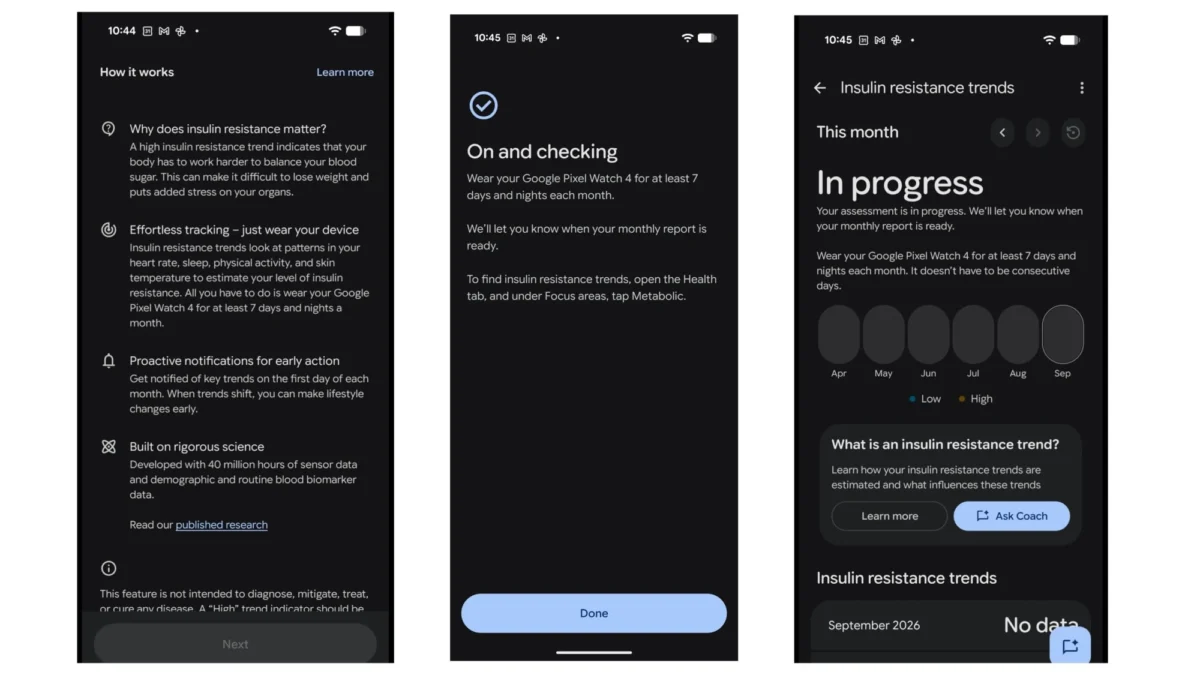
Health Guardian is a sophisticated software layer integrated into the Google Health ecosystem. It leverages existing sensors—such as photoplethysmography (PPG) for heart rate, heart rate variability (HRV) sensors, and activity trackers—to infer complex metabolic and cardiovascular states.
- Availability: Originally exclusive to the Pixel Watch series, the features are now live for Fitbit Air users via a Google Health Premium subscription ($9.99/month). Pixel Watch owners continue to access these features at no additional cost.
- The Core Metrics: The suite focuses on two primary areas: blood pressure trends and insulin resistance estimates.
- The Reporting Structure: Users do not receive real-time, minute-by-minute diagnostics. Instead, the system aggregates data over the course of a month to generate a "Health Guardian Report" on the first day of each month. This delay is designed to smooth out daily fluctuations and provide a broader longitudinal view of the user’s health status.
A Chronological Timeline of the Rollout
- September 2026: Google officially launches the Health Guardian feature set for the Pixel Watch 3, 4, and 5, positioning it as a major advancement in wearable-assisted health tracking.
- Early October 2026: Initial reports from users appear on community forums like Reddit, highlighting both excitement and confusion regarding the "estimated" results.
- Late October 2026: Google expands the feature set to the Fitbit Air device, officially incorporating it into the Google Health 5.11 update for both Android and iOS platforms.
- November 1, 2026: The first cohort of Fitbit Air users is scheduled to receive their inaugural monthly health report, marking the first large-scale test of the algorithm’s performance across a wider user base.
Supporting Data and the Science Behind the Sensors
Google has attempted to anchor these features in scientific literature, though the distinction between "peer-reviewed clinical study" and "internal algorithm testing" remains critical for consumers to understand.

The Insulin Resistance Algorithm
Insulin resistance (IR) is a metabolic condition where the body’s cells fail to respond effectively to insulin, often a precursor to type 2 diabetes. Traditionally, this is diagnosed via the HOMA-IR (Homeostatic Model Assessment for Insulin Resistance) score, which requires fasting blood glucose and fasting insulin measurements from a clinical lab.
Google’s approach uses a proprietary algorithm that synthesizes heart rate, HRV, and activity data. In a paper published in Nature, researchers demonstrated how these inputs were correlated with known metabolic states. However, the study does not claim to replace clinical testing. The algorithm is currently best viewed as a behavioral proxy rather than a chemical diagnostic.
The Blood Pressure Model
Blood pressure remains the "silent killer," and tracking it via a watch would be a holy grail for cardiology. Google’s approach involves an AI-based model that attempts to infer pressure changes through pulse wave velocity and heart rate patterns. While a non-peer-reviewed paper suggests the model performs with comparable accuracy to clinical devices in controlled settings, the real-world application is more complex. The study notably excluded patients with pre-existing heart disease, leaving a gap in data for the demographic most likely to monitor blood pressure daily.
Official Responses and Medical Caveats
Google has been explicit in its disclaimers: These features are not intended for medical purposes, nor are they a pre-screener for diabetes.
The company frames these tools as "wellness indicators" intended to provide trends that a user can discuss with their primary care physician. The primary goal is to encourage proactive conversations about health, rather than to provide a definitive diagnosis that would prompt a user to alter their medication or lifestyle drastically without professional guidance.

However, the medical community remains cautious. Health experts emphasize that a "high" or "low" reading from a watch can be influenced by environmental factors, strap tightness, arm positioning, and even minor physical stressors, leading to potential "false positives" that could trigger unnecessary anxiety.
Implications: The Psychological and Practical Consequences
The true challenge of Health Guardian lies not in the software, but in human behavior. When an algorithm delivers a health score, the user is often left wondering, "What do I do now?"
The Anxiety of Inaccuracy
We are already seeing a divide in user experience. On one hand, some users report satisfaction with the non-invasive monitoring. On the other, many are experiencing "data dissonance."
Consider the case of the user who recently lost 40 pounds through rigorous diet and exercise, only to receive a "high insulin resistance" notification. Such a discrepancy between one’s lived experience (weight loss, gym progress) and a digital output can be demoralizing. If a device contradicts a recent, perfectly normal blood test from a doctor, which should the user believe? The danger is that users might prioritize the continuous data stream of a wearable over the intermittent but highly accurate testing performed by medical professionals.
Delaying vs. Seeking Care
A significant concern is how these metrics influence care-seeking behavior. If the watch reports "normal" blood pressure, does a person with a family history of hypertension decide to skip their annual checkup? Conversely, if a "high" reading is reported, does the user rush to an urgent care center for a condition that might be a temporary, benign fluctuation?

The risk of "over-diagnosis" is high. By providing data that is traditionally the domain of a clinic, Google is essentially asking its users to act as their own doctors—a role for which the average consumer is not equipped.
Conclusion: A Tool, Not a Doctor
The rollout of Health Guardian on the Fitbit Air and Pixel Watch represents a bold step into the future of personal health. It is undeniably impressive that current technology can derive such complex insights from simple wrist-worn sensors.
However, as we move into November and more users receive their first reports, we must maintain a healthy skepticism. These metrics are estimates, not clinical facts. They are designed to show trends over time, not to provide diagnoses in the moment.
If you are using the Fitbit Air or Pixel Watch to track these metrics, treat the data as a conversation starter for your next physical. If you receive a concerning result, do not panic. Use it as a reason to schedule a visit with your physician for the "gold standard" blood work that remains the foundation of modern medicine. The future of health monitoring is bright, but it is not yet a replacement for the expertise and context of a trained healthcare provider.
Disclaimer: This article is for informational purposes only and does not constitute medical advice. Always consult with a qualified healthcare professional regarding any health concerns or before making changes to your health regimen.