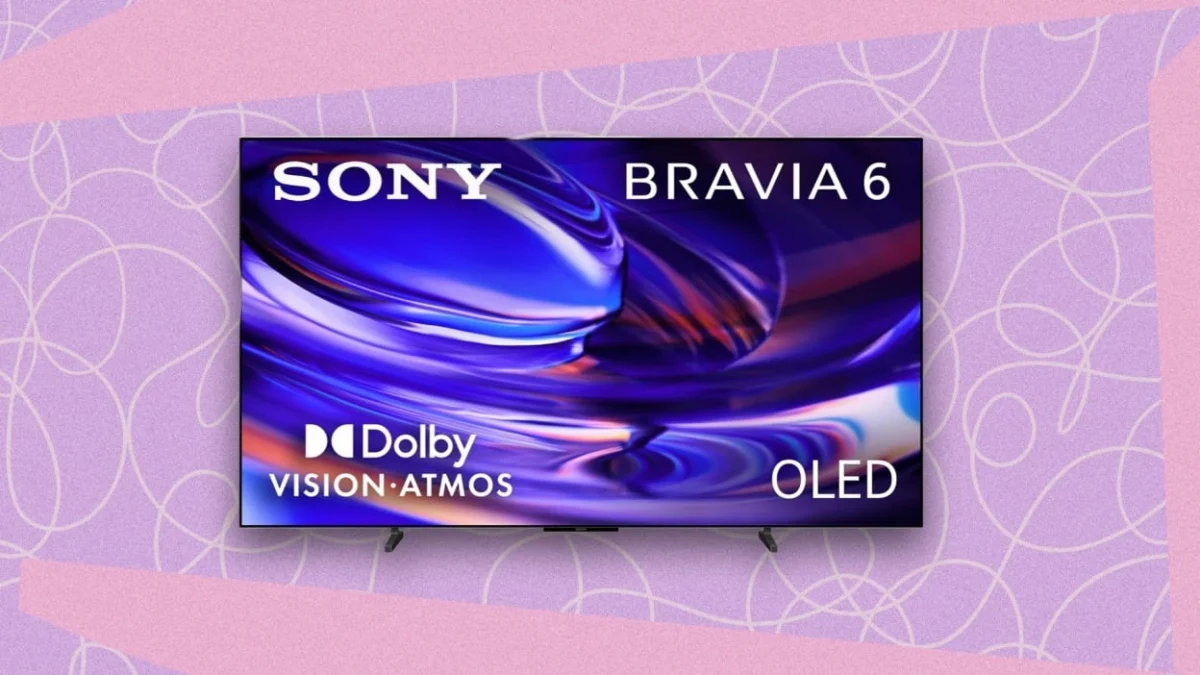
Since its debut in the summer of 2026, the Sony Bravia 6 OLED has occupied a unique, albeit challenging, position in the premium television market. Positioned as an accessible entry point into Sony’s prestigious OLED lineup, it has spent the last few months vying for dominance against aggressive competition from LG’s C-series and Samsung’s QD-OLED offerings.
Today, that competition just became much more one-sided. As of October 2026, major retailers have slashed the price of the Sony Bravia 6 by up to 40% across all sizes. The 55-inch model, which launched at a premium price of $1,499, is now available for just $998. With proportional discounts applied to the 65, 77, and 83-inch variants, the Bravia 6 has effectively transitioned from a "value-conscious premium" display to the most compelling budget-to-mid-range OLED deal of the year.
Main Facts: The Bravia 6 Technical Breakdown
The Sony Bravia 6 is not merely a "lite" version of its higher-end siblings; it is a specialized piece of engineering designed with a specific user in mind: the modern gamer.
While many Sony OLEDs—including the flagship Bravia 8 and 9 series—historically limited users to only two full-bandwidth HDMI 2.1 ports, the Bravia 6 breaks the mold. Equipped with MediaTek’s latest Pentonic 800 chipset, this television offers four dedicated HDMI 2.1 ports. This is a significant design shift that allows users to connect a PlayStation 5, an Xbox Series X, a high-end PC, and a soundbar (via eARC) simultaneously without the need for an external HDMI switch or constant cable swapping.
Key Technical Specifications:
- Resolution: 4K Ultra HD
- Refresh Rate: 120Hz native
- Chipset: MediaTek Pentonic 800
- Connectivity: 4x HDMI 2.1 ports (supporting VRR, ALLM, and eARC)
- Audio Support: DTS:X, Dolby Atmos
- Software Platform: Google TV
The trade-off for this connectivity and price point is peak brightness. Compared to the Bravia 8 or the premium Mini-LED models, the Bravia 6 has a lower peak luminosity. However, for most home theater environments—and certainly for dedicated gaming rooms—the contrast ratios inherent to OLED technology ensure that the picture remains deep, immersive, and sharp.
Chronology: From Launch to Market Disruption
The release of the Bravia 6 in June 2026 was met with cautious optimism. Reviewers noted that while the picture quality was distinctly "Sony"—characterized by excellent motion processing and natural color reproduction—the MSRP put it in direct competition with TVs that offered higher peak brightness.
- June 2026: Sony launches the Bravia 6, emphasizing it as an "attainable cinema and gaming experience." It receives praise for its industrial design and the inclusion of the Pentonic 800 chipset.
- July–August 2026: The market reacts. LG and Samsung respond with aggressive bundles and smaller, localized discounts. Sony remains firm on pricing throughout the summer months, allowing the Bravia 6 to maintain its "premium budget" status.
- September 2026: As the fiscal quarter draws to a close, inventory levels for the 2026 lineup begin to stabilize. Data analytics from major e-commerce platforms show that interest in the Bravia 6 is high, but conversion rates are stifled by the price parity with higher-brightness models.
- October 2026: Sony authorizes a massive, system-wide price adjustment. By dropping the 55-inch model to sub-$1,000 territory, Sony effectively pivots the Bravia 6 into the "impulse buy" category for enthusiasts who were previously sitting on the fence.
Supporting Data: Why Connectivity Matters
To understand why this deal is significant, one must look at the "HDMI tax." In previous years, enthusiasts purchasing high-end consoles and PCs were forced to choose between the brand prestige of Sony’s processing or the practical utility of four HDMI 2.1 ports found on LG’s competing OLEDs.
By integrating the Pentonic 800 chipset, Sony has effectively removed the hardware bottleneck that plagued their 2024 and 2025 lineups. According to internal retail data, "port count" has become one of the top three search filters for customers buying TVs over $1,000. By satisfying this demand while maintaining the color accuracy for which the Bravia brand is famous, Sony has created a product that solves a specific pain point.

Furthermore, the integration of Google TV remains a major selling point. Unlike proprietary operating systems that can feel sluggish or limited in app availability, Google TV offers a seamless, familiar interface that supports almost every streaming application on the market, alongside robust voice control via Google Assistant.
Official Responses and Industry Sentiment
While Sony rarely comments on mid-cycle price adjustments, the retail sector has been vocal. Industry analysts suggest that this move is a strategic play to clear warehouse inventory ahead of the upcoming holiday season.
"The sub-$1,000 price point for a 55-inch OLED with full HDMI 2.1 capabilities is the ‘holy grail’ for mid-range buyers," says a leading consumer electronics analyst. "By hitting this price point, Sony isn’t just trying to move units; they are trying to capture the loyalty of the next generation of gamers who are currently weighing their options for the holiday season."
Competitors, while tight-lipped, are expected to follow suit. The market for OLEDs has become increasingly saturated, and with the technology becoming cheaper to manufacture, the "premium" barrier to entry is crumbling. For the consumer, this creates a buyer’s market that hasn’t been seen since the early days of 4K adoption.
Implications: What This Means for Your Living Room
If you are currently in the market for a new display, the implications of this price drop are twofold.
First, the value proposition of the Bravia 6 is now undeniable. If your primary goal is gaming and high-fidelity streaming, the technical limitations regarding brightness are negligible compared to the benefits of four full-bandwidth ports. You are essentially getting "flagship-tier" connectivity at a "mid-range" price.
Second, this deal sets a precedent for the rest of the 2026 holiday shopping season. As retailers compete for market share, we may see further fluctuations in the prices of larger models, such as the 77-inch and 83-inch versions.
Should you buy now?
If you have been waiting for a reason to upgrade your living room, the current deal on the Sony Bravia 6 is likely the best value you will see for some time. While pricing is subject to change as holiday demand surges, the $998 price point for the 55-inch model offers a level of color accuracy, motion handling, and gaming flexibility that is difficult to beat.
As we move deeper into the fourth quarter, the Bravia 6 stands as a testament to how quickly the industry landscape can shift. It is a reminder that the best time to buy technology is often not at launch, but when the market reaches the "sweet spot" of performance-per-dollar. For those who value the "Sony look"—that specific, cinematic quality that the brand is world-renowned for—this is the moment to act. Whether you are a competitive gamer needing those extra HDMI ports or a movie buff looking for the perfect black levels of an OLED, the Bravia 6 is now, without question, the smartest purchase in its class.