The tech industry is currently gripped by an unrelenting obsession: Artificial Intelligence. From the moment you open a browser to the latest product launches from silicon giants, it is impossible to escape the narrative that we are living through a technological shift comparable to the dawn of the internet. For the creative industries—designers, filmmakers, and digital artists—this transition is not merely academic; it is profoundly disruptive. Yet, as the market becomes flooded with laptops sporting the "AI" suffix, a pertinent question arises: is this a genuine evolution in hardware, or are we witnessing the most aggressive marketing gimmick of the decade?
The AI Gold Rush: Industry Shifts and Bold Claims
The narrative of AI-driven creative production reached a fever pitch this week when Ian Dean of Creative Bloq sat down with Nikola Todorovic, co-founder of the AI filmmaking firm Flow Studio. The implications discussed were staggering. Todorovic, whose company has partnered with industry titan Autodesk, asserted that AI tools possess the capacity to "cut production costs by 95 percent." His bold declaration that "AI can fix a broken film industry" sent ripples through the creative community.
For the average creative professional, these claims are simultaneously exhilarating and terrifying. If the cost of production truly plummets, what happens to the human labor currently fueling the industry? This tension is being played out in real-time within the hardware sector. Laptop manufacturers, eager to capitalize on the generative AI boom, have begun rebranding their high-performance lineups as "AI laptops." For the consumer, this creates a frustrating paradox: if you are simply looking for a robust, high-performing machine for traditional creative tasks, you are increasingly forced to buy into an "AI" ecosystem you may not have requested.
Chronology of a Tech Trend
The ascent of the "AI PC" did not happen overnight. Its trajectory can be mapped through several distinct phases:
- The Silicon Pivot (2022–2023): As Large Language Models (LLMs) and generative image tools gained mainstream traction, semiconductor manufacturers—most notably NVIDIA, Intel, and AMD—began integrating dedicated Neural Processing Units (NPUs) into their chips. This hardware shift provided the engine for local AI processing.
- The Marketing Blitz (Late 2023–Early 2024): With the hardware in place, manufacturers began rebranding their consumer and professional laptops. The "AI" label was slapped onto everything from mid-range ultrabooks to high-end mobile workstations.
- The "Stress Test" Phase (Present): We are currently in a period of critical evaluation. Tech reviewers and creative professionals are beginning to push these machines beyond superficial benchmarks to see if the "AI" branding translates to tangible creative efficiency.
Beneath the Surface: Separating Substance from Style
There is a significant danger in dismissing the entire "AI laptop" trend as mere marketing noise. By branding everything with the same suffix, manufacturers have created a murky landscape where genuine innovation is often obscured by buzzwords. As reviewers, the responsibility has shifted toward identifying the "wheat from the chaff."
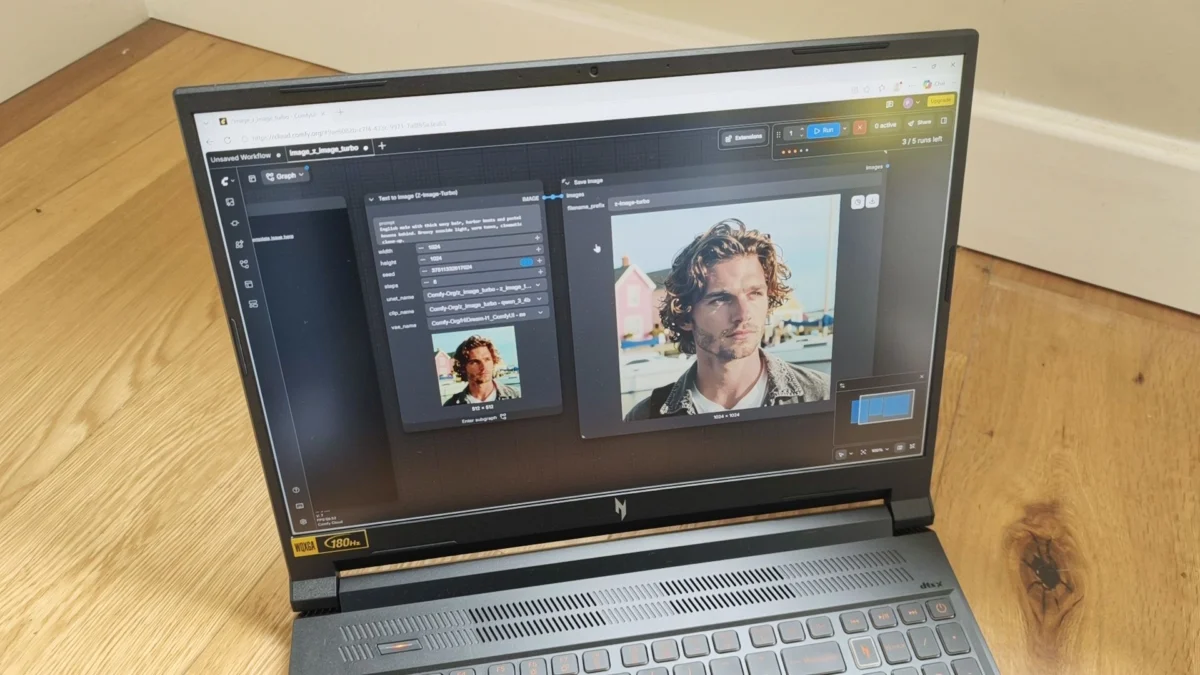
Recently, the Acer Nitro V 16 AI served as a litmus test for this phenomenon. When testing this device, the initial skepticism was palpable. The expectation was that the machine would buckle under the weight of intensive, real-world creative AI workflows. Instead, the results were surprisingly robust.
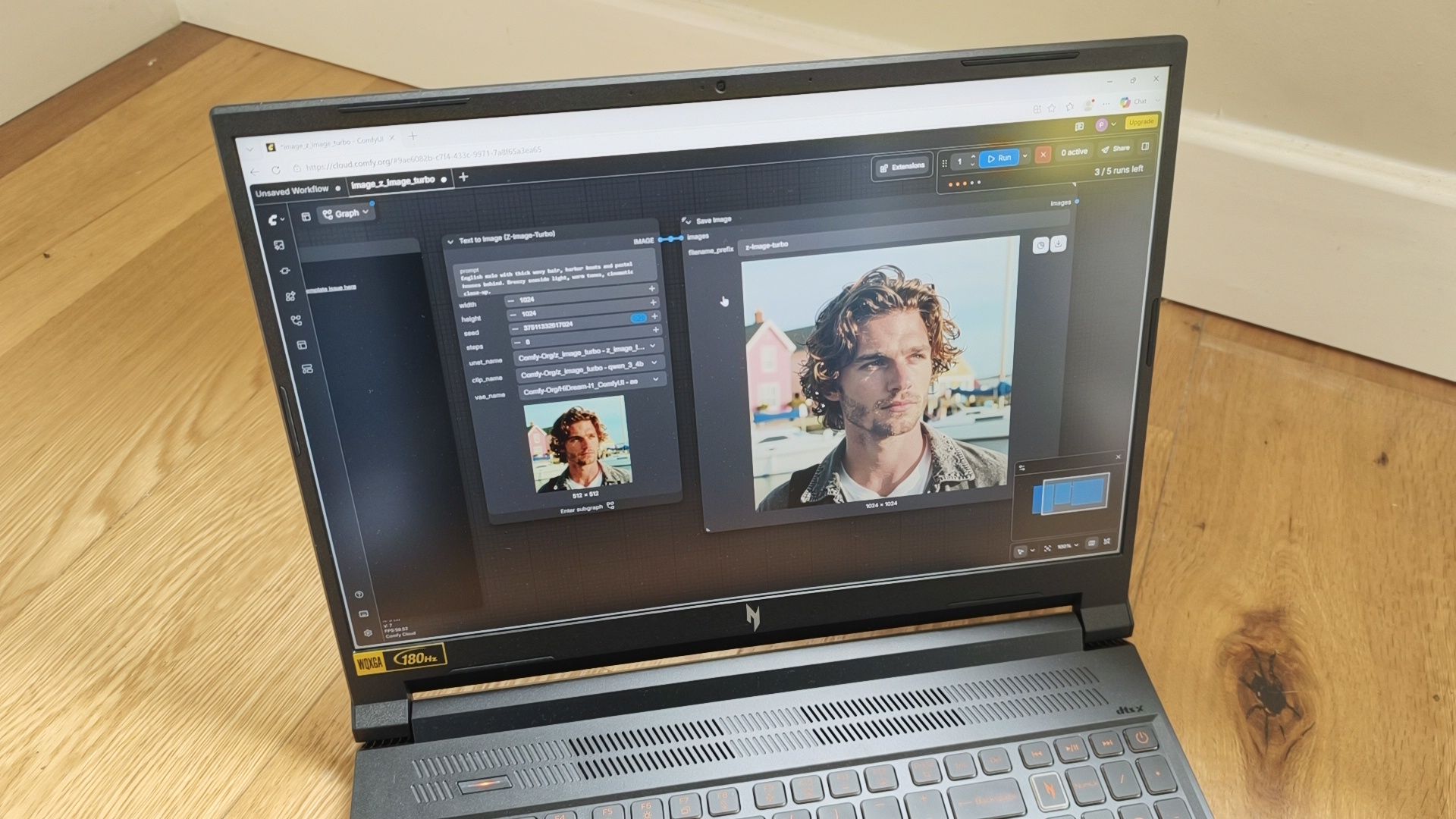
Performance Benchmarks in Creative Workflows
When subjected to a suite of demanding creative AI tools, the laptop demonstrated unexpected resilience:
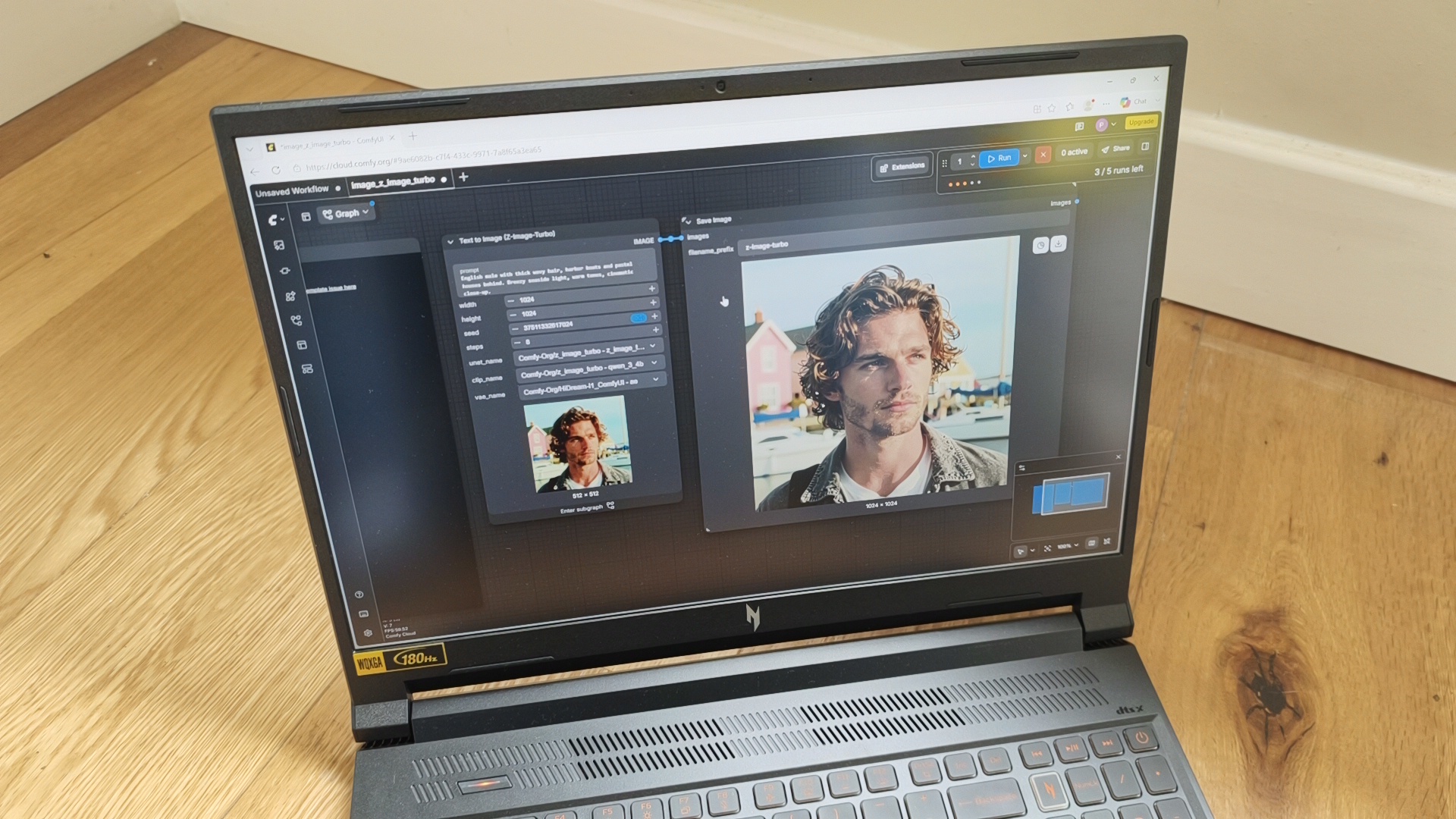
- ComfyUI: The device handled complex generative nodes with speed and efficiency.
- Adobe Photoshop: Background generative AI tasks—often notorious for slowing down system memory—remained fluid.
- NVIDIA Broadcast: The integration of AI-driven video effects and background noise suppression was handled with reliable, consistent responsiveness.
These findings suggest that while the "AI" label is often overused, the underlying hardware—specifically the integration of powerful GPUs and NPUs—is genuinely facilitating new ways of working. The performance was not just "adequate"; it was efficient enough to justify the inclusion of these tools in a professional’s daily workflow.
Supporting Data: Why Hardware Matters for AI
To understand the necessity of these "AI laptops," one must look at the technical requirements of modern generative tools. Unlike traditional software, which relies primarily on the CPU and standard RAM allocation, modern AI workflows require massive parallel processing power.
The transition from cloud-based AI (where your data is sent to a server, processed, and sent back) to "Edge AI" (processing on your own device) is the primary driver for this hardware shift. Processing locally offers three distinct advantages:
- Privacy: Sensitive creative projects remain on the local drive.
- Latency: The absence of network bottlenecks significantly speeds up iterative workflows.
- Cost: Reducing reliance on paid cloud compute tokens saves long-term operational expenses.
Manufacturers are betting that once creatives experience the speed of local generative processing, they will not want to go back to the cloud. However, the data also shows that not all "AI laptops" are created equal. Machines lacking a dedicated NPU or sufficient VRAM are currently struggling to keep pace with the demands of modern Stable Diffusion models or local LLM execution.
Official Industry Responses and Future Outlook
The industry response to the saturation of "AI" branding has been defensive. Major OEMs argue that the nomenclature is necessary to signal to consumers that these devices are "future-proofed." During recent tech summits, representatives from chip manufacturers emphasized that the NPU is not just for generative art, but for optimizing background OS tasks, battery efficiency, and real-time security scanning.
However, the creative community remains wary. There is a palpable fear that we are heading toward a "tiering" of creative hardware. The prospect of an "AI Pro" laptop category—where higher-end features are locked behind an AI-branded paywall—is a genuine concern. If the industry continues to bifurcate, we may find ourselves in a world where the standard creative toolset is slowly phased out in favor of AI-native environments that the average user didn’t ask for.
Implications for the Creative Professional
For those currently in the market for a new workstation, the landscape is complex. The implication of the current trend is that "AI" is no longer an optional plugin; it is becoming an architectural requirement of the machine itself.
- The New Baseline: Expect the presence of an NPU to be standard in all mid-to-high-tier laptops by 2025.
- The Skills Gap: Creative professionals must now reconcile their traditional workflows with these new AI-assisted capabilities. The most successful creatives will be those who use these tools as a force multiplier rather than a replacement.
- Cautious Consumption: Before purchasing an "AI" branded laptop, professionals must look past the branding and focus on the VRAM capacity and the specific NPU performance (measured in TOPS – Trillion Operations Per Second).
Conclusion: A Balanced Perspective
The "AI laptop" is neither a miracle cure for a "broken" industry nor a purely malicious marketing ploy. It is a transitional product in a rapidly changing technological landscape. While the branding is undeniably overhyped, the hardware capabilities that these machines offer are becoming increasingly relevant for modern creative workflows.
We must remain vigilant. If manufacturers continue to dilute the market with "AI" labels that offer no tangible benefit, the term will lose all meaning, potentially alienating the very creatives they hope to serve. If they avoid creating unnecessary sub-categories like "AI Pro" and instead focus on integrating these tools in ways that genuinely enhance the creative process, we may well be entering a golden age of digital production.
For now, the advice to the creative professional remains the same: ignore the marketing slogans on the box, look at the benchmarks, and choose the machine that serves your specific creative vision. After all, an AI-powered tool is only as good as the creative mind directing it.