For millions of women entering their 40s and 50s, the bedroom has transformed from a sanctuary into a site of nightly struggle. It begins subtly: a difficulty drifting off, a slight uptick in wakefulness, or that frustrating realization that you are wide awake at 3:00 a.m. staring at the ceiling. Unlike the transient insomnia of stress or temporary life changes, menopausal sleep disruption is physiological, relentless, and distinct in its pattern.
Generic sleep advice—the "sleep hygiene" tips that work for the general population—often bounces off the menopausal experience because it fails to address the underlying biological shifts. To solve the problem, one must first recognize that "menopause sleep" is not a single entity; it is a complex intersection of hormonal flux, body-driven mechanical issues, and the psychological weight of chronic wakefulness.
The Chronology of Disruption: From Perimenopause to Post-Menopause
The transition into menopause is not an overnight event, and neither is the disruption of sleep. The Study of Women’s Health Across the Nation (SWAN), which tracked over 3,000 women during their transition, revealed a clear trajectory: as the transition progresses, the odds of experiencing both sleep-onset insomnia (trouble falling asleep) and sleep-maintenance insomnia (trouble staying asleep) rise significantly.
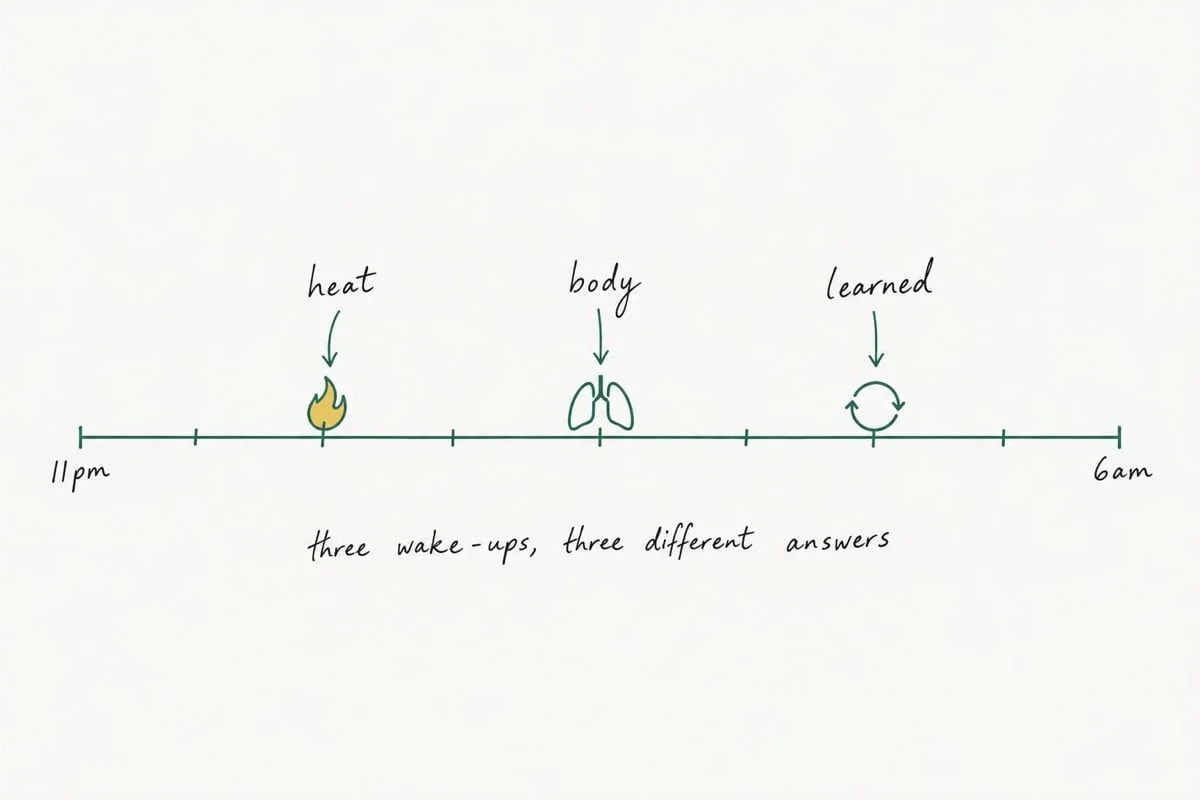
In early perimenopause, roughly 31% of women report chronic insomnia symptoms at least three times a week. By the time they reach late perimenopause, that figure jumps to nearly 50%. The pattern is often agonizingly predictable: drifting off by 11:00 p.m., only to snap awake at 2:40 a.m. drenched in sweat, tossing off the covers, shivering, and then repeating the process until the alarm rings at 6:00 a.m.
This isn’t just about fatigue; it’s about the erosion of quality of life. By Thursday, the cognitive load of a work week, combined with four days of broken rest, leads to irritability, impaired focus, and a growing, deep-seated dread of the bed itself. This dread is a critical psychological development—it signals that the brain has begun to associate the bedroom with stress rather than rest.
Supporting Data: Deconstructing the Three Wake-Up Patterns
The reason standard "natural remedies" often fail is that they attempt to treat a singular, monolithic problem. In reality, menopausal sleep disturbances generally fall into three distinct categories. A remedy that addresses one may be entirely ineffective for the others.
1. Heat-Driven Waking
This is the most widely recognized culprit. Research using actigraphy—a method of monitoring sleep-wake cycles—confirms that nearly 80% of nocturnal hot flashes coincide with a wake episode. Women are statistically significantly more likely to be awake in the five minutes immediately following a hot flash than in the minutes preceding it. The heat acts as a biological "alarm clock" that pulls the body out of deep sleep cycles.
2. Body-Driven Waking
Often ignored or misdiagnosed, this category involves physical impediments to breathing. Studies in midlife women show a 31% increase in the apnea-hypopnea index (a measure of breathing interruptions) during the post-menopausal years. Crucially, women with obstructive sleep apnea (OSA) rarely present with the classic "loud snoring" symptoms common in men. Instead, they report daytime fatigue, brain fog, and low mood. Because these symptoms mirror standard menopause complaints, the underlying respiratory issue remains hidden.
3. Learned Waking
Even when the physiological hot flashes subside, many women find themselves trapped in a pattern of 3:00 a.m. wakefulness. This is "learned waking." The brain has been conditioned by years of interrupted sleep to enter a state of hyper-arousal the moment it touches the pillow. The bed is no longer a place of rest; it is a place for calculating tomorrow’s to-do list.

Official Responses and Evidence-Based Solutions
The medical community is increasingly moving away from "sleep hygiene" as a standalone fix, recognizing it as a foundational floor rather than a therapeutic solution. When looking for evidence-based interventions, the hierarchy of effectiveness is clear:
Cognitive Behavioral Therapy for Insomnia (CBT-I)
CBT-I is the gold-standard recommendation from the American College of Physicians. Unlike simple relaxation techniques, CBT-I is a structured, multi-session intervention that addresses the mechanics of sleep. It involves "sleep restriction" (limiting time in bed to match actual sleep time), stimulus control (getting out of bed if you aren’t sleeping), and cognitive restructuring to dismantle the anxiety-driven 3:00 a.m. thought loops. Clinical trials have shown that CBT-I provides more significant and sustained improvements in insomnia severity than any supplement or generic sleep-hygiene tip.
Exercise: A Modest but Consistent Ally
While physical activity does not carry the same therapeutic weight as CBT-I, it remains a vital component of midlife health. Research indicates that regular, consistent exercise can reduce Insomnia Severity Index scores by approximately two points. While this is an "honest" effect size—meaning it helps, but it is not a cure-all—it is an essential tool for maintaining metabolic health and mood stability during the menopause transition.
The Supplement Landscape
The market is saturated with melatonin, valerian root, and various botanical extracts. However, the evidence remains thin. Pooled randomized trials on melatonin in menopausal women have failed to show statistically significant improvements in sleep quality. Similarly, umbrella reviews of valerian root have found the evidence to be inconclusive or weak. These supplements are often marketed as "natural" solutions, but they lack the robust, peer-reviewed clinical backing required to be considered a primary treatment.
Implications: Changing the Clinical Approach
The most dangerous assumption a woman can make is the belief that "it’s just menopause." This dismissal often leads to years of unnecessary suffering.
When to Seek Professional Care
If sleep disturbances occur three nights a week or more for over three months, the threshold for chronic insomnia has been met. Furthermore, if a woman experiences loud snoring, choking sensations, or extreme daytime sleepiness, she must bypass the supplement aisle and consult a physician. These are markers of sleep-disordered breathing, which requires a clinical diagnosis and potentially a CPAP or other intervention.
Hormone therapy (HT) also warrants a serious conversation with a healthcare provider. The North American Menopause Society identifies HT as the most effective treatment for hot flashes and night sweats. When sleep disturbance is directly caused by these vasomotor symptoms, hormone therapy can be transformative. However, it is not a general "cure" for insomnia and must be weighed against individual health risks.
A Roadmap for Reclaiming the Night
The path to better sleep begins not with a purchase, but with data collection. Before trying new supplements or expensive sleep apps, women are encouraged to spend one week observing their own patterns.
- The Log: For seven days, keep a bedside log. Record the time you woke up, whether a hot flash preceded the waking, and whether you experienced any breathing issues or daytime exhaustion.
- Fix the Wake Time: Regardless of how well you slept, pick one wake-up time and stick to it seven days a week. This anchors your circadian rhythm.
- Dismantle the Loop: If you find yourself awake for more than 20 minutes, get out of bed. Go to another room and read until you feel sleepy. This prevents the brain from associating the bed with wakeful anxiety.
By treating the "wake-up pattern" rather than the symptom, women can move from a state of helpless frustration to an active, evidence-based recovery plan. The goal is not just to "sleep better"—it is to stop the cycle of fear and fatigue, allowing the body to navigate the menopause transition with the rest and resilience it deserves.