TOULON, FRANCE — For centuries, the sun-drenched landscape of the Var Department in the south of France has been synonymous with a distinct Mediterranean aesthetic. Postcards and travel brochures have long celebrated the region for its rolling fields of fragrant lavender, gnarled olive trees, resilient vineyards, and sun-baked terracotta roofs. It is an ecosystem finely tuned to mild winters, hot and dry summers, and a predictable rhythm of seasonal rainfall.
Today, however, a quiet agricultural revolution is taking root beneath the azure skies of the French Riviera. In greenhouses tucked into coastal communes and on wind-swept hillsides near Toulon, an avant-garde collective of farmers, agronomists, and horticulturists is upending generations of agricultural tradition. They are successfully cultivating an unexpected bounty of atypical European crops: lush papayas, vibrant mangoes, sweet pineapples, exotic dragon fruit, and dozens of distinct varieties of bananas.
While climate change poses an existential threat to traditional agricultural models across the globe, these resilient Provençal growers are treating shifting weather patterns not merely as an environmental crisis, but as an unlikely horticultural opportunity. By embracing adaptation over resignation, they are charting a provocative new course for European farming—one that could drastically shorten supply chains and redefine what it means to produce "local" food in the twenty-first century.
Main Facts: The Tropical Transformation of the French Riviera
The epicenter of this agricultural pivot is located in the commune of Ollioules, nestled near the Mediterranean port city of Toulon. Here, unconventional farmers are proving that the microclimate of the Var Department has fundamentally shifted over the past few decades.
Dominique Berdin, whose pesticide-free operation produces roughly 20 different tropical fruits year-round, proudly claims a unique title. "I’m probably the only papaya grower in France!" she remarks with a laugh, gesturing to the thriving exotic canopy inside her greenhouse. Alongside papayas, Berdin harvests passion fruit, pineapples, and other warmth-loving crops that were previously thought impossible to grow north of the Mediterranean Sea, let alone on French soil.
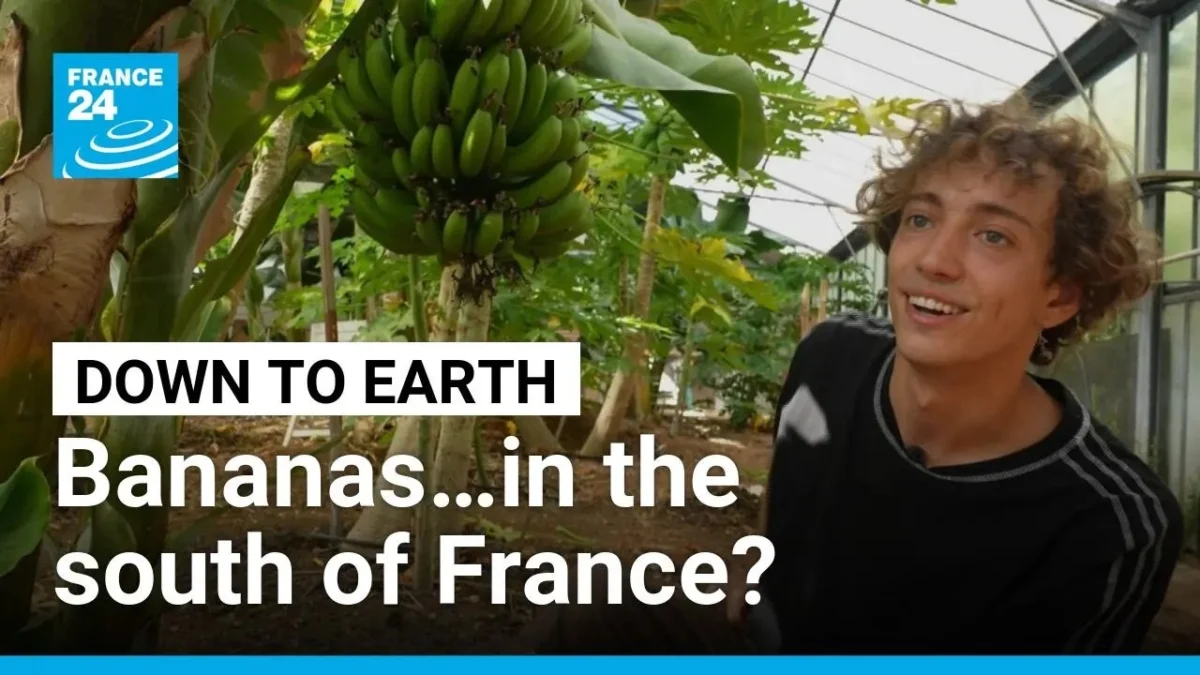
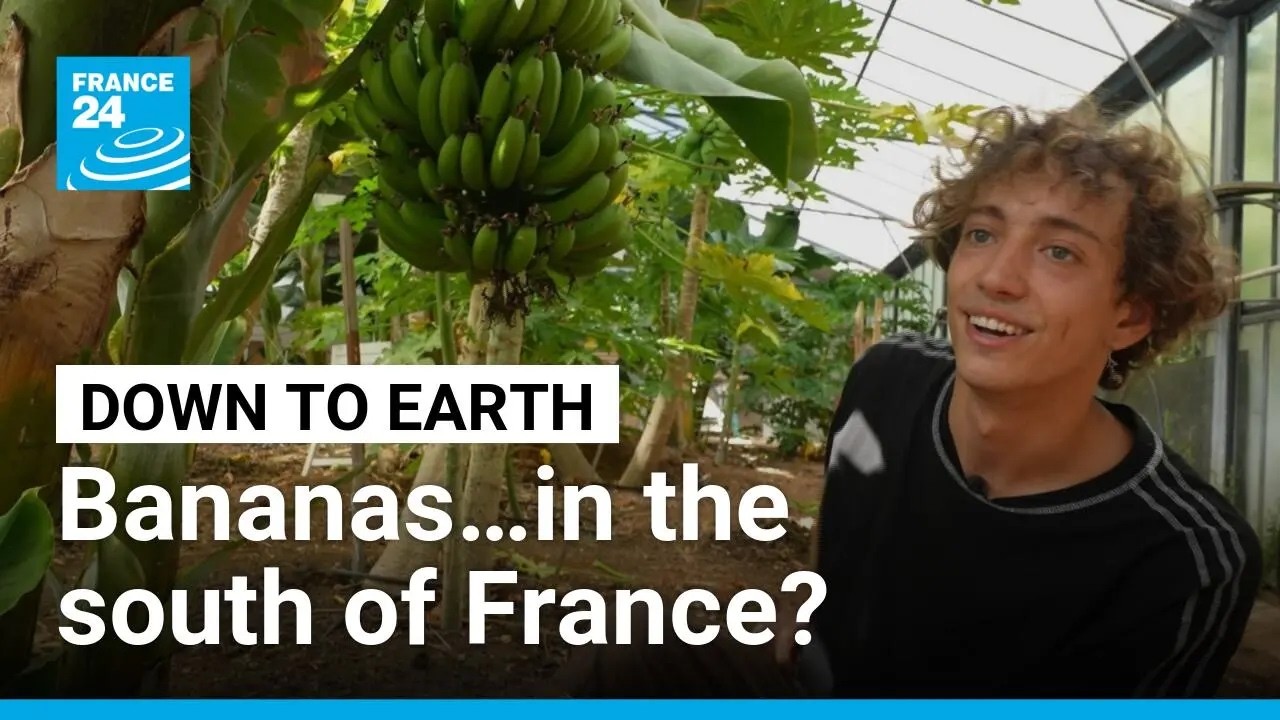
Working in tandem with innovators like Berdin is young agronomist Johan Bultel, whose specialization lies in banana cultivation. Bultel operates on a dual front: protecting tender varieties inside controlled greenhouse environments while pushing the boundaries of survival on the exposed, windy slopes of his land. Bultel is currently trialing 26 distinct banana varieties sourced from tropical climes as diverse as Honduras and the French overseas department of Réunion. His ultimate goal is to isolate and propagate at least one resilient variety capable of withstanding unexpected winter freezes without artificial heating.
Beyond bananas and papayas, the movement encompasses dragon fruit growers—some of whom have successfully doubled their yields through collaborative cropping strategies—and traditional vegetable farmers pivoting to multi-tiered, agroforestry-inspired layouts. By planting sun-sensitive crops like tomatoes and squash beneath the protective canopies of newly introduced citrus and banana trees, these farmers are mitigating the ravages of severe summer heatwaves while establishing a self-sustaining, zero-emission micro-ecosystem.
Chronology: How Provençal Agriculture Reached a Turning Point
To understand how tropical fruit came to be cultivated in the heart of Provence, it is necessary to trace the convergence of rising temperatures, shifting market demands, and grassroots agricultural experimentation over the past two decades.
Phase One: The Warning Signs (Early 2000s – 2010s)
For generations, farmers in the south of France enjoyed a stable Mediterranean climate. However, the turn of the century brought increasingly erratic weather patterns. Winters grew progressively milder, while summers transformed from pleasantly warm to punishingly hot. Traditional crops—particularly wine grapes, olives, and certain heritage vegetables—began showing signs of climate stress. Heatwaves routinely scorched delicate leaves, dried out topsoil, and forced farmers to rely heavily on increasingly restricted irrigation resources.
Phase Two: The Shift in Tactics (Late 2010s – 2021)
As extreme weather events transitioned from anomalies to annual occurrences, forward-thinking farmers began looking across the Mediterranean for inspiration. Drawing cues from agricultural practices in southern Spain and North Africa—regions that have long grappled with semi-arid conditions—early adopters began experimenting with shade-grown agriculture. Isabelle Pertois, a local organic vegetable farmer, found herself at a crossroads when scorching summer temperatures made traditional open-air farming unsustainable. Inspired by Mediterranean neighbors, Pertois began planting her tomatoes and squash beneath the dappled shade of newly introduced fruit trees.
Phase Three: The Tropical Breakthrough (2022 – Present)
By the mid-2020s, experimental plots yielded undeniable proof: the average ambient temperature and frost-free periods in the Var Department had crossed a biological threshold. Pioneers like Dominique Berdin and Johan Bultel moved past small-scale testing to full-scale commercial trials. Documented by national broadcasters like France24 in late 2026, these farmers showcased thriving, pesticide-free tropical ecosystems. What began as a desperate strategy to survive scorching heatwaves transformed into a thriving commercial market for locally grown tropical produce, capturing the attention of consumers and agricultural researchers alike.
Supporting Data: Climate Shifts and Agricultural Adaptation
The operational success of these French tropical farmers is underpinned by measurable meteorological and economic data reflecting a rapidly warming Europe.
- Temperature Trajectories: According to meteorological data for the Provence-Alpes-Côte d’Azur region, average annual temperatures have risen by nearly 1.5°C over the past three decades—a rate roughly double the global average.
- The Frost-Free Window: The number of consecutive frost-free days in coastal Var has expanded significantly, reducing the winter heating requirements for protective greenhouse structures.
- Crop Diversification Metrics: Agronomist Johan Bultel’s research involves tracking 26 distinct banana cultivars, measuring their resistance to wind shear, humidity fluctuations, and brief drops in temperature. Similarly, dragon fruit producers utilizing optimized local cropping strategies have reported yield increases of up to 100% compared to traditional baseline figures.
- Carbon Footprint Reduction: By replacing fruit imported via cargo ships or air freight from Central America, Africa, and Southeast Asia with zero-emission local produce, these farms drastically curtail "food miles" and associated carbon emissions. Berdin’s and Pertois’s operations rely entirely on zero-emission heating principles and natural pest control methods, ensuring that the ecological footprint of the fruit remains exceptionally low.
Official Responses and Expert Perspectives
The unexpected emergence of tropical fruit farming in France has sparked intense debate, cautious optimism, and fascination within the broader European agricultural and scientific communities.
Agronomists and climate scientists view the trend as a striking example of micro-level adaptation to macro-level climate change. While experts are quick to caution that tropical farming cannot replace traditional agriculture across the entirety of Europe, they acknowledge that regional microclimates—particularly along the Mediterranean basin—are evolving faster than previously projected.
"Our climate is now suitable for these crops," Dominique Berdin noted in her interview with France24. She emphasizes that humanity faces a stark choice in the face of environmental disruption: "If we are willing to adapt, it might turn into an opportunity to grow our own tropical fruit instead of shipping it from across the globe."
Local agricultural cooperatives and extension services have begun paying closer attention to these rogue experiments. Initially met with skepticism from traditionalist farming unions who feared a departure from time-honored Provençal identity, the success of growers like Bultel and Pertois has commanded professional respect. Their work is increasingly viewed as a masterclass in agricultural resilience, demonstrating that farmers can pivot toward high-value, climate-resilient crops without sacrificing the rigorous quality standards historically associated with French agriculture.
Implications: The Future of European Farming and Food Security
The implications of growing papayas, mangoes, and bananas in the south of France extend far beyond local novelty. They touch upon critical themes of European food security, supply chain vulnerability, and the future of regional farming economies.
1. Re-localization of Exotic Supply Chains
For decades, European consumers have enjoyed year-round access to tropical fruits imported from tropical regions thousands of miles away. However, these long supply chains are increasingly vulnerable to geopolitical disruptions, fuel price volatility, and climate-induced crop failures in producer nations. By successfully cultivating these same fruits domestically, France—and potentially other southern European nations like Italy, Spain, and Greece—could secure a localized supply of high-demand commodities, reducing reliance on transcontinental shipping.
2. Paradigm Shift in Agricultural Identity
For many French consumers and purists, agriculture is deeply intertwined with cultural heritage. The transition from lavender and wine grapes to bananas and dragon fruit challenges conventional notions of regional identity. Yet, as Isabelle Pertois marveled while watching her vigorous banana trees tear through the roof of her greenhouse—exclaiming, “It’s like I’m in the Caribbean!”—a new cultural narrative is forming. This evolution suggests that preserving agricultural heritage may paradoxically require radically modernizing what is grown in the soil.
3. A Blueprint for Climate Resilience
Ultimately, the trailblazing farmers of the Var Department offer a pragmatic blueprint for agricultural survival in an era of climate uncertainty. Rather than fighting an unwinnable war against rising temperatures, these growers are leaning into the new reality. Their success underscores an urgent truth for the agricultural sector worldwide: resilience lies in flexibility, biodiversity, and the courage to experiment.
Even as the climate continues to change, these adaptable Provençal farmers are proving that the exceptional standard and pioneering spirit of French agriculture need not be left behind.