KENTUCKY — In the rugged, sprawling terrain of the Kentucky-West Virginia borderlands, the line between despair and elation is often paper-thin. For 72 agonizing hours, that razor-thin margin dictated the lives of hundreds of search-and-rescue personnel, frantic family members, and anxious residents who combed through dense brush, steep ravines, and unforgiving mountainous landscapes.
Their mission: to find six-year-old Roman Heilman, a young boy with autism who had vanished from his home, walking off into the unforgiving wilderness.
What followed was a story of endurance, miraculous survival against the elements, and the profound power of a community refusing to give up hope. Armed with little more than determination, local volunteers and professional emergency responders transformed the wilderness into a coordinated grid of search parties. When the ordeal finally ended on a quiet horse trail deep in the woods, it concluded not with a tragedy, but with the cheerful, surreal sounds of a little boy singing "Old McDonald," accompanied by a loyal canine companion.
Main Facts: The Miraculous Discovery of Roman Heilman
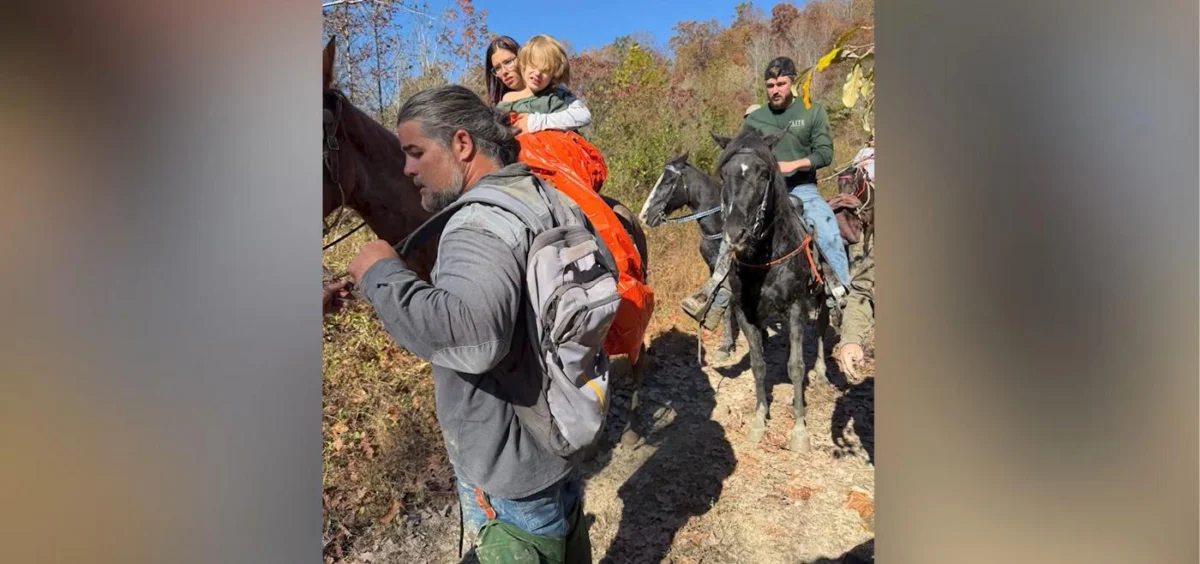
The search for Roman Heilman culminated in an encounter that rescuers describe as nothing short of surreal. On Tuesday, November 1, after enduring three days and two frigid nights lost in the wild, Roman emerged from a thicket of bushes onto a local horse trail, roughly a mile and a half from his family home.
Jacob Mullins, a member of a local regional horse trail-riding group who lives along the Kentucky-West Virginia state line, was among the ten equestrians combing the backcountry when the boy appeared.
"He just walked right out of the bushes onto a horse trail," Mullins recalled in an interview with the Lexington Herald Leader. "He came out of the bushes saying, ‘E-I-E-I-O horsey.’ He was singing ‘Old McDonald.’"
According to rescuers, Roman was unclothed and bore the physical toll of his ordeal—covered in scratches from the aggressive undergrowth. Yet, remarkably, he was not alone. A small dog accompanied the boy out of the brush, staying by his side throughout his miraculous survival. Upon stepping onto the trail, Roman immediately latched onto the leg of a lead rescuer, refusing to let go.
Emergency crews immediately provided the exhausted child with basic sustenance—offering him a banana and water—before gently carrying him off the mountain to reunite with medical professionals and his overjoyed family.
Chronology: A 72-Hour Race Against Time
Sunday, November 1: The Disappearance
The harrowing ordeal began in the late afternoon on Sunday, November 1. Roman Heilman, who is autistic, wandered away from his home, slipping unnoticed into the densely wooded and mountainous terrain that surrounds the property.
As daylight waned, local authorities were notified, immediately sparking concern. Compounding the urgency of the situation, rescue authorities received critical information on Sunday evening indicating that the young boy had removed his clothing at some point after wandering off. With temperatures in the region dropping significantly after dark, the race against the elements began immediately.
Monday: Expanding the Search Grid
By Monday, the search operation had scaled dramatically. Law enforcement agencies, K-9 units, and emergency management teams from Lawrence County were joined by a swelling wave of local volunteers.
The geography of the search zone presented immense challenges. The terrain is characterized by steep inclines, dense thickets, and remote wooded areas where visibility is severely restricted. Search parties utilized drones, all-terrain motor vehicles, and foot patrols, scouring miles of treacherous landscape. Despite these exhaustive efforts, Monday concluded without a single confirmed sighting of the missing boy, leaving families and searchers bracing for a perilous second night in the freezing temperatures.
Tuesday: The Breakthrough on the Horse Trail
As dawn broke on Tuesday, search efforts shifted tactics. Recognizing that noisy motor vehicles and large, mechanized search parties might inadvertently frighten a child with autism—causing him to hide rather than seek help—smaller, quieter teams were deployed into the backcountry.
Among these specialized teams were local horse trail riders who intimately knew the paths and hidden pockets of the mountainous terrain. Ten riders from both sides of the state line mobilized at first light, covering roughly 14 miles of rugged territory.
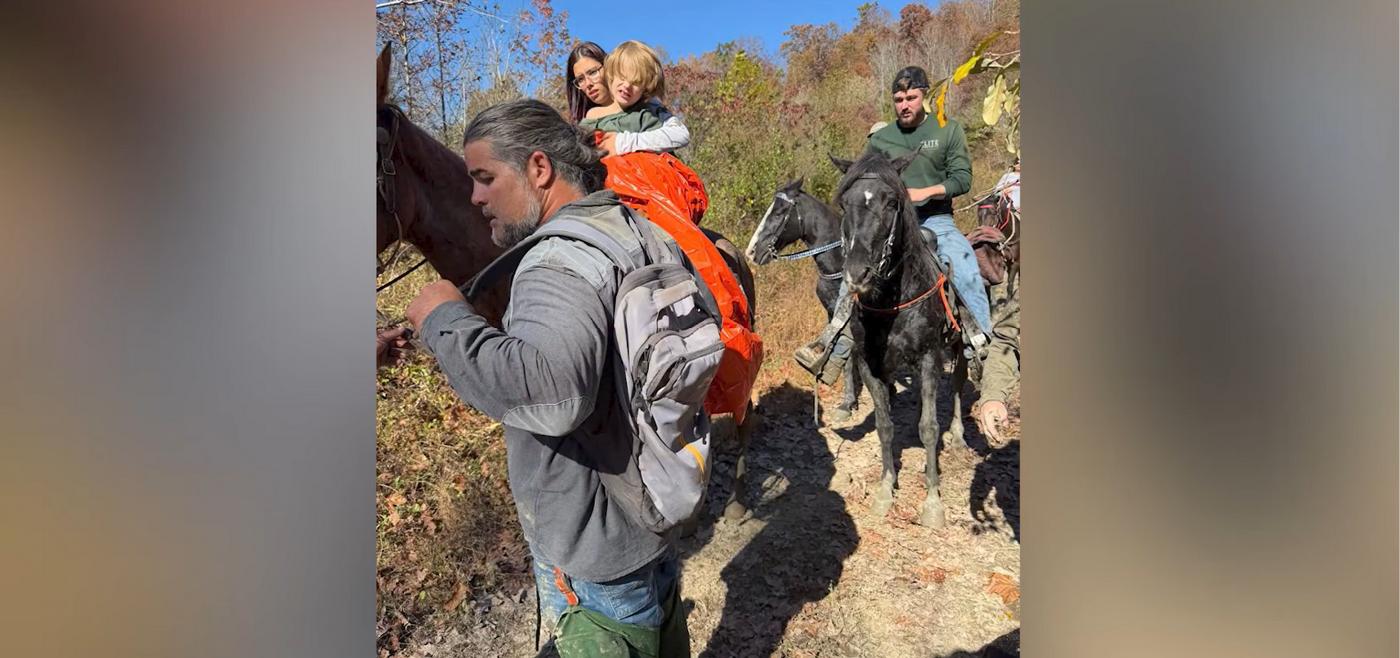
Around midday, roughly 72 hours after he was first reported missing, Roman made his fateful appearance. Emerging from the dense foliage just half a mile from where the search was heavily concentrated (and about 1.5 miles from his home), Roman ended the agonizing search with a song and a grip that his rescuers would never forget.
Supporting Data and Environmental Challenges
The survival of a six-year-old child for nearly three days in a mountainous wilderness without clothing or shelter defies ordinary odds. Emergency management officials pointed to several critical factors that framed the scale and danger of the operation:
- Duration: Approximately 72 hours (three full days and two nights) exposed to outdoor elements.
- Distance: Roman was found approximately 1.5 miles from his home, though search teams collectively covered dozens of miles of grueling terrain.
- Environmental Hazards: The region features steep mountainous drops, dense brush, and nocturnal temperatures that plummeted well below comfort levels, particularly for a child without clothes.
- Search Force: Hundreds of individuals participated in the multi-day operation, including professional emergency managers, state and local police, drone operators, K-9 units, and dedicated community volunteers.
- The Canine Companion: Adding an element of mystery and comfort, a small dog was discovered emerging from the woods alongside Roman, having seemingly acted as an unspoken protector throughout his time in the wild.
Experts note that children with autism can sometimes exhibit bolting or wandering behaviors (known as elopement) and may seek out secluded hiding spots, often failing to respond when called. This behavioral tendency made the quiet approach utilized by the horse riders on Tuesday morning uniquely effective in coaxing Roman out of hiding.
Official Responses and Community Impact
The successful conclusion of the search sent waves of relief and jubilation through Lawrence County and beyond. Local leadership was quick to praise the unprecedented level of solidarity displayed by ordinary citizens during the crisis.
Travis Hughes, Director of Lawrence County Emergency Management, took to social media to share a heartfelt statement reflecting on the emotional toll and ultimate triumph of the rescue operation.
"What happened over the course of this search was nothing short of a miracle, and I praise God for that," Hughes wrote. "It was also an incredible, overwhelming effort from so many people who came together with one common goal."
Hughes emphasized the unique spirit of the local population, noting that rural communities often rally during times of crisis, but that the scale of this particular response transcended expectations.
"I have always said that when something happens here in Lawrence County, our people come together," Hughes continued. "Pero what I witnessed during this search was truly something special. I have never been more proud of our community."
Local news outlets, including WOWK 13, heavily covered the rescue, broadcasting footage of the emotional aftermath and detailing how the hunters of tragedy quickly turned into finders of joy.
Implications: Lessons in Autism Awareness and Wilderness Search
The safe recovery of Roman Heilman serves as a powerful case study for emergency response strategies, particularly regarding missing persons on the autism spectrum, and highlights several broader societal implications:
1. Tailored Search Protocols for Neurodivergent Individuals
Traditional search-and-rescue methods—relying heavily on loud sirens, flashing lights, heavy machinery, and calling out names—can sometimes trigger panic or avoidance behaviors in children with autism, who may experience sensory overload. The breakthrough in Roman’s case came when quieter, less intimidating search methods were deployed. The use of horse trail riders, who moved silently and naturally through the brush, likely played a decisive role in allowing Roman to approach safely. Emergency planners are increasingly recognizing the necessity of incorporating autism-aware protocols into missing-child protocols.
2. The Power of Grassroots Community Resilience
While professional emergency services provided the organizational backbone for the search, it was the hyper-local knowledge of volunteers—ranchers, neighbors, and trail riders—that ultimately sealed the outcome. In remote geographic regions where federal or state resources can take hours to mobilize effectively, community-led infrastructure remains an indispensable frontline defense.
3. Raising Awareness on Elopement Risks
Wandering is a common and dangerous behavior associated with autism spectrum disorder. Child safety advocates and organizations continuously emphasize the importance of preventative measures, such as secure fencing, door alarms, and community awareness networks. Incidents like Roman’s underscore the critical need for families, educators, and first responders to maintain open lines of communication regarding proactive tracking and rapid-response safety planning.
Ultimately, the story of Roman Heilman stands as a testament to human resilience. Through freezing temperatures, challenging terrain, and mounting anxiety, a community refused to abandon one of its own—proving that sometimes, miracles really do walk out of the brush singing.