Main Facts
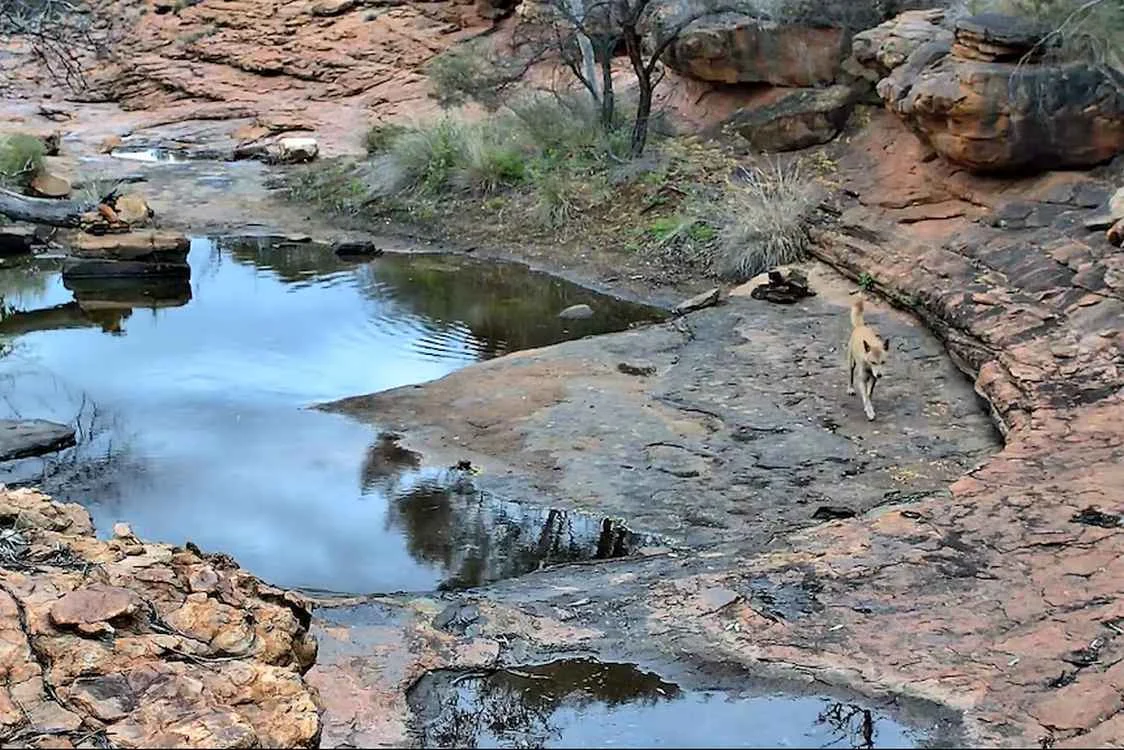
Deep within the rugged, sun-baked expanses of Australia’s Northern Territory, a solitary, camouflaged camera sits perched near a hidden desert oasis. Located approximately 1.2 miles off the beaten path—down a rugged, seldom-traveled track in the heart of Watarrka National Park—this unassuming device is quietly broadcasting the secret lives of the Outback directly to the global stage.
The project, a collaborative triumph between Northern Territory Parks and Wildlife and Charles Darwin University’s Research Institute for the Environment and Livelihoods, feeds a live, uninterrupted window into a vital ephemeral waterhole. While the local wildlife—including dingoes, agile wallabies, chorus lines of native frogs, the occasional opportunistic feral cat, and majestic wedge-tailed eagles—goes about its ancient daily routines entirely undisturbed, a global audience spanning from Sacramento to Samarkand tunes in. Viewers can watch these wild creatures quench their thirst in real-time, accompanied by the authentic, immersive soundscape of the desert: the raspy croaking of frogs, the trills of passing birds, and the rare, soothing pitter-patter of outback rainfall.
Yet, this livestream is much more than a digital safari or a novel form of wildlife entertainment. It represents a major leap forward in remote ecological monitoring. By fusing modern advancements in compact computing, resilient solar power arrays, and high-speed satellite internet, researchers have unlocked a sustainable method to observe one of the planet’s most isolated and climate-sensitive ecosystems. As global temperatures rise and weather patterns shift, this digital eye in the wilderness serves as both a public portal to a largely inaccessible landscape and a critical scientific instrument for tracking environmental change.
Chronology: From Trail Cameras to Real-Time Global Science
To understand how a livestream from the middle of the Australian desert became possible, one must trace the technological and professional evolution of freshwater ecologist Professor Jennifer Davis.
For years, Professor Davis relied on traditional motion-activated trail cameras to study the behaviors of desert fauna. These devices were invaluable for snapshot ecology, but they possessed inherent limitations. Cameras had to be physically visited to retrieve memory cards and replace batteries, meaning data was always historical, captured days, weeks, or even months after the event had occurred. Real-time observation of ephemeral water sources was essentially impossible due to the sheer logistical hurdles of the outback.
The turning point arrived in the early 2020s, driven by rapid advancements in commercial technology. As solar power systems became vastly more efficient and compact, satellite internet coverage expanded into remote corners of the globe, and low-power computing capabilities surged, Professor Davis realized the missing puzzle pieces were finally available.
Collaborating with institutional partners, the team designed a discreet monitoring station. Using specialized camouflage paint to blend seamlessly into the sandstone and iron-rich soils of Watarrka, they established a permanent watch over the waterhole. What began as a researcher’s ambition to bridge the gap between static trail photography and live ecological processes transformed into a fully operational public broadcast. The system went live, instantly connecting a quiet, secluded desert alcove to the screens of millions across the world.
Supporting Data and Ecological Context
Watarrka National Park is celebrated worldwide for its breathtaking geological formations—most notably the towering, weathered sandstone walls and dramatic gorges surrounding Kings Canyon at the park’s core. Culturally, the landscape is deeply sacred, serving as an ancestrally important region for the Matutjara people, who have managed and sustained a profound spiritual connection to the land for millennia.
Geographically, however, the park is profoundly isolated. Situated approximately 818 miles south of Darwin and 201 miles southwest of Alice Springs, the interior of the park is exceptionally difficult to reach. Even for native Australians, visiting these remote niches is a rare privilege. The waterhole captured by the camera is particularly fragile: it is an ephemeral pool, meaning its existence is entirely contingent upon seasonal precipitation. Extended droughts can cause the waterhole to evaporate completely, forcing local wildlife to travel greater distances for hydration. Conversely, when rare desert rains arrive, the pool swells, immediately attracting an explosion of amphibious life, most notably native frog species that burrow into the mud or lie dormant until moisture revives them.
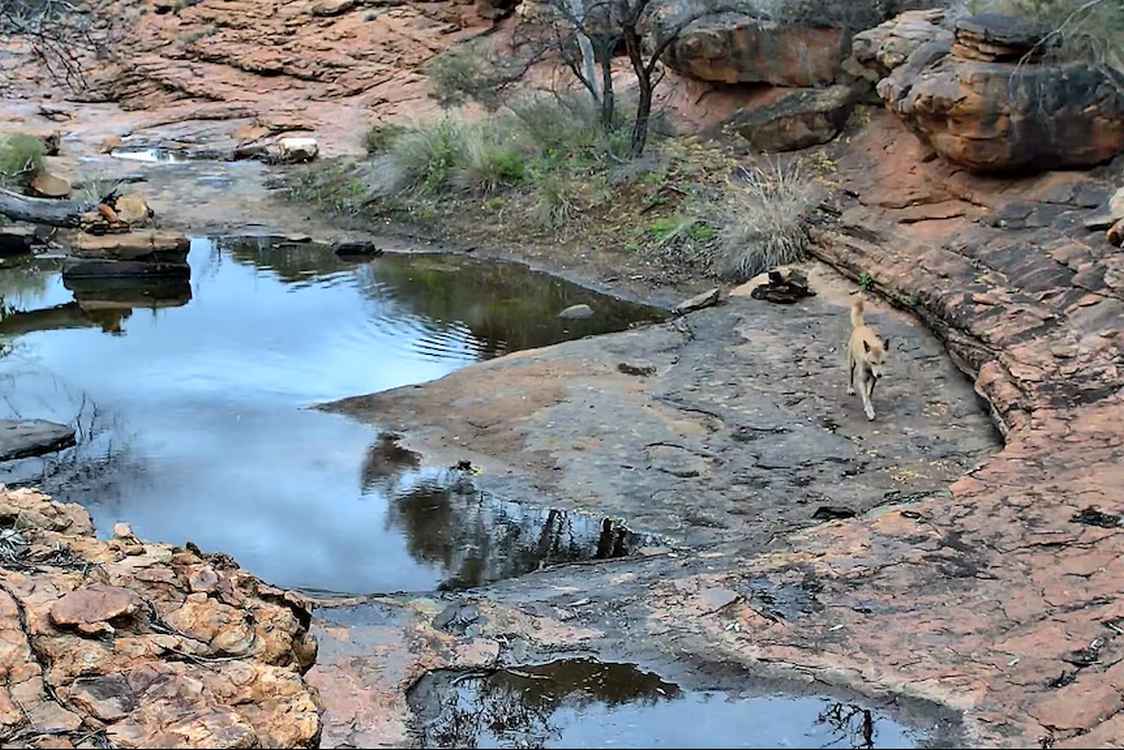
Data collected from the livestream highlights fascinating behavioral patterns among the regular visitors:
- Dingoes: The top predators of the region are the most frequently observed species, often visiting during cooler dawn and dusk hours to drink and scent-mark their territory.
- Wallabies: Agile and cautious, these marsupials frequently drop in to hydrate, displaying acute awareness of their surroundings.
- Avian Life: From small honeyeaters to the apex avian predator, the wedge-tailed eagle, the airspace above the waterhole is a constant hub of activity.
- Invasive Species: Occasional appearances by feral cats underscore the ongoing pressures introduced species place on native desert biomes.
Official Responses and Perspectives
The initiative has drawn praise from conservationists, academic institutions, and the public alike, bridging the gap between rigorous scientific field research and environmental education.
"The livestream allows us to see what’s coming in, what’s drinking, what the behaviors are, and how they might also change as the planet warms," Professor Jennifer Davis explained in an interview with ABC News AU. For a freshwater ecologist, the value of continuous observation cannot be overstated. "As a freshwater ecologist, I’m really keen to see when there’s water present… we’re looking at what’s happening with global warming because, at this site, the only real impact on the amount of water present is going to be climate change."
Administrators at Northern Territory Parks and Wildlife echo these sentiments, noting that the project serves a dual purpose. Not only does it yield unprecedented data streams for researchers at Charles Darwin University, but it also democratizes access to a national park that most citizens could otherwise only dream of seeing. By bringing the outback directly into classrooms and living rooms, the project fosters a broader, global appreciation for Australia’s unique and fragile arid ecosystems.
Implications for Conservation and Climate Research
The Watarrka waterhole livestream is more than a viral nature feed; it points toward a new frontier in global conservation biology. As climate change accelerates, traditional field surveys—which require expensive, carbon-heavy expeditions into remote terrain—are becoming less tenable and less responsive to rapid ecological shifts.
By demonstrating that high-definition video, audio, and telemetry data can be reliably streamed from deep within arid zones using off-grid green energy and satellite constellations, this project provides a scalable blueprint for researchers worldwide. Similar setups could soon monitor glacial meltwater pools in the Himalayas, remote waterholes in the African savanna, or vulnerable watering spots in the American Southwest.
Furthermore, the psychological and educational implications are profound. In an era where ecological anxiety is high and urban populations feel increasingly disconnected from the natural world, the Watarrka stream offers an antidote: quiet, meditative immersion in the raw reality of the wild. Viewers sitting thousands of miles away find themselves emotionally invested in the daily survival of individual dingoes and wallabies. This intimate connection breeds a deeper sense of global environmental stewardship.
Ultimately, the lonely camera at Watarrka National Park does not just broadcast nature—it binds us to it. As the climate shifts and the ancient rhythms of the desert face new pressures, this digital sentinel ensures that the quiet struggles and triumphs of the Outback will never go entirely unnoticed.