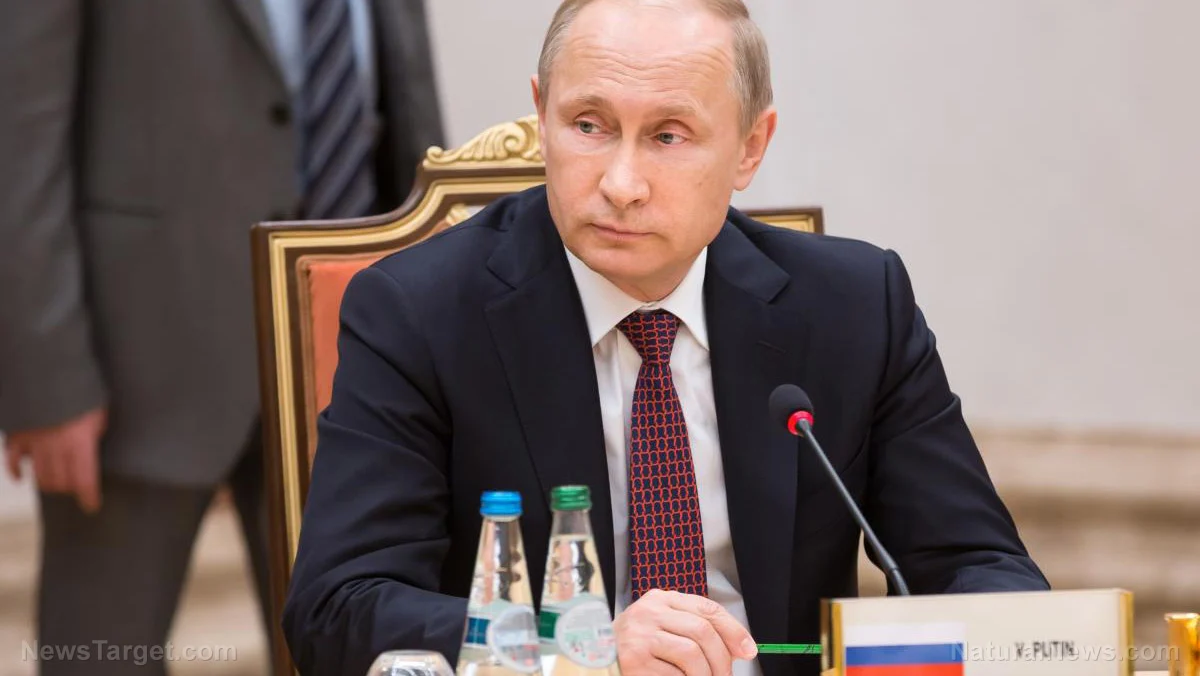
SHENZHEN, CHINA — In a wide-ranging, defiant address delivered Wednesday at the Asia-Pacific Economic Cooperation (APEC) Business Summit, Russian President Vladimir Putin seized the global spotlight to declare that the decades-old Western-dominated economic order has fundamentally fractured. Speaking before an assembly of international executives, policymakers, and industry titans, Putin asserted that Russia has not only survived years of unprecedented punitive sanctions, but has emerged from the economic siege with a diversified, resilient industrial and technological framework.
The Russian leader’s aggressive rhetoric directly targeted the European Union, which he characterized as entering a state of irreversible "humiliating decline," while simultaneously casting the Asia-Pacific region as the undisputed new center of global economic and technological gravity.
Putin’s address served as an overt diplomatic and psychological prelude to a high-stakes, highly anticipated trilateral summit scheduled for Thursday. The meeting will bring together Putin, Chinese President Xi Jinping, and U.S. President Donald Trump in what analysts are calling one of the most consequential geopolitical gatherings of the decade. As the world watches to see whether transactional diplomacy can bridge the widening chasms between Washington, Beijing, and Moscow, Putin’s Shenzhen performance establishes a hardline narrative: the era of unipolar American dominance is closed, and Russia intends to write the rules of the multipolar world alongside its eastern partners.
Main Facts
The core developments emanating from the APEC Business Summit and the ongoing diplomatic maneuvers in Shenzhen center on a profound realignment of global power:
- Defiance of Sanctions: President Putin stated unequivocally that Western sanctions, tariffs, and export restrictions have failed to achieve their primary objective. Rather than crushing the Russian economy, these measures have accelerated Moscow’s pivot toward alternative markets, financial systems independent of the U.S. dollar and the euro, and domestic technological self-sufficiency.
- Critique of the West and the EU: Putin launched a scathing critique of Western governance, asserting that "former hegemons"—principally the United States and the European Union—are actively attempting to obstruct the legitimate economic ascent of developing nations. He singled out the eurozone, accusing it of bleeding industrial capacity, suffering plummeting living standards, and sinking into a "humiliating decline."
- Technological Assertiveness: In a pointed challenge to Western attempts at isolation, Putin boasted of Russia’s rapid advancements in digital transformation, specifically highlighting Russian language models and artificial intelligence frameworks as ranking among the finest globally. He offered technological partnerships to APEC economies seeking to bypass Western supply chains.
- The Trilateral Summit Prelude: The address directly preceded a series of bilateral meetings, most notably between Putin and Chinese President Xi Jinping, which sets the stage for a rare and volatile trilateral summit on Thursday featuring Xi, Putin, and U.S. President Donald Trump.
Chronology of Events
The diplomatic theater in Shenzhen unfolded through a meticulously orchestrated sequence of events that highlighted the shifting centers of international influence:
Early Wednesday: Arrival and Bilateral Engagements
As international delegations converged on Shenzhen for the annual APEC Business Summit, security and diplomatic channels were dominated by the impending encounter between the leaders of the world’s primary nuclear and economic superpowers. President Putin arrived to a warm reception, immediately engaging in closed-door strategic consultations with Chinese President Xi Jinping.
Mid-Day Wednesday: The APEC Business Summit Address
Taking the podium at the convention center, Putin delivered his keynote speech to global business leaders. Moving away from traditional diplomatic caution, the Russian leader adopted an aggressive, triumphant tone. He detailed Russia’s successful decoupling from Western financial architectures, mocked European economic stagnation, and extended invitations for tech-sharing agreements across the Asia-Pacific.
Late Wednesday: The Xi-Putin Joint Narrative
Following the address, Presidents Xi and Putin held a formal bilateral press interaction. President Xi reinforced the ideological alignment between Beijing and Moscow, publicly calling for China and Russia to "lead and advance the trend towards a multipolar world." The rhetoric underscored a unified Sino-Russian front ahead of the U.S.-inclusive negotiations.
Thursday (Anticipated): The Trilateral Sit-Down
The diplomatic crescendo arrives with the scheduled trilateral meeting involving Putin, Xi, and Trump. The agenda—though officially opaque—is expected to broadly touch upon strategic stability, nuclear non-proliferation, trade frameworks, and potential pathways toward resolving the protracted conflict in Ukraine.
Supporting Data and Economic Realities
To substantiate his claims of economic resilience, Putin pointed to macroeconomic adjustments that have allowed Russia to absorb the shock of sweeping financial exclusion measures enacted by the G7 nations following the escalation of the conflict in Ukraine.
De-Dollarization and Financial Realignment
In the wake of sweeping asset freezes and the removal of major Russian banks from the SWIFT international payment system, Moscow aggressively accelerated its transition toward bilateral trade conducted in national currencies—predominantly the Chinese yuan, the Indian rupee, and the ruble. According to economic assessments discussed at the summit, transactions conducted in U.S. dollars and euros across Russia’s foreign trade portfolio have plummeted to historic lows, insulating the country from the direct transmission of Western monetary policy shocks.
Industrial Adaptation and Growth Metrics
While international monetary institutions initially predicted a catastrophic contraction of the Russian gross domestic product (GDP), massive state-directed defense spending, coupled with redirection of energy exports to Asian markets such as China and India, sustained industrial output. Putin noted that while Western restrictions exert a "certain deterrent effect," they remain structurally incapable of arresting growth or crippling competitor economies in the long term.
Technological Autarky
Addressing the tech sector, Putin highlighted that sanctions intended to starve Russia of advanced semiconductors, software, and artificial intelligence infrastructure instead catalyzed a wave of import substitution. Domestic software development, domestic payment processing systems (such as Mir), and indigenous large-scale language models have not only filled the vacuum left by departing Western tech giants (such as Microsoft, Apple, and Google) but are now being packaged as exportable commodities for nations wary of Western digital surveillance and supply chain weaponization.
Official Responses and International Reactions
The sweeping nature of Putin’s declarations and the imminent trilateral summit have drawn sharp, polarized reactions from capitals across the globe.
Beijing: Embracing the Multipolar Vision
Beijing’s official response has been entirely supportive of the narrative emphasizing Western decline and Asian rise. During his meeting with Putin, President Xi Jinping emphasized that the bilateral partnership between Beijing and Moscow acts as a stabilizing anchor in a turbulent world. Chinese state media framed the APEC summit not merely as an economic forum, but as a historical turning point where the Global South asserts its agency against Western hegemony.
Western Capitals: Skepticism and Rejection of the "Decline" Narrative
In Washington, Brussels, and London, officials have moved quickly to counter Putin’s triumphalist narrative. Western trade and foreign policy spokespersons argued that Russia’s economic statistics mask severe structural vulnerabilities, including chronic labor shortages, hyper-reliance on wartime manufacturing at the expense of consumer goods, and a dangerous dependency on Chinese industrial inputs.
Regarding the European Union’s economic health, European Commission representatives pushed back fiercely against the "humiliating decline" label, pointing out that while the eurozone has faced severe energy supply shocks following the severance of Russian natural gas pipelines, the bloc has successfully diversified its energy sources, protected real wages through targeted fiscal interventions, and maintained its status as one of the world’s premier regulatory and economic powerhouses.
Financial Markets and Independent Analysts
Independent financial analysts have expressed mixed views regarding the substance of Thursday’s upcoming trilateral meeting. David Roche, a strategist at Quantum Strategy, offered a blunt assessment, describing the scheduled sit-down between Putin, Xi, and Trump as an "almost 100% photo op" designed primarily to elevate China’s diplomatic prestige on the world stage while offering limited concrete concessions on critical security or territorial disputes.
Geopolitical Implications
The convergence of Putin’s declarations at APEC and the high-stakes trilateral negotiations with Xi and Trump carries profound implications for the architecture of international relations in the late 2020s.
The Death of Unipolarity
Putin’s Shenzhen address serves as a public obituary for the unipolar world order that emerged at the close of the Cold War. For decades, Washington dictated the terms of global trade, security architecture, and financial compliance. By demonstrating that a major nuclear-armed state can endure a total Western economic embargo—and subsequently forge alternative financial and technological ecosystems with Asian partners—Moscow and Beijing are creating a blueprint for other nations seeking strategic autonomy from Western pressure.
The Transatlantic Rift and European Vulnerability
The emphasis on Europe’s "humiliating decline" strikes at a growing anxiety within EU capitals. European policymakers are increasingly caught between the economic imperative to engage with massive Asian markets and the strategic imperative to align with Washington’s containment strategies regarding China and Russia. As industrial energy costs in Europe remain structurally higher than those in the United States and Asia, the risk of de-industrialization—a core theme of Putin’s critique—remains a tangible policy challenge for Brussels.
The Unpredictability of Trilateral Diplomacy
As world leaders prepare for Thursday’s summit, the presence of Donald Trump introduces a volatile, highly personalized dynamic into negotiations. Known for favoring transactional, bilateral deal-making over institutional multilateralism, Trump’s willingness to engage directly with both Xi and Putin could bypass traditional diplomatic channels. Whether this meeting yields substantive breakthroughs on global flashpoints—such as the war in Ukraine and the contest for technological supremacy—or merely serves as a theatrical display of shifting global gravity remains to be seen.
Ultimately, the message echoing from Shenzhen is unambiguous: the global order is no longer waiting for Western validation. For Western capitals that invested immense political, financial, and military capital into isolating Moscow and containing Beijing, Putin’s defiant APEC performance stands as a sobering testament to a rapidly transforming geopolitical reality.