
The local county fair is more than just a collection of prize-winning livestock and deep-fried delicacies; for parents, it serves as a sprawling, high-stakes laboratory of consumerism. For one Vermont family, the recent fair provided the perfect backdrop to continue a long-term experiment in financial education. With their children—ages five and seven—navigating the flashing lights and impulse-buy kiosks, the parents used the outing as a real-world classroom to demystify the complex, often stressful world of personal finance.
By shifting the paradigm from "parental provision" to "personal responsibility," this family is championing a hands-on approach to money management that prioritizes tangible experience over abstract lectures.
The Core Philosophy: A Scaffolding Approach
At the heart of the family’s strategy is a simple, clearly defined "Family Money Philosophy." The rule is straightforward: parents provide for the essentials—clothing, shelter, education, healthcare, and baseline nutrition. However, once the conversation shifts to discretionary spending, the dynamic changes. If a child wants a trinket at a gift shop, a specific treat at a restaurant, or a non-essential item from a school book fair, they are required to use their own funds.

This approach acknowledges that children often view money as a bottomless resource. By separating "needs" (provided by parents) from "wants" (funded by the child), the parents are teaching their children to weigh desire against the labor required to fulfill it.
Chronology of Lessons: From Debt to Delegation
The evolution of these financial lessons has followed a logical progression over the last few years, moving from simple transaction mechanics to complex behavioral economics.
1. The Value of Labor (The Foundation)
The first step was establishing the "chore economy." The children are offered opportunities to perform tasks for compensation, provided those tasks are completed with minimal adult intervention. The parents emphasize "fair market value," occasionally allowing the children to negotiate prices for more labor-intensive projects, such as deep-cleaning kitchen cabinets.

2. The Hard Lesson of Debt
One of the most significant milestones occurred at a previous year’s county fair. When a daughter wished to purchase a $13 inflatable unicorn but possessed only $9, the parents opted for a "real-world" loan. The mother agreed to front the remaining $4, provided the child understood she was now in debt. The subsequent weeks of mandatory, uncompensated labor served as a visceral, formative lesson: debt is a burden that diminishes the joy of a purchase.
3. Ownership and Accountability
The parents strictly enforce the rule that the children are responsible for their own money. This includes carrying their own wallets and accepting the consequences of losing them. A recent incident at a science museum, where a child misplaced her wallet, became a pivotal lesson in the fragility of wealth. The relief of recovering the wallet—after a nerve-wracking search—underscored the importance of vigilance.
Supporting Data: Why Early Financial Literacy Matters
According to recent studies by the Consumer Financial Protection Bureau and various child development experts, children as young as five can begin to understand the concept of "value exchange." By age seven, they are cognitively capable of grasping the relationship between work, earnings, and savings.
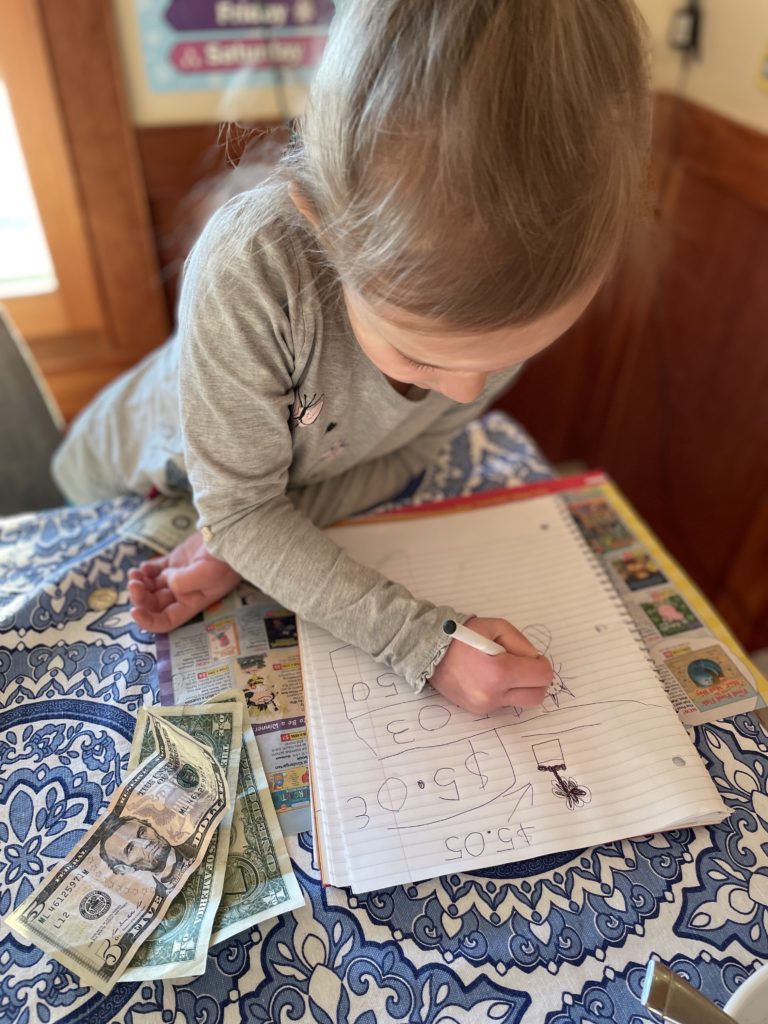
The "scaffolding" method used by this family aligns with pedagogical research suggesting that financial literacy should be introduced in layers:
- Ages 5-7: Basic identification of denominations, understanding prices, and the immediate work-to-reward cycle.
- Ages 8-10: Introduction of savings goals, the concept of interest, and the difference between short-term spending and long-term accumulation.
- Ages 11+: Budgeting, the mechanics of banking, and the impact of interest rates.
By stripping away the anxiety often associated with adult financial discussions, the parents have successfully normalized money as a "tool" rather than a source of emotional status or stress.
Official Perspectives: The Parental Role in Financial Socialization
The mother, a financial blogger known as "Frugalwoods," maintains that the greatest disservice parents do is shielding children from the reality of the family economy. "Kids don’t go around thinking about the fact that adults are paid to do their jobs," she notes. By explicitly stating that her own work pays for their groceries, clothes, and extracurricular activities, she removes the mystery surrounding the family’s lifestyle.

This transparent communication serves to demystify the household budget. It also prevents the development of "financial entitlement." When children see that a basket of groceries represents a specific number of hours of work, their perspective on consumption shifts. The child’s recent creative project—a book about her mother’s "boring but important" meetings—proves that the message is landing: work is the engine that drives their quality of life.
The Implications: Preparing for the "Bank of Parental Units"
As the children grow, the family is preparing for the next iteration of their experiment: the "Bank of Parental Units." This initiative aims to introduce the concept of interest rates. Currently, the children tend to spend their earnings immediately. The goal of the bank is to incentivize long-term saving by offering a return on deposits, mimicking the function of a high-yield savings account.
The implications of this approach are significant. By allowing children to fail in a safe, controlled environment—such as losing a wallet or experiencing the drudgery of debt—parents are effectively "inoculating" them against future financial instability.

Key Takeaways for Financial Parenting:
- Differentiate Responsibilities: Ensure children understand that daily chores (clearing the table, feeding pets) are contributions to the household unit, while special projects are opportunities for personal profit.
- Avoid the "Rescue" Impulse: If a child forgets their money or loses it, allow them to experience the disappointment. This builds the executive function skills necessary for future financial management.
- Normalize "The Talk": Discuss money regularly, but keep the level of detail age-appropriate. Focus on the mechanics of money as a tool for achieving goals, rather than as a source of household conflict.
- Embrace the "Hard" Lessons: While it is painful to watch a child work off a debt, it is far better for them to learn that lesson with a $4 toy than with a predatory credit card offer in their twenties.
Ultimately, the goal of this financial education is not to create a miniature accountant, but to raise a self-sufficient adult who understands that money is a resource to be managed, not a force to be feared. By the time these children reach adulthood, they will have already spent years practicing the very skills that often paralyze adults: earning, saving, planning, and exercising the discipline to say "no" to impulse buys.
The county fair, once a chaotic landscape of consumer temptation, has been transformed into a training ground. For these children, the most valuable thing they bring home from the fair isn’t a plastic unicorn or a butterfly ring—it’s the growing realization that their financial destiny is entirely in their own hands.