For millions of professionals, the "mid-career drift" has become a defining psychological state. You know you want out. You have been whispering the words "next year" to yourself for three years running. Your current role is not quite toxic enough to force a resignation, yet not fulfilling enough to keep you mentally engaged. It is a purgatory of competence—you are good enough at your job to keep getting paid, but not invested enough to care about the outcomes.
Conventional career advice suggests a linear path: discover your passion, audit your transferable skills, and then execute the transition. However, this advice is fundamentally flawed. It suggests that clarity is a prerequisite for action, when in reality, clarity is a byproduct of action. Those who successfully navigate career changes do not spend months soul-searching; they treat their career transition as an empirical experiment. They act first, cheaply and reversibly, and allow the resulting evidence to dictate their next steps.
The Flaw in Conventional Career Transition Models
Most career guidance is designed for those who already have a destination. When you consult standard institutional resources—such as university career centers or government labor departments—you are typically met with logistics-heavy advice: rewrite your resume, network, and obtain certifications. These steps are inherently downstream of a decision you have not yet made.
When you are asked to "look inward" to find your passion, you are often asked to build a list of strengths and interests that fail to overlap into a viable job description. This is not a failure of discipline; it is a failure of methodology. You are attempting to derive data from a source that has not yet collected it. Introspection is a poor tool for understanding the day-to-day reality of a field you have never inhabited. Changing careers is not a decision-making problem; it is an evidence-gathering problem.
The Three-Year Reality: A Chronology of Transition
If you are currently feeling "stuck," you are likely trapped in a cycle of passive research: reading salary data for industries you will never join, taking personality assessments that offer little more than psychological parlor tricks, and waiting for a "lightbulb moment" that never comes.
Research suggests that successful career transitions are rarely the result of a sudden leap. According to the work of organizational behavior expert Herminia Ibarra, who studied 39 professionals undergoing significant career changes, the process is iterative and long-term. Her findings suggest that most meaningful career transitions take approximately three years to complete.
This timeline is crucial. Many professionals abandon their efforts around the six-week mark because they measure their progress against a false, accelerated timeline. When they aren’t "hired" in a new field within two months, they conclude they are failing and retreat to the safety of their current role. Recognizing that the transition is a three-year "identity work" process—rather than a three-month job hunt—allows you to pace yourself and stay the course.
The Empirical Approach: Evidence-Based Pivoting
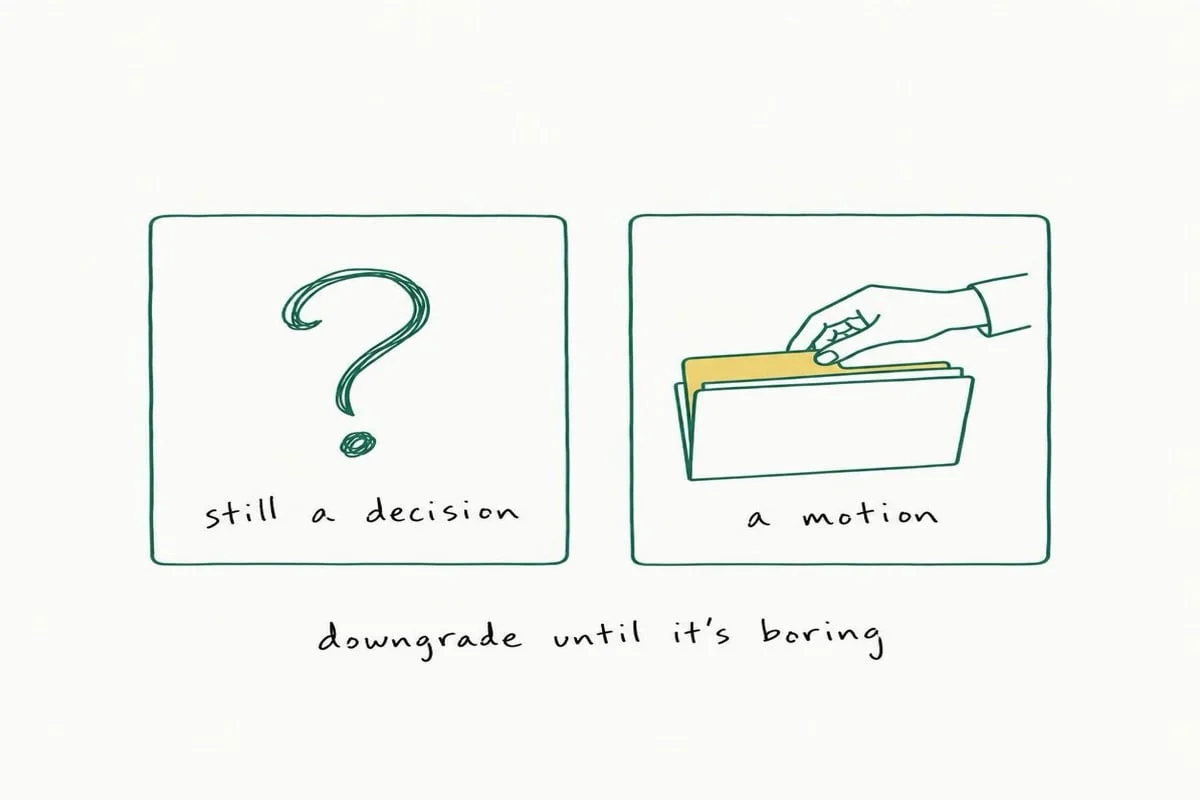
To break the stall, one must move from reflection to the "four-move" sequence. This framework prioritizes low-cost, high-information actions over expensive, high-stakes commitments.
1. Defining Constraints Before Destinations
Before identifying what you want, you must establish what you cannot afford to lose. This is the "constraint-first" approach. Define your financial floor—the exact monthly income required to sustain your household. Define your time constraints—how many hours per week can you realistically commit to testing a new career without compromising your current performance? By locking in these variables, you immediately disqualify "daydream" careers that are financially or logistically impossible, allowing you to focus on the feasible.
2. From One Answer to Three Bets
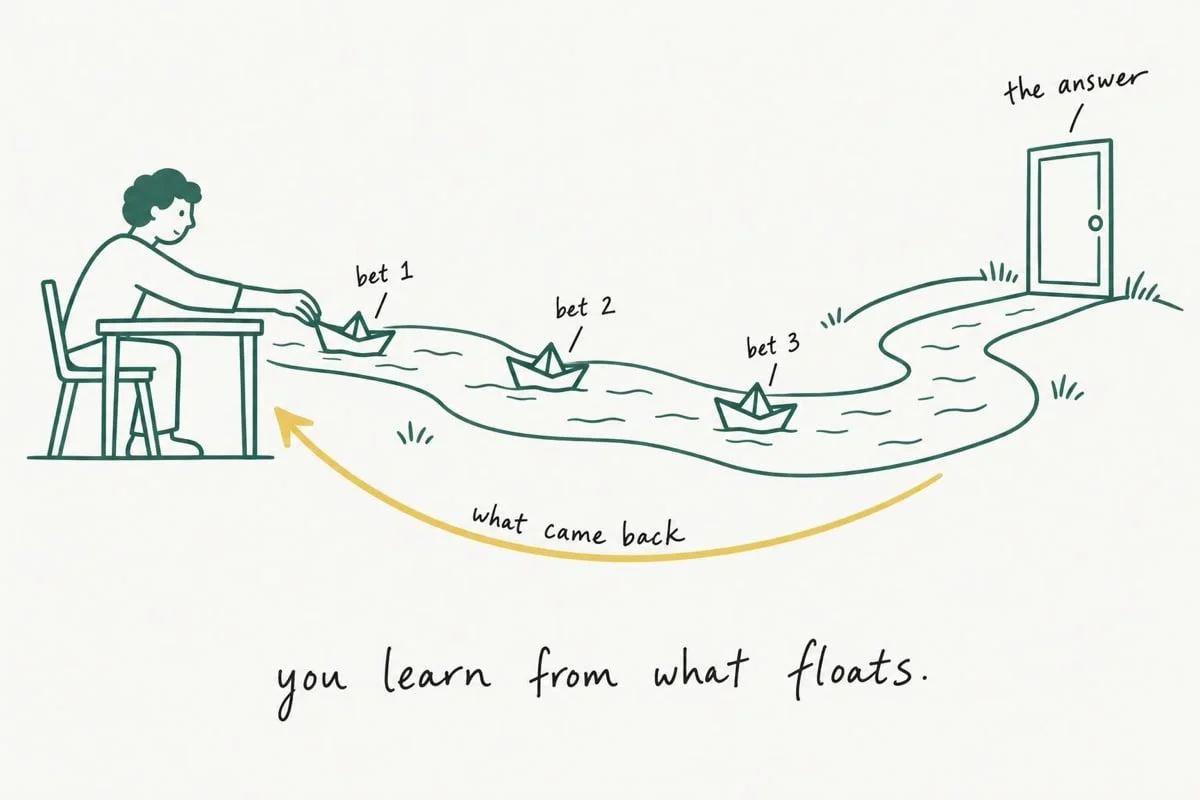
The "one true path" mentality is a trap. Instead, adopt a portfolio approach. Identify three distinct, plausible career "bets." A bet is not a vague category like "tech" or "healthcare"; it is a specific role, such as "clinical data analyst" or "UX researcher." By maintaining three bets, you prevent yourself from becoming emotionally attached to a single outcome, which makes it easier to abandon a path once the evidence proves it is a mismatch.

3. Buying Evidence with Low-Stakes Action
Once your three bets are defined, subject them to rigorous testing. This involves two specific tactics:
- The "Weak Tie" Conversation: Research shows that career opportunities often come from "weak ties"—acquaintances or former colleagues—rather than close friends or family. Engage these individuals to ask one question: "What is your work like on an ordinary Tuesday?"
- The Artifact: Enthusiasm is not evidence. A completed, tangible piece of work is. If you are considering a transition to data analysis, build a dashboard using your current department’s data. If you are considering a shift to writing, publish a series of industry-relevant articles. The finished product serves as both a litmus test for your own interest and a portfolio piece that holds actual market value.
4. Putting Credentials Last
The most common mistake is starting a transition by enrolling in an expensive degree or certification program. In an era where "skills-based hiring" is discussed more than it is practiced, tuition is often a poor investment. A 2024 analysis by the Burning Glass Institute found that skills-based hiring initiatives often fail to translate into significant increases in non-degree hiring. Treat credentials as the final step, not the first, to be pursued only when your small-scale tests have confirmed that the field is a genuine long-term fit.
Supporting Data and Implications
The psychological cost of the "stuck" state is high, leading to chronic disengagement. However, the data suggests that the pivot is not as risky as it appears, provided the transition is handled as a series of experiments.
When considering the age factor, it is important to note that seniority does not prevent a career change; it simply alters the methodology. For professionals over 40, the traditional application process is increasingly inefficient. The evidence suggests that older career changers succeed by leveraging their existing reputation to secure introductions, bypassing the "HR filter" that prioritizes younger candidates with recent, generic credentials.
Furthermore, the 90-day checkpoint is the most effective tool for maintaining momentum. Within a three-month window, you should be able to complete your initial research, conduct at least five conversations per "bet," and produce at least one "artifact" or pilot project. If you reach day 90 and find that your interest in a bet has waned, you have not failed; you have successfully saved yourself from a costly, multi-year mistake.
Frequently Asked Questions (FAQ)
Is 40 too late to switch careers?
Absolutely not. However, the tactics must shift. As you age, your professional network and your ability to produce high-quality, tangible work become your most valuable assets. Focus on direct outreach to decision-makers rather than online applications, which often filter out candidates based on outdated automated criteria.
What is the "90-Day Rule"?
The 90-day rule is a self-imposed checkpoint. It prevents "infinite research" cycles. By setting a hard date for a review of your three bets, you ensure that you are actively gathering data rather than just consuming information.
How do I know if I need a new career or just a new job?
If your frustration is with the industry itself, you likely need a career change. If your frustration is with your current management or team, you may simply need to pivot your role within the same industry. Run your "three bets" experiment; if all three fail to excite you, the problem is likely your current environment, not your profession.
Why is "networking" often ineffective?
Networking often fails because it is treated as a solicitation for favors. The most effective conversations are those centered on gathering information about the daily reality of a role. When you approach people for advice rather than a job, they are far more likely to be helpful, providing the "inside view" that is essential for making an informed decision.
Conclusion: The Path Forward
The transition from a stale career to a new one is not a leap of faith; it is a series of small, calculated steps. By identifying your constraints, placing three distinct bets, and prioritizing real-world evidence over internal reflection, you shift the power dynamic. You are no longer waiting for a sign or a perfect opportunity; you are systematically narrowing your options until the right path reveals itself. Start this week by scheduling one conversation—not to find a job, but to find out if the work you think you want is actually the work you want to do.