ORLANDO, Fla. — In an era where digital screens often isolate communities and headlines are routinely dominated by division, a quiet stretch of suburban Florida asphalt has become the epicenter of a viral masterclass in human connection. What began as a routine observation on a home security monitor has blossomed into an inspiring testament to the power of everyday empathy, capturing the hearts of millions across the globe and redefining what it means to be a good neighbor.
The story centers on Maren and David Douglass, a Florida couple and professional educators whose deep-rooted commitment to nurturing young minds extends far beyond the traditional classroom walls. When the local school district designated the end of their driveway as a school bus stop for a neighborhood middle schooler, the couple could not have anticipated how profoundly the arrangement would alter their daily routines—and eventually, their lives.
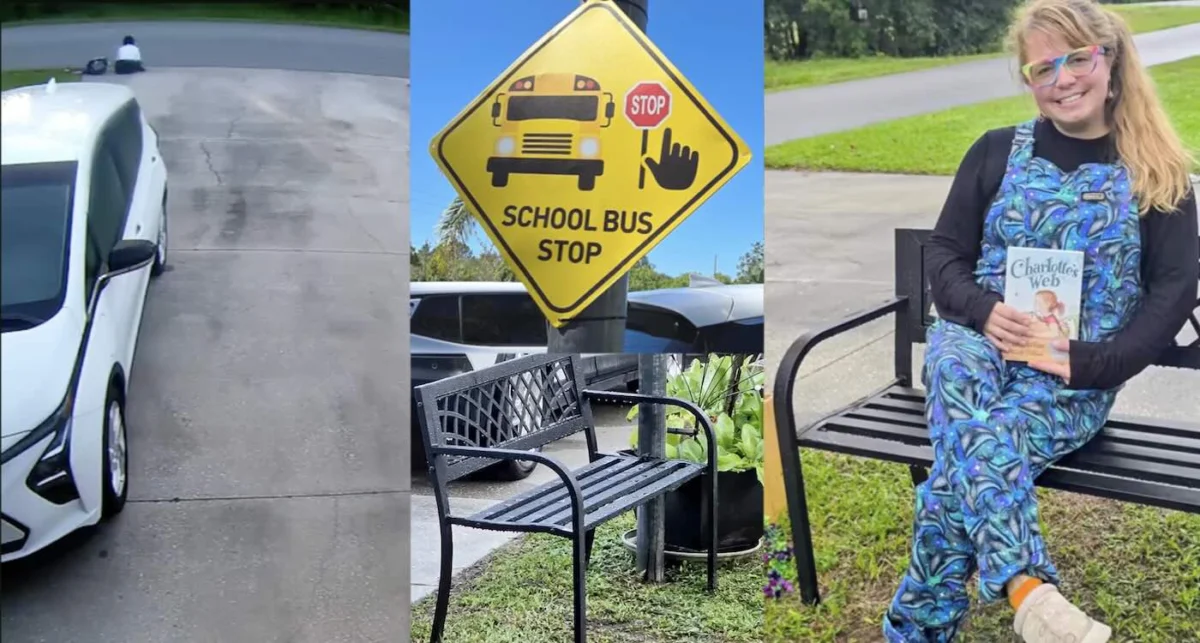
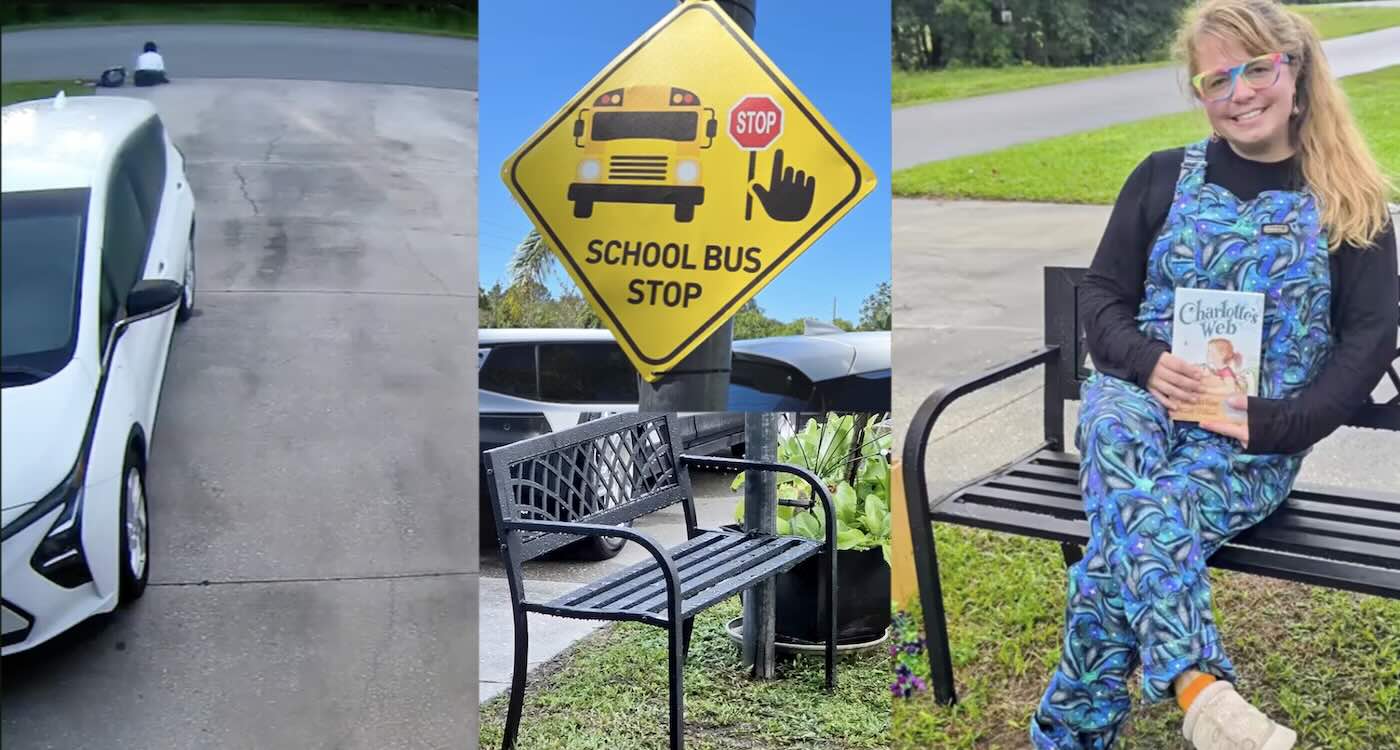
Through the lens of their surveillance camera, the Douglasses noticed a young girl sitting directly on the bare ground, waiting patiently for her morning transport. Unshielded by a sidewalk and vulnerable to the unpredictable Florida elements, traffic, and local wildlife, the student’s makeshift waiting area highlighted a common suburban oversight: the lack of infrastructure designed for pedestrian comfort outside of major thoroughfares.
Rather than turning a blind eye, the couple decided to lean into their instinct as educators and community members, setting off a chain reaction of kindness that has since captured the imagination of millions on TikTok and mainstream media alike.
The Genesis of Compassion: Spotting a Need from the Screen
The story first came to public attention when Maren Douglass shared footage from their home security camera on her TikTok account, @teacherandtraveler. In the video, which quickly amassed millions of views, a young girl can be seen arriving at the end of the Douglasses’ driveway early in the morning, finding a seat on the dirt, and bracing herself for the commute.
Recognizing the hazard and discomfort of the situation, Maren and David took matters into their own hands. Without administrative red tape or neighborhood committee approval, they quietly purchased and installed a sturdy, comfortable bench right at the edge of their property line. The intervention was designed to offer the student a safe, elevated, and clean place to sit while waiting for the yellow bus to arrive.
The morning the bench was unveiled brought an instant payoff for the thoughtful couple. Reviewing their security footage later that day, they watched as the young student approached the driveway, spotted the new addition, and literally jumped for joy.
“It was just the cutest reaction, her little jumps—and it just got sweeter from there,” Maren recounted in an exclusive interview with People magazine.
A Chronology of Care: From a Single Bench to a Thriving Community Hub
The initial gesture quickly evolved into an ongoing exchange of gratitude and generosity, establishing a heartwarming timeline of neighborly affection:
- Phase 1: The Observation and the Gift. After noticing the student sitting on the ground via their surveillance feed, Maren and David Douglass installed a wooden bench at the edge of their driveway to protect her from dirt, bugs, and traffic hazards.
- Phase 2: The First Thank You. Moved by the gesture, the young girl left a handwritten note tucked near the driveway. It read: “Hello, this is from the kid that waits for the bus at your house. Thank you so much for putting that bench there! Now I don’t have to worry about dirt and bugs, I appreciate it a ton!”
- Phase 3: Expanding the Project. Encouraged by the positive response, the educator couple decided to amplify their efforts. They erected a Mini Free Library next to the bench, fully stocking it with age-appropriate literature to keep the student—and eventually, other neighborhood children—engaged during their morning waits.
- Phase 4: Reciprocal Appreciation. Touched by the continuous upgrades to her bus stop, the student returned the favor by leaving fresh flowers for Maren Douglass at the edge of the property.
- Phase 5: Global Reach. Documented incrementally on TikTok, the unfolding story went viral, inspiring millions of viewers worldwide and sparking conversations about urban planning, micro-acts of kindness, and community engagement.
Supporting Data: The Impact of Micro-Infrastructure and Digital Virality
While the emotional resonance of the Douglasses’ story is undeniable, it also touches upon broader sociological data regarding community infrastructure and digital storytelling:
- Suburban Pedestrian Safety: According to recent urban planning studies, millions of suburban American children walk to bus stops lacking basic pedestrian infrastructure, such as sidewalks, benches, or overhead shelter. Community-led initiatives—often referred to as "tactical urbanism"—frequently step in to fill these municipal gaps.
- The Rise of "Little Free Libraries": Data from the Little Free Library organization indicates there are now well over 150,000 registered book-sharing boxes worldwide. The addition of the Douglasses’ mini library taps into a proven model for fostering literacy and community trust.
- The Economics of Empathy on Social Media: Maren Douglass’s TikTok videos documenting the bus stop transformation have garnered explosive engagement, pulling in upwards of several million views collectively. Digital media analysts note that wholesome, low-stakes, real-life kindness content consistently outperforms manufactured drama in driving positive online sentiment.
Official Responses and Perspectives
The digital community’s reaction to the Douglasses’ initiative has been overwhelmingly positive, reflecting a collective hunger for uplifting narratives.
Educational advocates have pointed out that Maren and David’s actions embody the core tenets of teaching: observation, empathy, and active support for youth development. Even though the student is not enrolled in their specific classrooms, their professional instinct to care for a child in their orbit remained unwavering.
"As teachers, you spend all day looking out for kids, trying to make sure they feel safe and seen," a peer educator commented on social media. "It’s beautiful to see that instinct carry over into their home life."
Commenters across TikTok and Instagram flooded the @teacherandtraveler feed with praise, with many expressing how deeply emotional it was to witness the raw, unfiltered joy of the student discovering the bench and later leaving flowers.
Broader Implications: Redefining Modern Neighborhoods
The viral success of the "Driveway Bus Stop" highlights several important cultural and social shifts in how modern communities operate:
1. The Revival of Hyper-Local Generosity
In an era where many people do not know the names of their next-door neighbors, the Douglasses’ story demonstrates how a single, intentional micro-action can bridge the physical and social distance between residents. By transforming a piece of neglected property edge into a welcoming space, they redefined their driveway as a community touchpoint.
2. The Role of Educators Beyond the Classroom
The narrative underscores the psychological profile of educators. For Maren and David, care is not restricted to the hours of 8:00 AM to 3:00 PM. Their decision to monitor the safety of a neighborhood child outside of school hours highlights a holistic approach to community well-being.
3. The Ripple Effect of Kindness
Perhaps the most significant takeaway is the reciprocal nature of the exchange. The bench led to a note; the note inspired a library; the library prompted a gift of flowers. Each actor in this micro-drama responded to kindness with an escalation of thoughtfulness, proving that positive behaviors are just as contagious as negative ones.
Conclusion: A Lesson for Us All
As the video of the young girl’s joyful leaps continues to circulate online, the story of Maren and David Douglass serves as a gentle, powerful reminder that heroism and community-building do not always require grand gestures or vast financial resources. Sometimes, all it takes is a camera pointed at a driveway, a heart open to the needs of others, and the willingness to build a simple wooden bench.
In doing so, these Florida teachers have not only provided a middle schooler with a clean place to sit—they have offered millions of viewers a renewed sense of hope in human decency.