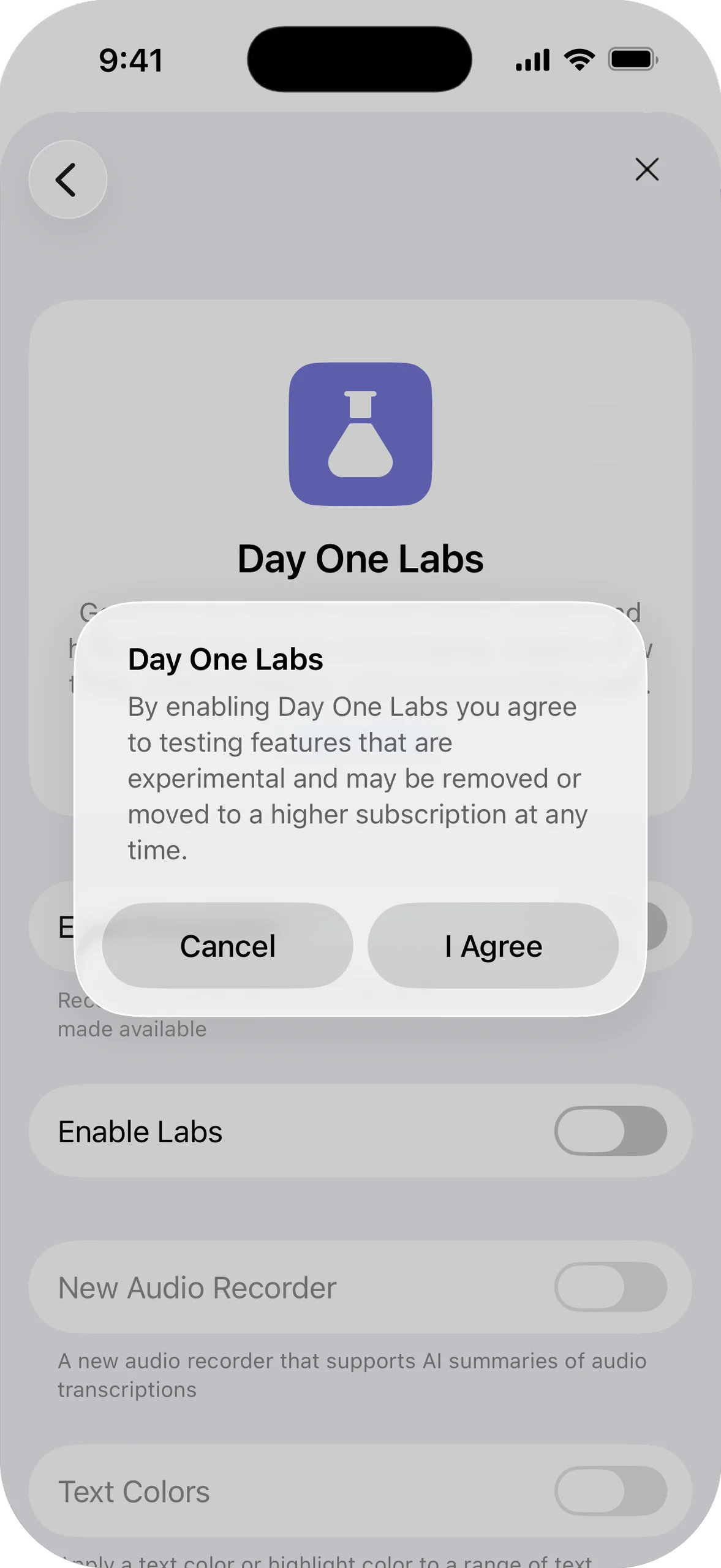
In a significant move aimed at fostering community-led innovation, Day One has officially announced that its experimental development hub, Day One Labs, is once again available to Silver subscribers. The decision marks a reversal of a policy shift implemented earlier this year, acknowledging the vital role that dedicated users play in refining the platform’s most ambitious new features. By restoring access to those who utilize the journaling application daily, the company is reaffirming its commitment to transparency and user-centric design.
Main Facts: What You Need to Know
The return of Labs to the Silver tier is effective immediately for users running version 2026.17 or later. This update ensures that Silver subscribers can once again test, iterate, and provide feedback on experimental tools before they are polished for a broader release.
Key takeaways for the user base include:
- Accessibility: Labs is included in the Silver subscription at no additional cost, provided the application is updated to the required version.
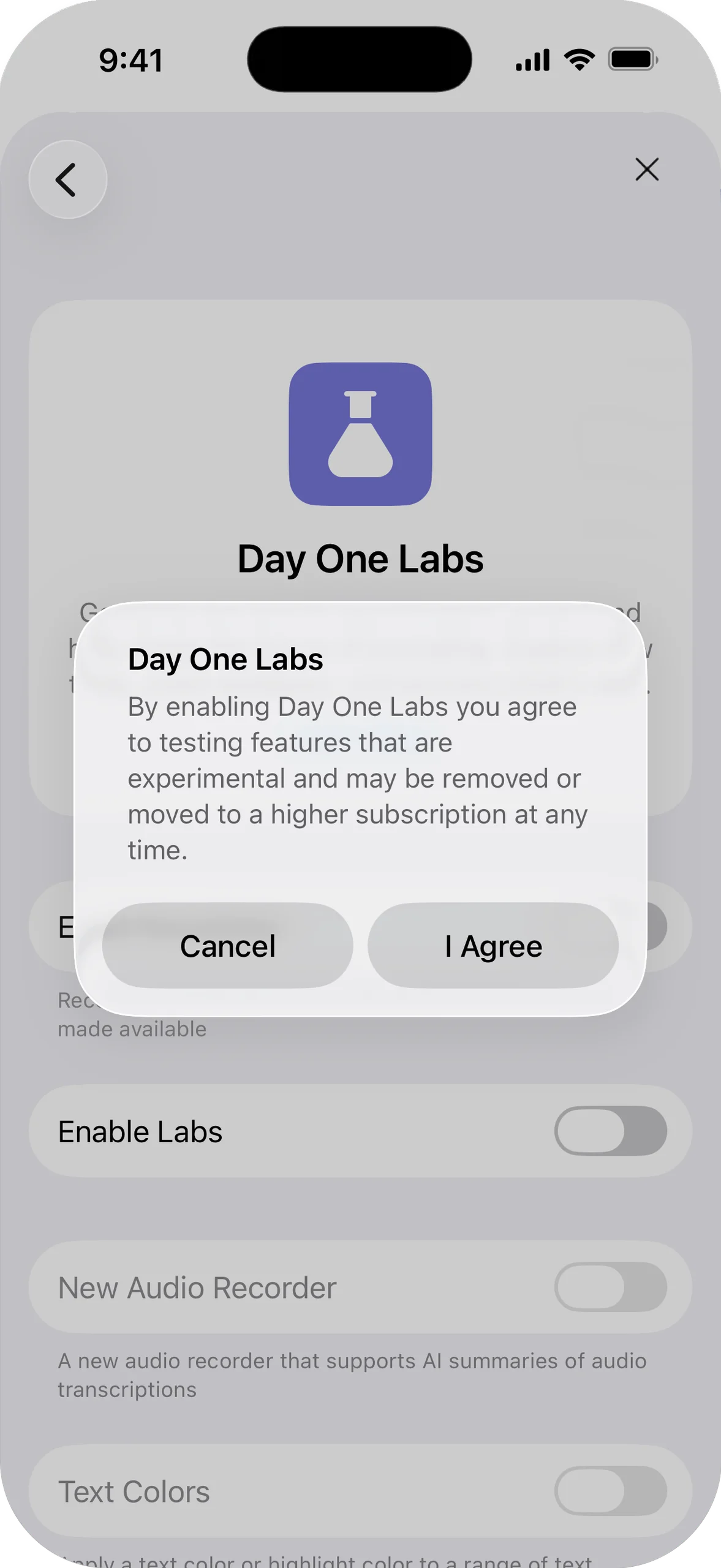
- Experimental Nature: Features housed within Labs remain prototypes. They may evolve, be integrated into the core app, or be moved to higher-tier subscriptions in the future.
- User Empowerment: The platform relies on active feedback. Features that struggle to gain traction with the community may be sunsetted, while those that prove essential may be fast-tracked for full deployment.
- Current Offerings: The initial rollout for the returning Labs features focuses on "journaling out loud," featuring a revamped Audio Recorder and AI-powered transcription formatting tools.
The Chronology of a Policy Shift
The relationship between Day One’s subscription tiers and its experimental features has been dynamic, reflecting the company’s struggle to balance business sustainability with user engagement.
- The Early Days: Originally, Labs was a feature bundled with the Premium subscription. It served as a sandbox where power users could test cutting-edge ideas.
- The March Realignment: In March, the company introduced a new tiered structure, categorizing its offerings into Silver and Gold. During this transition, Labs was moved exclusively to the Gold tier. This created a notable friction point; many longtime users who had spent months providing detailed feedback on experimental tools suddenly found themselves locked out of the very features they had helped shape.
- The User Backlash: The removal of Labs from the Silver tier resulted in significant negative feedback. Users expressed that the move felt like a loss of agency, as those who had contributed to the development process were stripped of their ability to see those projects through to completion.
- The Reversal: Recognizing the validity of these concerns, the company has now restored Labs to the Silver tier. This decision represents a tacit admission that the "Labs" experience is most effective when it includes a broad spectrum of the user base, rather than being restricted by subscription exclusivity.
Supporting Data: Why "Journaling Out Loud" is the Current Focus
The current iteration of Labs is heavily focused on audio-based features. Data collected by the development team indicates that while users often prefer the speed of voice, the resulting raw text transcriptions often become "walls of text"—difficult to digest and ultimately uninviting to revisit.
The New Audio Recorder
Available on iPhone and iPad, the rebuilt audio recorder is designed to solve the problem of the "forgotten entry." It includes AI-generated summaries, allowing users to quickly scan the core themes of a long-form recording without needing to listen to the entire file or read through a cluttered transcript.
AI Format Transcription
This tool addresses the lack of structure in raw speech-to-text. By applying automated punctuation, grammar correction, and suggested titling, the feature aims to turn stream-of-consciousness audio into a legible, archival-quality journal entry.
Technical Note: These features are strictly opt-in. The company emphasizes that its privacy principles remain steadfast: no user data is used to train third-party AI models, and nothing is processed or stored on servers without the explicit consent of the user.
Official Responses: A Commitment to Radical Transparency
The leadership at Day One has been notably vocal about the reasoning behind this reversal. In a recent statement, the development team highlighted that Day One is not a "one-size-fits-all" product. Because every user approaches journaling differently, the app’s roadmap must be informed by real-world usage patterns that designers may not have initially anticipated.
"When a few hundred people try something and tell us how it went, we learn whether it works. When thousands do, we learn whether it belongs in people’s lives," the company noted. By restoring Labs to Silver, the company is effectively decentralizing its product research, turning its user base into a collaborative development partner.
The company has also committed to a "Three-Touch" communication protocol to ensure users are never surprised by changes:
- Onboarding: Users must confirm they understand that Labs features are experimental and subject to change or tier migration.
- In-App Labeling: Every experimental feature is clearly marked with a "Labs" badge, ensuring users can distinguish between stable core features and works-in-progress.
- Advance Warning: The company has pledged to provide clear, early notice before any feature graduates from Labs to the main app, or moves to a different subscription tier.
Implications: The Future of Subscription-Based Development
This move has broader implications for the subscription-app economy. Many software-as-a-service (SaaS) companies struggle with the "feature-gate" dilemma: how to incentivize high-tier subscriptions without alienating the core community that provides the product’s value.
The Value of the "Active Workshop"
Day One’s strategy suggests that the most successful products of the future will be those that view their community not as passive consumers, but as active participants. By making Labs a "workshop" rather than a "perk," the company is fostering a culture of ownership.
Managing Expectations
However, this model requires a high level of trust. Users are being asked to test features that might be taken away, or that might require a future upgrade to access once they reach full maturity. The company’s transparency in acknowledging that "a feature you’ve come to rely on may eventually require an upgrade" is a risky but honest approach to business. It prepares the user for the reality of software development costs while maintaining a clear line of communication.
The Road Ahead
For now, the focus remains on iteration. The company is actively soliciting feedback via a dedicated button at the bottom of the Labs interface. They are particularly interested in the "almost right but not quite" feedback—the nuance that only a daily user can provide.
As the digital journaling market becomes increasingly crowded, Day One’s decision to prioritize its relationship with its Silver subscribers serves as a case study in effective community management. By acknowledging that they had "gotten it wrong" in the March transition, the company has managed to turn a potential PR crisis into a moment of brand loyalty.
For the Silver subscriber, the path forward is clear: the workshop is open again. Whether this translates into a more refined, indispensable product remains to be seen, but for the first time in months, the tools for shaping that future are back in the hands of the people who use the app the most.