The landscape of consumer audio has long been dominated by a singular, persistent trend: the prioritization of convenience-driven features over pure acoustic fidelity. For years, major manufacturers have funneled their research and development budgets into increasingly sophisticated active noise-cancelling (ANC) algorithms, often at the expense of the actual frequency response and soundstage quality. While silence is undeniably a feature, it has frequently come at the cost of "neutrality"—the holy grail for audiophiles who demand to hear music exactly as the artist intended.
However, a disruption has been brewing in the premium earbuds market. Status Audio, a brand that has consistently punched above its weight class, introduced the Pro X with a promise to reclaim the middle ground between professional-grade monitoring and consumer-grade convenience. Now, with the launch of the GoldenSound Edition, the company is doubling down on this philosophy, moving beyond the "one-size-fits-all" tuning to offer a master-engineered, precision-calibrated audio experience.
Main Facts: The Intersection of Hardware and Engineering
At the heart of the Status Audio Pro X, and subsequently the GoldenSound Edition, lies a sophisticated triple-driver architecture. Most consumer-grade earbuds rely on a single dynamic driver to handle the entire frequency spectrum, which often leads to muddy mid-tones and strained highs when the bass gets heavy.
Status Audio takes a different approach. The Pro X utilizes a 12mm dynamic driver dedicated exclusively to the sub-bass and low-end frequencies, providing a "weighty" and visceral punch. This is complemented by dual Knowles-balanced armatures—one for the mids and one for the highs. This trifecta allows for a cleaner separation of instruments, ensuring that a dense orchestral arrangement or a complex electronic track retains clarity across the spectrum.
The standard Pro X tuning is intentionally designed with a "V-shape" sound signature—a favorite among modern listeners for its engaging, lively profile that emphasizes the deep bass and crisp highs. But the GoldenSound Edition, developed in collaboration with renowned audio engineer Cameron "GoldenSound" Oatley, introduces an entirely new paradigm. By utilizing the Brüel & Kjær 5128—the industry gold standard for head and torso simulation (HATS)—Oatley has developed a locked, specialized sound profile that pivots away from the V-shape in favor of a natural, balanced timbre. The result is an acoustic presentation that prioritizes midrange cohesion and treble smoothness, offering a more realistic, "studio-monitor" feel.
Chronology: The Path to Precision
The journey toward the GoldenSound Edition did not happen overnight. It represents the culmination of a multi-year effort by Status Audio to refine their hardware before seeking external validation through elite engineering partnerships.
- Initial R&D Phase: Status Audio began by addressing the limitations of wireless signal transmission. By focusing on high-bitrate codec support and a robust driver housing, the company established the "Pro X" as a capable foundation for high-resolution audio.
- The Pro X Launch: The standard Pro X was released to critical acclaim, noted specifically for its "open EQ" software that allowed users to save custom sound profiles. This set the precedent that the software should be as flexible as the hardware.
- The Collaboration: Following the successful reception of the Pro X, Status Audio sought to move beyond user-customizable EQ. They engaged Cameron Oatley, a figure recognized for his objective, data-driven approach to audio measurement.
- Measurement and Calibration: The collaboration utilized the Brüel & Kjær 5128, a system that replicates human ear canal geometry more accurately than previous generation simulators. This allowed for the mapping of the earbuds’ output to a target curve that mimics how a human brain perceives "natural" sound.
- The Release: The GoldenSound Edition was launched as a limited, specialized iteration of the Pro X, featuring not just new tuning, but a distinct aesthetic shift to mark its premium positioning.
Supporting Data: Why the B&K 5128 Matters
To understand why the GoldenSound Edition is being hailed as a step forward, one must understand the limitations of previous audio measurement tools. For decades, the industry relied on ear simulators that often failed to accurately account for the resonance of the human ear canal.
The Brüel & Kjær 5128, which Oatley utilized for this project, is essentially a high-fidelity prosthetic that provides a more accurate "impedance" of the ear. When an earbud is inserted, the air pressure and resonance change significantly. By measuring on the 5128, the GoldenSound team was able to eliminate the "peaks" in the treble that often cause ear fatigue in lesser earbuds.
The data indicates that the GoldenSound profile significantly reduces the "sibilance" (the harsh "s" and "t" sounds) that plague many wireless sets. By smoothing out the crossover between the dynamic driver and the balanced armatures, the GoldenSound Edition achieves a phase coherence that is rare in wireless devices. Users retain the ability to switch back to the standard Pro X tuning via the companion app, providing a unique "A/B" testing experience that highlights exactly how much the tuning affects the overall soundstage.
Official Responses and Industry Context
Status Audio has positioned the GoldenSound Edition not as a replacement for the Pro X, but as a "tuner’s choice" for those who prefer an analytical, audiophile-grade presentation.
In official statements, the brand has emphasized that the collaboration was driven by a desire to prove that "wireless audio doesn’t have to mean compromised audio." By bringing in an independent expert like Cameron Oatley, Status Audio is effectively signaling a shift in their marketing strategy: they are moving away from general consumer appeal and toward the "enthusiast" segment.
Industry analysts have noted that this is a smart move for the brand. As the market for ANC headphones becomes saturated with massive conglomerates like Sony, Apple, and Bose, smaller brands often struggle to compete on noise-cancelling technology alone. By winning the "sound quality" argument, Status Audio occupies a niche that the major players—who are often beholden to mass-market tuning—cannot easily target.
Implications for the Future of Wireless Audio
The implications of this collaboration are twofold. First, it suggests that the "software-defined hardware" model is the future of the industry. Because the GoldenSound profile is implemented via the internal DSP (Digital Signal Processor), it demonstrates that hardware is only half the battle. If a manufacturer can provide a robust enough driver, the sound signature can be fundamentally altered or "upgraded" through firmware.
Second, it raises the bar for what consumers expect from "premium" wireless audio. If an earbud can be tuned to a professional studio standard, the justification for carrying bulky, wired audiophile equipment for daily listening begins to diminish.
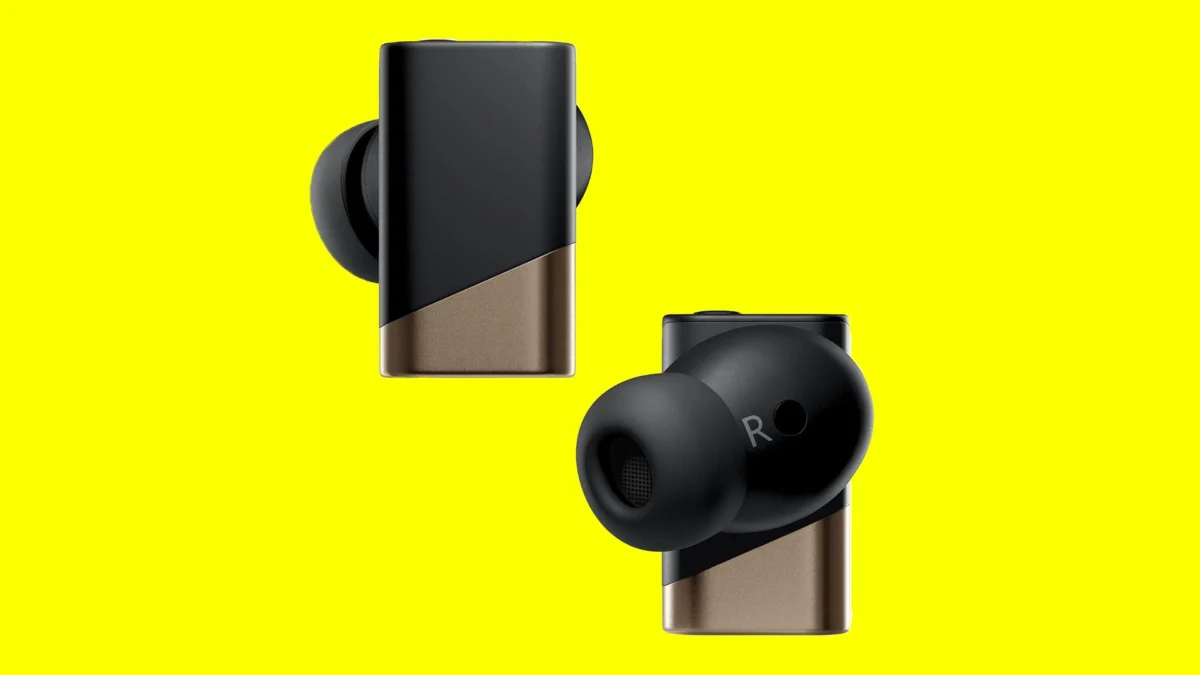
Furthermore, the aesthetic choices—the matte black and gold finish, the refined branding on the charging case—suggest a maturation of the product line. Status Audio is not just selling a piece of tech; they are selling an object of desire that signals a commitment to sound culture.
Conclusion: A New Benchmark?
The Status Audio GoldenSound Pro X is more than just a set of earbuds; it is a case study in how to bridge the gap between high-end professional monitoring and everyday portability. By integrating top-tier driver hardware with the objective measurement capabilities of the B&K 5128, Status Audio has created a product that satisfies the technical requirements of the audio purist while maintaining the user-friendly features of a modern wireless device.
For those who have felt alienated by the "bassy, muddy" sound profile of standard Bluetooth earbuds, the GoldenSound Edition offers a breath of fresh air. It is a testament to the fact that when engineering, data, and design align, the results can be truly transformative. As we look toward the future of personal audio, the standard set by the GoldenSound Edition will likely be the one that competitors are forced to chase. Whether you are a professional producer looking for a reference point on the go, or simply a music lover seeking to hear the hidden details in your favorite records, the GoldenSound Pro X represents a significant milestone in the evolution of sound.