
In the landscape of modern American adulthood, the intersection of career progression, lifestyle expectations, and financial stability often creates a complex, high-pressure environment. For Brian and Michael, two 34-year-old professionals residing in central Connecticut, this tension has reached a critical juncture. Despite steady careers in the public sector and a combined household income of approximately $167,500, the couple finds themselves navigating a precarious financial cycle characterized by consumer debt and the elusive goal of homeownership.
This report examines their financial trajectory, the psychological burden of their current standing, and expert recommendations on how to achieve lasting economic independence.

The Core Financial Landscape
Brian and Michael have been partners since 2013, with a decade of shared history that has seen them navigate significant professional growth. Brian, a quality assurance manager at a state-run hospital, and Michael, a project coordinator for a behavioral health agency with a supplementary role in disability advocacy, represent a demographic often referred to as the "middle-class squeeze."
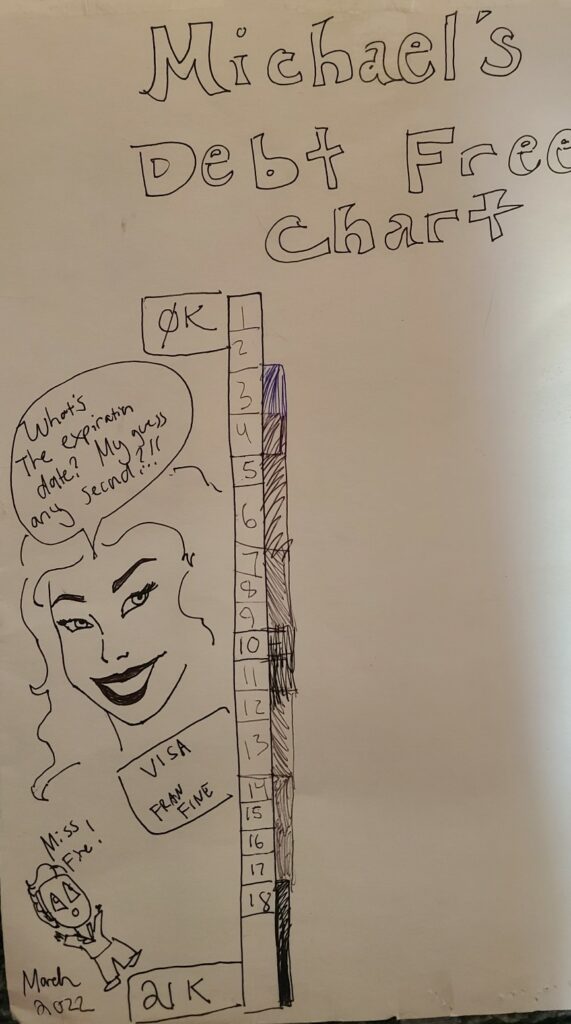
While their combined gross income is substantial, their net income—after taxes, health benefits, and retirement contributions—sits at approximately $109,455. Against this, they face annual expenses of roughly $96,400. This leaves a narrow margin for error, particularly when unexpected life events occur. Currently, the couple is managing $28,259 in consumer credit card debt, which they are aggressively working to eliminate.

A Chronology of Recent Transitions
The last 18 months have proven to be a period of significant volatility for the pair, serving as the primary catalyst for their request for a financial audit.
- August 2022: The couple was living in a $945/month studio apartment, maintaining a disciplined plan to enter the housing market by late 2023.
- Late 2022 – Early 2023: The couple faced an unexpected, high-pressure relocation period lasting 3.5 months. This transition, compounded by urgent veterinary expenses for their two kittens, forced them to dip into savings and rely on credit, disrupting their original timeline for debt repayment and home acquisition.
- Current Status: They have successfully settled into a two-bedroom apartment in a refurbished mill. While the space provides a high quality of life—featuring industrial architecture and a dedicated home office—the associated costs and the residual debt from their move have created a sense of "financial shame."
Supporting Data: Income vs. Expenses
To understand the couple’s current constraints, one must look at their cash flow. Their monthly income is roughly $9,121 (net), while their monthly expenses average $8,035.

Debt Profile
| Debt Item | Balance | Interest Rate | Strategy |
|---|---|---|---|
| Brian’s Visa (SCU) | $16,057 | 0% (expires Nov) | Aggressive reduction |
| Michael’s Visa Platinum | $9,700 | 10.99% | $1,400 monthly payoff |
| Brian’s Visa (Navy Fed) | $2,503 | 0.99% (expires Nov) | Snowball method |
Asset Allocation
The couple holds approximately $91,250 in total assets, including retirement accounts (401k, 403b, 457, and a pension) and a modest emergency fund. However, they express concern that these investments are under-diversified and that their liquid savings are insufficient to act as a proper buffer against future volatility.
Expert Analysis and Strategic Recommendations
Financial consultant Liz Frugalwoods, who reviewed the case, argues that while the couple feels "behind," their situation is actually quite stable. The primary issue is not a lack of income, but a lack of structural alignment between their daily spending and their long-term objectives.

1. The Power of Expense Tracking
The most immediate recommendation is to implement a rigorous expense tracking system. Using platforms like Empower (formerly Personal Capital) or manual spreadsheet logging is essential. Without knowing exactly where every dollar is allocated, the couple cannot effectively redirect the surplus—which currently exists on paper but is lost to "discretionary spending"—into debt retirement.
2. Debt as the Primary Hurdle
The consultant notes that the debt is not a "moral failing" but a "spreadsheet problem." The recommendation is to adopt an austere, short-term "spending detox." By cutting all discretionary categories—such as non-essential dining out, gifts, and hobby-related subscriptions—the couple could potentially increase their debt repayment capacity to over $4,400 per month. This would allow them to become entirely debt-free in roughly 6.5 months.
3. The Hierarchy of Financial Priorities
A common pitfall is attempting to save for a home while carrying high-interest debt. The expert hierarchy provided is as follows:
- High-Interest Debt Elimination: Pay off all consumer debt to stop the bleed.
- Emergency Fund Stabilization: Establish a liquid buffer equivalent to 3–6 months of living expenses.
- Retirement Contributions: Maximize tax-advantaged accounts (401k/403b/457).
- Home Ownership: Only pursue this once the above three are solidified.
Implications of Future Goals
Brian and Michael have expressed interest in academic advancement, specifically a graduate degree for Brian. The consultant advises extreme caution: "Do not pursue a master’s degree unless there is a precise, iron-clad, and guaranteed correlation to a significant salary increase." In the current economic climate, taking on student debt for a degree that does not offer a clear ROI is an "unhelpful detour" that could jeopardize their ability to buy a home or retire securely.

Furthermore, the "wildcards" of a government pension and Social Security are noted as strong pillars for the future, provided the couple remains in the public sector. However, relying solely on these is risky. Diversifying investments through an IRA—specifically by rolling over Brian’s old 401k—is a necessary step to gain control over expense ratios and investment risk.
Conclusion
Brian and Michael stand at a crossroads common to many in their mid-thirties. The transition from "feast and famine" cycles to sustainable wealth building requires a shift in mindset. By viewing their money as a tool that must be strictly aligned with their stated goals of homeownership, legacy building, and retirement, they can escape the cycle of shame.

The path forward is clear: reduce spending, eliminate the consumer debt mountain, build a robust emergency fund, and prioritize tax-advantaged retirement growth. If they follow this roadmap, their goals—which currently feel like "dreams deferred"—are well within their reach. As the couple looks toward their 10-year anniversary, they have the professional foundation to ensure the next decade is defined not by the stress of debt, but by the security of intentional living.