BORNEO — As relentless forest and peatland wildfires continue to scorch vast swaths of the island of Borneo, a humanitarian and ecological crisis of staggering proportions is unfolding. Choking palls of smoke have drastically degraded air quality, threatening the health of local human populations and vulnerable wildlife alike. For the island’s critically endangered orangutans, the blazes represent an existential threat, laying waste to their natural habitats and incinerating their primary food sources.
Amidst this catastrophe, however, acts of profound compassion and relentless heroism are shining through. Driven by urgency and unwavering dedication, the conservation nonprofit YIARI (Yayasan International Animal Rescue Indonesia), in close collaboration with local authorities and partners, has successfully rescued 53 orangutans from the fire zones. Many of these displaced and injured primates have already been safely rewilded into protected forest preserves across the country, offering a glimmer of hope for a species teetering on the edge of extinction.
Main Facts: A Crisis on the Front Lines
The crisis in Borneo has tested the limits of regional conservation infrastructure. Since August, relentless dry conditions have fueled a string of severe peatland and forest fires. These blazes not only destroy the canopy home of the arboreal apes but also release massive amounts of carbon into the atmosphere while stripping the landscape of wild fruits, leaves, and bark.
Key facts surrounding the ongoing rescue operations include:
- Total Rescues: 53 critically endangered orangutans have been rescued from fire-stricken zones since August.
- The Human Element: Teams from YIARI and the local conservation agency BKSDA have been operating around the clock, responding to high-priority distress calls.
- Vulnerable Demographics: Among the rescued animals are several mother-and-infant pairs, all discovered in critical condition due to severe smoke inhalation, dehydration, and starvation.
- Relocation Efforts: Recovered and stabilized individuals that are candidates for immediate release have been transported across arduous journeys—some up to five hours away—to safe havens like the Gunung Palung National Park.
- Capacity Constraints: YIARI’s specialized Rescue and Rehabilitation Centre is currently at maximum capacity, housing numerous survivors under round-the-clock veterinary observation.
Chronology of the Disaster and Response
The escalation of the fires and the subsequent mobilization of rescue units followed a rapidly unfolding timeline over the late summer and autumn months.
August: The Fires Ignite
As seasonal dry patterns intensified, localized agricultural burns and natural peatland combustions quickly spiraled out of control. Dense smoke blanketed communities across Borneo. Early reports began flooding into YIARI headquarters regarding wildlife trapped on isolated patches of unburned forest, surrounded by miles of charred ash.
September: Mobilizing the Emergency Response
Recognizing the unprecedented scale of the threat, YIARI deployed specialized wildlife rescue units. Operating in hazardous conditions characterized by toxic air and unstable terrain, field veterinarians and handlers began tracking stranded primates. During this period, the team executed several high-risk extractions, including the rescue of severely malnourished mothers and their dependent infants who had no means of escaping the advancing flames on foot.
October: The Story of Baby Irene and Public Appeals
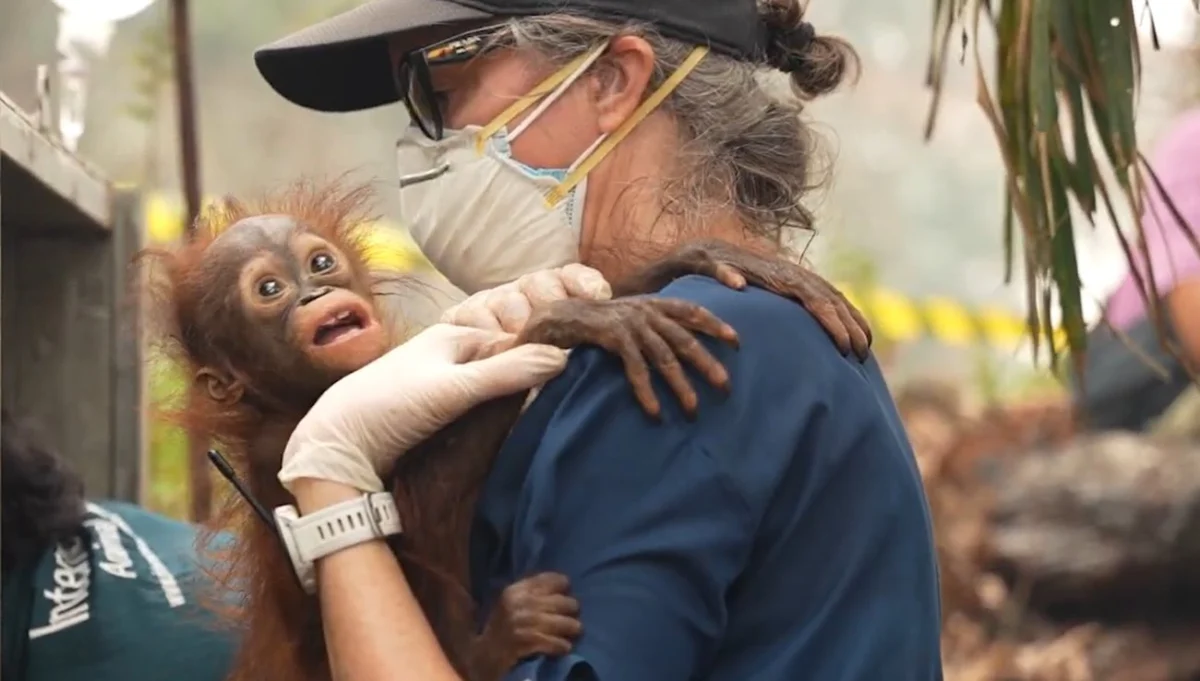
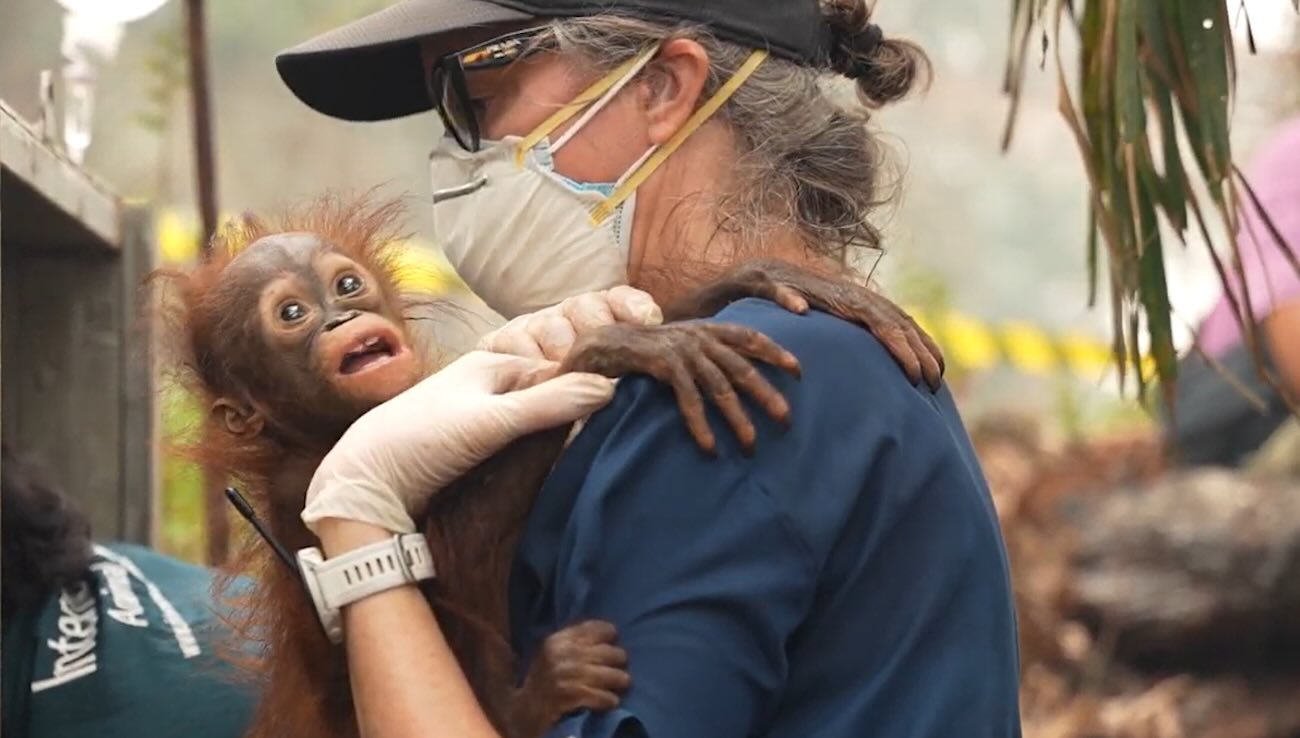
By mid-autumn, the physical toll on the rescued animals became painfully apparent. A powerful symbol of the tragedy—and the resilience required to fight it—emerged with the rescue of a tiny female orangutan named Irene. Dr. Karmele Llano Sanchez, CEO of YIARI, personally intervened to care for the distressed infant, an event captured in a widely circulated photograph that touched hearts globally. Concurrently, delayed seasonal rains pushed the crisis deeper into November, forcing rescue organizations to issue urgent public appeals for financial support as their facilities reached maximum capacity.
Supporting Data: The Plight of the Bornean Orangutan
To understand the gravity of the work being done by YIARI and its partners, one must examine the precarious status of the Bornean orangutan (Pongo pygmaeus). Listed as Critically Endangered by the International Union for Conservation of Nature (IUCN), the species has experienced catastrophic population declines over the past few decades.
- Habitat Loss: Borneo has lost a significant percentage of its primary rainforests over the last 50 years, primarily driven by commercial logging, palm oil plantations, and increasingly severe, climate-induced wildfires.
- Reproductive Vulnerability: Orangutans have one of the slowest reproductive rates of any mammal. Females give birth only once every six to eight years, meaning every individual lost—especially breeding-age females and infants—represents a devastating blow to the species’ long-term survival.
- The Peatland Factor: Borneo’s peatlands store vast amounts of carbon. When these subterranean soils catch fire, they burn for months underground, releasing extreme levels of greenhouse gases while rendering the topsoil entirely sterile and incapable of supporting native flora for years.
Despite these grim statistics, historical data from organizations like YIARI and International Animal Rescue (IAR) demonstrate that rehabilitation works. Previous cohorts of rescued orangutans released into isolated, protected forests have successfully adapted, established territories, and even begun raising new generations of wild-born infants, proving that targeted conservation interventions can yield sustainable populations.
Official Responses and Humanitarian Perspectives
The human faces behind the rescue mission have spoken candidly about the emotional and logistical hurdles of working in a disaster zone.
Dr. Karmele Llano Sanchez, a seasoned wildlife veterinarian and the CEO of YIARI, painted a vivid and heartbreaking picture of the conditions in which animals like baby Irene are found.
"She looked extremely stressed and very thin," Dr. Karmele noted, describing the infant’s condition upon arrival. "She may have gone for days without finding any food in this devastated forest."
The partnership between local Indonesian agencies and international bodies has been vital to navigating the crisis. Gavin Bruce, CEO of International Animal Rescue (IAR), praised the tireless dedication of the frontline workers on the ground in Borneo.
"They have worked around the clock, and baby Irene is just one tiny example of their hard work," Bruce stated.
He further emphasized how visceral and relatable the imagery from the rescue missions is for the global public. Looking at the photograph of Dr. Karmele cradling young Irene, Bruce pointed out that it allows observers to immediately recognize "how similar we are to orangutans, when you see their movements and facial expressions."
Local forestry authorities, including the Natural Resources Conservation Agency (BKSDA), have worked hand-in-hand with YIARI veterinarians, combining legal authority with specialized animal care expertise to execute swift field extractions.
Broader Implications for Conservation and Climate
The ongoing catastrophe in Borneo serves as a stark reminder of the interconnected nature of global environmental challenges. The fires are not merely local incidents; they are symptoms of broader climatic shifts characterized by prolonged droughts, rising global temperatures, and unchecked land-use changes.
- The Need for Fire Prevention Infrastructure: As dry seasons become longer and more unpredictable due to climate change, conservation groups argue that regional governments must heavily invest in early-warning systems, community fire-brigades, and the strict protection of peatland hydrology.
- The Burden on Nonprofits: Organizations like YIARI often act as the ultimate safety net for endangered wildlife when natural disasters strike. However, relying entirely on charitable donations and emergency appeals exposes these vital institutions to financial precarity, especially when facility capacities are overwhelmed, as is currently the case.
- The Role of Global Solidarity: The plight of Borneo’s orangutans transcends national borders. International support—ranging from financial contributions to public advocacy—plays a decisive role in keeping rehabilitation centers operational and funding complex, long-term rewilding programs.
As conservationists anxiously look to the skies for the arrival of the delayed seasonal rains, which are critically needed to extinguish the stubborn peat fires once and for all, the immediate focus remains on nursing survivors back to health. With YIARI’s rehabilitation center bursting at the seams, the global community’s response in the coming weeks will determine whether these rescued animals can ultimately return to the wild security of Borneo’s protected canopies.