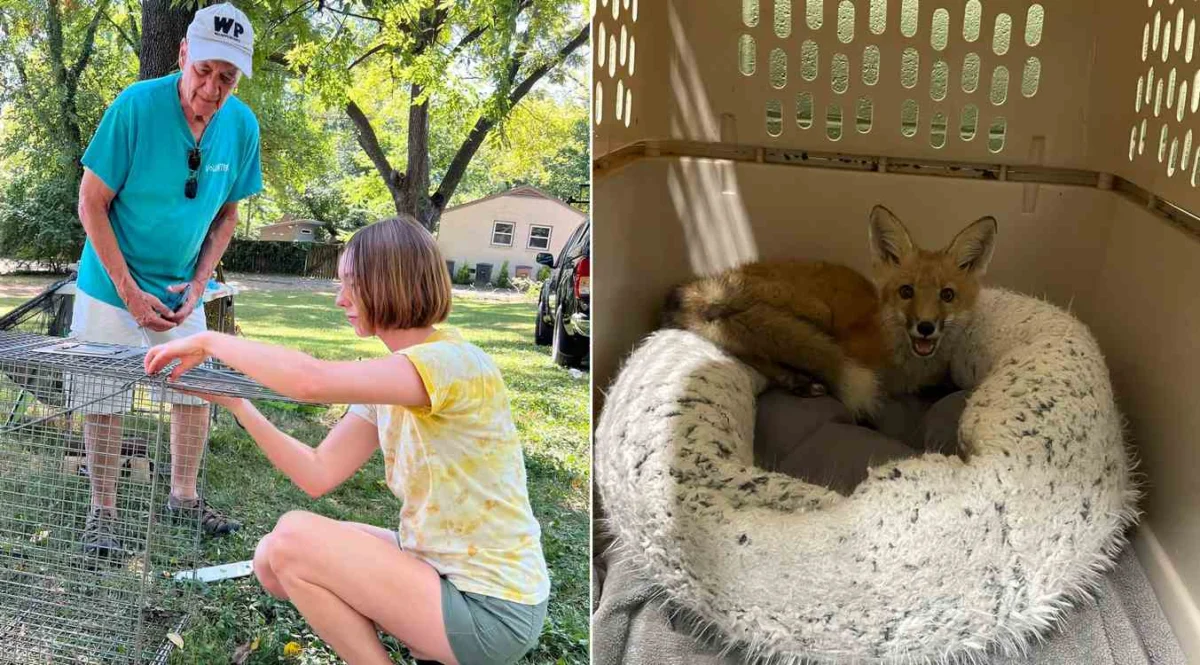
NASHVILLE, Tenn. — In the heart of Music City, where songwriting legends are minted daily and melodies echo from every honky-tonk on Broadway, Jerry Vandiver has found a radically different rhythm. While his name is permanently etched into the annals of Nashville’s country music scene—having penned hits recorded by industry heavyweights like Tim McGraw, Phil Vassar, and Barbara Mandrell—Vandiver’s most enduring legacy is currently being forged in the dark woods and quiet suburban neighborhoods of Davidson County.
At 78 years old, Vandiver has traded the glittering stages of country music for the grueling, unpredictable hours of wildlife rescue. For the past seven years, he has quietly emerged as a frontline guardian for Nashville’s embattled red fox population, logging thousands of volunteer hours baiting, trapping, and transporting animals suffering from a severe, highly contagious mange epidemic.
Yet, despite his viral status on social media and his life-saving interventions, Vandiver remains remarkably humble about his contributions.
"I’m not the hero, I’m just the ambulance driver," Vandiver said in a recent interview. "Mange is treatable. If we can catch them, they can have a healthy, happy life. I know how to do that. I can’t walk away from them when I see those pictures."
Chronology of a Calling: From Missouri Roots to the Frontlines of Rescue
Jerry Vandiver’s journey to becoming Nashville’s preeminent fox rescuer is as unconventional as it is inspiring. Originally from Missouri, Vandiver arrived in Nashville decades ago with a guitar, a notebook of lyrics, and a dream of making it as a professional songwriter. Throughout the 1980s and subsequent decades, he built a respectable and enduring career within the competitive Nashville ecosystem. His compositions became staples of the country format, performed by icons such as Barbara Mandrell and Phil Vassar.
For years, Vandiver’s life followed the typical trajectory of a dedicated artist: writing sessions, studio recordings, and occasional live performances. However, his life took a sharp, compassionate turn nearly a decade ago when he began noticing the plight of local wildlife encroaching upon suburban developments.
As urban sprawl accelerated across the greater Nashville area, natural habitats shrank, forcing red foxes into closer proximity with human settlements and, consequently, with one another. This spatial compression created a breeding ground for Sarcoptes scabiei—the skin mites responsible for sarcoptic mange.
Moved by distress calls from neighbors and images of suffering animals captured on his own property’s trail cameras, Vandiver began taking matters into his own hands. What started as an isolated act of mercy for a single distressed animal blossomed into a full-time, round-the-clock vocation. Over the last seven years, his mission has scaled dramatically, requiring him to monitor trail cameras, set humane traps in the dead of night, and drive suffering animals half an hour away to Walden’s Puddle Animal Rescue.
Supporting Data: The Anatomy of a Mange Epidemic
To understand the urgency of Vandiver’s mission, one must understand the devastating nature of sarcoptic mange and the ecological pressures facing Tennessee’s red foxes.
Mange is not rabies; it is not inherently a death sentence, but its progression can be agonizing and fatal if left untreated. Caused by microscopic skin mites that burrow into the epidermis, the disease manifests as intense, unrelenting irritation and pain. This leads to severe hair loss, thickened and cracked skin, crusting rashes, and bloody scabs. Because the afflicted foxes lose their protective coats, they become exceptionally vulnerable to hypothermia during cold snaps. Furthermore, the relentless scratching and compromised skin barrier open the door to secondary bacterial infections, which frequently prove fatal.
Despite the horrifying visual symptoms, the medical treatment for mange is remarkably straightforward, typically involving targeted anti-parasitic medications and supportive care. The bottleneck in the recovery chain is rarely medical complexity; rather, it is the logistical challenge of capture and transport.
"Usually, there isn’t a 78-year-old trapper with a heart of gold in the area who’s willing to wake up at any hour of the night to retrieve a fox trap from the woods," notes wildlife advocates familiar with the region’s rescue operations.
The scope of the crisis is vividly illustrated by data from Walden’s Puddle, the premier wildlife rehabilitation and rescue facility serving Middle Tennessee. During the entirety of 2025, the nonprofit successfully rehabilitated 44 red foxes. By September of the current year, that number has already surpassed 60, underscoring a dramatic escalation in incoming cases.
Vandiver’s personal logbooks reflect this alarming upward trend. In the single month of August, Vandiver logged an astounding 234 volunteer hours exclusively dedicated to catching and transporting foxes.
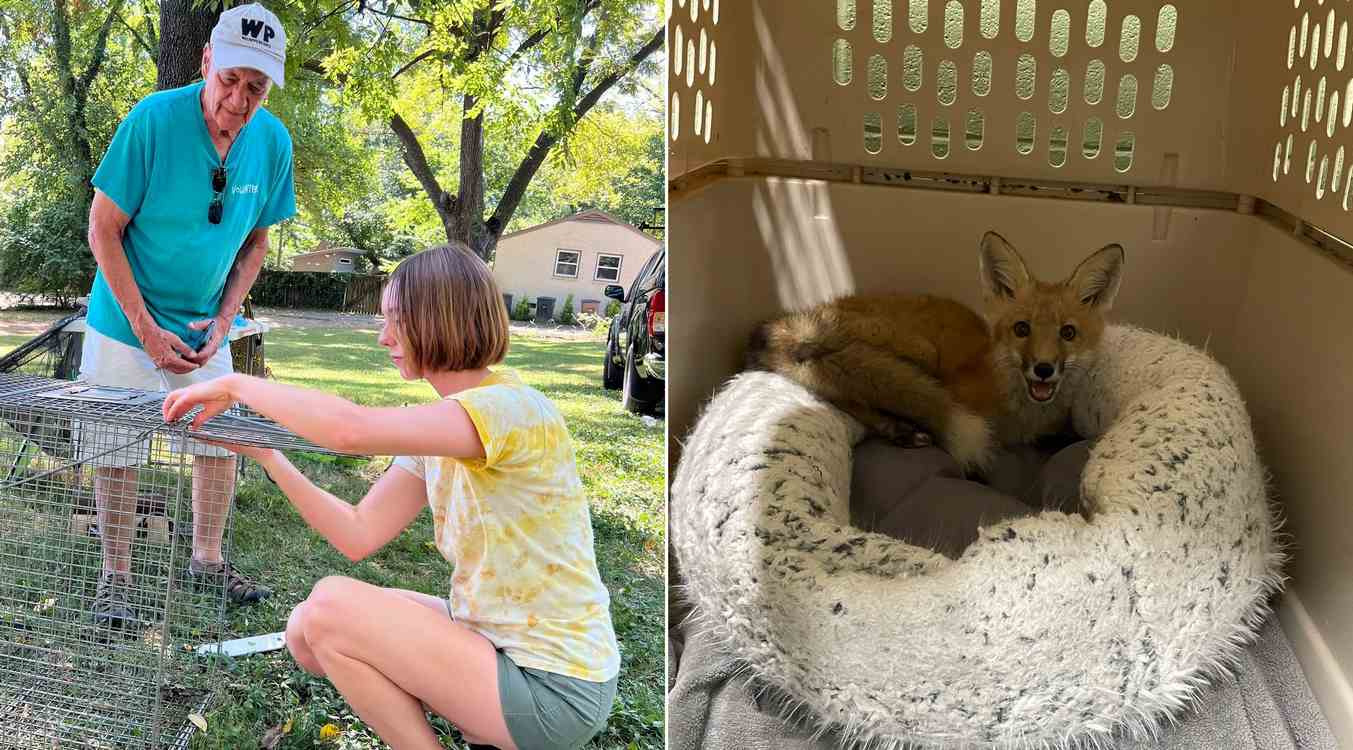
This surge in cases has also translated into an unexpected digital phenomenon. Vandiver began utilizing his professional artist Facebook page—originally created to promote his music—to document his rescue work, sharing gritty, heart-wrenching before-and-after videos of mangey foxes transformed back into healthy, vibrant animals. As the local fox population’s crisis grew, so did his digital footprint. Driven by the harrowing content and the community’s hunger for positive outcomes, Vandiver’s follower count skyrocketed from a modest 325 to over 5,000 engaged supporters.
Official Responses and Ecological Insights
Wildlife biologists and rehabilitation experts point to a confluence of environmental factors driving the current epidemic. Chief among them is the rapid loss of natural habitat due to suburban development in Davidson County and surrounding areas.
Red foxes are remarkably social animals that organize themselves into extended family units known scientifically as "leashes" (or sometimes referred to regionally as skulks or earths). A typical leash consists of a dominant breeding pair, their offspring from the current year, and occasionally subdominant adult relatives. These family units are fiercely territorial, requiring substantial home ranges stretching across several square miles to secure adequate food, water, and shelter.
As real estate development carves up forests and fields, the available territory for each leash shrinks dramatically. Consequently, multiple leashes are forced into overlapping, compressed spaces. This high-density living makes the transmission of contagious conditions like mange exponentially easier through direct physical contact or shared den sites.
Compounding this ecological stressor is the unintended ingestion of secondary toxins, such as rat poisons and rodenticides used in residential pest control. While these poisons may not instantly kill a fox, sub-lethal doses weaken their immune systems, leaving them defenseless against opportunistic parasites like mange mites.
In response to the crisis, Walden’s Puddle has issued strict guidance for Nashville-area residents who wish to coexist peacefully with local wildlife and prevent the spread of disease:
- Avoid Artificial Feeding: While well-intentioned citizens often leave food out for local wildlife, artificial feeding stations concentrate multiple foxes—and other species—into tight areas, accelerating the transmission of mange and other pathogens.
- Secure Refuse: Residents must tightly seal garbage containers and eliminate accessible food scraps to discourage foxes from depending on human settlements for sustenance.
- Refrain from Unregulated Poisoning: Homeowners should avoid using broadcast rodenticides, which inadvertently poison apex predators and scavengers higher up the food chain, severely compromising their immunological resilience.
Staff members at Walden’s Puddle speak of Vandiver with profound reverence. One rescue representative noted that Vandiver routinely "puts foxes before himself," a level of selfless dedication that is staggering for a septuagenarian.
Broader Implications: Compassion in the Face of Urban Sprawl
The story of Jerry Vandiver and Nashville’s red foxes transcends a simple local human-interest narrative; it serves as a microcosm of the broader challenges facing wildlife in an increasingly urbanized world. As metropolitan areas expand across the American South, human-wildlife conflicts are no longer restricted to rural frontiers. They are happening in backyards, suburban cul-de-sacs, and corporate office parks.
Vandiver’s work highlights the indispensable role that dedicated private citizens play in bridging the gap between municipal growth and wildlife conservation. Animal control agencies and underfunded wildlife nonprofits are frequently overwhelmed by the sheer volume of urban rescue calls. Individuals like Vandiver—who invest their own time, resources, and emotional energy into grassroots remediation—act as vital shock absorbers for ecosystems under stress.
Furthermore, Vandiver’s digital transition demonstrates the immense power of social media for conservation advocacy. By transforming his musical platform into an educational broadcast channel, he has sensitized thousands of urban and suburban residents to the hidden suffering of local wildlife. What was once viewed by some homeowners as a nuisance or an unsightly pest has been reframed through Vandiver’s lens as a sentient, family-oriented neighbor worthy of empathy, protection, and medical intervention.
Despite the grueling physical demands, the late-night stakeouts, and the emotional toll of witnessing severe animal suffering, Vandiver finds an unbreakable anchor in the moments of release.
He speaks candidly about the ritual of returning a rehabilitated fox back into the wild. As the cage door opens and the once-miserable, hairless animal bounds back into its natural forest home, it almost invariably pauses to cast a quick glance backward before disappearing into the brush.
Though scientific pragmatism reminds him that the backward glance is merely an animal’s instinctual check for lingering threats, Vandiver prefers to indulge in a more poetic interpretation. After all, for a lifelong country songwriter whose career was built on finding the emotional resonance in everyday moments, choosing to see that final look as a quiet expression of gratitude feels entirely natural.
For Nashville’s red foxes, Jerry Vandiver is not just an ambulance driver or a trapper; he is the author of a second chance—proving that true artistry isn’t just about the songs you write, but the lives you help rewrite.