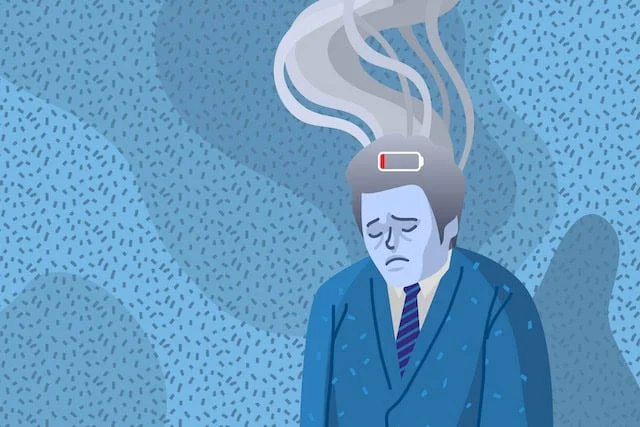
"Detachment is not about refusing to feel or not caring or turning away from those you love. Detachment is profoundly honest, grounded firmly in the truth of what is." — Sharon Salzberg
For many, the transition into adulthood involves a subtle shift from being a child who requires parental validation to an adult who provides it for themselves. However, for those raised in environments marked by addiction, abuse, or emotional neglect, this transition is rarely seamless. It often requires a conscious, painful, and transformative process of detachment. Silvia Turonova, a wellness advocate and author, recently shared her journey of reclaiming her self-worth after years of navigating strained relationships with her parents, offering a roadmap for others caught in the cycle of familial trauma.
The Core Conflict: When Duty Overshadows Connection
The challenge began with a series of health crises. When Turonova’s father announced a prostate cancer diagnosis, it was a moment that demanded empathy and connection. Yet, the interaction quickly devolved into a one-sided monologue. After months of silence—a form of "ghosting" that had become a recurring theme in their dynamic—the father reached out for a conversation that lasted nearly 90 minutes.
During this time, the father detailed the minutiae of his life: his hiking habits, his culinary preferences, his romantic life, and his professional interactions. He offered no space for his daughter’s life, nor did he inquire about her recent travels or personal milestones. Shortly thereafter, a conversation with her mother followed a similar pattern, complicated further by the mother’s struggles with substance abuse.
For Turonova, these calls were not merely tedious; they were existential threats to her self-esteem. They served as constant reminders of her perceived unworthiness, dredging up childhood wounds that had previously led her into patterns of codependency and self-doubt.
A Chronology of Self-Discovery
To understand the weight of these interactions, one must look at the historical context of the author’s upbringing.
- The Formative Years: Growing up, the author faced a home environment defined by maternal alcohol abuse and paternal volatility. These early experiences served as the blueprint for her future, leading her to internalize the belief that she was inherently unlovable.
- The Pattern of Seeking: In adulthood, this internal narrative often manifested in her romantic relationships, where she subconsciously gravitated toward partners who mirrored her parents’ neglect, reinforcing her feelings of inadequacy.
- The Breaking Point: The turning point occurred on a quiet Sunday. Following the draining phone calls with her parents, rather than spiraling into the usual self-flagellation, the author paused. She confronted the fundamental question: How long will I let my unhealed parents define my worth?
- The Shift: This moment of clarity initiated a new phase of interaction, characterized not by cutting ties, but by the strategic application of boundaries and emotional distance.
Supporting Data: The Psychology of Attachment and Codependency
Psychological research consistently demonstrates that individuals raised in households with dysfunctional dynamics often struggle with "attachment wounds." When caregivers are unable to provide emotional mirroring or validation, the child learns to equate their value with their utility to the parent or their ability to "fix" the parent’s problems.
According to trauma experts, this often manifests as codependency, where the child becomes an "emotional caretaker" for the parent. In Turonova’s case, the realization that she could not save her mother from addiction or "fix" her father’s lack of interest was the primary catalyst for her psychological liberation. By recognizing that her parents were "unhealed" rather than "evil," she moved from a state of victimhood to one of agency.
Data on familial estrangement and low-contact boundaries suggests that for many, these choices are not acts of cruelty, but essential strategies for mental health preservation. Setting boundaries acts as a protective layer, allowing the individual to engage with family members without sacrificing their own identity or emotional stability.

Expert Perspectives on Healthy Detachment
While this article is a personal narrative, its core themes resonate with established psychological methodologies regarding family systems. Many therapists advocate for the "Differentiation of Self," a concept developed by family systems theorist Murray Bowen. Differentiation refers to the ability to be in emotional contact with others while maintaining a separate sense of self.
In the context of the author’s experience, "practicing detachment" is the practical application of differentiation. It is the ability to:
- Observe without absorbing: Listening to a parent’s monologue without internalizing their lack of interest as a reflection of one’s own worth.
- Accept reality: Moving away from the "fantasy" of what a parent should be and accepting the reality of who they are.
- Choose the reaction: Recognizing that while we cannot control the behavior of others, we possess absolute sovereignty over our internal interpretation of those events.
Implications for Personal Healing
The implications of Turonova’s journey are twofold: it highlights the necessity of the "inner child" work and the power of the "power of choice."
1. Reframing the Inner Child
Many adults remain tethered to their parents because they are still waiting for a "re-parenting" that will never come. By acknowledging that her parents lacked the capacity to provide the emotional support she needed, the author was able to stop demanding that they change. This release of expectation is the cornerstone of healing. It allows the individual to become their own primary caregiver, providing the validation they once sought externally.
2. The Power of Choice
The most significant takeaway is the author’s transition from reactive to proactive behavior. By deciding that she would no longer let her parents’ limitations define her value, she effectively broke the generational chain. This is not a "happy ending" in the traditional sense, where the family is suddenly healed and reconciled. Instead, it is a "sovereign ending," where the individual is finally free to live on their own terms.
Moving Forward: A Strategy for Mental Wellness
The author outlines three actionable pillars for those navigating similar familial waters:
- Setting Boundaries with Understanding: This involves recognizing that while we may feel guilty for distancing ourselves from a parent’s destructive behavior, that guilt is often a byproduct of old conditioning. Forgiving oneself for needing space is vital.
- Meeting Parents Where They Are: This requires radical acceptance. By dropping the demand for change, the individual stops the cycle of disappointment. They recognize that a parent’s inability to express love is a limitation of the parent, not a lack of value in the child.
- The Practice of Detachment: This is a daily exercise. It is the mental muscle memory of repeating, "I will not let you define my worth," during moments of friction.
Conclusion
The journey described by Silvia Turonova is not one of abandonment, but one of reclamation. By redefining her relationship with her parents, she has not only protected her mental health but has also opened a door to genuine, sustainable healing. The narrative serves as a poignant reminder that while we cannot choose our origins, we hold the ultimate authority over our personal evolution.
For those currently feeling the weight of parental expectations or the sting of neglect, the message is clear: You are not defined by the wounds of those who raised you. The power to define your own lovability, your own worth, and your own future lies entirely within your grasp. It begins with the courageous act of choosing yourself.