In the 2021 satirical film Don’t Look Up, the world’s collective refusal to gaze toward the heavens served as a stinging metaphor for societal apathy toward existential threats. Yet, in our modern reality, the "looking down" phenomenon is driven by a different force: the smartphone. We are a generation of screen-bound pedestrians, our attention tethered to five-inch rectangles. However, as the tech industry pivots toward wearable computing—specifically smart glasses—the landscape of physical advertising is standing on the precipice of a profound, high-tech evolution.
Far from rendering physical billboards obsolete, the advent of augmented reality (AR) and sophisticated smart eyewear is set to transform static outdoor advertising into dynamic, interactive, and hyper-personalized gateways to the digital world.
The Evolution of the Billboard: From Static Paint to Digital Portals
For over a century, the billboard has functioned as a "one-way" medium. It is an exercise in brevity—a single image or punchy slogan designed to capture a driver’s or pedestrian’s attention for a fleeting three seconds. Despite the digital revolution, the fundamental format has remained largely stagnant. QR codes were introduced as a bridge between the physical and digital, yet they have largely failed to gain widespread traction; they require the cumbersome ritual of stopping, unlocking a phone, and pointing a camera at a pixelated square, which disrupts the natural flow of movement.

The promise of smart glasses, however, is a seamless integration of digital intelligence into our field of vision. If the smartphone was the tool that forced us to look down, smart glasses are the technology designed to let us keep our eyes on the world around us. In this future, the billboard ceases to be a static image and becomes an "anchor" for digital content.
Chronology of Out-of-Home (OOH) Innovation
The trajectory of outdoor advertising has been a steady march toward immersion:
- The Early 20th Century: The era of hand-painted posters and static vinyl wraps. Advertising was purely informational, relying on high-contrast visuals and location-based visibility.
- The Digital Transition (2000s): The shift to LED panels allowed for rotation and limited animation. This enabled brands to cycle through multiple messages, increasing the "inventory" of a single physical location.
- The Connected Era (2010s): The integration of beacons and mobile data allowed for rudimentary location-based targeting, where billboards could "talk" to mobile devices via Bluetooth or Wi-Fi.
- The Experiential Turn (2020s): Installations like London’s Electric Garden began blurring the lines between physical and virtual spaces.
- The AR Horizon (2025 and beyond): The expected mass-adoption of lightweight AR eyewear, enabling persistent, location-aware digital overlays that interact with the physical environment.
The Electric Garden: A Case Study in "Walkable" Advertising
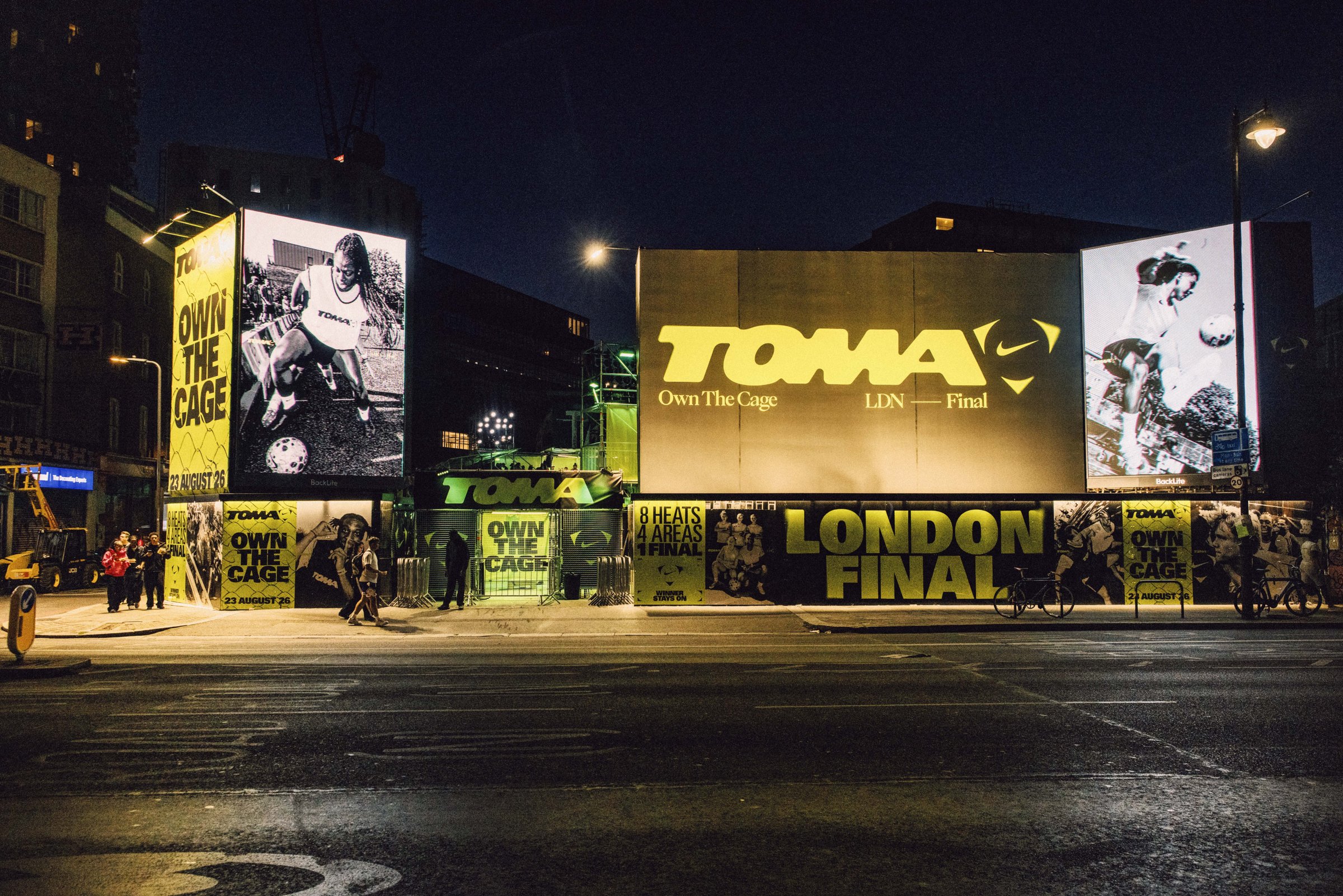
The current frontier of this evolution can be found in East London. Electric Garden, located on Shoreditch High Street, is positioning itself as a pioneer of the "billboard you can walk into." Spanning 21,000 square feet, this open-air site operates behind a perimeter of massive digital screens.

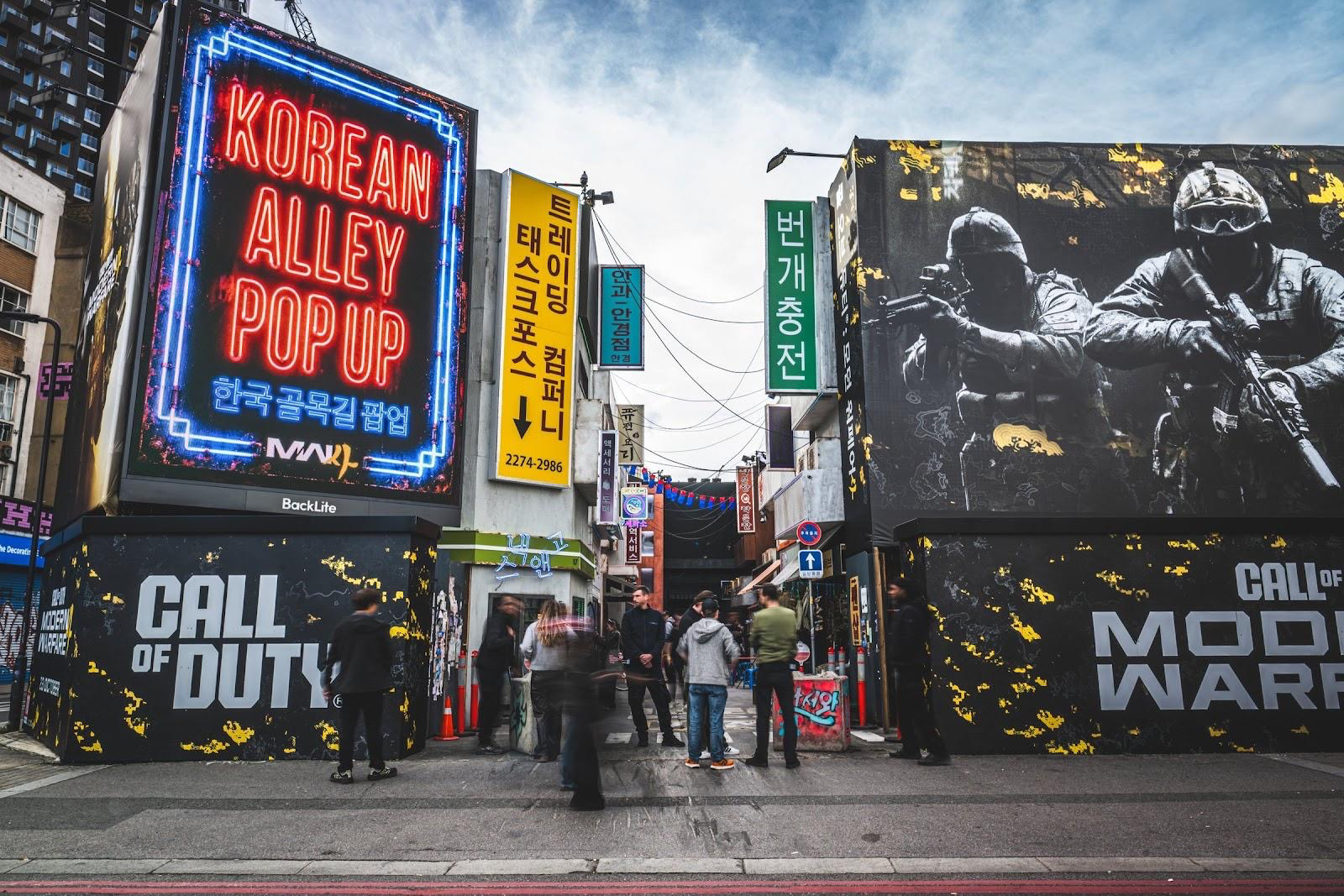
The site’s debut campaign for Activision’s Call of Duty: Modern Warfare 4 serves as a proof of concept. Rather than just displaying a trailer, the campaign transformed the physical space into an immersive, neon-drenched, Seoul-inspired alleyway. Complete with authentic convenience stores, street-style plastic seating, and complex code-breaking missions, the campaign forced a shift in consumer behavior: it turned a passive viewing experience into an active, shareable adventure.
Alex Ezen, co-founder of the initiative, notes, "A screen can capture attention, but a physical experience gives people a reason to stop, take part, and share it." This philosophy highlights the ultimate goal of future advertising: creating value through engagement rather than mere exposure.
Supporting Data: Why Physical Media Still Matters
While digital advertising (social media, search ads) has seen explosive growth, data suggests that "Out-of-Home" (OOH) advertising remains one of the most effective ways to build brand trust. According to industry reports from the Outdoor Advertising Association of America (OAAA), OOH advertising consistently outperforms digital-only campaigns in terms of consumer recall.

The human brain is hard-wired to process physical environments in 3D. When we see a massive, physical advertisement, it triggers a different cognitive response than a small, skippable ad on a mobile screen. When this physical "realness" is augmented with the digital capabilities of smart glasses—such as live traffic, personalized product information, or instant navigation—the effectiveness of the medium increases exponentially.
Official Industry Responses and Future Projections
Major advertising agencies and tech conglomerates are already investing billions into "Spatial Computing." The consensus among industry leaders is that we are moving toward a "Persistent AR Layer" for cities.
In this model, every billboard, building, and bus stop will have a digital twin. When a user looks at a billboard with their smart glasses, the glasses will recognize the image or the GPS location and trigger a specific interactive experience. For example:
- Retail: A billboard for a clothing line could show a model wearing a jacket. A user with smart glasses could see the price, available colors, and a button to "try on" the item via a digital mirror overlay, or even purchase it for immediate delivery.
- Entertainment: A movie poster could instantly trigger a trailer to play within the glasses, provide showtimes at the nearest cinema, and project a floating, real-time navigation arrow on the sidewalk leading to the box office.
- Utility: Public information signs could be translated into the user’s native language in real-time, or government notices could display interactive maps and contact information.
The Implications: A New Era for Designers and Advertisers
The shift toward AR-integrated advertising presents a monumental challenge for creative professionals. The "brief" will no longer be limited to a 2D canvas; it will encompass 3D space, user experience (UX) design, and AI-driven personalization.
Designers will need to master the art of "spatial narrative." How do you design an ad that is visually appealing to the naked eye while simultaneously housing a rich, secondary layer of digital data for those wearing smart glasses? This requires a new discipline—one that combines traditional graphic design, architectural planning, and software engineering.
Furthermore, there are significant ethical implications. As with any technology that overlays content onto our reality, concerns regarding "ad-clutter" and privacy will be paramount. Who owns the "digital real estate" in front of a building? Will city councils need to pass zoning laws for augmented reality, just as they do for physical signs? The potential for an overly saturated, intrusive digital landscape is high, and the advertising industry will likely need to adopt new standards for "digital decorum" to avoid public backlash.
Conclusion: Looking Up, Not Down
The transition toward smart glasses will not kill the billboard; it will liberate it. By removing the friction of the smartphone screen and allowing advertising to exist as a fluid part of our environment, we are entering an era where the city itself becomes a living, breathing, and interactive interface.
As we look toward the next decade, the "Black Mirror" scenarios of constant, inescapable advertising are certainly a valid concern. However, if navigated with creativity and respect for the user, the integration of AR into our outdoor spaces promises a world where information is not just consumed—it is experienced. We will finally stop looking down at our phones and start looking up, discovering a world of information and entertainment projected directly onto the horizon.