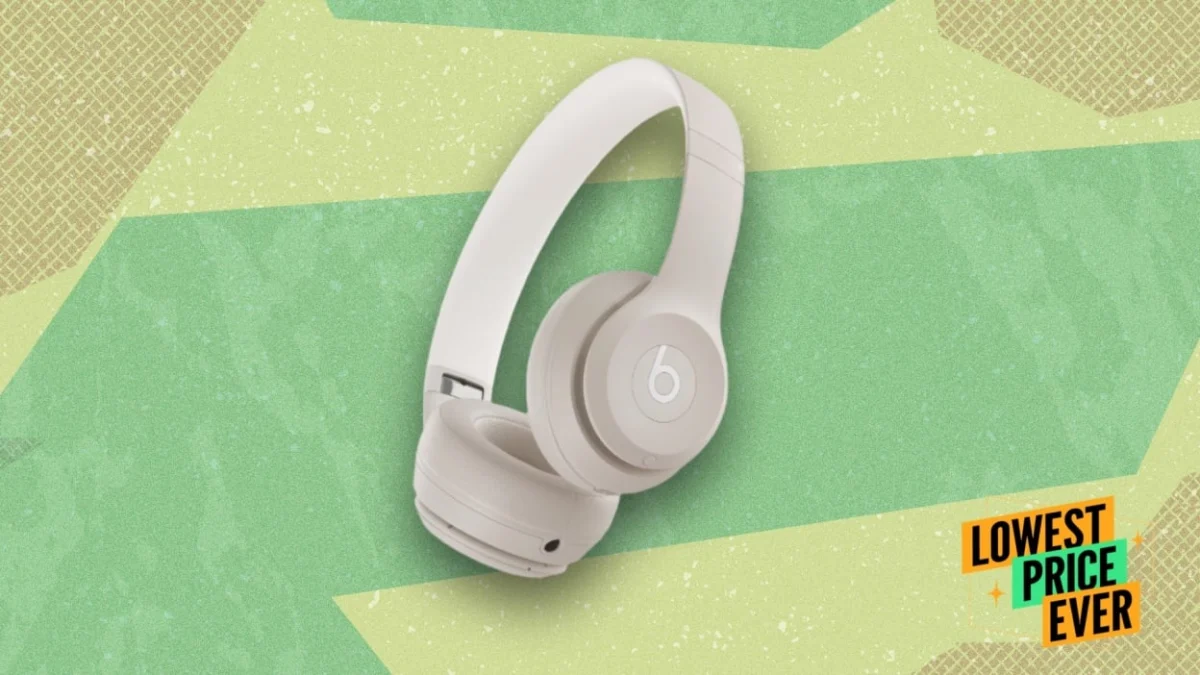
As the retail landscape gears up for the frenetic pace of the 2026 holiday shopping season, early Black Friday promotions are beginning to surface with surprising intensity. Among the most eye-catching offers currently circulating is a significant price reduction on the Beats Solo 4 headphones. Walmart is currently offering these iconic on-ear headphones for just $69—a staggering 65% discount from their original $199.99 MSRP.
For audiophiles and casual listeners alike, this price point marks a transition from a premium lifestyle accessory to a "must-buy" impulse purchase. However, with the market saturated by noise-canceling alternatives and high-fidelity competitors, it is essential to look beyond the sticker price and examine whether the Beats Solo 4 still holds its own in a modern sonic ecosystem.
Main Facts: The Beats Solo 4 at a Glance
The Beats Solo 4 represents the latest iteration in a long-standing line of on-ear headphones that have defined the "Beats aesthetic" for over a decade. While the design remains quintessentially Beats—sleek, foldable, and fashion-forward—the internal technology has been updated to reflect contemporary standards.
- Retail Price: Currently $69 (discounted from $199.99).
- Key Features: Bluetooth 5.3 support, 50-hour battery life, one-touch pairing for Apple devices, and integrated hands-free Siri.
- Audio Connectivity: Supports AAC and SBC codecs; provides options for wired audio via 3.5mm jack or USB-C.
- Charging: Fast-fuel technology providing five hours of playback from a 10-minute charge.
- Variants: The current discount specifically applies to the Gray and Sandstone colorways.
Notably absent from the spec sheet is Active Noise Cancellation (ANC). Instead, the Solo 4 relies on passive isolation—a physical seal created by the ear cups. While this may be a dealbreaker for frequent flyers or commuters seeking total silence, it remains an effective solution for office environments or casual home listening.
A Chronological Evolution: From the Original Solo to the Solo 4
To understand the value proposition of the Solo 4, one must look at the trajectory of the Beats brand. Since its inception, the "Solo" series has been the entry point for millions into the world of premium audio.
The Early Years
The original Beats Solo, introduced during the rise of the personal music player era, prioritized bass-heavy signatures that became the brand’s trademark. In those early years, Beats were as much a fashion statement as they were an audio device.
The Transition to Apple
Following Apple’s acquisition of Beats Electronics in 2014, the product line saw a shift toward deeper ecosystem integration. The Solo 2 and Solo 3 versions introduced the W1 and H1 chips, which streamlined the pairing process for iPhone, iPad, and Mac users.
The Solo 4 Era
Released to modernize the legacy form factor, the Solo 4 focuses on battery longevity and versatility. By moving to USB-C and refining the internal driver architecture, Beats has attempted to balance its signature "sculpted" sound profile with the functional demands of a modern, multi-device lifestyle. The jump from 40 hours of battery life in the Solo 3 to 50 hours in the Solo 4 represents a significant incremental improvement that appeals to heavy users.
Supporting Data: Performance and Technical Metrics
When analyzing the performance of the Solo 4, it is useful to rely on both empirical metrics and critical reception.
Battery Longevity and Charging Efficiency
One of the primary selling points of the Solo 4 is its power management. At 50 hours of playback, it sits at the top end of its category. The "Fast Fuel" technology is equally impressive, offering a 10-minute charge for 5 hours of playback. In practical terms, this eliminates "battery anxiety," a common pain point for users of wireless headphones.
Sonic Signature
Professional reviews, such as those from PCMag, describe the audio profile as "sculpted with accentuated bass and highs." This "V-shaped" sound signature is specifically tuned for popular genres like hip-hop, electronic, and pop. It is not designed for the flat, neutral response required by studio mixing engineers, but it is highly effective for the general consumer who enjoys a punchy, energetic sound.

Connectivity and Codecs
The implementation of Bluetooth 5.3 ensures a stable, low-latency connection. While the reliance on AAC and SBC codecs means that Android users may not get the same "lossless" high-resolution experience as those with specialized high-bitrate codecs, the performance remains robust for streaming platforms like Spotify, Apple Music, and YouTube.
Official Perspectives and Market Positioning
Beats, under the umbrella of Apple, has consistently positioned the Solo series as a lifestyle-first product. They are not marketed as "pro" gear, but rather as tools for daily living—commuting, gym sessions, and remote work.
Industry analysts suggest that the significant discount at retailers like Walmart is a strategic move to clear inventory ahead of a potential refresh cycle or to capture market share during the most competitive shopping window of the year. For Apple, the "halo effect" of the Beats brand remains a vital component of its audio ecosystem. By lowering the entry price to $69, they effectively bring the Beats experience to a demographic that might otherwise opt for lower-quality "no-name" generic headphones.
Implications: Is the Solo 4 Right for You?
The decision to purchase the Beats Solo 4 at this price point hinges on three primary factors: your environment, your device ecosystem, and your preference for comfort.
The "No-ANC" Factor
If you are a professional commuter who requires ANC to drown out the drone of airplane engines or subway tracks, the lack of active cancellation is a genuine drawback. However, if your listening habits are primarily in quiet rooms, offices, or while walking, passive isolation is often sufficient.
The Ecosystem Advantage
If you are already integrated into the Apple ecosystem, the convenience of the H1/W1-style pairing and the hands-free Siri integration provides a "frictionless" user experience that is difficult to replicate with third-party, non-Apple-affiliated headphones.
The Price-to-Value Ratio
At $199.99, the Solo 4 faces stiff competition from headphones that include ANC, transparency modes, and adjustable EQ settings. At $69, however, those shortcomings are far easier to overlook. At this price, the Solo 4 competes directly with budget-tier headphones that often lack the build quality, battery life, and brand reputation that Beats provides.
The Verdict
The current $69 price tag on the Beats Solo 4 is arguably one of the most compelling deals of the early 2026 holiday season. While it is not the most technologically advanced headset on the market, it provides a reliable, high-battery-life, and aesthetically pleasing audio solution. For the student, the casual listener, or the person looking for a secondary pair of headphones for the gym, this deal represents a significant value proposition.
As with all major holiday sales, inventory is likely to fluctuate rapidly. If you are in the market for a reliable pair of on-ear headphones, this window of opportunity is one that justifies an immediate look at the retailer’s current offerings.
Disclaimer: Deal pricing and availability are subject to change after the time of publication. Lifehacker may earn a commission from affiliate links included in this article.