Main Facts
By 2029, high-frequency, rolling blackouts are projected to transition from rare, emergency-driven events into a normalized facet of daily American life. The structural stability of the United States’ three major electrical interconnections—the Eastern PJM grid, the Western grid, and the Electric Reliability Council of Texas (ERCOT) grid—is being pushed to its breaking point.
The primary catalyst for this systemic stress is the exponential surge in energy demand driven by artificial intelligence (AI) data centers. Pressured by national security imperatives to outpace geopolitical rivals like China in the global AI race, federal authorities and grid operators are increasingly prioritizing heavy industrial and technological loads over residential consumers. Consequently, ordinary households face a growing risk of becoming low-priority loads, subject to localized service interruptions while massive compute clusters maintain uninterrupted power.
Compounding this looming crisis is a widening chasm between rising energy consumption and stagnant or declining dispatchable generation capacity. Grid operators across multiple regions are reporting capacity shortfalls that consistently breach safety margins. In response to these vulnerabilities, energy experts, independent analysts, and off-grid resilience advocates are sounding the alarm, urging everyday citizens to invest in independent power systems, such as off-grid solar arrays and localized battery storage, before regulatory and economic barriers—including impending tariffs—make such self-reliance cost-prohibitive.
Chronology of a Failing Grid: A Timeline to 2029
The degradation of North America’s power infrastructure has accelerated over the past five years, tracing a clear trajectory toward widespread systemic failure:
- February 2021: Winter Storm Uri triggers a near-total collapse of the Texas ERCOT grid, exposing deep structural vulnerabilities in privatized, deregulated energy markets and underscoring the dangers of extreme weather events intersecting with surging baseline demand.
- 2022–2023: Independent energy analysts and preparedness advocates begin documenting early warning signs of rolling blackouts and localized diesel fuel shortages. Regional grid operators quietly acknowledge tightening reserve margins as industrial demand climbs.
- Late 2023: Federal agencies, including the Department of Energy (DOE) and the North American Electric Reliability Corporation (NERC), issue increasingly urgent warnings regarding the adequacy of winter and summer peak capacity across major U.S. interconnections.
- 2024: PJM Interconnection—serving 13 states and 76 million people—fails to meet its baseline reliability requirements for capacity auctions for multiple consecutive years. The shortfall is publicly attributed to the unprecedented proliferation of data center interconnection requests.
- 2025 (Current Outlook): Emergency orders are issued by federal authorities allowing regional operators to draw upon backup generation assets, including those housed within commercial technology facilities, to stave off widespread outages. Meanwhile, trade policies introduce Section 232 executive orders establishing minimum import prices and tariffs on polysilicon derivatives, setting the stage for significantly higher solar component costs by 2027.
- June 2027 (Projected): Goldman Sachs and PJM projections indicate that spare generation capacity on the Eastern grid will drop below 14%—well beneath the 20% safety threshold required to prevent rolling blackouts during peak demand periods.
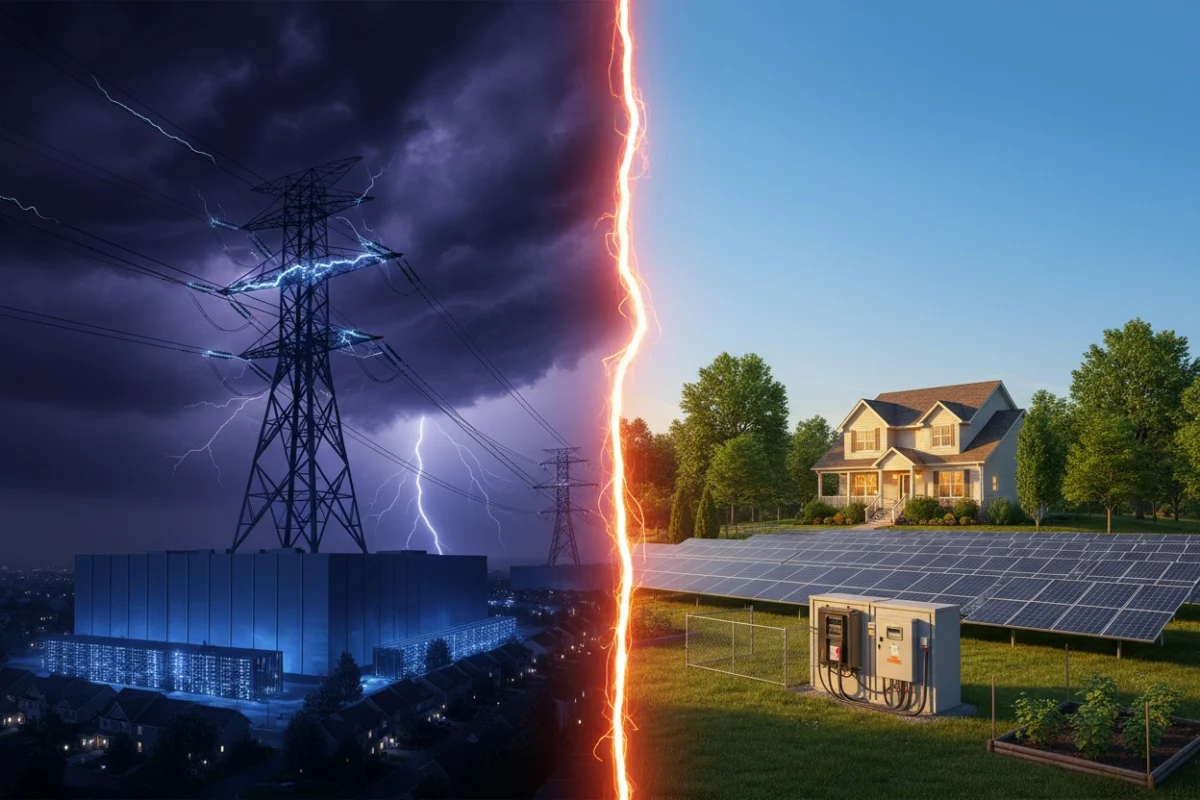
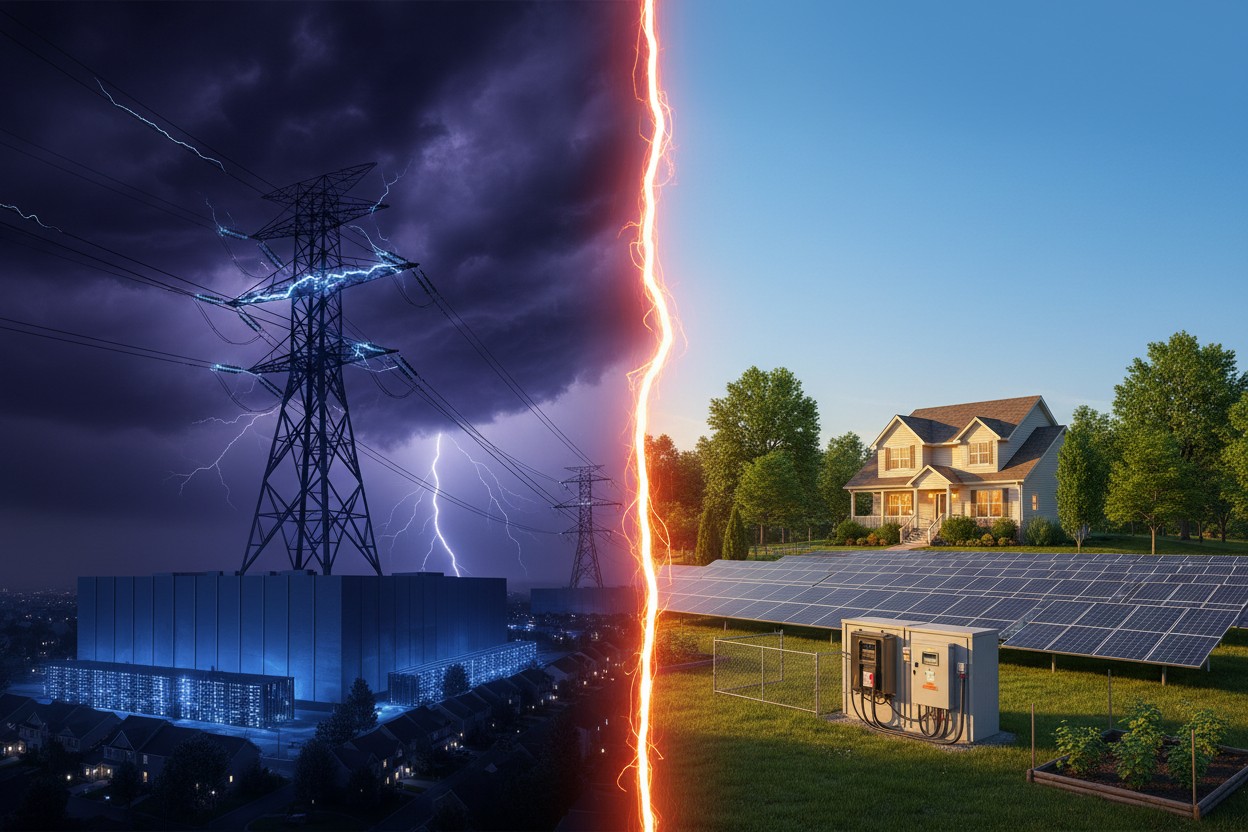
- 2029 (Projected Endpoint): High-frequency rolling blackouts become a normalized feature of American infrastructure, characterized by a stark "power divide" where data centers retain prioritized access while residential neighborhoods experience routine service curtailments.
Supporting Data and Regional Vulnerabilities
To understand the mechanics of the impending crisis, one must examine the metrics governing North America’s regional transmission organizations (RTOs).
The PJM Interconnection Shortfall
PJM, which manages the wholesale electricity market across 13 mid-Atlantic and Midwestern states, procurement data reveals a persistent deficit. In its most recent capacity auction, PJM secured 149,182 megawatts (MW) of supply. However, this figure fell 6.8 gigawatts short of the level required to satisfy its one-event-in-10-year reliability standard. This marks the third consecutive year PJM has failed to meet its own internal adequacy benchmark.
According to operator forecasts, spare generation capacity within the PJM footprint is on track to plummet to just 14% by 2027. Energy analysts emphasize that a 20% reserve margin is the historical safety floor necessary to absorb sudden generation outages or extreme weather spikes without initiating involuntary load shedding (rolling blackouts).
Regional flashpoints extend nationwide:
- New York: Implementation of aggressive climate legislation, such as the Climate Leadership and Community Protection Act (CLCPA), restricts the construction of new fossil-fuel-fired peaking plants. Simultaneously, aging legacy plants face mandatory retirement schedules without adequate renewable or storage replacements coming online at scale, resulting in localized reliability alerts.
- California and the West: The Western Interconnection faces recurring summer strain driven by simultaneous heatwaves, the retirement of baseload thermal plants, and transmission bottlenecks that restrict the movement of renewable energy from desert solar farms to urban consumption centers.
- Lake Tahoe and Rural Enclaves: Utilities in geographically constrained regions have begun notifying tens of thousands of residential customers regarding the operational infeasibility of maintaining continuous service, effectively signaling the triage of non-essential loads.
Official Responses and Federal Intervention
Faced with mounting evidence of grid fragility, federal regulators, defense agencies, and energy watchdogs have adopted an aggressive posture that prioritizes critical technological infrastructure above all else.
The National Security Mandate
The White House and the Department of Defense have increasingly framed the geopolitical competition over artificial intelligence as a paramount national security emergency. Because modern AI training clusters require continuous, uninterrupted power supplies measured in hundreds of megawatts per facility, federal planners view power availability for data centers as a strategic imperative on par with traditional defense manufacturing.
This framing has translated into direct regulatory interventions. The Department of Energy has exercised emergency authority under the Federal Power Act to compel grid operators to utilize backup generation assets—including commercial diesel generators situated at tech facilities—to maintain regional frequency stability.
Regulatory Realities for Consumers
Legal precedent established during these emergency actions heavily favors industrial and technological continuity. As grid operators designate AI and data infrastructure as critical national security assets, the legal framework governing load shedding shifts residential consumers down the priority queue. Consequently, when system frequency drops or reserve margins evaporate, automated load-shedding protocols are designed to protect critical nodes first, leaving residential distribution feeders vulnerable to intentional, managed blackouts.
Implications: The Power Divide and the Case for Energy Independence
The convergence of failing infrastructure, surging industrial demand, and federal prioritization of AI data centers is giving rise to a profound socio-economic shift: The Power Divide.
The Class Dynamics of Reliability
In the near future, grid reliability will no longer be a universal public utility. Wealthy households, affluent communities, and commercial enterprises with the capital to invest in independent microgrids, advanced battery storage, and private solar arrays will insulate themselves from systemic instability. Conversely, lower- and middle-income families dependent entirely on legacy utility distribution lines will experience third-world reliability standards—characterized by unpredictable outages, spoiled food, compromised heating and cooling, and a lack of recourse against service providers.
Why Grid-Tie Solar Falls Short
A widespread misconception among homeowners is that installing standard grid-tied solar panels provides protection during a blackout. In reality, regulatory standards and electrical safety codes mandate that grid-tie inverters instantly shut down when the local utility grid loses power. This "anti-islanding" feature is designed to protect utility line workers from dangerous backfeeding, but it leaves the residential property completely dark despite bright sunlight overhead.
To achieve genuine security, property owners are increasingly turning to true off-grid or hybrid systems featuring:
- Isolated Battery Storage: Systems disconnected from utility feedback loops, utilizing either proven Lithium Iron Phosphate (LiFePO4) chemistry or emerging, temperature-tolerant sodium-ion batteries capable of extended duty cycles.
- Ground-Mounted Arrays: Bypassing the limitations of rooftop installations, ground-mounted systems allow for optimal seasonal tilt adjustments—yielding up to a 20% increase in winter energy capture—while simplifying maintenance, cleaning, and expansion.
- Redundant Critical Loads Design: Prioritizing essential survival equipment, such as medical devices, communications hubs, refrigeration, and basic lighting, rather than attempting to power entire households indiscriminately.
Economic Hurdles and Regulatory Pressures
The window for cost-effective microgrid adoption is narrowing. While photovoltaic panel spot prices have remained relatively low, impending trade policy shifts—including Section 232 executive orders establishing minimum import pricing and tariffs on polysilicon derivatives—threaten to significantly inflate component costs for everyday consumers.
Ultimately, the trajectory of American infrastructure points toward an era where energy self-reliance transitions from a niche alternative practice into a fundamental requirement for household stability. As the 2029 threshold approaches, the division between those who control their own power and those tethered to a strained, data-center-prioritized grid will define modern resilience.