By Stephen Johnson
October 28, 2026
The era of the bulky, isolated virtual reality headset may be nearing its twilight. As the industry grapples with the ergonomic and social challenges of "face computers," XReal has unveiled its answer to the problem: the XReal Aura. Debuted this morning at the Google Android Developer Summit, these smart glasses represent a sophisticated leap toward a future where Extended Reality (XR) is not just a gaming experience, but a seamless, everyday utility.
By balancing high-performance hardware with the lightweight profile of traditional eyewear, XReal is positioning the Aura to compete not just with Meta or Apple, but with the very concept of the smartphone as our primary digital window.
The Core Innovation: Blending Digital and Physical Realms
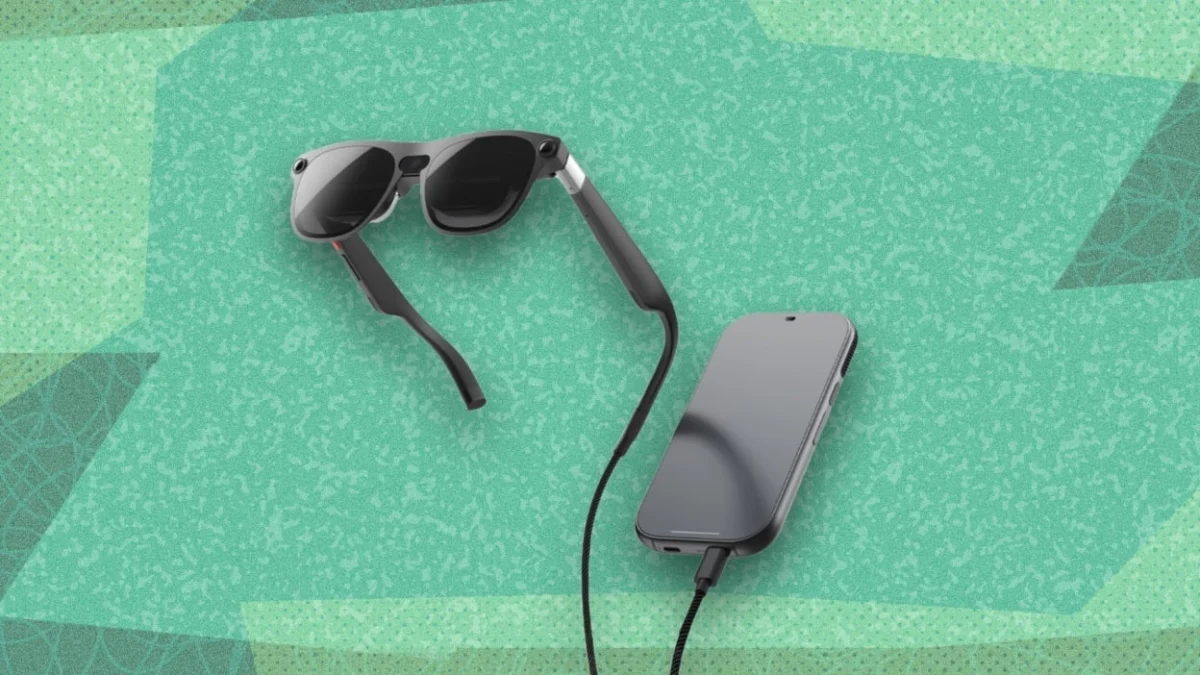
At the heart of the XReal Aura is a philosophy of "presence." Unlike traditional VR headsets—which isolate the user within a foam-lined, light-sealed enclosure—the Aura employs transparent lenses that project digital content directly into the wearer’s field of view. The result is a true "Mixed Reality" experience where digital interfaces, 3D applications, and media coexist with the physical environment.
The hardware architecture is bifurcated to achieve this balance. The glasses themselves house the optical engine and the proprietary X1S chip, keeping the weight under 95 grams—a significant achievement for a device with a 70-degree field of view. To manage the thermal and power demands of such a high-fidelity display, XReal has offloaded the primary computing and battery to a "puck," a sleek, wired controller that slips easily into a pocket.
This design choice addresses the primary complaint of long-term VR users: neck strain and discomfort. By tethering the processing power to a separate unit, XReal has prioritized the longevity of the user experience, making the Aura comfortable enough for extended productivity sessions or marathon entertainment.
A Chronology of the Aura’s Development
The journey to the XReal Aura has been one of iterative refinement. XReal has long been a key player in the AR space, but earlier iterations were largely relegated to "display glasses" that required a smartphone to function.
- Early 2026: Rumors began to circulate regarding a "breakthrough" device from XReal that would run on Google’s specialized Android XR platform.
- Early October 2026: XReal teased the product, initially suggesting a premium pricing tier that drew some skepticism from industry analysts concerned about market accessibility.
- October 28, 2026: The official unveiling at the Android Developer Summit. XReal surprised the market by announcing a lower-than-expected launch price, effectively undercutting its own earlier projections by $180 to $200.
- Mid-November 2026: The scheduled commencement of global shipping, marking the transition from development to consumer hands.
This aggressive pricing strategy—starting at $1,099 for the 12GB/256GB model—suggests that XReal is not looking to occupy a niche corner of the enthusiast market. Instead, they are positioning the Aura as a direct challenger to flagship consumer electronics.
Technical Specifications and Ecosystem Integration
The Aura runs on Android XR, providing users with an immediate, deep library of applications. The integration with the Snapdragon Reality Elite platform ensures that the device is not merely a screen, but a high-performance computer capable of handling complex spatial computing tasks.
Key Technical Pillars:
- Display: 70-degree field of view (FOV) optics, providing a wide, immersive canvas for 2D and 3D applications.
- Compute: Snapdragon Reality Elite-powered puck; proprietary X1S chip integrated into the frames.
- Memory/Storage: Launching in two tiers: 12GB RAM with 256GB storage, and 16GB RAM with 512GB storage.
- Compatibility: Native Android XR support, plus plug-and-play USB-C connectivity for PCs, gaming consoles, and workstations.
The ability to connect to external devices via USB-C is a critical feature. By allowing the Aura to function as an external display for a high-powered computer, XReal is bridging the gap between mobile XR and traditional desktop productivity. Users can essentially carry a virtual multi-monitor setup in their pocket, creating a private, scalable workspace in any location—be it a coffee shop, an airplane, or a home office.

A Diverse Library: From Entertainment to Enterprise
A platform is only as strong as its software, and XReal is launching the Aura with a robust suite of over 150 "made for XR" applications. This ecosystem is categorized into three distinct pillars:
1. Immersive Entertainment
Gaming is front and center. Highlights include Nevatars, an interactive experience designed by Andy Serkis, and Fallout: Factions, which brings the iconic post-apocalyptic universe into a head-to-head, dice-based gaming format. Additionally, Landing Party is being marketed as the world’s first outdoor roleplaying video game, utilizing the glasses’ pass-through capabilities to blend fantasy with real-world navigation.
2. Cultural and Media Consumption
XReal has secured partnerships with organizations like the NBA and NASCAR to provide immersive, front-row viewing experiences. Furthermore, the San Francisco Ballet Company’s production of The Nutcracker will be available in a spatial format, showcasing the potential for XR to revolutionize how we experience the performing arts.
3. Professional Productivity and Training
The enterprise sector is a major focus for the Android XR platform. ShapeXR allows software developers to collaborate in 3D, while Frontline.io provides industrial-grade job training and assistance. For the finance-minded, Plynk Spatial offers a new way to visualize stock research and market trends, turning flat data into tangible, interactive graphs.
Implications for the Future of Tech
The launch of the XReal Aura signals a broader shift in the technology sector. For years, the industry has chased the "metaverse" dream, often resulting in heavy, isolating hardware that struggled to find a place in the average consumer’s life.
By focusing on form factor, weight reduction, and seamless integration with existing Android ecosystems, XReal is moving the needle toward "Ambient Computing." The implication here is profound: if digital content can be accessed as easily as putting on a pair of glasses, the need for the physical screens we carry in our pockets—our smartphones—may eventually be diminished.
The Competitive Landscape
This release puts immense pressure on other manufacturers to refine their offerings. Apple’s Vision Pro, while technically superior in terms of display density, remains a heavy, face-filling device. Meta’s Quest line, while more affordable, is still firmly rooted in the "headset" paradigm. By occupying the "smart glasses" space with full XR capabilities, XReal has found a middle ground that is both socially acceptable to wear in public and technically capable of high-level work.
Socio-Economic Considerations
The price point, while still premium, puts the Aura within reach of the "prosumer" demographic. However, the true test will be how the public receives a device that is perpetually connected to the internet and capable of recording and projecting digital overlays in public spaces. As with all wearable technology, the conversation will inevitably shift toward privacy, digital etiquette, and the blurring of lines between the physical and digital world.
Final Thoughts: Is the Headset Dead?
While it may be premature to declare the "death" of the VR headset—which will likely remain the gold standard for high-end, stationary simulation—the XReal Aura proves that the future of personal computing is heading in a different direction. It is a direction defined by portability, subtlety, and integration.
For those eager to experience this shift, the XReal Aura is available for order today on the company’s official website. With units expected to hit the market in mid-November, the industry will be watching closely to see if this is the moment the "smart glasses" category finally goes mainstream. Whether you are a developer looking to build the next great spatial app or a consumer tired of being tethered to a laptop screen, the Aura offers a glimpse into a world where your digital life is no longer confined to a screen, but woven into the fabric of your day-to-day existence.