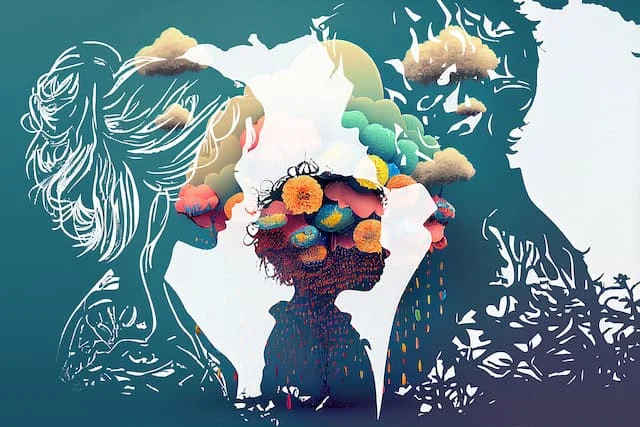
For many, the human capacity to find patterns in the chaos—to see synchronicities in repeating numbers, celestial alignments, or cinematic narratives—is a source of comfort and spiritual grounding. For author and therapist Allison Jeanette Briggs, this innate ability to "weave dreams" was not merely a personality trait; it was a survival mechanism forged in the crucible of a dangerous childhood.
In a recent exploration of her own healing journey, Briggs details how the psychological survival tactics of her youth transitioned into complex, often obstructive, adult behaviors. Her story serves as a poignant case study on the fine line between intuitive living and the dangerous habit of using spiritual narratives to bypass the harsh realities of personal accountability and self-protection.
The Genesis of the "Dream Weaver"
Briggs describes herself as a lifelong spiritual seeker, drawn to the intersection of stories, tarot, astrology, and mythology. However, she argues that her propensity for these systems was "given a job" by the instability of her early life.
As a child facing threats she could not control, Briggs lacked the agency to physically escape. Consequently, she turned to the internal world of imagination. By consuming stories like Cinderella or Charlotte’s Web, she conditioned her mind to believe that rescue was inevitable—that a savior would appear to validate her suffering and provide a path to safety. This form of hope, while psychologically essential for a child, established a lifelong pattern: the habit of looking for "signs" to dictate her future rather than exercising her own agency.
A Chronology of Manifestation and Misalignment
The evolution of this behavior is best tracked through key milestones in Briggs’ adult life:
- The 2010 Pivot: Following a painful divorce, Briggs immersed herself in the self-help movement, specifically the "Law of Attraction" and manifestation literature. In a bid to control her future, she wrote in a journal that she would meet her soulmate on a Florida beach in 2014.
- The 2014 Convergence: Years later, finding herself in another difficult relationship, Briggs took her children to Florida. She packed a white sun hat she had worn in her visualization, driven by a lingering hope that the "magic" she had scripted would materialize.
- The Moment of Clarity: Standing on the beach, watching her son play exactly as she had imagined, she caught herself "scanning the shoreline." It was a moment of profound realization: she was not living in the present; she was waiting for a savior. She was repeating the childhood pattern of waiting for someone else to rescue her from her current reality.
- The Modern Integration: Recently, Briggs began noticing the repeating number 911. Rather than consulting external spiritual authorities or "manifestation" manuals, she paused to interpret the sign through her own lens of agency. She redefined 911 as a call to action—a signal that she is the one who decides when something is wrong and she is the one who initiates the rescue.
Supporting Data: The Psychology of "Spiritual Bypassing"
The phenomenon Briggs describes is recognized by mental health professionals as a form of "spiritual bypassing"—a term coined by psychologist John Welwood. It involves using spiritual beliefs or practices to avoid facing unresolved emotional issues or psychological wounds.
According to research in trauma-informed care, when a child experiences chronic abuse or neglect, they often develop "dissociative" tendencies or hyper-vigilance. The brain creates a narrative structure to explain the suffering, often projecting a "hero" figure or a "destined" positive outcome to tolerate the intolerable. As these individuals enter adulthood, this mechanism can manifest as:
- Idealization: Projecting goodness onto partners or authority figures who have not earned that trust, effectively blinding the individual to red flags.
- External Locus of Control: Seeking answers in tarot, astrology, or religious texts instead of internalizing the ability to make decisions.
- Refusal to See Reality: Using beautiful stories to mask the reality of abusive or stagnant relationships.
Expert Perspectives on Reclaiming Inner Authority
While Briggs writes from a personal perspective, her insights align with contemporary therapeutic approaches that emphasize the "Internal Family Systems" (IFS) model. This model suggests that we have various "parts" of our personality—some of which are "protectors" (like the Dream Weaver) that may have been helpful in the past but have become burdens in the present.

Briggs’ journey highlights a critical distinction: the difference between "spiritual surrender" and "giving up control." By moving away from external validation and toward internal discernment, she is not abandoning her spirituality; she is elevating it. She notes, "I don’t know exactly what this sign or coincidence means, and I choose to see something meaningful in it anyway." This approach allows for the presence of mystery without the necessity of dogma.
Implications for Healing and Personal Growth
The implications of Briggs’ findings are significant for anyone struggling to move past childhood trauma. Her transition from "waiting for rescue" to "self-protection" provides a roadmap for others:
1. The Right to Protect Oneself
Briggs emphasizes that the most critical shift is the realization that "I am worth protecting." This involves replacing the hope for an external savior with the active use of boundaries, legal resources, and personal voice. It is the transition from a passive observer of one’s life to an active protagonist.
2. Redefining "Magic"
Magic, in this new context, is no longer a tool to predict or force the future. Instead, it is a creative force used to find beauty and meaning in the present. By adopting a cat or engaging in artistic expression, Briggs engages with her "witchy" side as a form of self-expression rather than a mechanism for safety.
3. Living with Ambiguity
Perhaps the most mature aspect of Briggs’ evolution is her acceptance of uncertainty. By choosing to allow symbols to exist without needing a "correct" interpretation, she avoids the trap of using spiritual systems as a crutch. She demonstrates that one can be both spiritually inclined and grounded in the practical, sometimes harsh, realities of life.
Conclusion: A New Era of Agency
The "Dream Weaver" in Allison Briggs has not been silenced; she has been integrated. The magic that once served to hide the painful reality of her childhood is now free to act as a source of joy and artistic depth.
Her narrative serves as an essential reminder that while our survival mechanisms are to be honored for the roles they played, they must eventually be retired when they no longer serve our growth. By reclaiming the meaning-making process, Briggs illustrates that the ultimate power lies not in predicting the future, but in the radical act of taking responsibility for the present. The rescue, as she has discovered, was never going to come from a shoreline in Florida—it was, and always has been, waiting within herself.