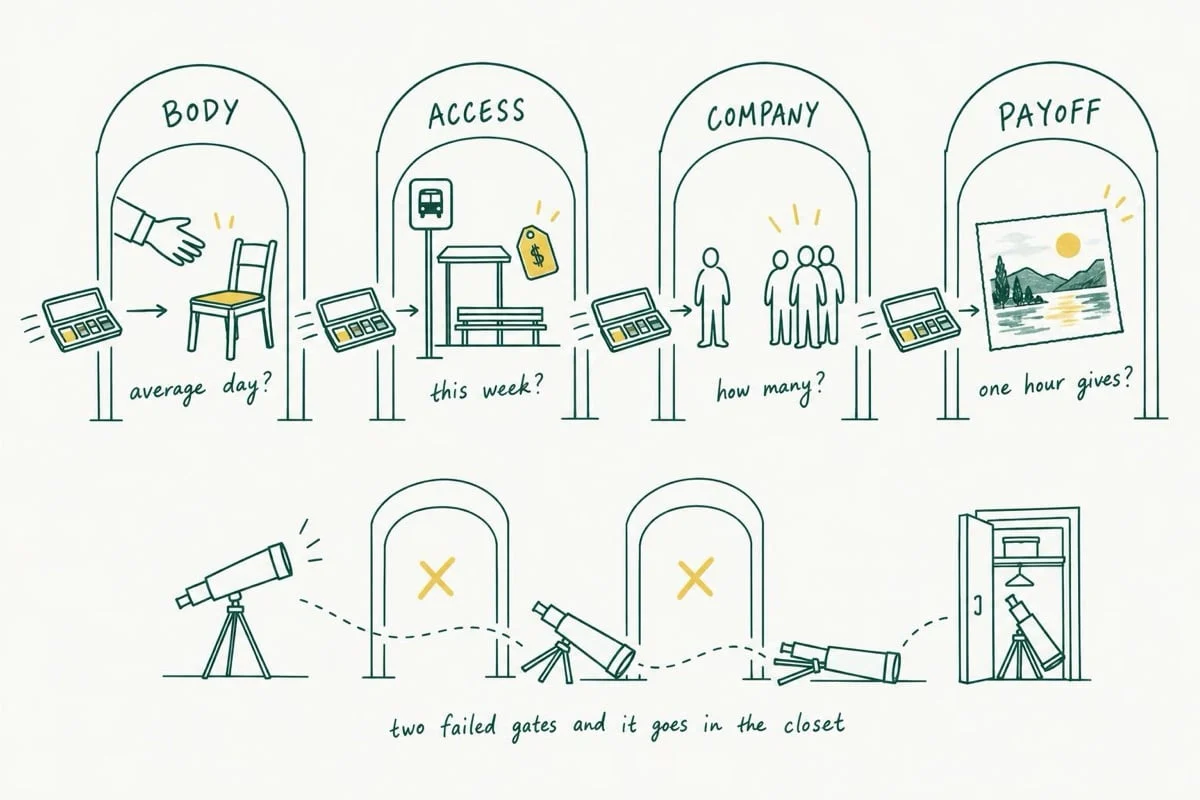
For millions of adults, the feeling of social isolation is not a reflection of their personality, but a symptom of their environment. In a modern landscape defined by remote work, transient living, and the fragmentation of community spaces, the organic "glue" that once bonded individuals—school desks, office cubicles, and neighborhood dorms—has largely evaporated.
Making new friends as an adult is often perceived as a personal failure, a private inadequacy that suggests one is "bad at socializing." However, sociologists and researchers increasingly argue that the difficulty is structural. When the repetition of daily life is removed, the burden of social maintenance shifts entirely onto the individual. Without the scaffolding of a shared routine, even the most charismatic people find themselves struggling to move from "friendly acquaintance" to "close friend."
The Anatomy of the Social Drought
The difficulty of forming adult friendships is not merely a modern malaise; it is a measurable trend. According to the 2021 report on American friendship from the Survey Center on American Life, the landscape of social connection has shifted dramatically. In 1990, only 3 percent of Americans reported having no close friends; by 2021, that number had climbed to 12 percent. Conversely, the cohort reporting ten or more close friends plummeted from 33 percent to 13 percent.
This decline is rarely the result of a single, catastrophic event. Instead, it is the cumulative effect of small transitions: a relocation for a job, the shift to a fully remote team, the arrival of a child, or the migration of a best friend to another state. The result is a paradox of modern life—we interact with people constantly, attend parties, and maintain active group chats, yet we lack that specific, reliable person we can reach out to on a Tuesday night to process the weight of a difficult week.
The distance between "friendly with" and "friends with" is not bridged by charm alone. It is bridged by time and, more importantly, by geography and rhythm.
The Health Implications of Loneliness
The cost of this social drift is significant, extending far beyond the emotional toll of loneliness. In 2023, the U.S. Surgeon General issued an advisory on social connection, elevating the issue of loneliness to a public health priority. The report stated clearly that poor or insufficient social connection is associated with a 29 percent higher risk of heart disease and a 32 percent higher risk of stroke.
Perhaps most striking is the clinical comparison provided in the advisory: the mortality impact of being socially disconnected is comparable to smoking up to 15 cigarettes a day. These findings underscore that friendship is not a luxury or a "nice-to-have" social amenity; it is a fundamental biological requirement for human longevity. As more adults find themselves living in areas without family or established support networks, the urgency of intentional social planning becomes clear.
The Mathematical Threshold: Why Repetition Wins
If the problem is structural, the solution must be logistical. The core obstacle to adult friendship is that every interaction currently requires a series of negotiations: a text, a calendar check, a venue selection, and a commitment. This high "friction cost" prevents the accumulation of the hours necessary to build trust.
University of Kansas researcher Jeffrey Hall, who has studied the formation of friendships extensively, suggests that time is the primary currency of social bonding. His research indicates that it takes roughly 40 to 60 hours of shared time to transition from stranger to "casual friend," 80 to 100 hours to reach the status of "friend," and over 200 hours to move into the "close friend" category.
For the average adult, finding 200 hours of unscripted time is impossible. However, if that time is "arranged" through fixed, recurring activities, the hours accumulate almost by accident. A 2021 study published in PLOS ONE involving 182 classrooms found that simply reassigning seats increased the probability of mutual friendship from 15 percent to 22 percent over a single semester. The students didn’t change their personalities; the structure of the room changed their opportunities for interaction.
The Four-Step Strategy for Adult Friendship
To reclaim your social life, you must stop viewing friendship as an abstract social goal and start treating it as a scheduling priority. The following framework provides a path to building connection through structural, recurring engagement.

1. Prioritize Frequency Over Interest
When choosing a new activity, ignore the "cool factor" and focus on the "repeat factor." A hobby that is fascinating but one-off will never foster deep connections. Look for groups that meet on a fixed day, involve the same cohort of people, run for at least six weeks, and have "downtime." This includes volunteer shifts, community choirs, or recreational sports leagues. The downtime is crucial—conversations occur in the gaps, not while you are focused on a task.
2. The "Six-Visit" Rule
Most people abandon a new social group after two or three sessions because they feel a lack of immediate connection. This is the equivalent of closing a book on the first page. Commit to attending at least six times before making any judgment. During these sessions, focus on being present and learning names. Familiarity is the primary driver of rapport; you don’t need to be witty, you simply need to be there.
3. The "Adjacent" Invitation
Once you have become a familiar face, the transition to friendship requires an invitation. Keep the invitation "small, specific, and adjacent."
- Small: Low stakes, like grabbing a coffee or a quick bite.
- Specific: A firm day and time, rather than the vague "we should hang out sometime."
- Adjacent: Taking place immediately after the group activity.
Research from the Association for Psychological Science shows that people consistently underestimate how much others like them. You are likely bracing for rejection that will never happen.
4. Break the Scaffold
A friendship that exists only within the context of a specific class or club is fragile. Once the class ends, the friendship ends. After a few successful adjacent hangouts, invite your new acquaintance to an activity that has nothing to do with the original group. By moving the interaction to a new setting, you prove that the connection is based on the people, not the activity.
Case Studies: Real-World Applications
Consider the case of Jenna, a 38-year-old who moved to a new city for work. By joining a Wednesday night climbing gym group, she wasn’t just exercising; she was logging 24 hours of proximity to the same eight people over three months. By week five, she initiated the "adjacent" move—grabbing tacos after climbing—which eventually turned into a group text thread that existed outside of the climbing gym.
Similarly, Shawn, 52, joined a Saturday morning trail crew. By spending six weeks as a listener, he earned his place in the group dynamic. By suggesting a post-hike sandwich, he converted coworkers into friends. Both individuals succeeded not because they were charismatic, but because they understood that repetition was the engine of their social success.
Addressing the "Time" Objection
The most frequent pushback to this strategy is a lack of time. If you do not have two hours a week to dedicate to building a social life, you are currently living in a state of social insolvency. Protecting this time may require the difficult work of saying "no" to other, less rewarding obligations on your calendar.
For those who identify as introverts, this logistical approach is actually a relief. You do not need to "work a room" or possess high-level social performance skills. You only need the stamina to show up. In a world that is increasingly atomized, the most radical act of self-care is creating the structure that allows you to be seen, consistently, by the same people.
Conclusion: The Path Forward
Adult friendship is not a mysterious puzzle reserved for the extroverted; it is a logical outcome of proximity and time. When we stop trying to "make" friends and start trying to "arrange" the conditions where friendship can occur, the pressure to be interesting fades, replaced by the comfort of being known.
Start this week. Look at your calendar, identify a two-hour block that you can defend, and commit to a group that meets there for the next six weeks. Do not look for a soulmate; look for a regular, recurring face. In the logistics of human connection, showing up is not just half the battle—it is the entire strategy.