
In the landscape of modern self-improvement, few concepts are as pervasive—and as potentially misleading—as "positive thinking." For decades, self-help gurus have preached that if one simply visualizes success with enough intensity, the universe will conspire to deliver it. However, psychological research suggests a different reality: positive thinking, when practiced in isolation, can often act as a sedative, lulling the brain into a state of complacency that actively undermines achievement.
Enter WOOP—an acronym for Wish, Outcome, Obstacle, and Plan. This evidence-based strategy, developed by Dr. Gabriele Oettingen, a professor of psychology at New York University and the University of Hamburg, provides a rigorous framework for goal attainment. By grounding aspirational thinking in the reality of human obstacles, WOOP transforms idle daydreams into actionable strategies.
Main Facts: The Anatomy of WOOP
The WOOP method is the culmination of over two decades of peer-reviewed research into the science of motivation, self-regulation, and future-oriented thinking. At its core, WOOP is a tool for mental self-management that addresses the "gap" between where we are and where we want to be.
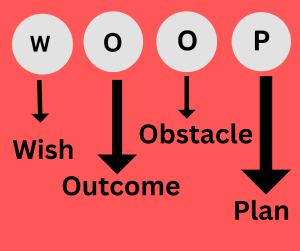
The acronym stands for:
- Wish: Defining a specific, challenging, yet attainable goal.
- Outcome: Visualizing the best result of achieving that goal.
- Obstacle: Identifying the internal hurdles—thoughts, habits, or emotions—that block progress.
- Plan: Constructing an "if-then" scenario to bypass those specific obstacles.
Unlike traditional visualization techniques, which focus exclusively on the "end state," WOOP mandates the confrontation of reality. As detailed in Dr. Oettingen’s seminal work, Rethinking Positive Thinking: Inside the New Science of Motivation, the method functions by leveraging "mental contrasting." This process forces the brain to reconcile the desire for a positive future with the reality of current limitations, thereby mobilizing the energy required for action.
Chronology of Discovery: From Fantasy to Function
The evolution of the WOOP method is rooted in the cognitive science of the late 20th century. Dr. Oettingen began her career investigating how people think about the future. Her early observations revealed a counterintuitive phenomenon: people who indulged in positive fantasies about their future performance often demonstrated lower levels of success than those who did not.
The Problem with "Positive" Fantasies
In a series of classic studies, Oettingen asked participants to imagine achieving their goals—such as losing weight or finding a job. She discovered that the "positive thinkers" actually showed lower physiological signs of engagement and less persistence in the face of challenges. The explanation was simple: by mentally "achieving" the goal in their imagination, their brains experienced a sense of relief, effectively quenching the drive to work for the real-world reward.
The Breakthrough: Mental Contrasting
In the early 2000s, Oettingen pivoted her research toward "mental contrasting." She hypothesized that if she could force people to juxtapose their dreams with their current reality, the brain would perceive a "discrepancy." This discrepancy creates an energetic tension that naturally demands to be resolved through action. By layering this technique with "implementation intentions"—a concept pioneered by psychologist Peter Gollwitzer—the four-step WOOP process was solidified.
Supporting Data: Why It Works
The efficacy of WOOP is not based on anecdotal success, but on longitudinal data across diverse fields, including health, education, and corporate productivity.

The Power of "If-Then" Planning
Implementation intentions, the "P" in WOOP, are the structural backbone of the method. Research into these plans has shown that they significantly increase the likelihood of goal attainment. By pre-deciding when and where to take a specific action to overcome a specific obstacle, individuals bypass the need for willpower during moments of crisis.
When a person says, "If I feel the urge to check social media while working, then I will take three deep breaths and return to my document," they are offloading the decision-making process to their subconscious. Studies indicate that this form of "pre-commitment" can double or even triple the success rate of complex behavioral changes.
Cognitive Load and Motivation
Neurologically, WOOP works by reducing the cognitive load required for decision-making. When an obstacle is encountered, the brain often stalls, leading to procrastination. Because the WOOP practitioner has already defined the obstacle and the solution, the brain defaults to the pre-planned "then" behavior. This automated response removes the friction that typically leads to goal abandonment.

Official Perspectives: The Psychology of Self-Regulation
In the academic community, Dr. Oettingen’s work is highly regarded for its empirical rigor. Her research has shifted the discourse in psychology from "what we think" to "how we think."
The official perspective of the WOOP methodology is that it is not a "magic pill," but a cognitive discipline. It is a tool designed to help people be more selective about which goals they pursue. By engaging in the WOOP process, individuals often find that some goals are not actually attainable or worth the effort. In such cases, dropping the goal is a success in itself, as it frees up mental resources for more viable pursuits.
Dr. Oettingen frequently emphasizes that WOOP is accessible to anyone, regardless of their background or current station in life. It requires no specialized training—only the honesty to confront one’s own internal limitations and the willingness to prepare for the inevitable friction of the path ahead.
Practical Application: Conducting a WOOP
To effectively implement the WOOP method, one should set aside ten minutes in a quiet environment. The following steps should be followed with intention:
1. Define the Wish
Identify a goal that is meaningful and realistic. Avoid vague desires like "be happy." Instead, focus on specific targets, such as "complete the first draft of my project report" or "walk for 30 minutes every morning."
2. Imagine the Outcome
Close your eyes and visualize the feeling of success. Focus on the benefits—the sense of accomplishment, the reduction of stress, or the pride of completion. This step provides the emotional fuel for the journey.

3. Identify the Obstacle
This is the most critical stage. Search for the inner obstacle—the thought, feeling, or habit that usually stops you. Is it fatigue? Is it fear of failure? Is it a tendency to procrastinate? Be specific. If your goal is to exercise, the obstacle isn’t "the gym is closed," but rather, "I feel lazy after work and choose to watch TV instead."
4. Create the Plan
Formulate your "If-Then" statement. Using the previous example: "If I arrive home from work and feel the urge to watch TV, then I will immediately put on my running shoes." By tethering the obstacle to a pre-defined action, you create a fail-safe for your motivation.
Implications: The Long-Term Impact on Human Performance
The implications of adopting WOOP extend far beyond individual task management; they suggest a fundamental shift in how we approach human potential.

Overcoming Procrastination
Procrastination is rarely a time-management problem; it is an emotional-regulation problem. By using WOOP, individuals learn to face the discomfort of their tasks rather than avoiding them. The method validates the existence of the obstacle, removing the shame often associated with struggling, and replaces it with a tactical solution.
Building Resilience
Resilience is often defined as the ability to recover from failure. WOOP builds resilience by normalizing the presence of obstacles. Instead of viewing a setback as a sign of incompetence, a person trained in WOOP views it as a "trigger" for their implementation intention. They are never caught off guard because they have already envisioned the challenge and prepared the response.
Ethical Considerations and Future Outlook
As we move into an increasingly complex and high-pressure world, the need for effective self-regulation tools is paramount. The WOOP method offers a democratic approach to personal agency. It does not require high status, financial resources, or innate talent; it only requires the discipline to look at one’s own mind, recognize the barriers to one’s goals, and build a map to navigate around them.

In conclusion, the science of motivation has moved beyond the naive optimism of the past. The WOOP method stands as a testament to the fact that we do not need to simply "believe" in our success. Instead, we must confront the reality of our obstacles and arm ourselves with the structural tools to overcome them. By integrating the dream with the reality, WOOP provides the most reliable pathway to sustained, long-term achievement.