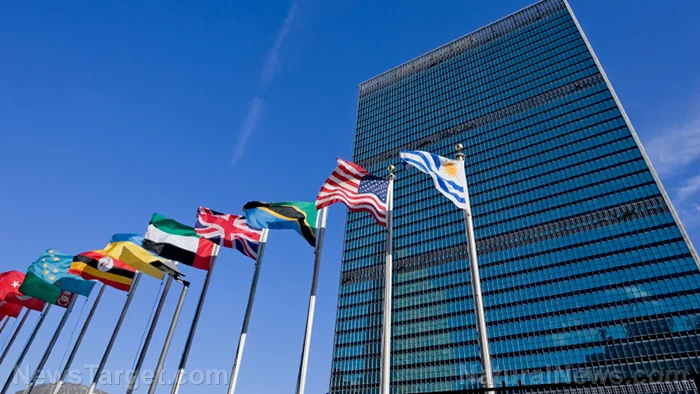
UNITED NATIONS, NEW YORK — In an annual ritual that has played out for over three decades, the United Nations General Assembly voted overwhelmingly on October 28, 2026, to condemn the enduring United States economic embargo against Cuba. Yet, beneath the familiar numbers lies a shifting geopolitical landscape. The final tally of 130 votes in favor and 17 against—bolstered by 25 abstentions—captured both Washington’s persistent global isolation and the tangible, albeit controversial, gains achieved by the Trump administration’s aggressive lobbying campaign to fracture international solidarity against the blockade.
While the vote remains non-binding, it laid bare the high-stakes confrontation unfolding across the Caribbean and the halls of the UN. As Washington successfully peeled away key European and Asian allies from voting in favor of the resolution, the humanitarian crisis inside Cuba has reached a terrifying crescendo, driven by a tightening U.S. economic chokehold and dramatic geopolitical interventions across Latin America.
Main Facts: The 2026 UN Showdown and Shifting Alliances
The core of the October 28 vote centers on a stark dichotomy: the global community’s moral rejection of a 64-year-old unilateral sanctions regime versus Washington’s determination to tighten the screws on Havana, regardless of multilateral consensus.
- The Vote Breakdown: 130 nations voted to condemn the embargo, 17 voted to uphold it (or opposed the resolution), and 25 countries abstained.
- Washington’s Strategic Shift: U.S. Envoy Mike Waltz celebrated what the administration views as a notable diplomatic victory. By aggressively lobbying major economies, Washington successfully convinced key nations—including South Korea and Germany—to alter their positions, resulting in a tripling of countries moving away from their previous opposition to the U.S. stance.
- The Humanitarian Toll: Official Cuban figures estimate the cumulative economic losses from the embargo at an astronomical $179 billion. Meanwhile, a de facto fuel blockade implemented in January 2026 has crippled the island’s infrastructure, leaving 11 million citizens grappling with historic blackouts, erratic water supplies, and severe food shortages.
- Unprecedented Diplomatic Friction: The ideological hostility spilled over from speeches into physical altercations. Fiery shouting matches and shoving on the UN General Assembly floor culminated in the immediate expulsion of a senior Cuban diplomat by Washington, setting off a rapid cycle of retaliatory diplomatic complaints.
Chronology: Escalating Tensions Leading to the UN Vote
The diplomatic showdown at Turtle Bay did not happen in a vacuum; it was the culmination of a tense year defined by aggressive U.S. foreign policy maneuvers in the Western Hemisphere and mounting desperation within Cuba.
Early 2026: The Chokehold Tightens
The groundwork for the autumn diplomatic clash was laid in January 2026, when the Trump administration instituted a de facto fuel blockade against Cuba. This measure was executed alongside decisive U.S. military action that successfully removed Venezuelan President Nicolás Maduro from power. For decades, Caracas had served as Havana’s primary economic lifeline, providing subsidized oil. With Maduro’s removal and the U.S. naval and economic interdiction of fuel tankers, Cuba’s energy architecture was pushed to the absolute breaking point.
Mid-2026: The Crisis Deepens Internally
Throughout the spring and summer, the absence of imported petroleum paralyzed the island. Power plants failed with cascading regularity. In Havana and across the provinces, multi-day blackouts became the norm, halting public transportation, shutting down refrigeration for dwindling food supplies, and making running water an intermittent luxury. The economic and social fabric of the island frayed rapidly under the weight of the compounded sanctions.
October 27–29, 2026: The UN Clash and Expulsions
As diplomats gathered in New York for the late October General Assembly session, the atmosphere was electric with hostility.
- Tuesday: Tensions boiled over on the UN floor, where U.S. and Cuban delegates engaged in volatile shouting matches that quickly escalated into physical shoving in front of international observers.
- Wednesday: U.S. Envoy Mike Waltz escalated the diplomatic crisis by publicly accusing Cuba’s First Secretary, Richard Tur de la Concepcion, of physically assaulting an American diplomat. Waltz announced Tur de la Concepcion’s immediate expulsion from the United States.
- The Counter-Move: In retaliation, the Cuban Foreign Ministry filed a formal, high-level complaint with UN Secretary-General António Guterres, targeting the conduct of the American diplomat involved in the altercation and decrying the expulsion as a bullying tactic.
- October 28 (The Vote): Amid this toxic backdrop, the General Assembly proceeded with the annual vote, yielding the 130-17 result that captured both global condemnation of the embargo and Washington’s targeted diplomatic gains.
Supporting Data and Economic Realities
To understand the gravity of the UN vote, one must examine the metrics defining the crisis. The economic architecture of the U.S. embargo is anchored by the 1996 Helms-Burton Act, which codified extraterritorial provisions penalizing foreign companies that do business with Cuba. Because only the U.S. Congress possesses the constitutional authority to lift the statutory embargo, the UN General Assembly resolutions remain symbolic. Yet, they serve as the premier global barometer of opinion on American foreign policy.
Historical Voting Patterns
Since 1992, the United States has consistently voted against the UN resolution condemning the embargo, with only one exception: the historic abstention in 2016 under President Barack Obama during the brief, tentative "thaw" in U.S.-Cuba relations. Under the Trump administration, however, Washington has abandoned any pretense of seeking normalization, opting instead for a maximum-pressure campaign designed to force regime collapse.
Economic and Humanitarian Metrics
- $179 Billion: The cumulative economic damage inflicted on Cuba by the embargo, according to official Havana data—a figure representing systemic losses across trade, finance, tourism, and medicine.
- Zero Fuel Security: Following the January 2026 blockade, fuel imports dropped to an all-time low. The cascading effect on electricity generation has meant that hospitals, schools, and water treatment facilities operate under perpetual emergency constraints.
- Shifting Diplomatic Alignment: While the overwhelming majority of nations (130) still view the embargo as an unjust collective punishment, Washington’s relentless lobbying efforts proved mathematically successful. By convincing major economies like Germany and Italy to abstain, and South Korea to shift its voting posture, the U.S. State Department demonstrated that it can erode international opposition by linking broader geopolitical partnerships to Cuba policy.
Official Responses and Rhetoric
The ideological chasm between Washington and Havana was on full display in the statements issued by key figures immediately following the UN vote.
The United States Perspective
U.S. Envoy Mike Waltz struck a triumphant tone regarding the shift in international compliance, framing the administration’s aggressive lobbying as a major success.
"Major economies like Korea, like Germany, and others have shifted their position," Waltz stated, highlighting the tripling of nations that walked away from their traditional opposition to the U.S. stance.
Washington continues to justify the crushing sanctions as a necessary and moral pressure campaign against what U.S. officials characterize as a "corrupt dictatorship" in Havana. From the administration’s viewpoint, economic isolation is the most effective tool to deny the Castro regime the resources it uses to maintain internal security and suppress domestic dissent.
The Cuban Perspective
Cuban Foreign Minister Bruno Rodríguez fiercely denounced the U.S. position, labeling the ongoing blockade not merely as a policy disagreement, but as a humanitarian atrocity.
"The U.S. government is once again isolated in its attempt to continue strangling the Cuban people and subjecting them to an act of collective punishment and genocide," Rodríguez declared from the UN podium.
On the ground in Havana, ordinary citizens expressed exhaustion with the geopolitical posturing. Luis Manuel Cepero, a resident navigating the daily crisis of blackouts and shortages, dismissed the political theatrics of New York in favor of lived reality.
"This vote raises awareness among many people who just don’t understand what the embargo is all about—how it affects the Cuban people in our day-to-day lives, what we are going through, how we suffer," Cepero remarked.
Implications: A Permanent Stalemate?
The October 2026 UN vote and its tumultuous aftermath signal a grim future for U.S.-Cuba relations. The implications of this diplomatic showdown stretch across three critical domains:
1. The Normalization of Diplomatic Hostility
The physical altercations and rapid expulsion of diplomats at the United Nations mark a dangerous regression in bilateral relations. Channels of communication—already strained to a breaking point—are now nearly non-existent. As both nations resort to retaliatory expulsions and inflammatory rhetoric at international forums, the possibility of backchannel dialogue or confidence-building measures is effectively dead for the foreseeable future.
2. The Mounting Humanitarian Toll on Civilians
While Washington measures success by the number of abstentions it can buy or bully in New York, the human cost inside Cuba continues to escalate exponentially. The combination of the fuel blockade, the loss of Venezuelan support, and the legacy embargo has created conditions indistinguishable from a humanitarian disaster. With no end in sight to the energy crisis, basic survival for 11 million Cubans is becoming increasingly precarious, driving a new wave of migration and domestic civil strain.
3. A Geopolitical Dead End
Structurally, the policy remains locked in a permanent stalemate. Because the legislative power to dismantle the embargo rests entirely with a divided U.S. Congress, the annual UN ritual will likely continue unchanged. The Trump administration has proven explicitly that it is willing to accept deep diplomatic isolation from the broader global community to achieve its regional strategic objectives.
Ultimately, Washington’s calculus relies on one of two outcomes: a dramatic shift in U.S. domestic politics that brings a pro-engagement administration to power, or the total collapse of the Cuban state under the crushing weight of accumulated pressure. In the current geopolitical climate, neither outcome appears imminent, leaving the Cuban people trapped in the crossfire of a 21st-century Cold War relic.