By Global Science & Culture Desk
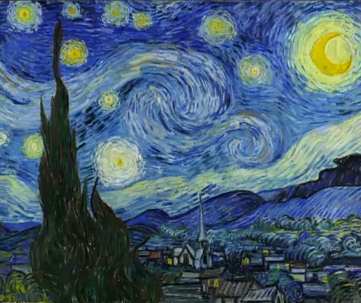
For more than a century, Vincent van Gogh’s The Starry Night (1889) has captivated millions with its swirling vortexes of luminous yellow, deep indigos, and dramatic, expressive skies. Widely regarded as a masterpiece of post-Impressionist art, the painting has long been interpreted through the lens of psychological turmoil, religious symbolism, and pure imaginative abstraction.
However, a groundbreaking multidisciplinary study published in the journal Scientific Reports has upended conventional art history. Conducted jointly by the space-science enterprise SLLAB and the School of Space Research at Kyung Hee University in South Korea, the research reveals that the vibrant celestial bodies swirling above the sleeping French village are not products of fantasy. Instead, they represent an astonishingly accurate astronomical portrait of the pre-dawn sky over Saint-Rémy-de-Provence on July 22, 1889.
The findings offer a profound reinterpretation of Van Gogh’s working methods, suggesting that even during periods of immense personal and mental struggle, the artist maintained a rigorous, observational connection to the natural world.
Main Facts: Bridging Art History and Modern Astronomy
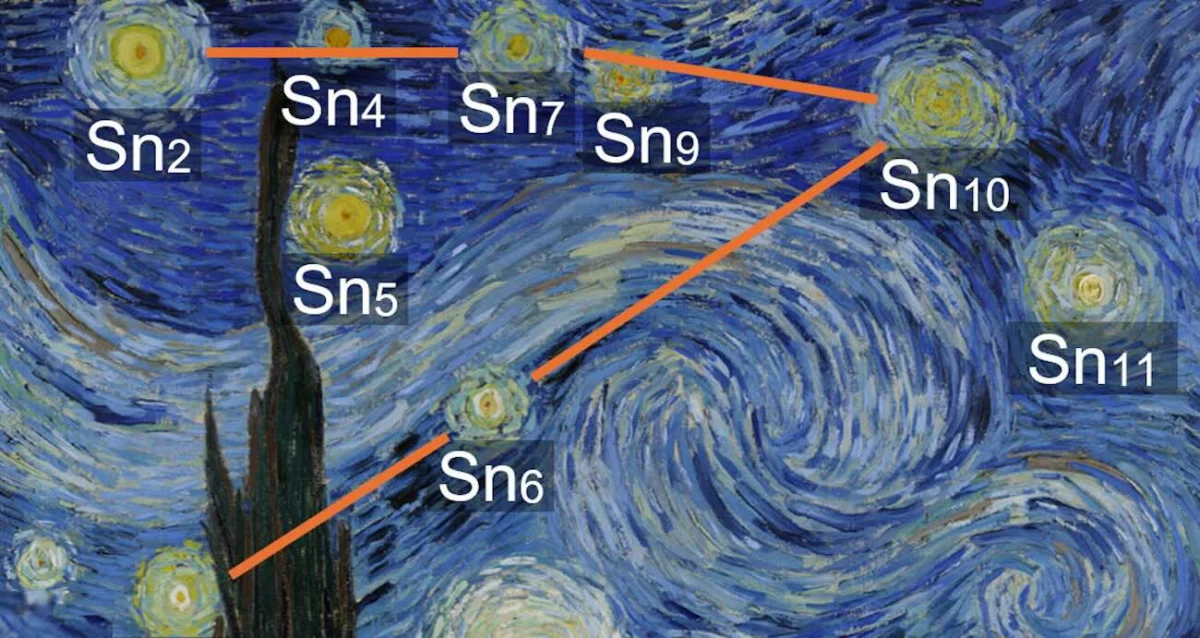
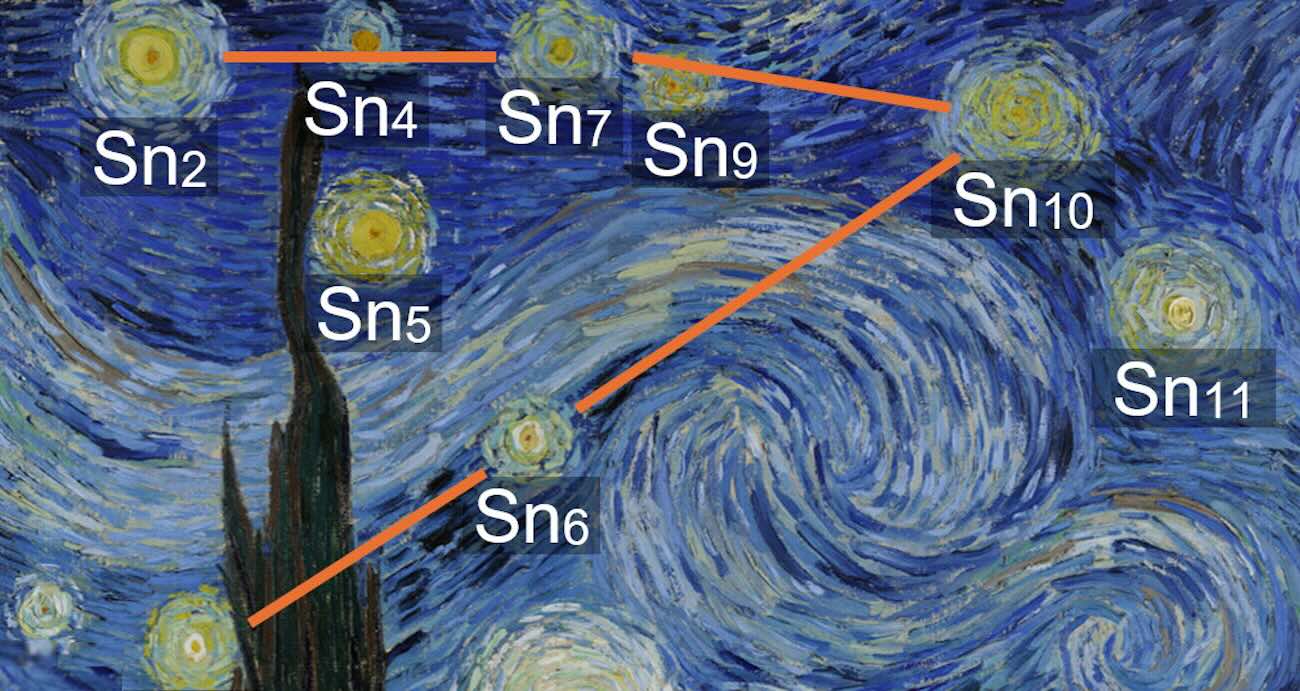
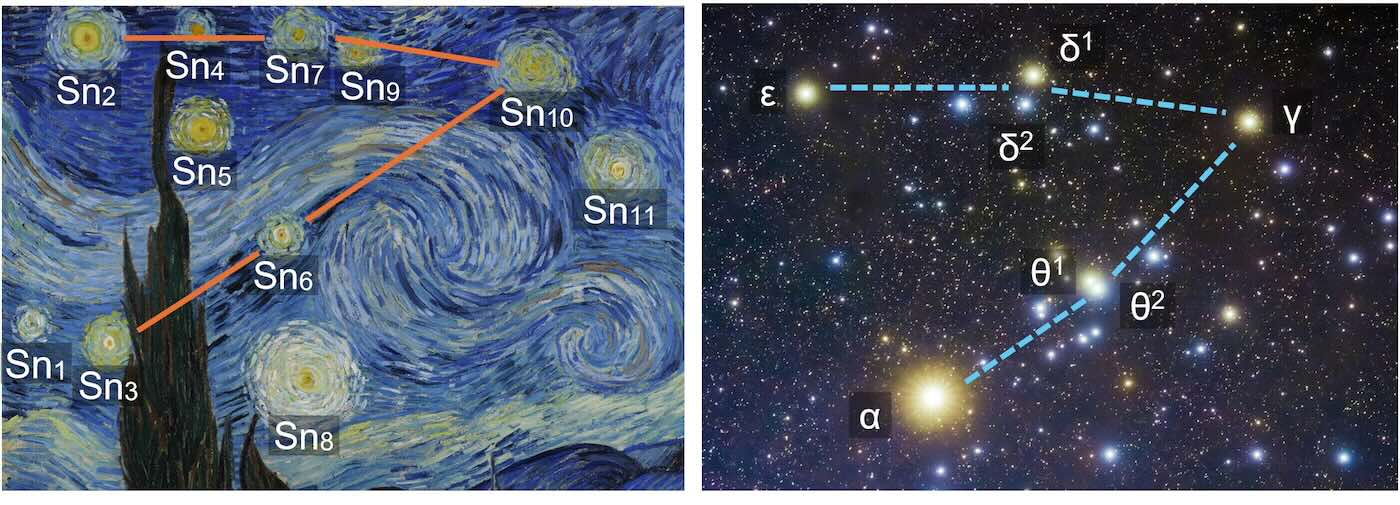
At the heart of the new study is a precise astronomical alignment. According to the research team led by lead author Elijah Jeong-hyun Kim, the cluster of bright stars immortalized in the upper right-center of The Starry Night matches the Hyades star cluster in the constellation Taurus. Furthermore, the painting features a waning crescent moon and the planet Venus, all positioned precisely within the artist’s field of view during late July 1889.
This revelation challenges the traditional timeline accepted by art historians for decades. Historically, The Starry Night has been dated to approximately June 18, 1889. This date was derived from a letter Van Gogh wrote to his brother, Theo, mentioning a newly completed canvas of a starry sky.
Yet, astronomers have long noted a glaring inconsistency: the lunar phase described in letters from mid-June was a waning gibbous, which fails to account for the slender, delicate crescent moon rendered so vividly on the canvas.
By applying advanced statistical shape analysis alongside meteorological records, historical correspondence, and on-site geographical field work in France, the South Korean research team has successfully bridged the gap between canvas and cosmos. Their work marks the first comprehensive astronomical re-examination of the painting in forty years.
Chronology: How the Research Unfolded
The journey to decode the skies of The Starry Night was decades in the making, drawing on iterative scientific inquiries that began in the late 20th century.
1. Early Astronomical Inquiries (1984–1986)
The modern intersection of Van Gogh scholarship and astronomy began in the mid-1980s. American scientists Albert Boime (in 1984) and Charles Whitney (in 1986) independently analyzed the celestial configurations in the painting. While both recognized that Van Gogh was painting a real sky, they arrived at conflicting conclusions regarding which celestial bodies were depicted. Because of these discrepancies, neither theory managed to displace the prevailing psychoanalytic and symbolic interpretations favored by art historians.
2. Fieldwork and Observation (2019)
The current breakthrough took root when Elijah Jeong-hyun Kim, an experienced telescope builder and amateur astronomer, felt compelled to reinvestigate the painting. "To an observational astronomer, the cluster of stars in The Starry Night is the Hyades in Taurus," Kim explained. "But the moment I read the earlier studies explaining it as Aries, I heard the painting calling to me."
Unsatisfied with the Aries hypothesis, Kim and his team embarked on their first major research trip to France in 2019. Utilizing historical photographs and topographical mapping, the team located the exact vantage point in Saint-Rémy-de-Provence from which Van Gogh had observed the landscape before translating it to canvas. They performed similar topographical verifications in Arles, analyzing the perspective of Van Gogh’s 1888 work Starry Night over the Rhône.
3. Quantitative Data and Publication (2025–2026)
Following years of data compilation, Kim published a foundational book in 2025 gathering initial evidence. This groundwork culminated in the 2026 Scientific Reports paper, which integrated quantitative astronomical simulations, textual analysis of original French and Dutch letters, and rigorous statistical modeling.
Supporting Data: Procrustes Shape Analysis and Historical Context
To move beyond subjective interpretation, the research team employed Procrustes shape analysis—a sophisticated statistical method used to compare the geometric distribution of shapes. By aligning the coordinates of the five central stars in The Starry Night with digital simulations of the night sky, the team demonstrated a statistically significant correspondence with the Hyades cluster. Remarkably, the match proved even more precise in a pen-and-ink drawing that Van Gogh executed after completing the oil painting.
Establishing the correct date of July 22, 1889, however, required reconciling a major historical hurdle: the timeline of Van Gogh’s mental health.
Art historians had long assumed that late July 1889 fell squarely within one of the severe debilitating seizures that plagued the artist during his stay at the Saint-Paul-de-Mausole asylum in Saint-Rémy. To solve this chronological puzzle, the research team conducted a meticulous cross-analysis of:
- Original correspondence written in French and Dutch by Vincent and Theo van Gogh.
- Contemporary meteorological logs from the region.
- Specific ecological markers mentioned in the letters, such as references to the emergence and song of cicada insects.
Through this triangulation of data, the team concluded that the onset of that specific seizure occurred slightly later than previously thought, leaving a clear window on the morning of July 22 during which Van Gogh could calmly observe and record the pre-dawn sky.
Official Responses and Broader Implications
The findings have sent ripples through both the astronomical and art-historical communities, prompting a re-evaluation of how scholars approach Impressionist and Post-Impressionist masterworks.
Dr. Kim emphasized that the study’s implications extend far beyond a single canvas. "I hope this work prompts a renewed, multidisciplinary look at the sequence and working methods of the Saint-Rémy paintings," he said. "Our conversation with Van Gogh’s other skies is still ongoing. We plan to tell those stories one by one."
As part of this broader initiative, the research team applied the same Procrustes shape analysis methodology to another iconic nocturnal work: Van Gogh’s 1888 painting Café Terrace at Night. Their preliminary findings suggest that the star configurations glittering above the Parisian-style café correspond accurately to the stars surrounding the Summer Triangle asterism.
Shifting Perspectives on Van Gogh’s Genius
For generations, popular culture has romanticized The Starry Night as the feverish hallucination of a troubled mind—a swirling projection of psychological anguish divorced from reality. While Van Gogh undoubtedly suffered from severe mental health challenges, this new research highlights an often-overlooked facet of his genius: his deep, methodical engagement with nature.
Rather than abandoning reality during his episodes, Van Gogh demonstrated an acute visual memory and a profound respect for the cosmos. By anchoring his swirling brushwork in actual astronomical phenomena, he demonstrated that his art was not merely an escape from the physical world, but an intense, hyper-aware amplification of it.
Conclusion
The convergence of space science and art history embodied by Kim and his colleagues at Kyung Hee University opens an exciting new chapter in museum scholarship. By treating historical masterworks as scientific data points as well as cultural treasures, researchers are decoding hidden layers of meaning embedded in the canvas.
As scientists continue to decode the remaining nocturnal landscapes left behind by the Dutch master, one thing is certain: Vincent van Gogh’s skies are far more than emotional expressions—they are genuine, beautifully rendered windows into the universe as it truly appeared in the summer of 1889.