By Global Innovation & Technology Desk
Published: November 2026
Introduction: The Spark of Inspiration
In an era dominated by technological advancements designed to maximize corporate profits or automate routine office labor, the most profound innovations often stem from a deeply personal place. For Shashank Madala, a high school student from New Jersey, that spark came not from a Silicon Valley boardroom, but from family gatherings where he watched well-meaning adults repeatedly misunderstand his autistic cousin.
When his cousin became overwhelmed or upset, family members would crowd around, loudly guessing at his internal state—wondering aloud if he was hungry, or if the room was simply too loud. More often than not, their guesses were entirely incorrect. Over time, the young boy grew frustrated and retreated inward, eventually stopping his attempts to communicate his needs altogether.
Instead of accepting this communication breakdown as an inevitable hurdle, Madala decided to take matters into his own hands. Armed with little more than curiosity, a profound empathy for his cousin, and the completion of just a single high school computer science course, Madala taught himself machine learning. The result of his self-directed education is Kora, a free, AI-powered mobile application designed to help parents, caregivers, and educators better interpret the emotional and behavioral cues of autistic children.
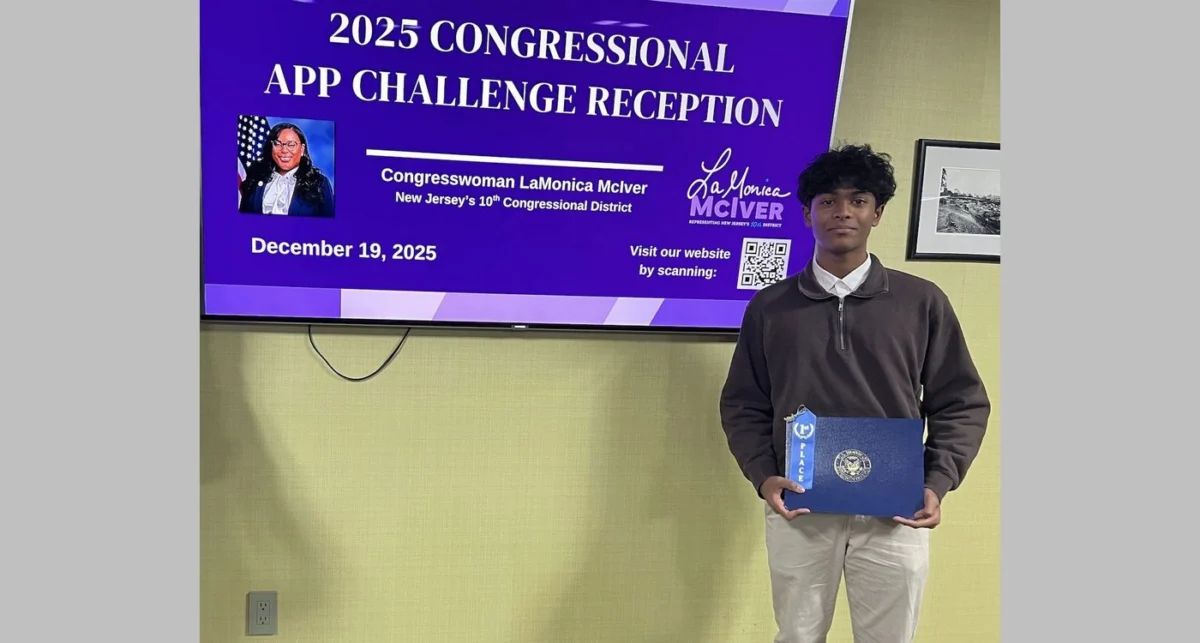
Today, Kora has grown from a humble family-inspired project into an international tool utilized by more than 700 users across 12 countries. Distributed primarily through autism therapy centers and family networks, Kora remains completely free to the public. Its development has earned Madala prestigious accolades, including first place in the Congressional App Challenge for New Jersey’s 10th Congressional District and formal recognition from the New Jersey Senate and General Assembly.
Main Facts: What is Kora and How Does It Work?
Kora is designed to operate seamlessly on standard mobile devices. When a caregiver is uncertain about what an autistic child might be feeling, they simply point their smartphone camera at the child. The app’s underlying machine learning model processes the visual data and provides a breakdown of potential emotional states, registering probabilities across metrics such as happiness, sadness, anger, fear, and a neutral baseline, alongside practical suggestions for how an adult might respond.
However, Kora’s core innovation lies not in what it does, but in what it deliberately avoids doing.
Traditional emotional-recognition software often operates on a deterministic premise: it issues a single, highly confident, and definitive label—such as "The child is angry"—and presents it as absolute fact. Madala quickly realized that this rigid approach replicated the very mistake his family had made with his cousin. A definitive label encourages adults to stop paying attention, shifting their focus away from the child and onto the technology’s verdict.
“A tool that announces that a child is angry invites the adult to stop looking at the child,” Madala wrote in an essay published in Autism Spectrum News.
Recognizing this critical flaw, Madala fundamentally rebuilt the app. Instead of delivering a single, authoritative answer, Kora presents multiple plausible interpretations of a child’s emotional state. Crucially, the app is programmed to highlight its own uncertainties, deliberately leaving the final judgment and interpretation to the adult who knows the child best. There are no rigid scores, no medical diagnoses, and no clinical judgments—only suggestions meant to foster deeper human connection.
Chronology of Development: From a 15-Year-Old’s Bedroom to the U.S. Capitol
The journey of Kora’s creation spans several distinct phases of technical trial, ethical refinement, and public recognition:
- The Observation Phase (Pre-2024): Madala observes recurring miscommunications between his autistic cousin and adult family members. He notes how well-intentioned guesswork often isolates the child further.
- The Self-Taught Coding Phase (Age 15): With only a single introductory computer science class under his belt, Madala dedicates his free time to studying machine learning, neural networks, and mobile app development frameworks.
- The Iteration Phase: Madala builds early prototypes of Kora that output single, confident emotional readings. Recognizing that this approach mirrors human error, he re-engineers the software to offer probabilistic, multi-outcome readings that emphasize humility and nuance in AI interpretation.
- The Launch and Expansion (2024–2025): Kora is rolled out to autism therapy centers and families. Word-of-mouth adoption spreads the tool globally, crossing borders to reach users in 12 countries. Madala forms a small development team, collaborating with three colleagues to scale the infrastructure.
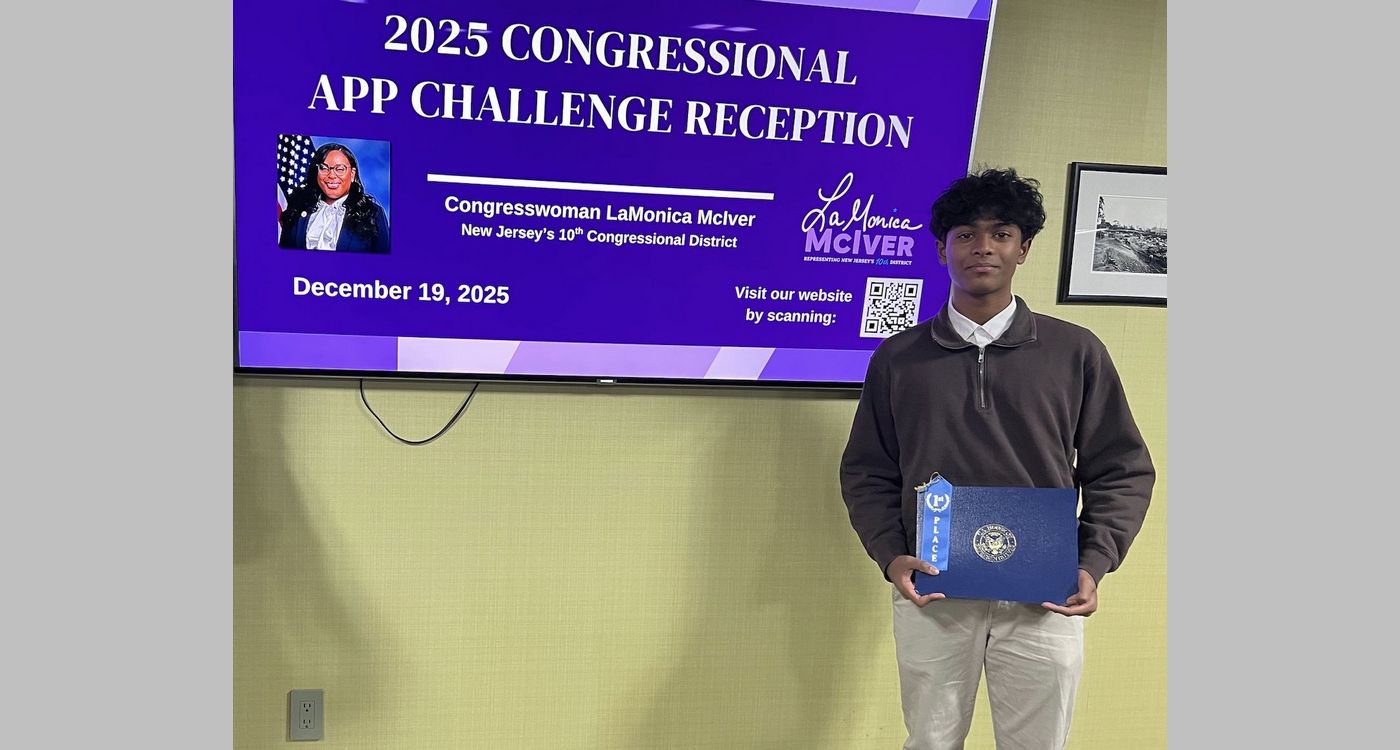
- Congressional Recognition (December 2025): Competing against approximately 4,600 participants, Kora takes first place in the Congressional App Challenge for New Jersey’s 10th Congressional District. The app is subsequently displayed in the United States Capitol.
- Legislative Honors (2026): The New Jersey Senate and General Assembly pass a Joint Legislative Resolution officially commending Madala for his technological achievement and civic contribution.
Supporting Data and Technical Architecture
To understand the magnitude of Kora’s success, one must examine both its adoption metrics and its design philosophy.
Global Reach and Adoption Metrics
- Active Users: Over 700 individuals, spanning parents, specialized educators, and clinical therapists.
- Geographic Footprint: Deployed across 12 countries, demonstrating that the communication barriers Kora addresses are universal across cultures.
- Competitive Standing: Victor out of a pool of roughly 4,600 submissions in the 2025 Congressional App Challenge for New Jersey’s 10th District.
- Development Team: Led by Shashank Madala in coordination with a dedicated team of three peers.
Technical Philosophy: Flipping the Script on Assistive Tech
Most assistive technology developed for autistic individuals historically shares a common objective: to modify or normalize the behavior of the child so that they conform more easily to neurotypical expectations. Madala’s architecture flips this script entirely.
By designing Kora to prompt adults to slow down, consider multiple emotional hypotheses, and consult their own intimate knowledge of the child, the technology acts as a bridge rather than a corrective filter. It honors the autonomy of the child while relieving the anxiety of caregivers who frequently worry about misinterpreting non-verbal cues.
Official Responses and Public Acclaim
The emergence of Kora has garnered praise from legislators, educators, and technology advocates alike. Lawmakers in New Jersey pointed to Madala’s work as a prime example of youth-led innovation addressing real-world community challenges.
In early 2026, the New Jersey Senate and General Assembly issued a Joint Legislative Resolution praising the high schooler’s ingenuity. The resolution highlighted not only the technical complexity of building a machine-learning application at a young age, but also the profound social impact of making the tool universally accessible and free of charge.
Furthermore, educational pieces penned by Madala himself—such as his contribution to Autism Spectrum News—have sparked broader discussions within the therapeutic community regarding the ethical implementation of artificial intelligence in neurodiversity support. Experts have praised his mature approach to data uncertainty, noting that many commercial AI developers could learn valuable lessons from Madala’s decision to program humility into his algorithms.
Implications: The Future of Ethical AI and Neurodiversity Support
The success of Kora carries profound implications for multiple fields, ranging from artificial intelligence ethics to modern special education practices.
1. Democratizing AI for Social Good
For years, the narrative surrounding artificial intelligence has been dominated by concerns over job displacement, algorithmic bias, and privacy violations. Madala’s work demonstrates that AI can be reclaimed as an instrument of empathy. By leveraging accessible open-source machine learning tools, independent developers and students can construct localized, highly impactful solutions to problems that large technology firms often overlook as unprofitable.
2. Redefining Assistive Technology
Kora’s design philosophy challenges the medical model of disability, which traditionally views autistic traits as deficits to be corrected. By framing the app as a tool to educate caregivers rather than manage children, Madala establishes a new benchmark for assistive technology. Future developers in the neurodiversity space may increasingly look to Kora as a model for tools that emphasize mutual understanding and relational bridge-building over behavioral compliance.
3. The Power of Hyper-Local Observation
Perhaps the most enduring takeaway from Madala’s journey is the source of his inspiration. In an age where young technologists are routinely encouraged to solve abstract, global problems, Madala turned his gaze inward—to his own family living room.
As Madala reflected during a recent interview:
"The most useful thing I have ever built came out of paying close attention to one person. If you are looking for something that matters, it is probably already in your house."
As Kora continues to expand its reach through partnerships with schools, therapy centers, and family support groups, Shashank Madala remains at the helm of its ongoing development. Whether the platform scales to tens of thousands of users or remains a specialized resource for dedicated communities, its foundational ethos has already left an indelible mark: technology at its finest does not replace human empathy; it amplifies it.