The scenario is achingly familiar: you have just finished a demanding ten-hour workday, spent your commute fielding urgent messages from your teenager’s school, navigated a pharmacy queue to pick up medication for an aging parent, and are now sitting in a grocery store parking lot, arguing with an insurance representative on speakerphone. It is 9:40 p.m. As you finally turn the key in your front door, a well-meaning acquaintance tells you that you really need to "make time for self-care."
While the sentiment is rooted in kindness, it is structurally inadequate. For the millions of Americans navigating the complex landscape of caregiving, "self-care" is not just insufficient—it is often a tone-deaf response to a systemic overload. When caregiving responsibilities bleed into every facet of your life—work, sleep, finances, marriage, and personal health—the problem is no longer a lack of mindfulness. It is a fundamental depletion of capacity.
The Anatomy of Caregiver Burnout
Caregiver burnout is a term that has entered the common lexicon, yet it remains widely misunderstood. It is not a character flaw, nor is it a sign that you have stopped caring about the person you are supporting. Rather, it is a clinical and emotional state of cumulative depletion. It occurs when the demands placed upon an individual—whether for an aging parent, a child with medical needs, or a spouse—consistently exceed the resources, recovery time, and support structures available to them.
Unlike a clinical diagnosis found in the Diagnostic and Statistical Manual of Mental Disorders (DSM-5), "burnout" is a descriptive label for a dangerous pattern. It manifests as a blend of physical exhaustion, emotional detachment, chronic irritability, and a creeping sense of dread. For many, it also presents as "cognitive slippage"—forgetting routine details, missing work deadlines, or feeling a hollow numbness when another request for help arrives.
The Research Perspective: Is It a Diagnosis?
The medical community has debated the classification of burnout for decades. A 2023 review published in The BMJ highlighted that, despite extensive study, there is no universally accepted clinical diagnosis for burnout. However, researchers are quick to note that the absence of a formal diagnostic code does not equate to an absence of distress.
In fact, treating burnout as a simple "coping failure" is where the current societal approach goes wrong. A peer-reviewed framework for informal caregiving identifies burnout as the result of interacting variables: the specific care setting, the caregiver’s personal resources, the environment, and the nature of the relationship. By shifting the focus from "weak resilience" to "systemic demand," we can begin to address the problem with the gravity it deserves.
The Scope of the Crisis: A Chronology of Invisible Labor
The scale of this issue is immense. According to data from AARP and the National Alliance for Caregiving, approximately 63 million U.S. adults—nearly one in four—provided ongoing care to an adult or child with a medical condition or disability in 2025.
The Rise of the "Sandwich Generation"
The crisis is particularly acute for the "sandwich generation"—those individuals, often in their late 40s and 50s, who are simultaneously raising children and caring for aging parents. This demographic is currently experiencing a unique collision of pressures:
- Early 40s: Balancing career acceleration with early-stage child-rearing and the initial signs of parental decline.
- Mid 40s-50s: The peak of "load-bearing" responsibility. Financial strain mounts as retirement savings are diverted to cover elder-care costs, and professional growth is stifled by the inability to work overtime.
- Late 50s: The onset of personal health decline, often exacerbated by years of suppressed stress.
Research into this demographic shows that the financial and temporal costs are not merely "private attitude problems." They are structural realities. The loss of employment opportunity, the high cost of specialized equipment, and the erosion of personal savings create a cycle of instability that no amount of meditation can resolve.
Distinguishing Stress from Burnout
One of the most critical steps in managing this experience is understanding the terminology. "Caregiver stress" is the acute, immediate pressure of a specific task. "Compassion fatigue" is the emotional toll of witnessing another person’s prolonged suffering. "Burnout," however, is the cumulative result of sustained, unmitigated demand.
While these terms often overlap, they are not interchangeable. For instance, depression is a distinct clinical condition that requires medical intervention, whereas burnout is more closely tied to the specific environment of the caregiving role. Relying on an online checklist is rarely sufficient; if an individual experiences low mood, hopelessness, panic, or substance use, they must consult a professional. Suicidal ideation, unfortunately, is a documented risk among family caregivers, and it is a signal that the situation has moved beyond the scope of informal support.

The "Care Load Triage" Framework
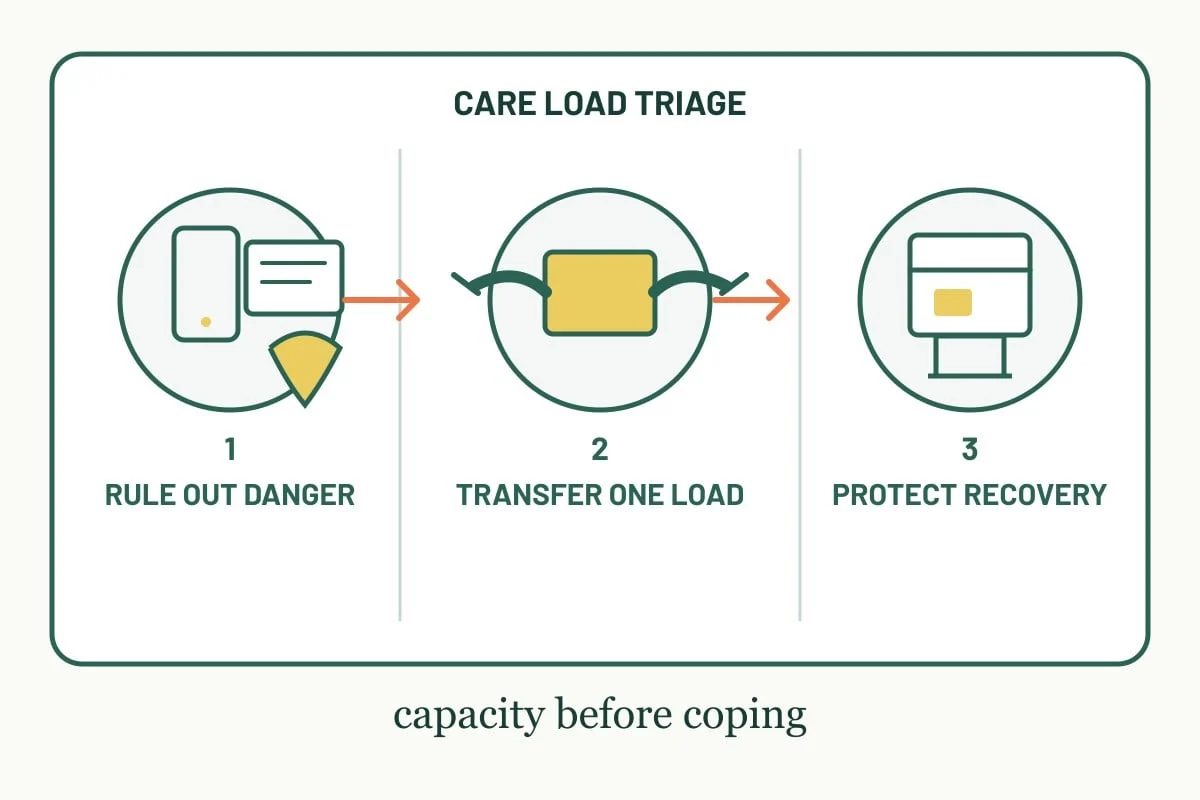
Because the problem is one of capacity rather than commitment, the solution must be tactical. "Care Load Triage" is an editorial and management tool designed to force a re-evaluation of the care arrangement within a 48-hour window.
1. Rule Out Danger and Immediate Health Concerns
Before addressing the "load," one must ensure the baseline safety of the environment. Is the person in your care safe? Are medications managed? If you find yourself too exhausted to drive, too distracted to manage complex medication schedules, or experiencing your own health decline, the system is failing. In these instances, you must move beyond the "caregiver" role and seek immediate intervention from social services or healthcare professionals.
2. Transfer One Load-Bearing Task
The phrase "let me know if I can help" is often useless to a caregiver because the effort of managing the helper is just as taxing as doing the task yourself. To effectively transfer a task, you must:
- Identify a specific, repetitive, and high-consequence task. (e.g., transport to dialysis).
- Assign ownership. Ask a specific person to take full responsibility for that task for a set duration (e.g., "Could you manage the Thursday transport for the next month?").
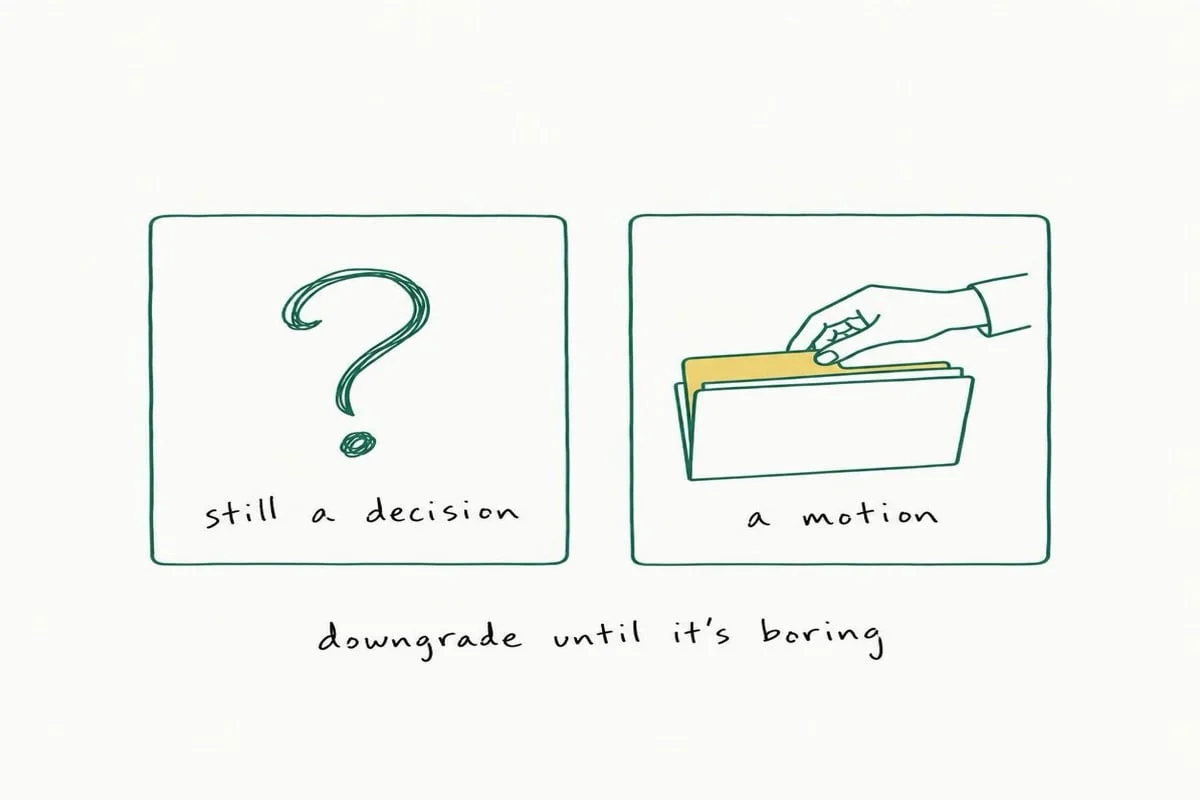
- Relinquish the oversight. Once the task is transferred, you must step back. The goal is to reduce your cognitive load, not to supervise a new assistant.
3. Protect One Recovery Block
A recovery block is not "free time." It is a protected, non-negotiable period where you are completely unreachable for caregiving tasks. This might be a two-hour window on a Sunday morning or a single evening where a professional or family member monitors the phone. The goal is to provide enough psychological distance to view the care arrangement objectively.
Implications: Changing the Operating Model
The societal implication of this crisis is clear: we are relying on an unsustainable, informal, and invisible workforce to prop up a healthcare system that is failing to provide adequate long-term support.
When we tell caregivers to "take a bath" or "be more positive," we are gaslighting them. We are suggesting that the solution to a broken bridge is for the person carrying the load to simply walk across it with more grace.
A New Way Forward
For those currently feeling the weight of the load, consider these final points:
- Audit your environment: Use a "life audit" to identify exactly which responsibilities are pulling down your health, work, and finances.
- Document the gaps: If support is unavailable, stop trying to fill every gap yourself. Document the deficiencies and present them to clinicians, social workers, and employers. When you make your own capacity invisible, you allow the system to continue underfunding the necessary care.
- Prioritize structural change: If you are choosing between a spa day and finding a local respite care provider, choose the latter. Respite care is not a luxury; it is a structural necessity for the long-term survival of the care arrangement.
Conclusion: Capacity Over Commitment
The most profound realization a caregiver can make is that their capacity is not infinite. You do not have to prove your love by making yourself disappear. By shifting from a mindset of "tolerance" to one of "triage," caregivers can begin to reclaim their agency.
If you or someone you know is struggling, do not wait for a crisis to occur. If the load is unsustainable, it is not because you are failing; it is because the structure is broken. Contact local aging services, consult with a professional, and start by shifting just one part of the load. Your duty is to be a caregiver, not a martyr. Protecting your own health is not an act of selfishness—it is a prerequisite for your ability to provide care at all.
Need Help?
- If you are in immediate danger or in crisis: Call or text 988 in the US and Canada, or contact your local emergency services immediately.
- For resources: Visit the Eldercare Locator or the ARCH National Respite Locator to find support systems in your local community.
Disclaimer: This article is for informational purposes and does not constitute medical, psychological, or legal advice. If you are experiencing symptoms of depression or burnout, please contact a licensed healthcare professional.