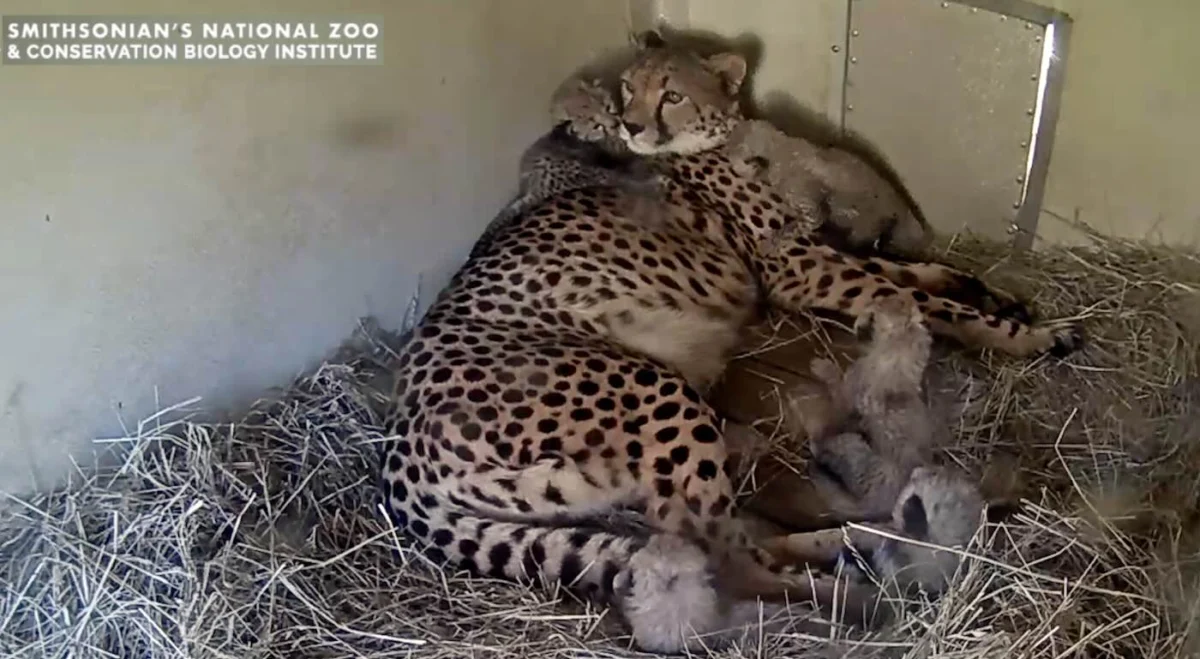
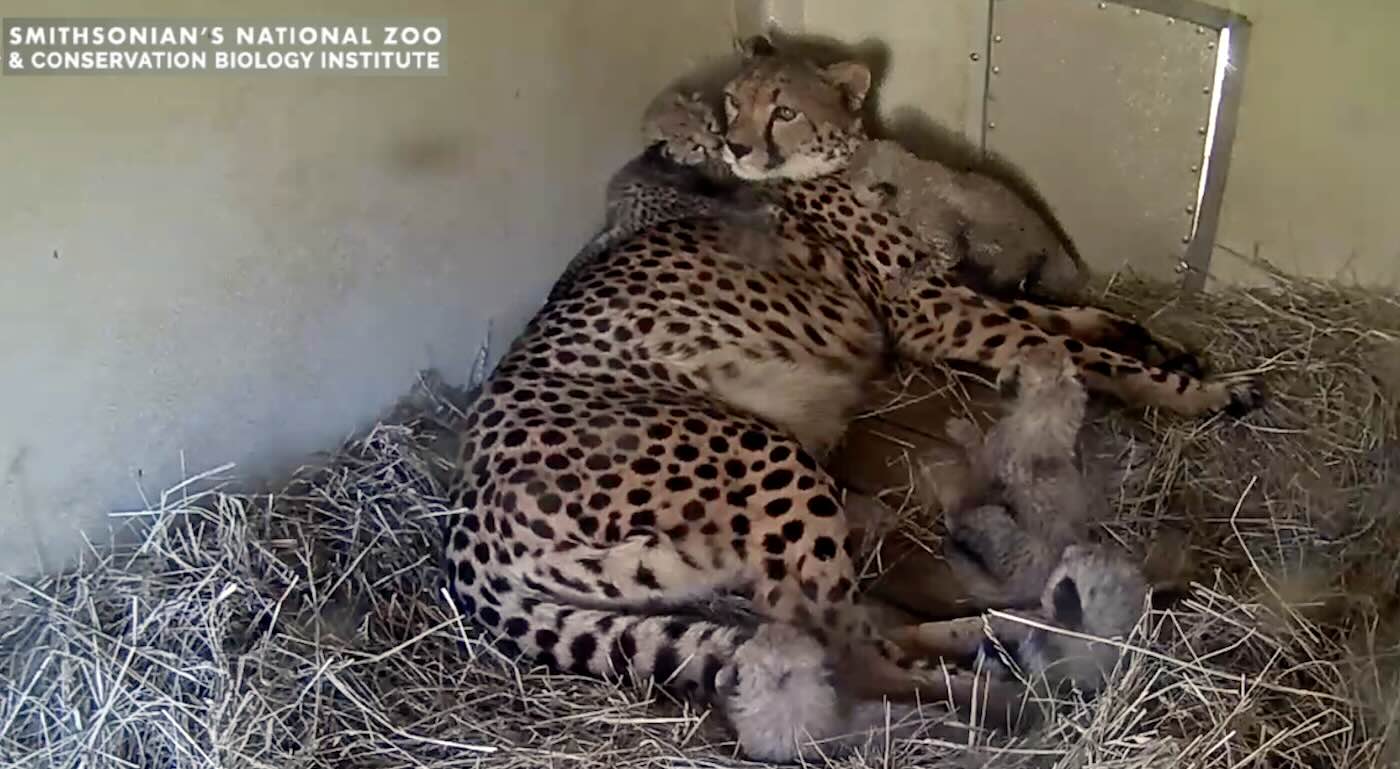
FRONT ROYAL, Virginia — Animal lovers and conservationists around the globe have found a new daily obsession. On October 5, a cheetah named Zura gave birth to a healthy, energetic litter of five cubs at the Smithsonian’s Conservation Biology Institute (SCBI) in Front Royal, Virginia. While the birth of any endangered apex predator is a cause for celebration within the global zoological community, this event offers something unprecedented: a 24/7, high-definition live stream that invites the public directly into the private sanctuary of a mother cheetah and her newborn family.
Far beyond offering an endless stream of heartwarming entertainment—complete with soft chirps, tiny mews, and clumsy wrestling matches—the digital window serves as a vital tool for scientific research and highlights the ongoing, high-stakes global effort to pull cheetahs back from the brink of extinction.
Main Facts: A Rare Window into Early Cheetah Development
The newly launched Smithsonian "Cheetah Cub Cam" has captured the hearts of millions, but its existence serves a dual purpose. On the surface, it is an irresistible portal to the natural world. Viewers tuning into the live feed can watch Zura nurse, groom, and lovingly corral her five rapidly growing cubs. Unlike the traditional low-decibel observation experiences of standard zoo exhibits, this feed transmits both pristine video and intimate audio, allowing audiences to hear the unique array of vocalizations cheetahs use to communicate—from high-pitched motherly purrs to the distinct bird-like chirps that cubs rely on before their eyes are fully open.
However, the technology broadcasting the cuteness to living rooms across the world is the exact same tool utilized by SCBI’s professional animal care staff to monitor the big cats remotely. By keeping a digital eye on the den rather than an intrusive physical presence, researchers can track critical developmental milestones—such as weight gain, nursing frequency, and maternal attentiveness—without causing undue stress to Zura or her vulnerable offspring.
The births represent a major triumph for the Smithsonian’s specialized cheetah breeding program, which has spent decades refining the protocols necessary to maintain genetic diversity and reproductive health in managed care environments.
Chronology: The Journey to Zura’s Litter
Understanding the significance of October 5 requires looking at the careful, years-long planning that precedes the birth of endangered species in specialized conservation facilities.
- Pre-Breeding and Genetic Pairing: Months prior to the conception, Smithsonian reproductive scientists and animal curators meticulously analyzed international studbooks. Because the captive cheetah population requires careful genetic management to prevent inbreeding, pairing decisions are made with global conservation goals in mind. Zura was matched with a compatible male based on genetic mapping designed to maximize diversity.
- Confirmation of Pregnancy: Through voluntary training, keepers and veterinary staff monitor female cheetahs for hormonal shifts and physical changes. Once Zura’s pregnancy was confirmed, the SCBI team began preparing the quiet, off-exhibit maternity den. These specialized indoor-outdoor spaces are designed to mimic the quiet seclusion a wild cheetah mother would seek out in the savanna.
- October 5, 2026 — The Birth: Zura successfully delivered a robust litter of five cubs. Animal care staff immediately initiated remote monitoring via the closed-circuit camera system, tracking the labor and the immediate postpartum behavior to ensure all neonates were breathing, active, and successfully nursing.
- Post-Natal Milestone Phase (October–November): As the weeks progress, the cubs transition from blind, helpless newborns to mobile, exploratory youngsters. The live stream allows the public and researchers alike to witness their eyes opening, their first clumsy attempts at walking, and their initial interactions with solid food as they are weaned.
- Future Integration: As the cubs grow stronger and develop coordination, they will eventually transition out of the maternal den and into larger enclosures at the SCBI facility, where they will learn the complex social behaviors necessary for their future roles in conservation breeding programs or accredited institutions worldwide.
Supporting Data: The Fragile State of Wild Cheetahs
While the birth of five healthy cubs is an undeniable victory, it exists against a sobering backdrop. The cheetah (Acinonyx jubatus) is classified as Vulnerable by the International Union for Conservation of Nature (IUCN), with populations experiencing precipitous declines across their historical ranges in Africa and a critically isolated remnant population in Iran.
- Global Population: Conservation biologists estimate that there are currently fewer than 7,000 cheetahs remaining in the wild. This represents a catastrophic drop from an estimated 100,000 cheetahs at the beginning of the 20th century.
- Range Loss: Cheetahs have been eradicated from over 90% of their historical range. Today, the majority of wild populations exist in fragmented pockets across eastern and southern Africa, frequently clashing with expanding human populations, livestock farmers, and infrastructure.
- High Cub Mortality: In the wild, cheetah cubs face staggering mortality rates. Between 70% and 90% of cubs born in the wild do not survive their first year due to predation by lions, leopards, hyenas, and eagles, as well as disease and environmental stressors.
- The Genetic Bottleneck: Modern cheetahs suffer from exceptionally low genetic diversity—a historical population bottleneck that occurred thousands of years ago makes them vulnerable to diseases, poor sperm quality in males, and high infant mortality even under optimal conditions. This makes every successful captive birth vital for preserving the species’ genetic blueprint.
Official Responses: Insights from the Smithsonian Conservation Biology Institute
The strategy behind the SCBI’s breeding facilities diverges significantly from traditional urban zoos, a distinction that directly benefits the animals’ long-term adaptability.
"Unlike animals living at our Zoo in nearby Washington, D.C., cubs born here experience limited human contact early in their lives," explained a spokesperson for the Smithsonian Conservation Biology Institute. This intentional protocol is designed to keep the animals wild-natured and focused on conspecific (same-species) socialization rather than human acclimation.
Dr. Adrienne Crosier, a cheetah biologist at the Smithsonian, has long emphasized the dual mission of facilities like SCBI. "Our goal is not just to house animals for public exhibition, but to serve as a biological lifeboat for species facing severe anthropogenic pressures in their native habitats," Crosier noted in past institutional updates regarding the cheetah program. "By studying reproductive physiology, behavior, and cub development in a controlled, low-stress environment, we can apply these critical insights to field conservation projects across Africa and Asia."
Furthermore, allowing the public to peer into the private world of the maternity den serves an educational and financial purpose. Direct engagement through platforms like the Cheetah Cub Cam fosters a profound empathy that translates into conservation support. The Smithsonian has encouraged viewers to utilize the live stream’s platform to make donations, directly funding veterinary care, habitat maintenance, and field research initiatives.
Implications: A Global Effort for Survival
The birth of Zura’s cubs is not an isolated event; it is part of a massive, coordinated international safety net designed to rescue the world’s fastest land mammal from extinction. The plight of the cheetah requires a multi-pronged approach combining captive breeding, habitat protection, anti-poaching measures, and human-wildlife conflict mitigation.
The Success of Transcontinental Reintroductions
The resilience of the cheetah is currently being tested on an unprecedented scale. Recent milestones include ambitious reintroduction projects, such as India’s historic initiative to bring cheetahs back to the subcontinent more than 70 years after the species was declared locally extinct. Reports from earlier this year confirm that female cheetahs translocated to India have successfully birthed new litters in the wild, proving that the species can adapt to new, protected environments when given the chance.
To safeguard these reintroduced populations from illegal wildlife trade and poaching, conservationists have deployed innovative tools, including specialized anti-poaching units and highly trained "super-sniffer" dogs capable of tracking contraband and protecting vulnerable cats.
The Role of Managed Breeding Facilities
Institutions like the Smithsonian Conservation Biology Institute act as reservoirs of genetic health. Managed breeding programs ensure that if wild populations face catastrophic disease outbreaks, climate-driven habitat loss, or severe human-wildlife conflict, a genetically robust safety net exists to bolster or re-establish populations where needed.
Moreover, the behavioral data gathered from Zura and her cubs helps field researchers understand the nuances of maternal investment, early vocal communication, and the physiological markers of stress. This information is routinely shared with field biologists working in Namibia, South Africa, and East Africa, where human-wildlife mitigation strategies often hinge on understanding cheetah behavior around farmlands.
How the Public Can Help
For those watching the live stream from the comfort of their homes, the experience bridges the gap between urban life and global wildlife conservation. As Zura nurses her cubs through their critical first months of life, viewers are reminded that the survival of majestic species relies on collective global awareness, scientific funding, and unwavering advocacy for protected habitats.
The Smithsonian Cheetah Cub Cam is streaming live now via the National Zoo and SCBI website. Whether tuning in to catch the soft chirps of a waking cub or to support the vital conservation research happening behind the scenes, every viewer becomes an active participant in the ongoing story of cheetah survival.