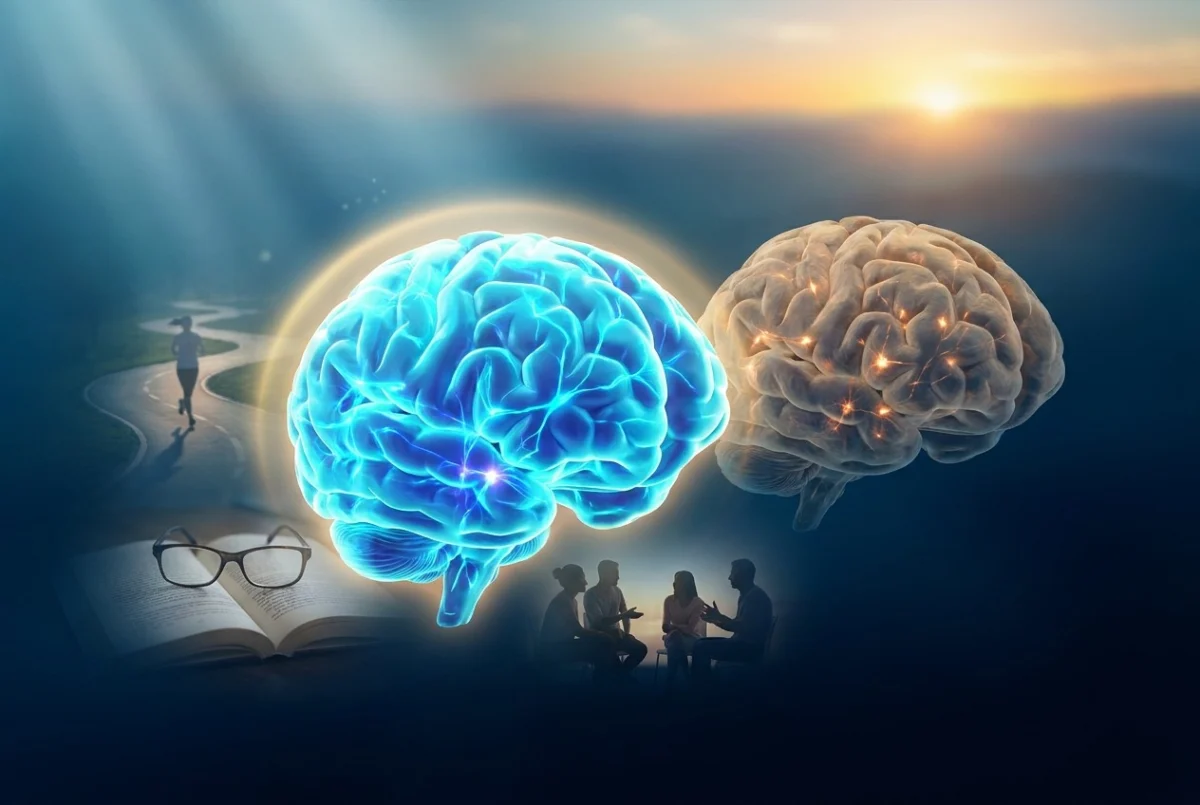
WASHINGTON — In the ongoing battle against neurodegenerative disease, medical science has long grappled with a perplexing paradox: Why do some individuals whose brains show heavy pathological hallmarks of Alzheimer’s disease remain sharp, focused, and mentally agile, while others with minimal physical pathology experience profound cognitive decline?
A groundbreaking study published on November 13, 2026, in the medical journal Neurology offers a compelling answer. According to the research, cognitively healthy older adults whose brains appear structurally "younger" than their chronological age exhibit a remarkable resilience, shielding them from the cognitive fallout of Alzheimer’s-related pathology.
Following more than 600 cognitively healthy participants with an average age of 70, the research team utilized a sophisticated metric known as "brain-predicted age difference." By evaluating blood markers and brain imaging, researchers peered into the biological age of participants’ minds. The results suggest that keeping a brain biologically youthful may serve as a powerful buffer against the ravages of dementia, even when cellular-level pathology is already present.
Main Facts: Decoding the "Younger Brain" Advantage
At the core of the Neurology study is a shift in how scientists understand cognitive resilience. Historically, researchers looked heavily toward educational attainment or sheer brain size as proxies for cognitive reserve—the mind’s ability to improvise and find alternate ways of getting a job done when damage occurs. However, this new research pivots the spotlight to brain efficiency and structural preservation.
- The Cohort: The study evaluated over 600 cognitively healthy older adults, averaging 70 years of age.
- The Methodology: Researchers measured Alzheimer’s-related pathology through blood-based biomarkers and neuroimaging in a subset of participants. These biological findings were then cross-referenced against rigorous cognitive assessments measuring memory, attention, processing speed, and executive function.
- The Core Finding: Participants whose brains were estimated to be younger than their chronological age demonstrated significantly lower vulnerability to cognitive decline. Even when Alzheimer’s-related changes—such as amyloid plaques or tau tangles—were present, these individuals maintained high cognitive performance.
- The Paradigm Shift: The study challenges older assumptions about cognitive reserve, reinforcing that the functional and structural efficiency of the brain matters far more than simple educational background or brain volume.
Chronology and Evolution of Brain Reserve Research
To fully appreciate the weight of the 2026 Neurology findings, it helps to examine how neurological science arrived at this crossroads.
Early Theories of Reserve (Late 20th Century)
Decades ago, epidemiologists noticed a puzzling disconnect: autopsies of elderly individuals who had lived normal, sharp lives often revealed brains riddled with the plaques and tangles characteristic of Alzheimer’s disease. This led to the birth of the "cognitive reserve" hypothesis. Early models posited that individuals with higher education, complex occupations, or intellectually stimulating lifestyles possessed a mental "surplus" that allowed them to tolerate brain damage before symptoms manifested.
The Shift Toward Structural and Functional Efficiency (2010s)
As neuroimaging technologies evolved, scientists moved beyond simple demographics like education. Imaging studies began to indicate that brain efficiency—how smoothly neural networks communicate—underlies true cognitive capacity. Researchers started developing algorithms capable of estimating "brain age" by mapping structural degradation or preservation against normative aging data sets.
The 2026 Breakthrough
The publication in Neurology represents a maturation of these imaging and biomarker techniques. By combining blood tests (which can detect Alzheimer’s pathology cheaply and non-invasively) with brain-age prediction models, researchers could finally track, in real time, how a biologically "young" brain interacts with active neurodegenerative pathology in a living cohort.
Supporting Data and the Modifiable Nature of Brain Aging
One of the most encouraging takeaways from the Neurology study is that biological brain age is not set in stone. Unlike chronological age, which marches forward inexorably, brain age is modifiable.
The Accelerators of Brain Aging
While some factors are outside human control, massive epidemiological data sets have isolated the primary drivers that prematurely age the brain. A separate, extensive analysis of 40,000 brain scans highlighted three critical modifiable risk factors that accelerate brain aging:
- Diabetes: Unmanaged blood sugar wreaks havoc on microvascular structures within the central nervous system.
- Frequent Alcohol Intake: Chronic, heavy alcohol consumption contributes to accelerated neural shrinkage and white matter damage.
- Traffic-Related Air Pollution: Inhaling fine particulate matter has been increasingly linked to systemic inflammation and neurodegeneration.
The Role of Sleep and Metabolic Health
Chronic sleep disruption has long been flagged as a primary accelerator of cognitive decline. A landmark meta-analysis revealed a chilling statistic: each 10-year gap between a sleep-derived brain age estimate and a person’s actual chronological age is associated with an approximate 39% higher risk of developing dementia.
Furthermore, research originating from the Wake Forest University School of Medicine established a direct pipeline between sleep deprivation and neurological risk. Sleeping an average of five hours or less per night is linked to exponential increases in dangerous visceral fat. This type of deep abdominal fat triggers insulin resistance, metabolic syndrome, and systemic inflammation—all direct pathways to accelerated brain aging and dementia.
Official Responses and Expert Implications
The medical community has greeted the Neurology findings with a mixture of validation and renewed optimism. Because the study confirms that brain aging is malleable, public health advocates and clinical researchers are shifting their focus toward actionable lifestyle interventions.
Lifestyle as Medicine
Dr. Elena Vance, a prominent neurogerontologist not directly involved in the study, noted that the research provides a biological mechanism for advice doctors have given for decades.
"We used to tell patients to exercise, eat well, and stay social simply because it was good for the heart," Dr. Vance explained. "What studies like this prove is that these behaviors actively alter the structural trajectory of the brain. They keep the brain biologically younger, building a resilient shield against pathologies that might otherwise manifest as clinical Alzheimer’s disease."
Aerobic and Strength Training
The study emphasized that aerobic exercise and structured strength training do more than improve general fitness. By robustly supporting cerebral blood flow and enhancing cardiometabolic health, physical exertion helps preserve brain structure over time, directly contributing to a lower brain-predicted age difference.
Mental Stimulation and Social Engagement
Cognitive resilience is equally supported by mental engagement. Landmark research from the Albert Einstein College of Medicine at Yeshiva University demonstrated that staying mentally active throughout life is among the most potent defenses against dementia.
Complementing this, a comprehensive review published in Psychological Medicine highlighted a surprisingly simple intervention: reading for pleasure. Across multiple age groups, regular reading was robustly associated with superior cognitive skills and a drastically reduced risk of cognitive decline.
Clinical and Societal Implications
The implications of the 2026 Neurology study stretch far beyond academic journals. As global populations age, the societal and economic burden of Alzheimer’s disease threatens to overwhelm healthcare systems. Strategies that delay the onset of symptoms—even if they do not entirely eradicate underlying pathology—represent a seismic shift in patient care.
- Redefining Prevention: Public health messaging can now move away from vague concepts of "brain games" toward concrete, measurable targets: reducing visceral fat, securing 7 to 8 hours of quality sleep, mitigating exposure to air pollution, and maintaining rigorous physical and mental fitness regimens.
- Personalized Medicine: The use of blood-based Alzheimer’s biomarkers combined with brain-age imaging algorithms opens the door to personalized neurological risk profiles. Patients could theoretically learn their "brain age" decades before symptoms appear, allowing for aggressive lifestyle interventions while the brain is still fully capable of compensating.
- New Therapeutic Targets: Drug developers may look beyond purely clearing amyloid and tau proteins. Future therapies might aim to mimic the structural efficiency and youthful resilience identified in the brains of the study’s most resilient participants.
Conclusion
The latest research from Neurology demystifies one of the most frustrating enigmas in modern medicine: why some bodies harbor the seeds of Alzheimer’s disease yet never bear its cognitive fruit. By demonstrating that a biologically "younger" brain acts as a powerful insulator against pathology, the study elevates brain reserve from an abstract concept to a measurable, modifiable clinical target.
As science continues to map the intricate relationship between lifestyle, cellular pathology, and cognitive longevity, the ultimate message is one of empowerment. While chronological time cannot be reversed, the biological age of the human mind remains, to a significant degree, within our control. Through diligent physical activity, restorative sleep, metabolic health, and lifelong intellectual engagement, individuals can construct a formidable cognitive fortress against the challenges of aging.