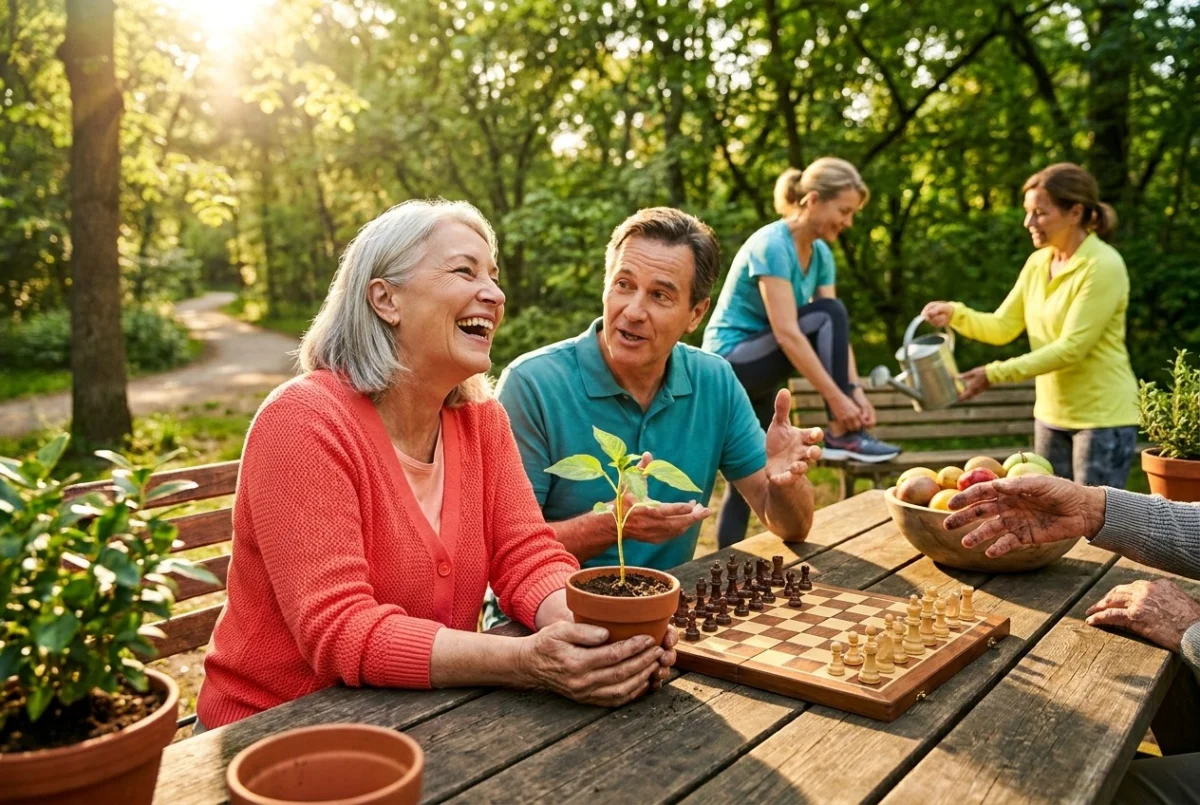
Global Research Tracking Nearly 58,000 Adults Highlights the Power of Volunteering and Sports Clubs in Preserving Brain Health
Main Facts
In an expansive international study tracking nearly 58,000 adults across 24 countries for a median of six years, researchers have uncovered a compelling correlation: diverse social engagement is consistently linked to superior cognitive scores over time.
The investigation, which adds to a burgeoning body of literature regarding lifestyle factors and cognitive aging, sought to understand how everyday social interactions and community involvement impact the brain’s resilience as people age. Participants were regularly evaluated through established tests measuring memory, processing speed, and other high-order thinking skills.
While the study highlights a profound positive relationship between social vitality and cognitive maintenance, the researchers urge caution, noting that the data points toward an association rather than a definitive causal mechanism. Notably, two specific types of activities—volunteering and participation in sports clubs—consistently stood out across all five major survey groups as powerful correlates for healthier cognitive aging.
The findings arrive against a backdrop of public uncertainty regarding brain health maintenance. According to a 2026 Alzheimer’s Association report cited by NaturalNews.com, nearly nine in 10 American adults believe that preserving brain health is "very important," yet a staggering 9% admit they actually know how to achieve it. This knowledge gap underscores the urgent need for clearer public health messaging regarding practical lifestyle interventions.
Chronology of the Research and Study Design
To understand how the findings emerged, it is necessary to examine the timeline and methodology of the international project.
The research initiative was structured as a longitudinal observational study. Rather than assigning participants to specific social regimens in a laboratory environment, researchers monitored real-world behavior over an extended duration.
- Participant Enrollment: Over 57,793 adult participants spanning 24 distinct countries were enrolled in the study.
- Baseline and Ongoing Assessments: Participants initially reported their habitual involvement in various social frameworks—ranging from volunteering and athletic clubs to educational classes and community groups.
- The Longitudinal Window: Participants were followed for a median period of six years. Throughout this window, cognitive functions were assessed repeatedly through standardized thinking and memory tests to chart trajectories over time.
- The Attrition Factor: As with all long-term studies involving aging populations, researchers navigated standard methodological hurdles. Over the six-year timeline, attrition occurred due to various factors: some participants passed away, others experienced cognitive declines that precluded further testing, while others simply lost interest or could no longer be located.
Methodological literature notes that while longitudinal designs are vital for observing real-world aging, they require careful statistical controls to account for these dropouts, ensuring that the final data set accurately reflects the broader population.
Supporting Data, Associated Research, and Context
The international study does not exist in a vacuum; it builds upon a robust foundation of neurological and epidemiological science exploring how lifestyle habits influence the aging brain.
Public Awareness vs. Reality
The 2026 Alzheimer’s Association findings spotlighted by NaturalNews.com reveal a striking paradox:
- 87% of American adults view brain health preservation as paramount.
- Only 9% feel confident in their knowledge of actionable steps to protect their cognitive faculties.
Broader Lifestyle and Community Studies
Other recent investigations have chipped away at this knowledge gap by examining micro-interactions within communities:
- The Gentle Community Group Study: A separate project focusing on adults aged 65 and older tracked weekly attendance at low-intensity community groups over four years. Interestingly, the study linked this regular attendance to a lower risk of cognitive decline, but only among non-exercisers, suggesting that social stimulation may compensate for physical inactivity to a degree.
- Multifactorial Approaches: Comprehensive lifestyle reviews—such as a study highlighted by People magazine—demonstrate that cognitive resilience is rarely driven by a single habit. That research pointed to a powerful synergistic effect when individuals combine improved diet, consistent cardiovascular health monitoring, regular physical exercise, and routine cognitive challenges alongside social stimulation.
Official Perspectives and Proposed Explanations
Why would joining a sports club or volunteering at a local food bank help keep the mind sharp? While definitive biological mechanisms remain under investigation, neuroscientists and researchers have put forward several leading theories.
Cognitive Reserve
The primary hypothesis centers on the concept of cognitive reserve. Researchers define cognitive reserve as the brain’s resilience—its built-in capacity to improvise, find alternative neural pathways, and cope successfully with the structural changes that accompany normal aging or neurodegenerative pathology.
Engaging in complex social environments requires continuous emotional processing, communication, strategic thinking, and adaptation. These dynamic mental workouts are thought to fortify the brain’s structural and functional networks.
Neuroplasticity and Brain Efficiency
Delving deeper into neurological mechanics, modern science has largely shifted away from evaluating brain health purely by physical size, focusing instead on brain efficiency.
- Neuroplasticity: Books and papers on healthy aging emphasize neuroplasticity—the remarkable capacity of the brain to adapt, grow new functional parts of neurons, and forge fresh neural connections when continuously challenged.
- Imaging Evidence: Neuroimaging studies utilizing advanced brain scans have demonstrated that efficiency dictates capacity. Scans show that two individuals can achieve the exact same test score, but a brain with higher efficiency or stronger reserve may need to work considerably less hard to arrive at that result compared to a less-stimulated brain.
Implications for Public Health and Daily Life
While the study stops short of prescribing a rigid "social prescription" or claiming that community involvement is a guaranteed preventative shield against cognitive decline, the practical implications for daily life are both encouraging and manageable.
Quality Over Quantity
A vital takeaway from the data is that individuals do not need to overhaul their entire schedules or maintain a relentlessly packed calendar to reap cognitive rewards. The research indicates that a wider variety of activities correlates with better outcomes, but the entry barrier is low.
Health experts and the study’s authors offer several guiding principles for everyday implementation:
- Prioritize Enjoyment: Select activities that bring genuine personal satisfaction rather than viewing participation as a clinical chore.
- Consistency Over Intensity: Choose commitments that can be maintained regularly over the long term. Whether it is a weekly shift at an animal shelter or a casual weekend bocce ball league, sustainability is key.
- Targeting Standouts: Because volunteering and sports club participation demonstrated uniquely strong associations with healthy cognitive aging across multiple cohorts, individuals looking to optimize their routines might consider prioritizing these two domains.
Limitations to Keep in Perspective
It is equally important for the public to understand what the study cannot tell us:
- No Direct Causation: The research proves a strong correlation between social activity and superior cognitive scores, but it cannot definitively prove that the activities themselves prevent cognitive decline. It remains possible that individuals with naturally robust cognitive health are simply more inclined to seek out social opportunities.
- Specific Dosing Unknown: The study did not isolate precisely which specific sub-activities generate the most profound effects, nor did it establish a strict "dosage" (e.g., exact hours per week) required to secure brain-protective benefits.
Moving Beyond Outdated Paradigms
Ultimately, this international study reinforces a modern, hopeful paradigm of aging. Contemporary research has largely dismantled the outdated view that intellectual ability experiences a uniform, inevitable nosedive with age. Instead, science reveals a complex, highly adaptable organ that responds powerfully to the environments we choose to inhabit. By stepping out into our communities, joining local clubs, and lending a hand to others, we may well be investing directly in the future resilience of our own minds.