Main Facts
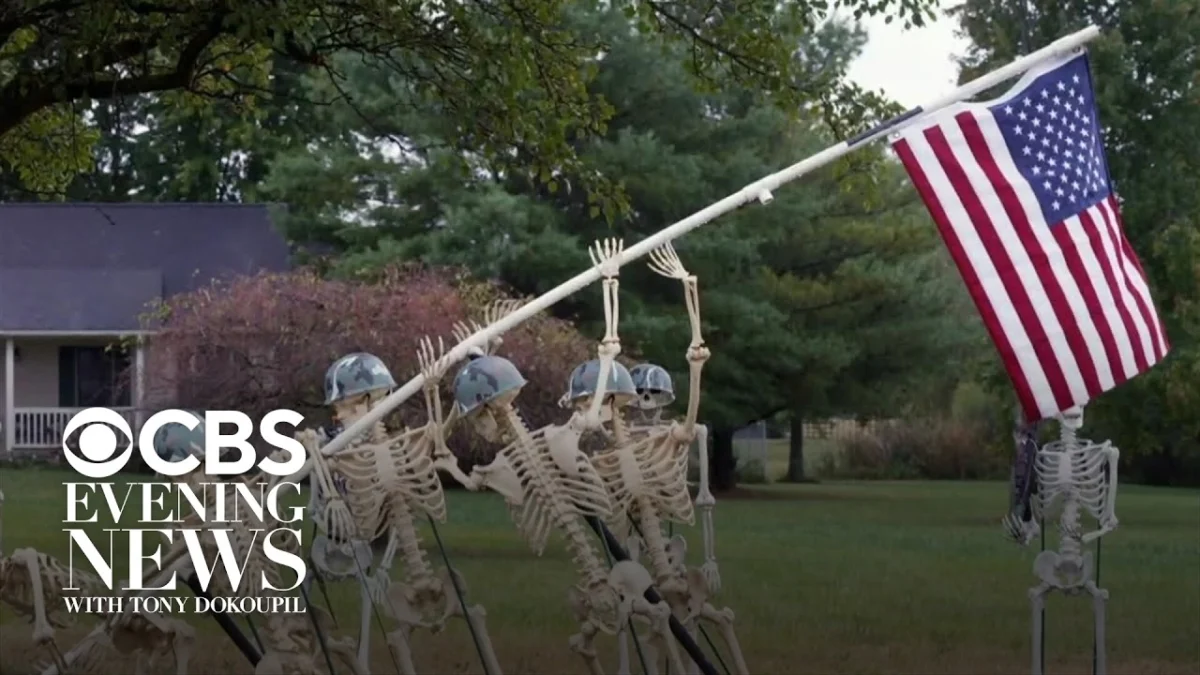
In the quiet college town of Oxford, Ohio, Bill Pyle’s annual Halloween lawn display is nothing short of a theatrical masterpiece. Rather than settling for a few generic plastic skulls staked into the turf, Pyle curates an intricate, ever-evolving tableau starring a sprawling community known locally as the "Bone Family." These skeletal figures do not merely stand guard; they live, work, and play in astonishingly creative scenarios. Passersby might spot a crew of bony figures reenacting the historic raising of the flag at Iwo Jima, while nearby, another industrious skeleton tends to its canine companion. The meticulous layout features a skeletal beekeeper standing watch behind a cowboy riding an osseous equine, just yards away from a pair of boneheaded tourists snapping a selfie.
Yet, for all the whimsy and artistry poured into the display, Pyle’s neighborhood tradition has historically attracted a wave of hostility. Year after year, the weeks leading up to October 31 brought a flood of hate mail to his Oxford mailbox. Accusations of devil worship, fiery sermons condemning him to hell, and grim theological warnings were standard fare.
However, the trajectory of Pyle’s hobby shifted permanently when he opened a letter that stopped him in his tracks. Far from another condemnation, the handwritten note came from Tammy Wyche, a local woman navigating grueling daily radiation treatments for cancer. To Wyche, a front yard covered in skeletons served not as a morbid reminder of mortality, but as a brilliant, imaginative escape during the most terrifying chapter of her life.
What began as a misunderstood artistic endeavor blossomed into an unexpected lifeline of joy. When Pyle learned of the profound impact his skeletons had on Wyche’s daily commute, he orchestrated a heartwarming surprise for her final day of treatment—transforming his lawn into a cheering section of bones. Today, the story of Pyle and Wyche has shattered the local controversy, sparking an international wave of support that proves art and kindness can pierce even the darkest circumstances.
Chronology of Events
Years of Misunderstanding: The Hate Mail Era
Long before Tammy Wyche penned her life-changing letter, Bill Pyle was already well-acquainted with the darker side of seasonal decorating. For consecutive autumns, Pyle invested countless hours into arranging his Bone Family, treating his front lawn as a canvas for theatrical storytelling. But as the skeletons multiplied, so did the friction with certain members of the community.
While children and art enthusiasts slowed down to admire the intricate vignettes, detractors took a much more severe view. Pyle’s mailbox regularly served as a drop-off point for anonymous vitriol. Letters filled with fierce moral indignation accused him of occult practices, while others prophesied his swift descent into the netherworld. Despite the stinging criticism, Pyle remained committed to his craft, enduring the seasonal barrage of disapproval simply because he enjoyed bringing a smile to those who appreciated the humor.
The Daily Commute: Finding Light in the Shadows
While the critics penned their condemnations, Tammy Wyche was fighting for her life. Diagnosed with cancer, Wyche faced the grueling, monotonous, and emotionally draining routine of daily radiation therapy. Every trip to the treatment center required driving past anxieties, fears, and the physical toll of her illness.
Yet, for 19 consecutive days, a mandatory segment of her journey brought her past Bill Pyle’s Oxford residence. What could have been a grim stretch of road became the emotional anchor of her commute. Wyche began to look forward to the drive, eagerly scanning the lawn to see what new theatrical scenario the Bone Family had gotten themselves into.
Whether the skeletons were staging a historical snapshot or partaking in mundane domestic activities, they provided Wyche with a vital mental diversion. In a time dominated by clinical settings, medical jargon, and existential dread, Pyle’s imaginative yard offered a pocket of pure, unadulterated escapism.
The Turning Point: A Letter That Stopped Time
The status quo of silent neighborhood judgment shattered on a fateful day in September. Pyle walked out to his mailbox, sorted through the usual post, and unfolded a handwritten letter. It was signed by Tammy Wyche.
Writing with profound vulnerability, Wyche detailed her daily ritual: “I have been driving past your house daily for the past 19 days on my way to radiation treatments. A highlight of my journey has been checking to see who else has joined the bone family & what they are up to.”
She continued with news that marked a monumental milestone in her personal battle: “Thankfully, Wed. Sept 11th is my final radiation treatment, though I may need to continue to drive by once in a while to see what’s new. Thanks for the diversion.”
Recalling the moment he first read those words for CBS News’ On the Road with Steve Hartman, Pyle admitted, "Tears came to my eyes. It really touched my heart." The complaints of the past suddenly vanished into insignificance, eclipsed by the realization that his harmless artistic hobby had served as a psychological anchor for someone facing a life-threatening crisis.
The Grand Finale: Rolling the Bones for Tammy
Upon reading the date of Wyche’s final treatment—Wednesday, September 11th—Pyle knew he had to act. He decided to "roll the bones" on a high-stakes, deeply personal surprise to honor his most dedicated admirer.
On that Wednesday morning, as Wyche approached the familiar stretch of road on her way to her final appointment, she naturally glanced to the right toward the Bone Family. But this time, the display was entirely different. Rather than merely posing in their usual comedic snapshots, the entire skeleton crew had been repurposed into a roaring cheering section. Customized signs had been carefully positioned among the bones, directly celebrating Wyche’s incredible milestone and cheering her across the finish line of her radiation therapy.
Driving past the house that morning, Wyche was overwhelmed with emotion. "It was very touching to think that somebody would go to that effort for a stranger," she reflected.
Supporting Data and Cultural Impact
The heartwarming exchange between Pyle and Wyche did not remain a private local affair. When national media outlets, most notably CBS News, brought the story to light, it struck a powerful chord with audiences across the globe.
Statistics surrounding the aftermath of the story illustrate a profound shift in public perception:
- The Criticism Ratio: For every single local resident who previously had a "bone to pick" with Pyle’s macabre decor, an estimated 30 supportive messages began pouring in from around the world.
- Geographic Reach: The story transcended American borders, generating widespread appreciation and encouraging letters from individuals as far away as Australia.
- Social Engagement: The narrative became a viral sensation, heavily shared across digital platforms as a testament to empathy, community, and the healing power of unexpected art.
This data highlights a broader cultural phenomenon: public art installations—even unconventional ones like Halloween lawns—function as communal touchstones. When infused with genuine human empathy, they possess the capacity to bridge gaps between strangers in ways traditional community centers or support groups sometimes struggle to achieve.
Official Responses and Reflections
The emotional fallout of the "Bone Family" saga prompted deep reflections from both the creator and the recipient, shedding light on the psychological mechanics of compassion and public art.
Bill Pyle’s perspective on his hobby underwent a total metamorphosis. What had once been a persistent exercise in enduring neighborhood friction transformed into a profound sense of purpose. Speaking candidly about the hate mail he used to receive, Pyle noted that the vitriol was easily overshadowed by the knowledge that his yard could act as a therapeutic distraction. The letters accusing him of moral failings faded from memory, replaced entirely by the handwritten note from Tammy Wyche and the subsequent outpouring of global goodwill.
Tammy Wyche, meanwhile, offered a poignant reminder of how human beings process trauma during health crises. For Wyche, the skeletons were never about morbidity or fear; they were an embodiment of life, continuity, and whimsy. By focusing on the playful creativity of the displays, she was able to detach, even momentarily, from the heavy clinical reality of cancer treatment. Her willingness to reach out to a total stranger bridged the gap between a private homeowner and a public audience, turning a solitary artistic outlet into a shared emotional victory.
Implications of the Oxford Skeleton Story
The unexpected bond forged between Bill Pyle and Tammy Wyche carries significant implications for how communities view public expression, mental health support during chronic illness, and the nature of neighborhood relations.
1. The Therapeutic Value of Unconventional Art
In modern healthcare discussions, art therapy is well-documented, but the therapeutic value of found or public art encountered during transit is frequently overlooked. Wyche’s experience demonstrates that spontaneous encounters with creativity can significantly alleviate the psychological weight of chronic medical treatments. Municipalities and neighborhood associations often lean toward uniform, highly sanitized aesthetic standards; however, Pyle’s story argues for the psychological benefits of eccentric, personal creativity in public spaces. A humorous skeleton display, while unconventional, can act as a crucial mental health buffer for individuals navigating high-stress life events.
2. Overcoming Dogmatic Intolerance
The hate mail Pyle endured for years is a symptom of a broader cultural rigidity—an intolerance for aesthetics that fall outside narrow, traditional parameters. The transition from local condemnation to international celebration highlights the dangers of snap judgments. The local critics who saw devil worship in plastic bones missed an opportunity for human connection, whereas an open-minded cancer patient found solace in the exact same arrangement. The story serves as a reminder to look past surface-level eccentricities and consider the underlying intentions and human impacts of community displays.
3. The Ripple Effect of Micro-Acts of Kindness
Ultimately, Pyle’s decision to build a skeletal cheering section for Wyche underscores the profound impact of micro-acts of kindness. It required minimal financial investment—merely time, imagination, and a willingness to pay attention to a stranger’s plight. Yet, that single gesture provided Wyche with validation and emotional uplift precisely when she needed it most.
As the story continues to circulate globally, it inspires others to look at their own neighborhoods with fresh eyes. It challenges individuals to consider how their own hobbies, passions, and creative outlets might unknowingly be serving as a lifeline for someone else quietly fighting a hidden battle. In the end, Bill Pyle’s skeletons did not bring terror; they brought community, resilience, and life.