By Stephen Johnson
October 28, 2026
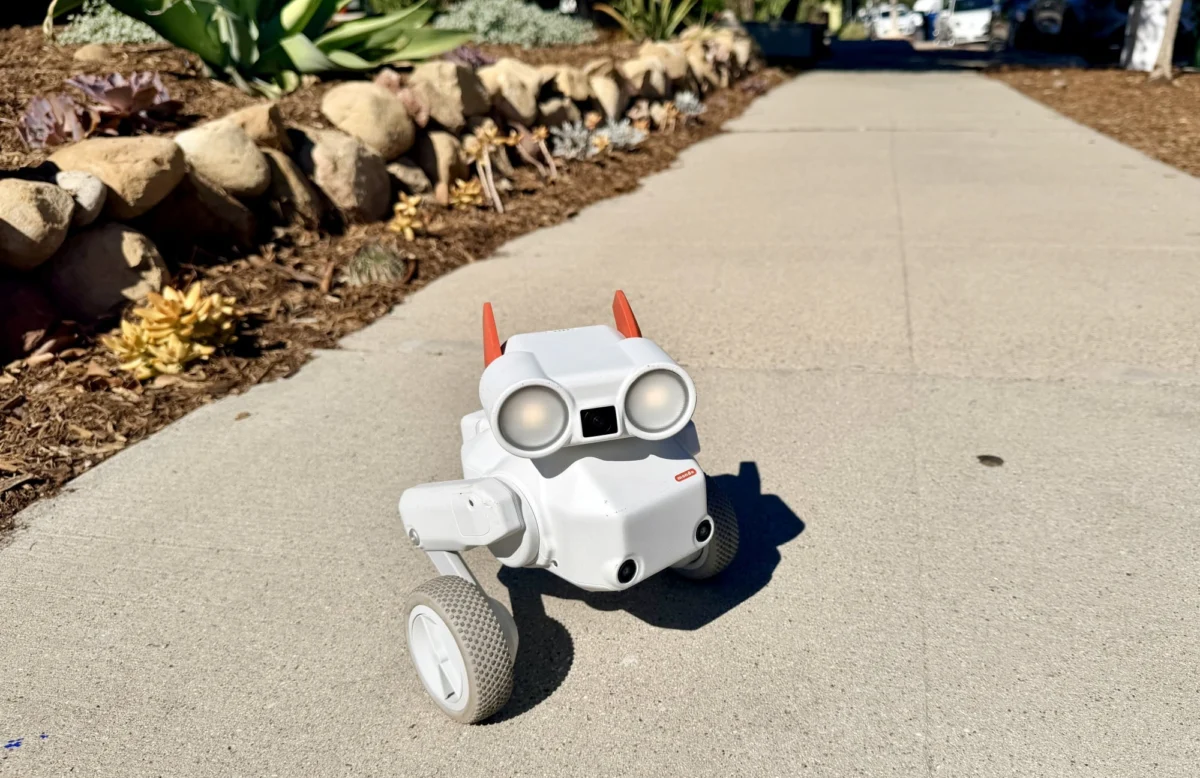
For generations, the dream of owning a personal droid—a mechanical companion capable of navigating the world alongside us—was confined to the realm of science fiction. From the utilitarian astromechs of Star Wars to the helpful service bots of classic cinema, the archetype has always been the same: a small, mobile, and intelligent machine that simplifies human life. Today, that vision has taken a concrete, physical form. Meet Beni, the all-terrain camera robot from Mondo Robotics that is effectively ending the era of the static tripod and the dedicated camera operator.
Beni is not merely a gadget; it represents a significant leap in consumer-grade autonomous robotics. While many products in the current market attempt to bridge the gap between hobbyist robotics and professional filmmaking, most fail to balance agility with high-fidelity output. Beni, however, manages to succeed where others have faltered, offering a sophisticated, 4K-capable camera system mounted on an intelligent, self-stabilizing chassis that moves with the fluidity of a professional film crew.
The Core Technology: More Than Just a Camera on Wheels
At its heart, Beni is an all-terrain, autonomous cinematography platform. The device emerged from a successful Kickstarter campaign, a proving ground that has claimed the reputations of many tech startups. However, unlike the countless prototypes that fail to translate crowdfunding excitement into functional retail hardware, Mondo Robotics has delivered a device that is as capable as its initial marketing promised.
The unit functions through a sophisticated array of sensors and AI-driven tracking algorithms. When deployed, Beni does not simply "follow" a subject; it interprets environmental variables to maintain a frame. Whether the subject is running, skating, or navigating complex architectural terrain, the robot adjusts its speed, orientation, and angle to maintain the desired shot. Users can toggle between various modes—such as side-tracking, circular orbit, or direct follow—via a dedicated smartphone application or a handheld remote control.
What sets Beni apart from traditional drones or motorized gimbals is its low center of gravity and its ability to traverse ground-level terrain that would be inaccessible to aerial equipment. By staying at eye level, Beni provides a perspective that is fundamentally more intimate and grounded, capturing the grit and reality of action sports and daily life with a cinematic smoothness that feels almost uncanny.
Chronology: From Kickstarter Concept to Market Reality
The journey of Beni is a testament to the modern hardware development cycle.

- Early Development (2024–2025): Mondo Robotics spent the better part of two years refining the proprietary stabilization software. The primary engineering hurdle was not the camera optics, but the "terrain-adaptive navigation"—the ability for a small, four-wheeled robot to maintain consistent speed and camera stability while moving over cracked concrete, gravel, and grass.
- The Crowdfunding Phase (Early 2026): The project launched on Kickstarter, quickly surpassing its funding goals as amateur filmmakers and tech enthusiasts flocked to the promise of an "autonomous camera crew." The transparency of the development team during this phase, including regular updates on sensor calibration and battery efficiency, helped build a loyal user base.
- Refinement and Testing (Mid-2026): During the summer of 2026, the team moved into rigorous field testing. This included testing the unit’s durability in extreme conditions, such as skate parks and mountain bike trails. It was here that the robot’s "self-righting" capability was perfected, allowing the unit to recover from accidental flips or high-impact landings.
- Retail Launch (November 2026): With the manufacturing pipeline secured, Mondo Robotics announced a formal release window for early November 2026, marking the transition from a crowdfunded curiosity to a consumer-ready product.
Supporting Data: Why the Industry is Taking Note
The shift in consumer expectations toward "creator-first" technology has paved the way for devices like Beni. Industry analysts note that the demand for "b-roll" and high-quality social media content has created a bottleneck for solo creators who cannot afford a camera assistant.
Beni addresses this with specific technical benchmarks:
- Resolution: 4K video recording at 60 frames per second, ensuring professional-grade clarity.
- Terrain Adaptability: The suspension system allows the unit to navigate inclines of up to 25 degrees, a significant improvement over standard motorized dollies.
- Latency: The tracking algorithm operates with a sub-50ms latency, ensuring the robot doesn’t "lose" the subject during sharp turns or sudden movements.
In internal testing, the robot demonstrated an uncanny ability to navigate around obstacles. In one stress test, the robot followed a skater under a park bench, weaving through structural supports without losing lock on the subject. This level of autonomous pathfinding, once reserved for high-end research robotics, is now accessible to the average consumer.
Official Perspectives and User Experience
Mondo Robotics has remained relatively quiet regarding their future roadmap, but the company’s vision is clear: to democratize the "cinematic look." In an official statement, the company noted that their goal was to remove the "friction of production."
"The biggest barrier to creating great video is the physical setup," said a spokesperson for Mondo Robotics. "By removing the need for a tripod, a cameraman, and complex remote setups, we allow the creator to focus entirely on the performance. Beni is the invisible crew member that never gets tired."
Initial impressions from the enthusiast community have been largely positive. Users have praised the "circle you" mode, which creates a sweeping, professional-looking arc shot that would typically require a complex track system or a very steady-handed operator to replicate. The ease with which the robot handles terrain changes—moving from pavement to grass without a stutter in the footage—has become the primary selling point in online forums.
The Broader Implications: The Future of Autonomous Filmmaking
The emergence of Beni signals a broader shift in the "Prosumer" market. We are entering an era where hardware is no longer just a tool for capturing light, but an active participant in the creative process. If a robot can navigate a park, anticipate a subject’s movement, and frame a shot with professional intuition, the barrier to entry for high-quality storytelling effectively vanishes.

However, this also raises questions about the future of traditional camera operation. If autonomous robots become the industry standard for small-scale productions, how does this affect the professional cinematographer? In the short term, devices like Beni will likely serve as a supplement, handling the difficult, repetitive, or "impossible" shots that are too dangerous or too mundane for a human crew.
Furthermore, there is the social implication of "robot companions." As we see in the design of Beni—which features a distinct, almost pet-like aesthetic—there is an intentional effort to make technology feel approachable. It is not just a tool; it is a companion that follows you, documents your triumphs, and navigates the world at your side.
Final Verdict: Is It Worth the Investment?
As of late October 2026, the pre-order window for Beni is open on the Mondo Robotics website. For the hobbyist, the filmmaker, or the dedicated "geek" who has been waiting for their own personal droid since childhood, this is a milestone moment.
While it is still early in the product’s lifecycle—and questions remain about long-term support and the potential for a wider retail release via platforms like Amazon—the current iteration of Beni is undeniably impressive. It succeeds because it doesn’t try to be everything to everyone; it focuses on one thing—moving the camera autonomously and flawlessly—and it does it better than almost anything else on the market.
Whether you are looking to capture your own athletic feats or simply want to experience the cutting edge of personal robotics, Beni is, without hyperbole, the most compelling piece of hardware to hit the market this year. It is a reminder that the future we were promised—the one with helpful robots and seamless technology—is finally, and literally, rolling toward us.