By Medical and Technology Desk
Published September 2026
Main Facts: The Physical Toll of the Screen Age
Nearly two decades after smartphones transitioned from luxury novelties into ubiquitous appendages of daily life, clinicians, occupational therapists, and orthopedic researchers are mapping the physiological toll of constant connectivity. Far from spelling an apocalyptic doom for modern health, extensive peer-reviewed studies published between 2018 and 2025 demonstrate that the physical ailments associated with smartphone use are fundamentally mechanical in nature.
Rather than signaling an irreversible structural decline, the hallmark symptoms of excessive device usage—ranging from chronic neck tension and thumb tendonitis to acute dry eyes and circadian sleep disruption—are classified in clinical literature as repetitive strain phenomena. They emerge gradually, born of sustained micro-postures, high-frequency digital interactions, and altered biological rhythms built up over months and years of continuous daily engagement.
The most widely documented symptoms include:
- Cervical and Thoracic Tension: Sustained forward-flexed head postures that strain the upper trapezius and neck extensors.
- Thumb Tenosynovitis: Repetitive friction and micro-trauma within the narrow tendon compartments at the base of the thumb, commonly linked to high unlock frequencies and frantic social media scrolling.
- Digital Eye Strain and Tear Film Depletion: Drastically reduced blink rates during device interaction, leading to surface evaporation, gritty eyes, and accelerated myopia risks in younger populations.
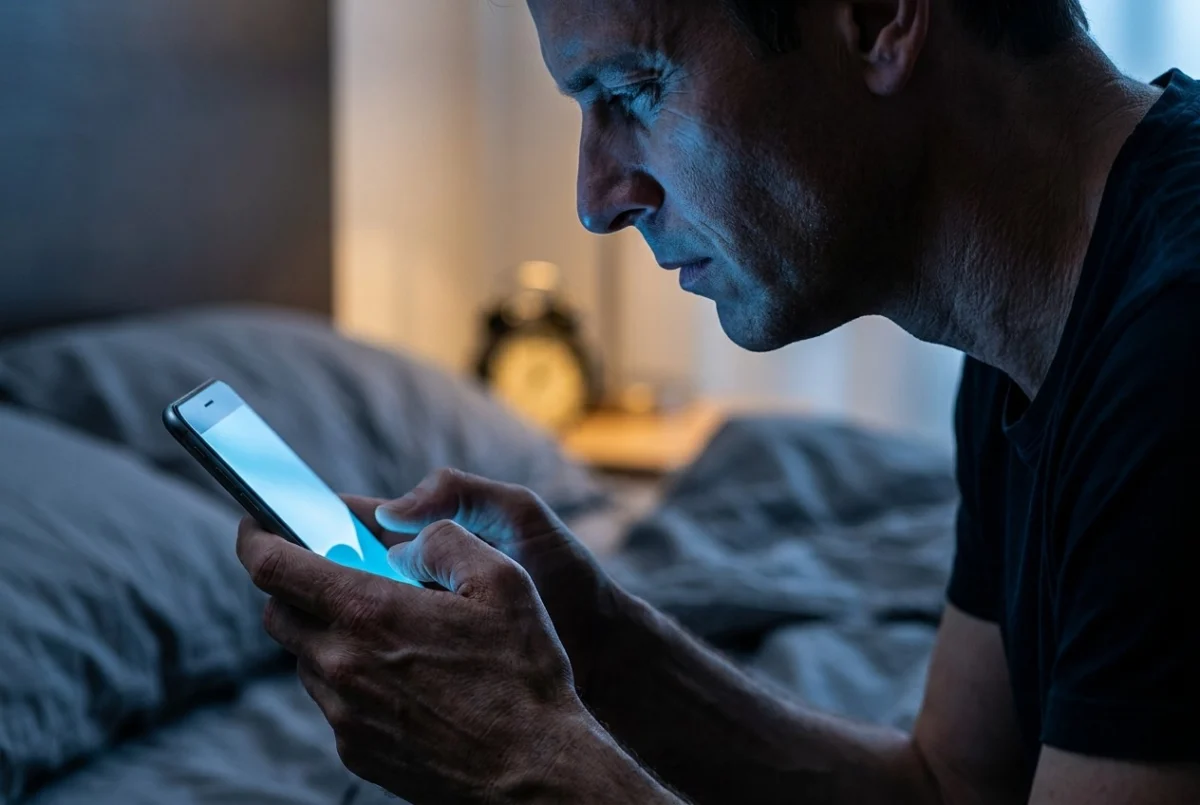
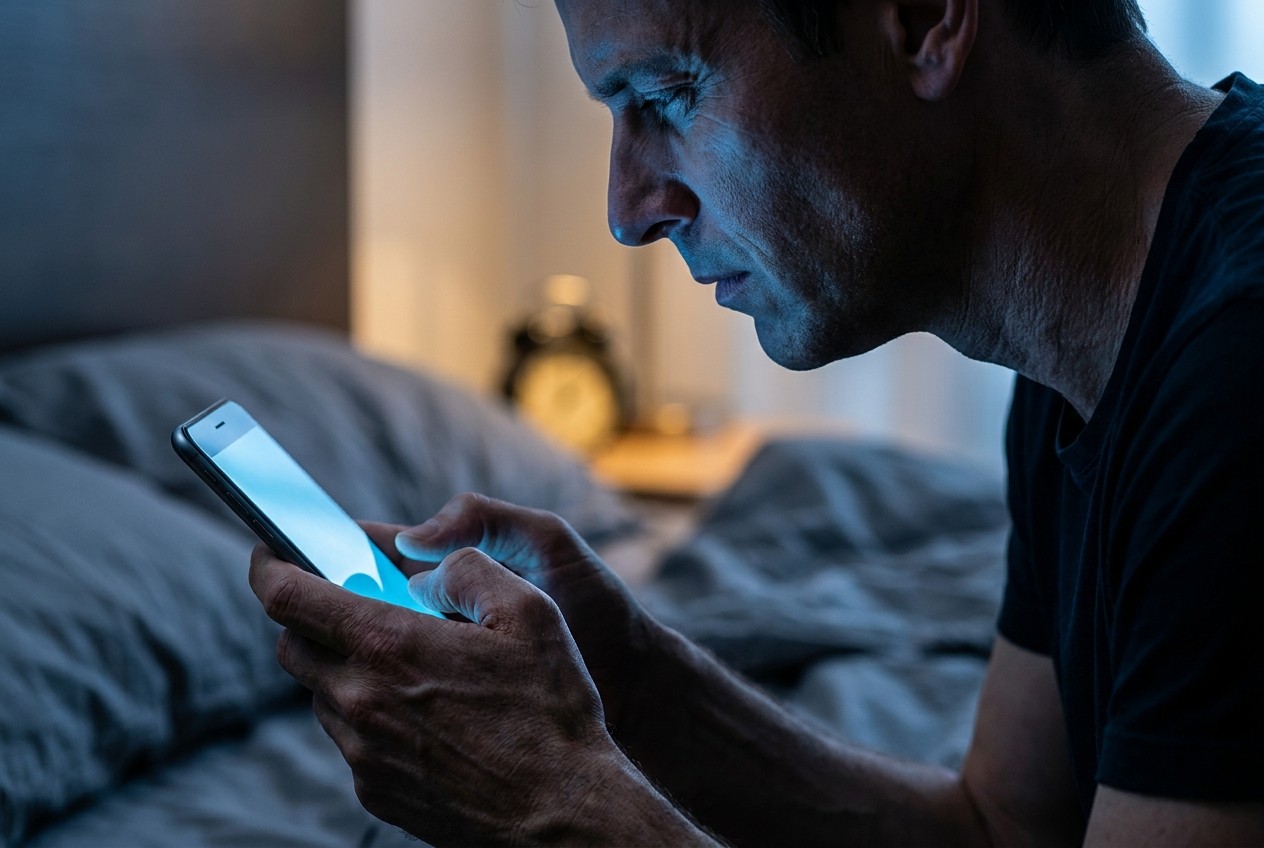
- Melatonin Suppression and Circadian Disruption: Evening blue-light exposure that tricks the brain into delaying sleep architecture, triggering cascading systemic recovery failures.
Chronology: The Evolution of Digital Ergonomics Research
To understand how researchers arrived at these contemporary clinical insights, it is helpful to trace the evolution of scientific inquiry into human-device interaction over the past decade.
2018–2020: The Awakening of Digital Ergonomics
As smartphone ownership saturated global demographics, early warning signs began to crowd physical therapy clinics. Researchers in orthopedics and occupational health began investigating "text neck"—a colloquial term coined to describe the cervical spine loading caused by looking down at handheld devices. Initial studies focused heavily on static biomechanics, attempting to quantify the exact physical weight placed on the cervical vertebrae when the human head tilts forward at various angles. Concurrently, sleep scientists at institutions like Harvard Medical School published pivotal comparative studies on short-wavelength blue light, establishing a baseline understanding of how evening device usage disrupts human hormonal signaling.
2021–2023: Nuance and Longitudinal Realities
As the field matured, researchers began looking past simple geometric assumptions. While early models asserted a direct, linear relationship between the angle of neck flexion and pain severity, subsequent longitudinal cohorts revealed a more complex reality. Studies began to show that static posture alone could not fully account for who experienced chronic discomfort; systemic lifestyle variables—such as underlying sleep quality, baseline physical activity, and stress metrics—played massive roles in modulating physical vulnerability to digital strain.
2024–2025: Granular Data and Clinical Validation
The publication of targeted, large-scale studies in late 2025 provided definitive data points. A 12-month longitudinal study of 457 adults, published in the Brazilian Journal of Physical Therapy in November 2025, disrupted conventional wisdom by demonstrating that the exact neck-flexion angle while texting did not independently predict who would develop neck pain a year later. Instead, poor sleep and physical inactivity emerged as the true force multipliers for chronic pain.
Simultaneously, a cross-sectional study of 155 young adults published in the Indian Journal of Orthopaedics in November 2025 utilized the clinical Finkelstein test to establish a direct correlation between daily unlock frequency, screen time, and De Quervain’s tenosynovitis. Ophthalmic researchers also quantified blink suppression during digital gaming in studies published in the journal Eye, mapping the precise mechanics of evaporative dry eye disease.
Supporting Data: What the Clinical Literature Reveals
The scientific consensus relies on rigorous empirical findings across multiple medical specialties. The data outlines precise physical thresholds where digital habits begin to intersect with human biological limits.
1. Cervical Spine Dynamics and Pain Predictors
Physiotherapy reviews published in the journal Work explain that sustained forward-flexed postures completely alter muscle activation patterns across the cervical and thoracic spine. The upper trapezius and neck extensors are forced into a state of continuous isometric contraction to prevent the head from falling forward under gravity. Dr. Mercola’s clinical analyses have famously compared this constant forward-tilting force to carrying four adult-sized bowling balls on the cervical spine.
However, the 2025 Brazilian Journal of Physical Therapy longitudinal study injected vital nuance into the discourse. While mechanical strain exists, the study proved that mechanical posture alone does not dictate pathology. The primary statistical predictors for developing chronic neck pain were behavioral and systemic:
- Poor sleep quality raised the odds of developing persistent neck pain by 76 percent.
- Insufficient physical activity amplified the odds of neck pain by nearly two-and-a-half times.
2. The Mechanics of Thumb and Wrist Strain
The human thumb was never evolutionarily designed to act as the primary navigational input for a high-speed digital interface. The Indian Journal of Orthopaedics (November 2025) study found that daily unlock frequency and cumulative screen time were statistically significant predictors of a positive Finkelstein test—the standard clinical indicator for De Quervain’s tenosynovitis (inflammation of the tendons moving the thumb away from the wrist). Remarkably, nearly one-third of the study’s young adult participants tested positive.
Further contextualizing this mechanical load, marketing and ergonomic analyses conducted by the English agency ilk calculated that an average heavy user’s thumb travels the cumulative distance of two marathons every single year merely scrolling through social media feeds and web pages. When combined with awkward wrist angles, these repetitive motions place undue stress on small tendon compartments, frequently exacerbating underlying nerve compression issues such as carpal tunnel syndrome or thoracic outlet syndrome.
3. Ophthalmic Decompensation: The Broken Blink Reflex
The human eye relies on a steady, subconscious blinking mechanism to sweep fresh tear film across the cornea, maintaining optical clarity and tissue hydration. A study tracking children’s blinking habits during smartphone gaming, published in the journal Eye, revealed an alarming drop: blink rates plummeted from 20.8 blinks per minute down to 8.9 blinks per minute within the very first minute of gameplay.
Interblink intervals nearly tripled during this time, allowing the protective tear film to evaporate and producing the characteristic dry, gritty sensation associated with digital eye strain. Compounding this, cumulative exposure to high-energy visible (HEV) blue light accelerates digital eye fatigue, while epidemiological data indicates that children face a 21 percent increase in myopia (nearsightedness) odds for each additional hour of daily screen time.
4. Circadian Suppression and Metabolic Cascades
Screens emit concentrated short-wavelength blue light that directly targets intrinsically photosensitive retinal ganglion cells, suppressing the pineal gland’s production of melatonin—the fundamental biochemical signal telling the human brain it is time to sleep.
Groundbreaking research from Harvard University compared 6.5 hours of blue-light exposure against equally bright green-light exposure. The results demonstrated that blue light suppressed melatonin production for twice as long and shifted human circadian rhythms by twice the magnitude (three hours versus 1.5 hours).
Sleep specialists have translated these physiological markers into real-world equivalents. As sleep expert Natalie Pennicotte-Collier noted, interacting with a smartphone at 1 a.m. inflicts a level of circadian disruption comparable to flying halfway across the world to Abu Dhabi. Furthermore, clinical endocrinologist Dr. Jennifer Ashton has emphasized that the psychological stress and subsequent sleep deprivation driven by device dependency act as powerful catalysts for hormonal imbalances, systemic inflammation, and unwanted weight gain.
Official Responses and Expert Recommendations
Rather than calling for a wholesale rejection of modern technology, medical professionals, physical therapists, and occupational health advocates emphasize mechanical corrections, lifestyle pacing, and deliberate behavioral adjustments.
Ergonomic Interventions from the Experts
- Redefining Device Utility: Karen Jacobs, a clinical professor of occupational therapy at Boston University, stresses that handheld smartphones should be viewed strictly as complementary tools to work performed on a stationary computer, rather than serving as primary work platforms.
- Elevating the Screen: Physiotherapy literature consistently advises users to raise smartphones up closer to eye level rather than dropping the chin and neck downward to meet the screen. Taking frequent, scheduled micro-breaks to reverse flexed cervical postures helps reset muscle memory.
- Spreading the Motor Load: To combat De Quervain’s tenosynovitis and thumb tendon irritation, hand therapists recommend alternating which thumb or finger is used to unlock, swipe, and scroll. Wrists should be maintained in a neutral, unsupported position rather than bent at awkward angles for hours on end.
- The 20-20-20 Rule for Ocular Health: To counteract blink suppression and dry eyes, ophthalmologists universally recommend the 20-20-20 rule: every 20 minutes of screen time, an individual should look at an object at least 20 feet away for a minimum of 20 seconds. This simple act resets both visual focus and spontaneous blink rates.
- Circadian Hygiene: Sleep physicians recommend eliminating bright screen exposure two to three hours before intended sleep onset. If nighttime device use is unavoidable, utilizing hardware-level or software-level warm color temperature (blue-light) filters is strongly encouraged.
Implications: Navigating the Future of Digital Wellness
The documentation of these physical syndromes between 2018 and 2025 marks a mature turning point in our cultural relationship with consumer technology. The emerging consensus clarifies that smartphones are neither the existential health hazard sensationalized by alarmist headlines, nor are they benign tools devoid of biological consequence.
Instead, smartphones represent an unprecedented ergonomic challenge—one defined by high-frequency repetition, sedentary micro-postures, and optical fixation. Because these physical tolls manifest incrementally over months and years, they offer a distinct diagnostic advantage: they are entirely preventable and reversible through mindful behavioral modification.
Ultimately, noticing which of these five primary physical warnings—neck tension, thumb irritation, dry eyes, sleep delays, or shoulder fatigue—appears first serves as an invaluable internal biofeedback mechanism. By utilizing these signs as early cues to adjust posture, alter screen distance, modify timing, and prioritize physical activity and sleep hygiene, modern users can successfully harness the profound utility of the digital age without sacrificing their physical well-being.