
In an era defined by digital transactions and contactless payments, the tangible concept of money—what it is, how it is earned, and why it is finite—is becoming increasingly abstract for children. For one Vermont-based family, the recent local county fair served as more than just a weekend of animal sightings and agricultural displays; it acted as a practical classroom for financial literacy. By treating consumer-heavy environments not as headaches, but as opportunities, they are pioneering a "family money philosophy" designed to demystify the adult world of finance for their five- and seven-year-old children.
Main Facts: The "Family Money Philosophy"
The core of this educational approach is a rigid, yet simple, delineation between "needs" and "wants." In this household, parents assume the burden of life’s essentials: housing, clothing, nutritious food, healthcare, and baseline entertainment like museum admissions.
However, the discretionary world is left entirely to the children. If a child desires a souvenir at a gift shop, a specific treat at a restaurant, or an item from a school book fair, they are required to use their own funds. This binary system serves a specific purpose: it prevents the "automatic entitlement" that often develops when children perceive that money is an infinite resource provided by parents. By removing the parents as the primary source of non-essential funding, the children are forced to confront the reality of their own limited capital.

A Chronological Approach to Financial Literacy
Financial education for children, particularly at the elementary level, must be scaffolded. It begins not with complex stock market theory, but with the mechanics of daily life.
The Foundation (Ages 5-7)
The parents focus on four fundamental pillars:
- Denominations and Math: Learning to identify coins and bills, and understanding the physical value of money.
- Price Recognition: Reading price tags to understand the cost of goods.
- Comparison Shopping: Evaluating whether a product is worth the required expenditure.
- The Labor-Capital Link: Understanding that parents do not possess money by default; they work to earn it, and that money is then exchanged for goods.
This educational sequence was recently validated when one of the children authored a "book" about her mother’s job. She noted that her mother’s work involves "important but boring meetings" where adults "drink coffee and tea." This observation proved to the parents that the concept—that work is a serious, often demanding process used to facilitate family life—had successfully taken root.

Supporting Data: The Mechanics of Chore-Based Income
To ensure the children have "skin in the game," the parents employ a market-based chore system. Chores are categorized into two distinct types:
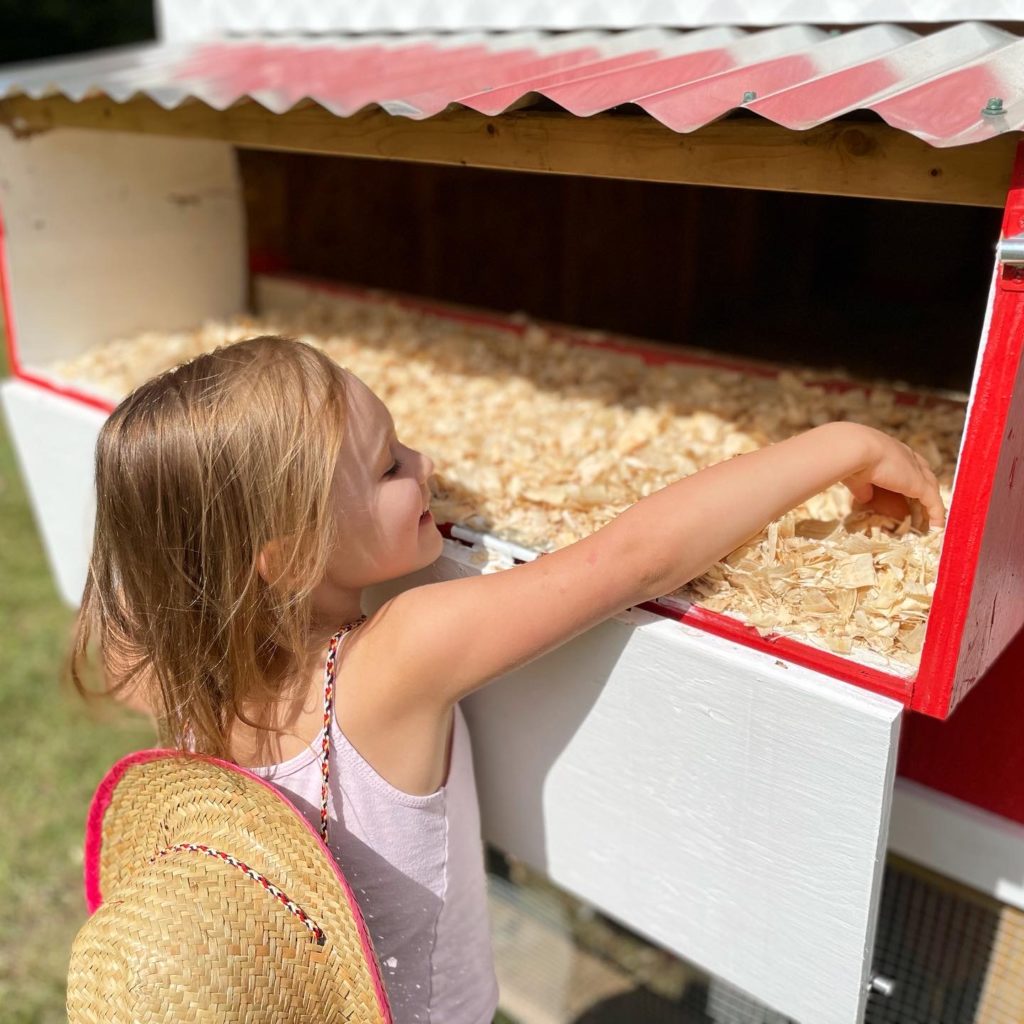
- Daily Unpaid Contributions: These are communal tasks essential to family life, such as collecting eggs from the family chickens, putting away personal laundry, and tidying bedrooms. These represent the "social contract" of a family, where everyone contributes to the maintenance of the home without a transaction.
- Paid Labor: These are specific, negotiated projects that fall outside the standard daily routine. For example, a child may negotiate a "contract" to deep-clean kitchen cabinets for a lump sum of $10.
Crucially, compensation is tied to quality. If a job is left half-finished—such as taking out the trash but spilling contents on the floor—payment is withheld until the "trashlette" issue is resolved. This teaches the children that wages are a product of value delivered, not merely time spent or the act of participation.
Real-World Implications: The "Debt" Experiment
Perhaps the most controversial, yet effective, aspect of this curriculum was an experiment in debt. Last year, when one child desired an inflatable unicorn that cost more than her current savings, the parents allowed her to "borrow" the difference.
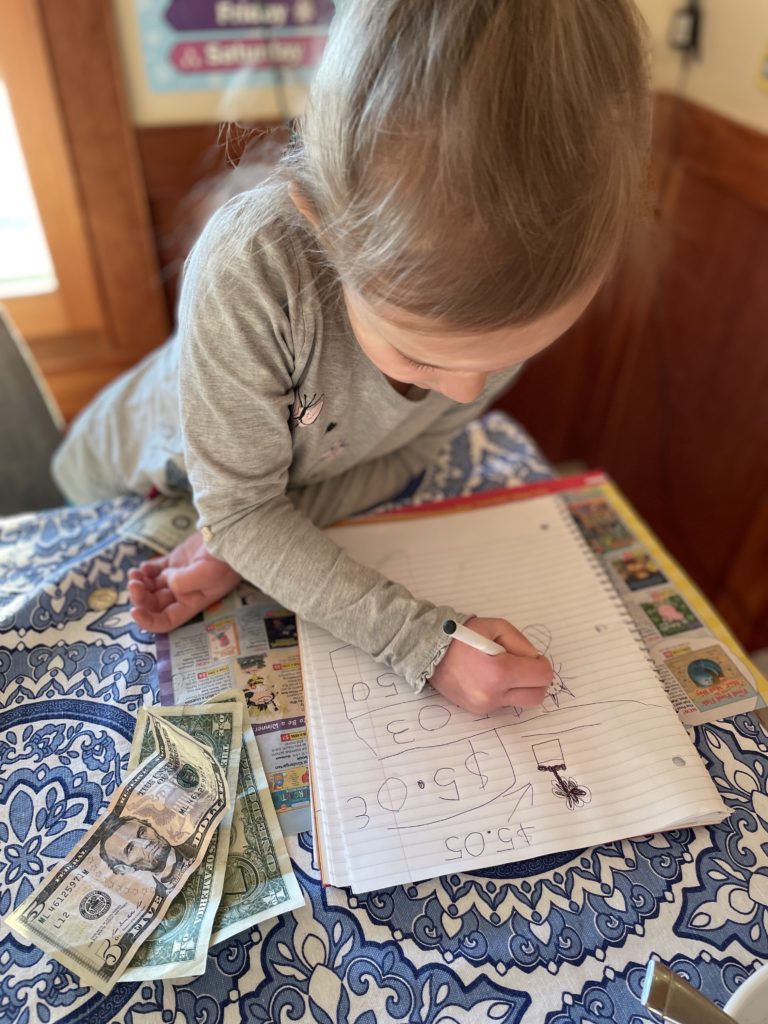
The child was then required to pay off the debt through mandatory chores. The realization that she was working to pay for an item she already owned—and therefore had no "new" money to show for her efforts—was a pivotal moment in her financial development. It provided a visceral, real-world understanding of the misery of debt and the importance of planning for purchases in advance. Since that experience, neither child has opted to go into debt, suggesting that the lesson in deferred gratification was internalized effectively.
Challenges and Official Perspectives: The Risk of Loss
The family’s approach also forces children to manage the logistical risks of money. Recently, a minor crisis occurred at a science museum when a child misplaced her wallet containing her savings.
The parents refused to intervene, forcing the child to take responsibility for her own property. After a stressful search, the wallet was recovered, but the experience served as a permanent lesson in the value of personal accountability. The parents utilized this as a "teachable moment" to explain that if money is lost, it is often gone forever—a harsh but necessary lesson for future fiscal health.
The Future: Introducing Interest and Long-Term Savings
As the children move toward middle childhood, the parents are preparing to introduce the next stage of the curriculum: the "Bank of Parental Units."
The Proposed Savings Model
The goal is to move the children away from a "spend everything as soon as it is earned" mentality. By offering interest on savings held within the family, the parents hope to demonstrate the power of compound growth and the benefits of long-term patience.
However, this transition brings new questions:

- At what rate should the "Bank of Parental Units" pay interest? Too low, and the incentive is negligible; too high, and it creates an unrealistic expectation of passive income.
- How should the children view this savings? The parents are cautious about ensuring that the girls don’t view money as a source of status or happiness, but rather as a neutral tool to be managed.
Conclusion: Money as a Tool, Not a Goal
The overriding theme of this parental strategy is the demystification of money. By stripping away the anxiety and the secrecy that often surrounds family finances, these parents are teaching their children that money is simply a tool—like a hammer or a paintbrush—used to achieve specific goals.
Whether it is exercise, sleep, or nutrition, they frame money as one of many resources to be managed effectively to achieve a stable and content life. By allowing their children to make small mistakes now—misplacing a wallet, buying a toy they regret, or struggling with debt—they are building a foundation of financial resilience. In doing so, they are not just raising children who understand how to count coins; they are raising future adults who understand the value of their own labor and the importance of self-regulation in a consumer-driven society.
As the children continue to navigate these lessons, the parents remain open to feedback. The transition to a savings-based model is the next great hurdle, and as they refine their "Bank of Parental Units," they invite other families to consider whether a similar, transparent approach might serve to prepare the next generation for the complexities of the modern economy. After all, the best time to learn the value of a dollar is long before that dollar is needed to secure a mortgage, a retirement fund, or a future.