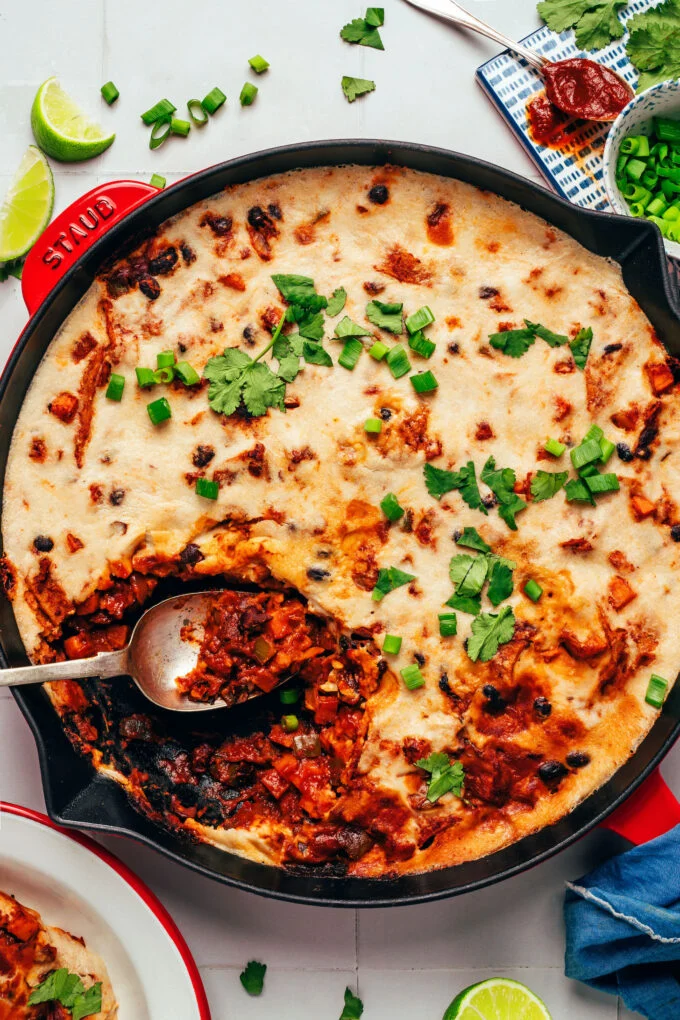
In the modern culinary landscape, the intersection of efficiency and plant-based nutrition has become the holy grail for home cooks. As lifestyles accelerate and the demand for wholesome, sustainable, and allergen-friendly dining increases, home chefs are looking for ways to capture the essence of labor-intensive comfort foods without the time commitment. Enter the "Cheesy Vegan Enchilada Skillet"—a dish that has recently captured the attention of the culinary community for its ability to deliver the deep, complex flavors of traditional Mexican-inspired cuisine in just 30 minutes.
This dish serves as a testament to the "one-pan" movement, a culinary trend that minimizes cleanup while maximizing flavor through clever ingredient layering. By deconstructing the traditional, rolled enchilada, this recipe offers a pragmatic solution for busy weeknights without sacrificing the heartiness that defines the original dish.
Main Facts: A Deconstruction of Tradition
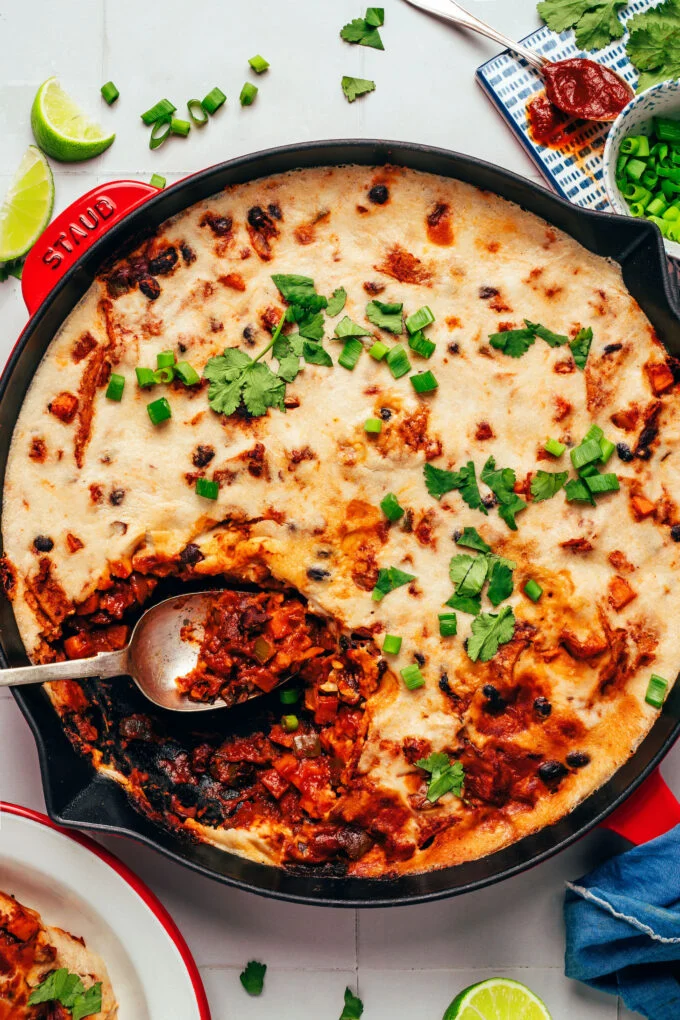
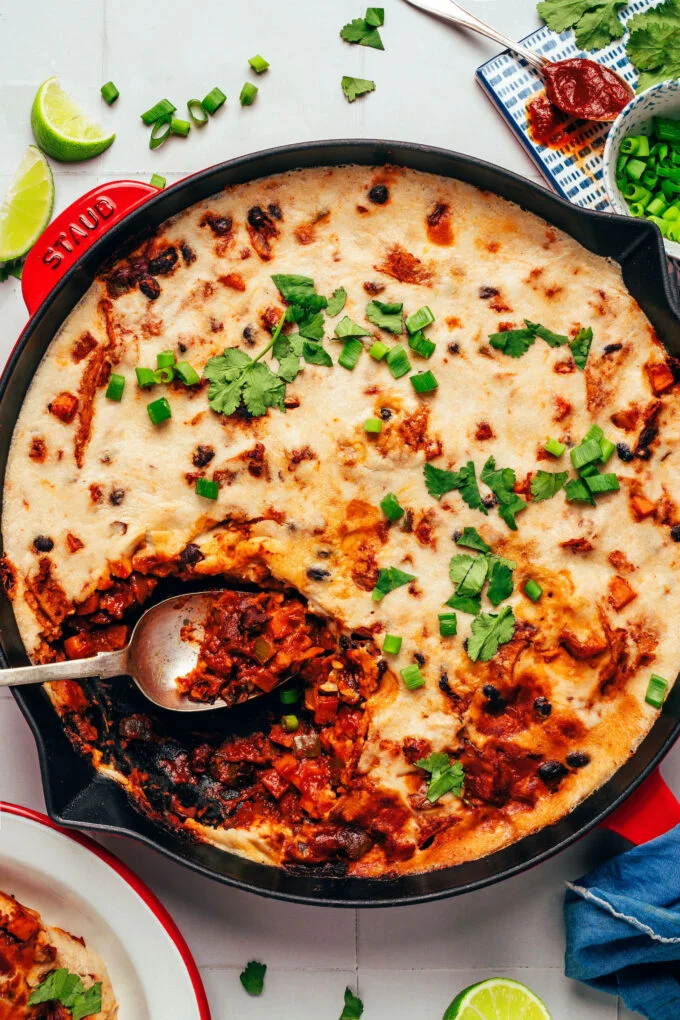
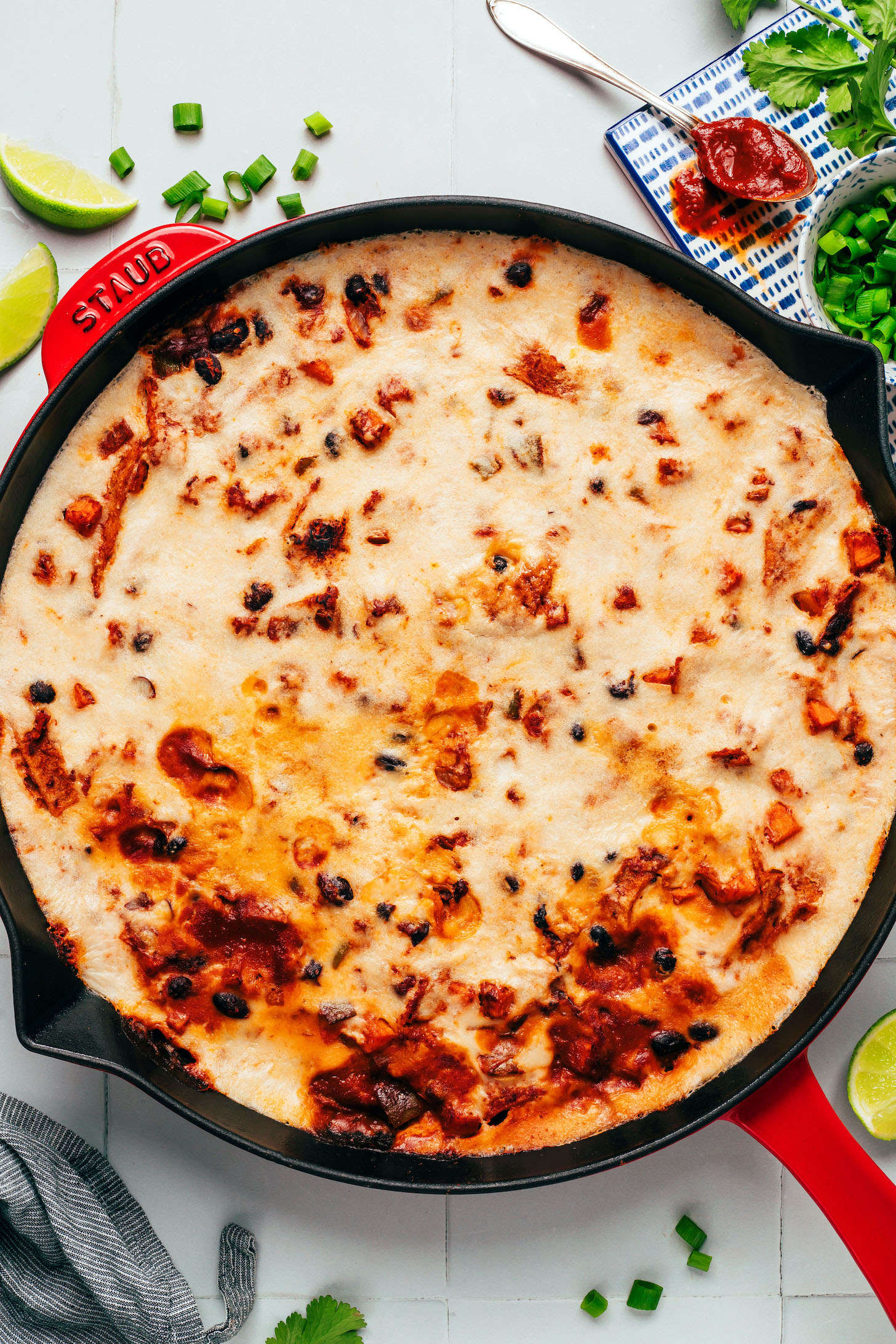
The core appeal of the vegan enchilada skillet lies in its rejection of the tedious assembly required by traditional enchiladas. While the classic dish requires individual filling, rolling, and baking of tortillas—a process that can easily span an hour or more—this skillet iteration utilizes a "deconstructed" method.
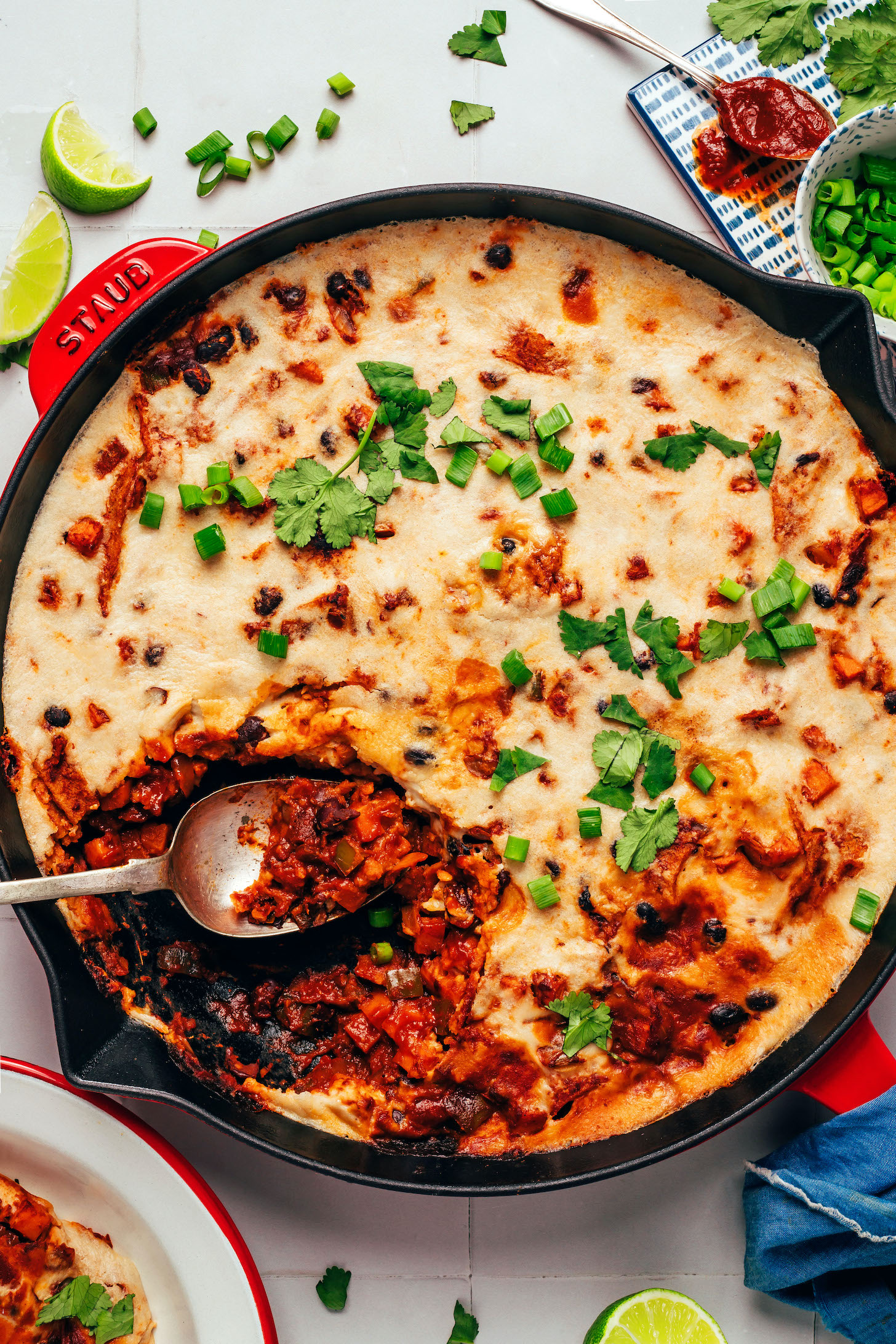
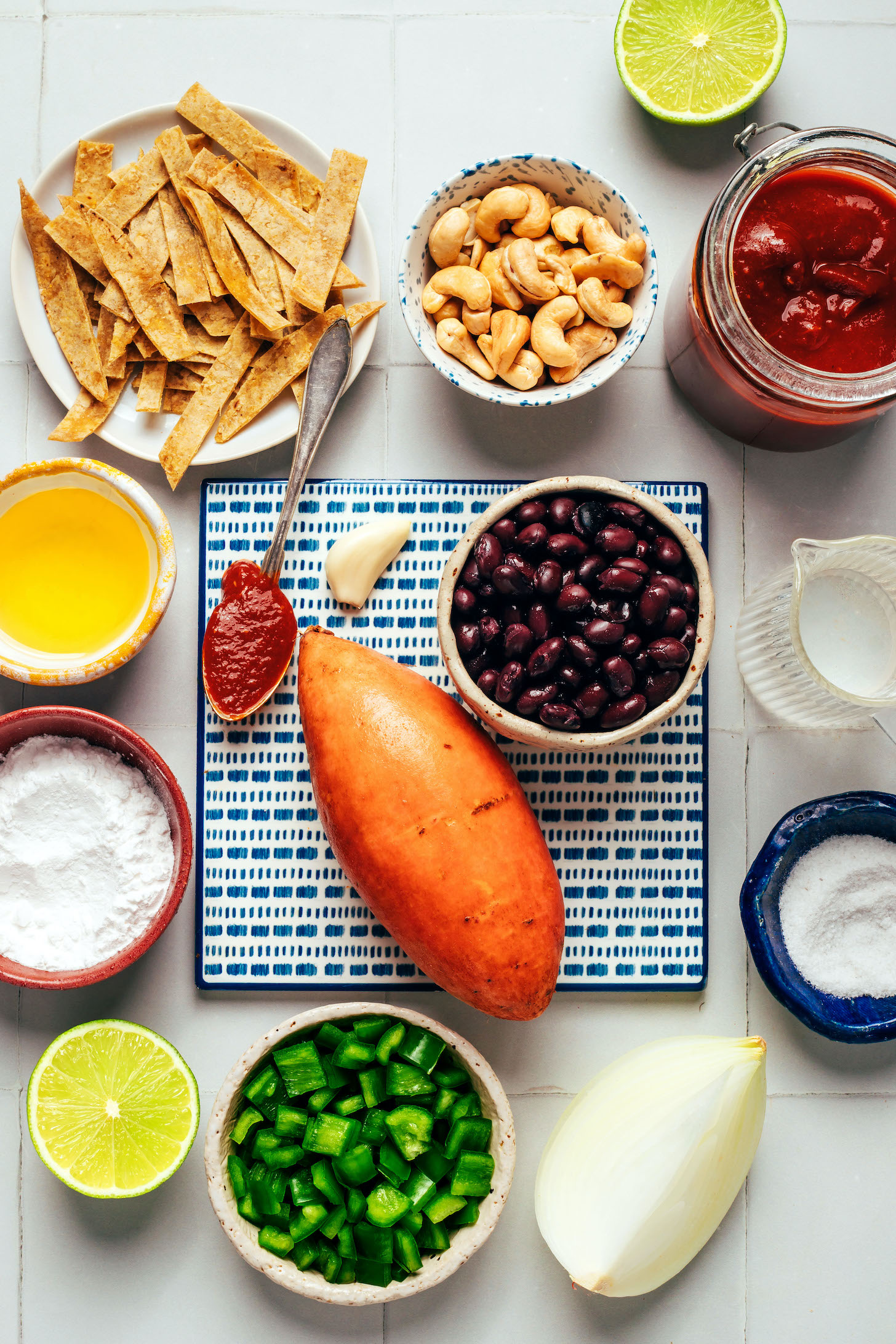
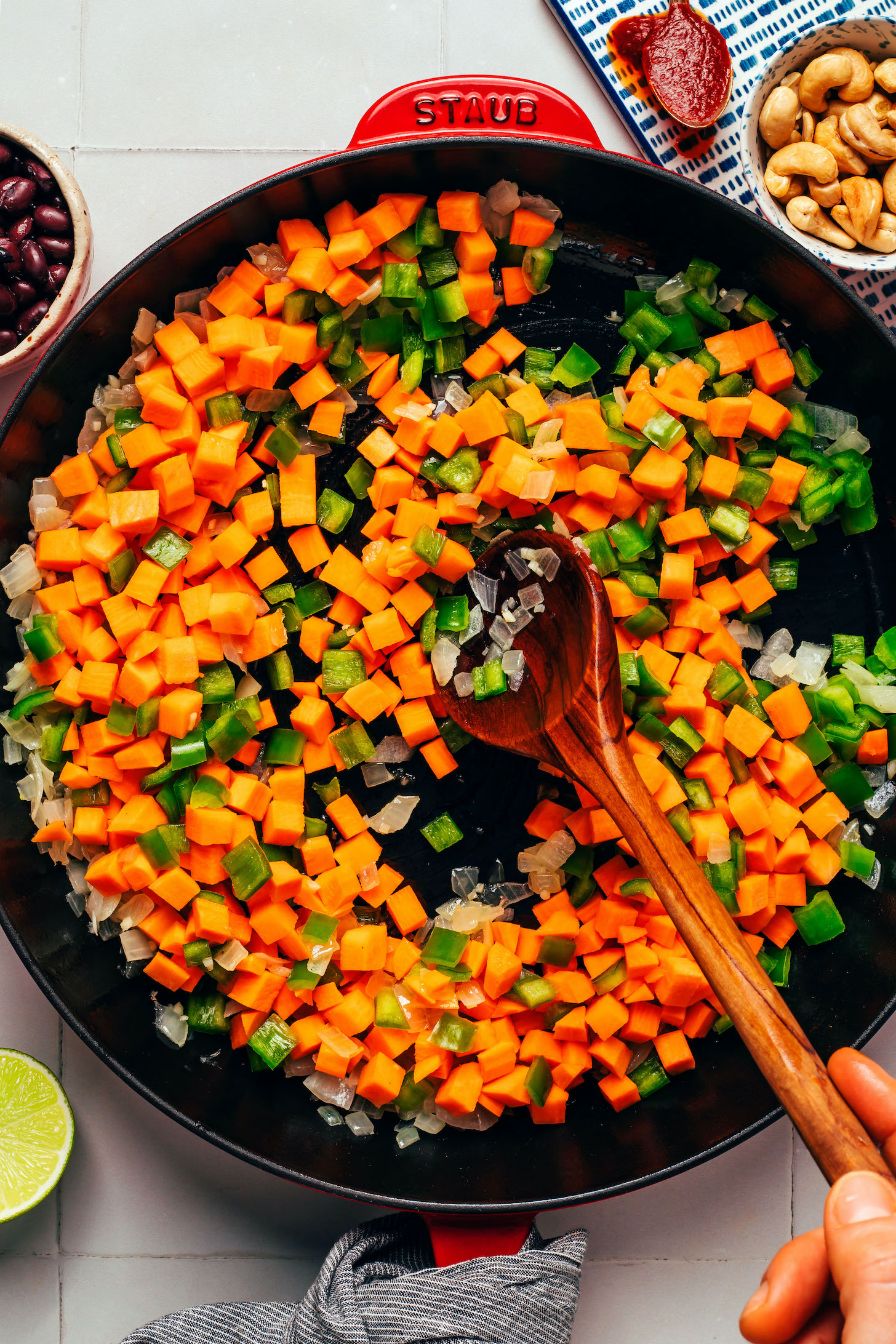
The base of the dish is a nutrient-dense medley of sautéed aromatics, including onion and garlic, combined with the earthy sweetness of cubed sweet potatoes or winter squash. To this, fiber-rich black beans are added, providing a substantial protein boost. The traditional tortilla element is replaced by corn tortillas cut into strips, which are simmered directly into the sauce. This allows the corn to soften and absorb the savory, smoky notes of the red enchilada sauce, effectively acting as a thickener for the dish.
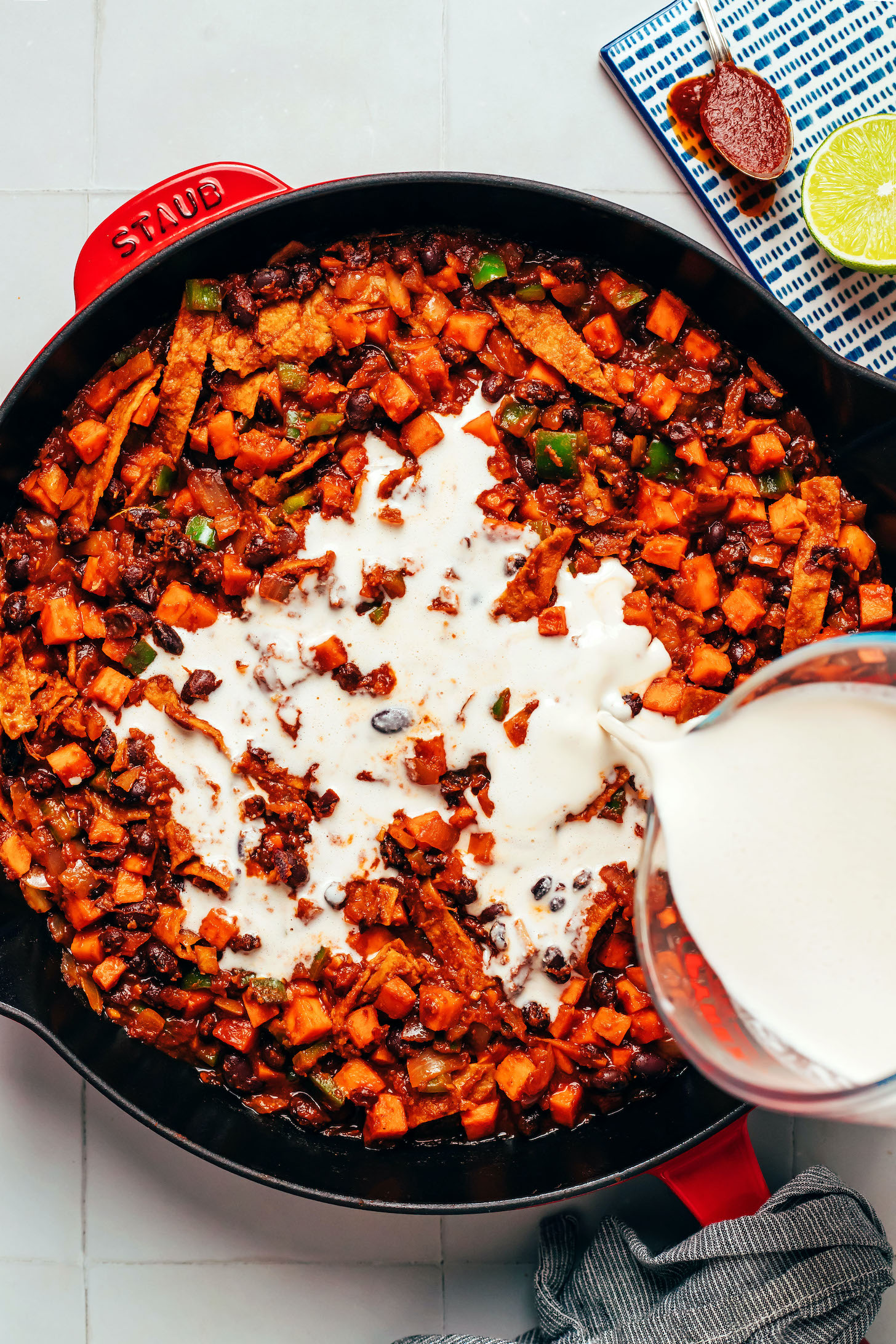
The crowning achievement of this recipe, however, is the "cheese." Eschewing processed vegan alternatives, the dish employs a homemade cashew-based sauce. By blending raw cashews with lime juice, garlic, and a small amount of tapioca starch, the recipe creates a velvety, melt-in-your-mouth topping that mimics the texture and tang of dairy-based cheese, providing a satisfying mouthfeel that has made this technique a staple in contemporary plant-based cooking.
Chronology: The Journey to the Skillet
To understand why this dish is resonating with home cooks, one must look at the historical context of the enchilada itself. The origins of the dish are deeply rooted in pre-Columbian history, with scholars pointing to the Mayan dish papadzules—corn tortillas dipped in a pumpkin seed sauce—as a likely precursor.
The first documented reference to the enchilada as we recognize it today appeared in the 1831 Mexican cookbook El Cocinero mexicano. Over the subsequent two centuries, the recipe evolved into a staple across North America, typically involving meat, beans, or cheese tucked inside corn tortillas and smothered in chili sauce.
The "skillet" version represents the latest chapter in this evolution. It is a response to the 21st-century demand for "low-fuss" cooking. By eliminating the rolling step, the recipe removes the primary barrier to entry for the average home cook, transforming a "special occasion" dinner into a viable Tuesday night staple. The transition from oven-baked to stovetop-braised signifies a broader shift in domestic habits, where the focus has moved from technical presentation to efficiency and sustainability.
Supporting Data: Nutrition and Scalability
Beyond the convenience, the nutritional profile of this skillet is a significant draw. With approximately 416 calories per serving, the dish is calorie-dense enough to function as a standalone entree while remaining balanced in its macronutrient distribution.
The data supports the efficacy of the ingredient choices:
- Fiber Content: With 14.3 grams of fiber per serving, the combination of black beans and sweet potatoes promotes satiety and digestive health.
- Plant-Based Protein: Providing 13.6 grams of protein per serving, the meal satisfies the requirements of a heartier dinner without the need for animal products.
- Micronutrient Density: The inclusion of sweet potatoes provides a substantial dose of Vitamin A (5342 IU), while the lime and garlic base offers essential Vitamin C and minerals like iron (4.9 mg).
Furthermore, the recipe is highly scalable. The use of tapioca starch as a thickening agent for the cashew sauce is a clever application of food science; when heated, the starch gelatinizes, creating a "pull" or "stretch" that replicates the behavior of mozzarella, a feature that many commercial vegan cheese products struggle to achieve.
Official Perspectives: The Philosophy of Minimalist Cooking
Industry experts and nutritionists have noted that the rise of such recipes reflects a "return to basics" mentality. By using whole-food ingredients like cashews, beans, and fresh vegetables rather than pre-packaged, highly processed alternatives, home cooks are taking more control over their dietary intake.
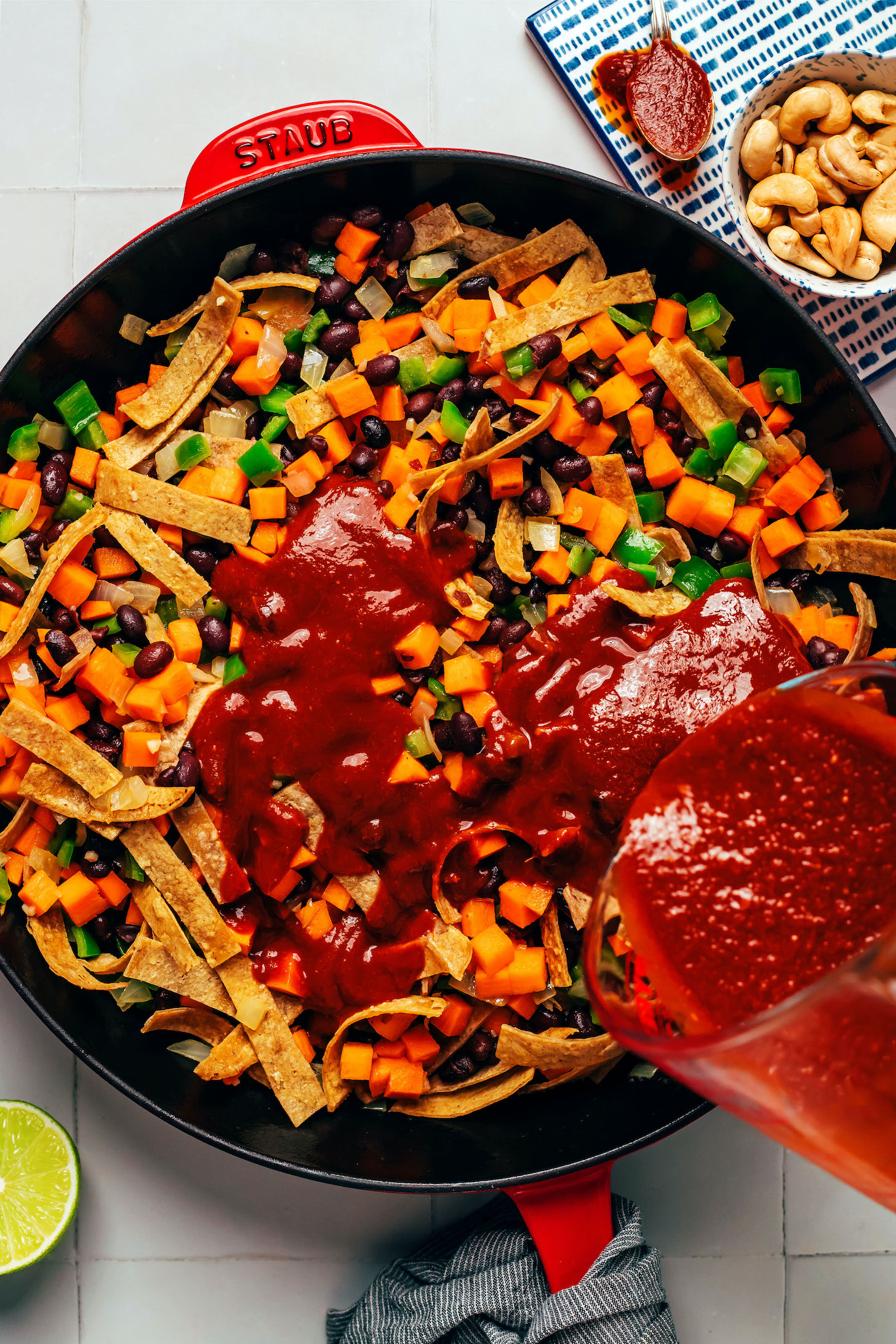
"The beauty of this approach is in the modularity," says one culinary analyst. "When you provide a base structure—vegetables, beans, sauce, and starch—you allow the cook to pivot based on what is available in their pantry. It encourages seasonal eating. For instance, swapping sweet potatoes for kabocha squash in the autumn or utilizing bell peppers in the summer allows the recipe to remain relevant throughout the year."
The recipe’s adaptability also addresses common concerns regarding food waste. Because the vegetables can be substituted based on what is currently in the refrigerator, it serves as an excellent "clean-out-the-fridge" meal, a practice highly recommended by sustainability advocates to reduce domestic food waste.
Implications: The Future of Weeknight Dining
The success of the 30-minute vegan enchilada skillet carries broader implications for the future of the home kitchen. As society continues to navigate the pressures of work-life balance, the demand for "simple, yet sophisticated" meals will only grow.
1. The Death of the Recipe-Dependent Chef
This dish encourages a style of cooking that is less about rigid adherence to measurements and more about understanding flavor profiles. By learning to make a simple cashew sauce, a cook gains a tool that can be applied to pizzas, tacos, or pasta dishes, effectively building a culinary "toolkit" rather than just a collection of static recipes.
2. Sustainability and Plant-Forward Trends
The shift away from dairy and meat in this recipe isn’t merely a trend; it represents an environmental shift. Reducing reliance on dairy cheese in favor of nut-based alternatives has a lower carbon footprint, making this dish a small but meaningful contribution to sustainable home eating habits.
3. The "One-Pan" Revolution
The logistical success of the one-pan method highlights a desire for lower-friction cooking experiences. The kitchen, once viewed as a place for laborious, multi-hour projects, is being reclaimed as a space for high-efficiency creative output. This shift allows more individuals to cook for themselves, reducing reliance on takeout and processed meal kits.
Conclusion
The 30-minute vegan enchilada skillet is more than just a quick dinner; it is a manifestation of contemporary culinary values. It manages to balance the weight of history—honoring the traditional roots of the enchilada—with the forward-thinking demands of modern life. Through its reliance on whole foods, its clever use of texture, and its commitment to efficiency, this dish stands as a blueprint for the future of home cooking.
For those looking to transition to a more plant-based diet or simply wanting to reclaim their time in the kitchen, the skillet method offers a path forward that is both nourishing and deeply satisfying. Whether you choose to follow the recipe precisely or use it as a canvas for your own culinary experiments, the result remains the same: a meal that proves you do not need hours in the kitchen to create something that feels truly special.