Your alarm rings at 6:10 a.m. You are upright by 6:12, standing in the kitchen by 6:15, and yet you are functionally adrift. You stare at the refrigerator, unable to decide between milk or juice. You read the same text message three times, the words failing to form a coherent narrative. You are, for all intents and purposes, a stranger to your own morning. Around 6:40 a.m., the fog begins to lift, and you finally feel like a conscious human being—which is exactly when you need to walk out the door.
For millions, this daily transition is a source of profound frustration. We spend the remainder of the day diagnosing ourselves with "sleep problems," assuming that our struggle to wake is a failure of character or a symptom of poor sleep hygiene. However, the reality is far more physiological. What you are experiencing has a formal name, an extensive body of research, and a set of remedies that look nothing like the conventional advice you have been sold.
The most vital realization is this: the battle for a sharp morning is not won at 6:12 a.m. It is a decision you made the night before, or perhaps the moment you set your alarm.
Sleep Inertia: A Measured Physiological State
In clinical literature, the grogginess, disorientation, and cognitive degradation that follow waking are known as sleep inertia. Far from a character flaw or a lack of willpower, sleep inertia is a documented transition state—a temporary period of impaired performance as the brain shifts from the unconsciousness of sleep to the high-demand state of wakefulness.
Research published by Hilditch and McHill (2019) confirms that during this window, alertness and physical performance are significantly compromised. Dr. R.D. Trotti (2017) describes this phase as a period where the brain is literally struggling to "come online." It is an ordinary, clinical reality that affects even the best sleepers. If you have been beating yourself up for not being "sharp" the second your eyes open, you are fighting a biological inevitability.
Many of us have tried the standard "hacks": placing the alarm across the room, splashing freezing water on our faces, or banning phones from the bedroom. While some of these tactics are harmless, they rarely change the texture of those first twenty minutes. The reason is simple: you are trying to solve a systemic biological issue with a surface-level behavioral fix.
The Chronology of the Morning Fog
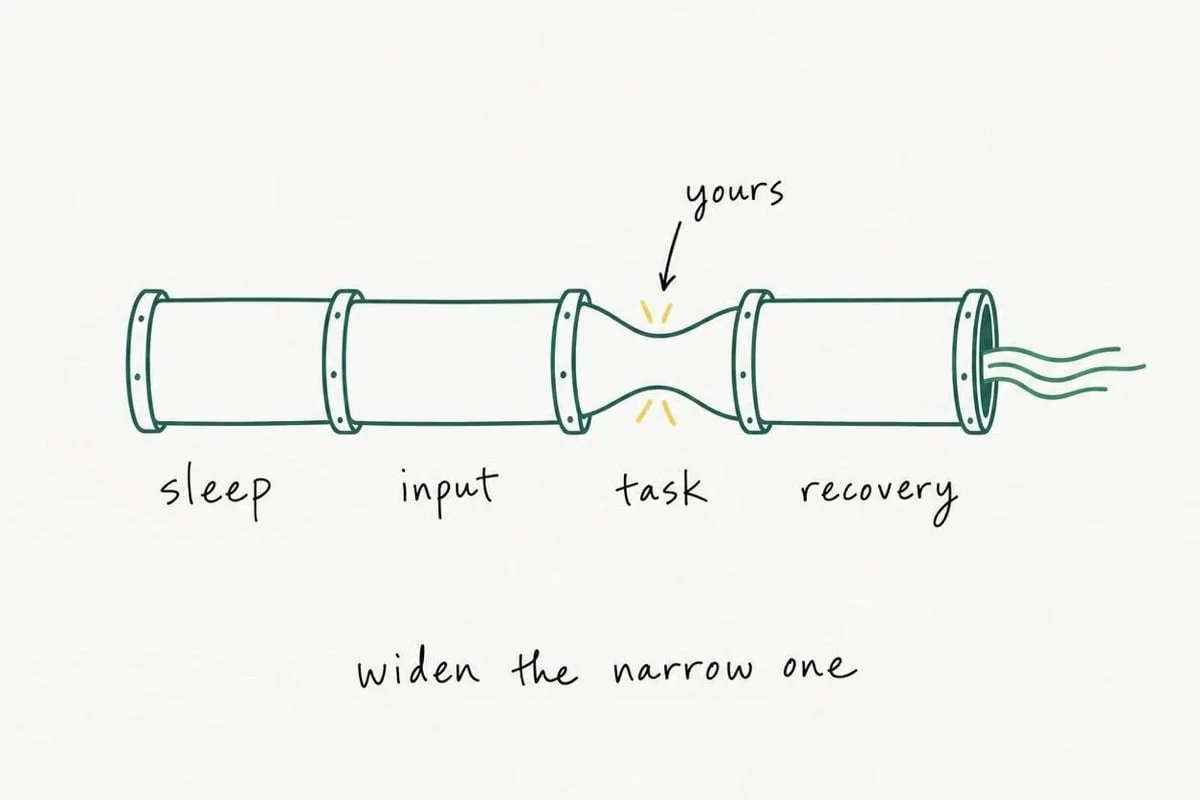
To understand why your brain feels like it is moving through molasses, we must look at the three primary factors that dictate the severity of sleep inertia. None of these factors occur after the alarm rings.
1. The Cumulative Weight of Sleep Debt
Sleep deprivation is the primary driver of morning impairment. When you are sleep-deprived, the brain enters the morning in a state of deficit. Studies show that people who are sleep-deprived perform significantly worse upon waking than those who have achieved a full eight-hour opportunity. Furthermore, a long, irregular stretch of wakefulness before finally heading to bed can exacerbate how hard the next morning’s wake-up feels. You cannot "out-caffeinate" a systemic lack of sleep; the damage is done before you ever hit the pillow.
2. The Circadian Trough
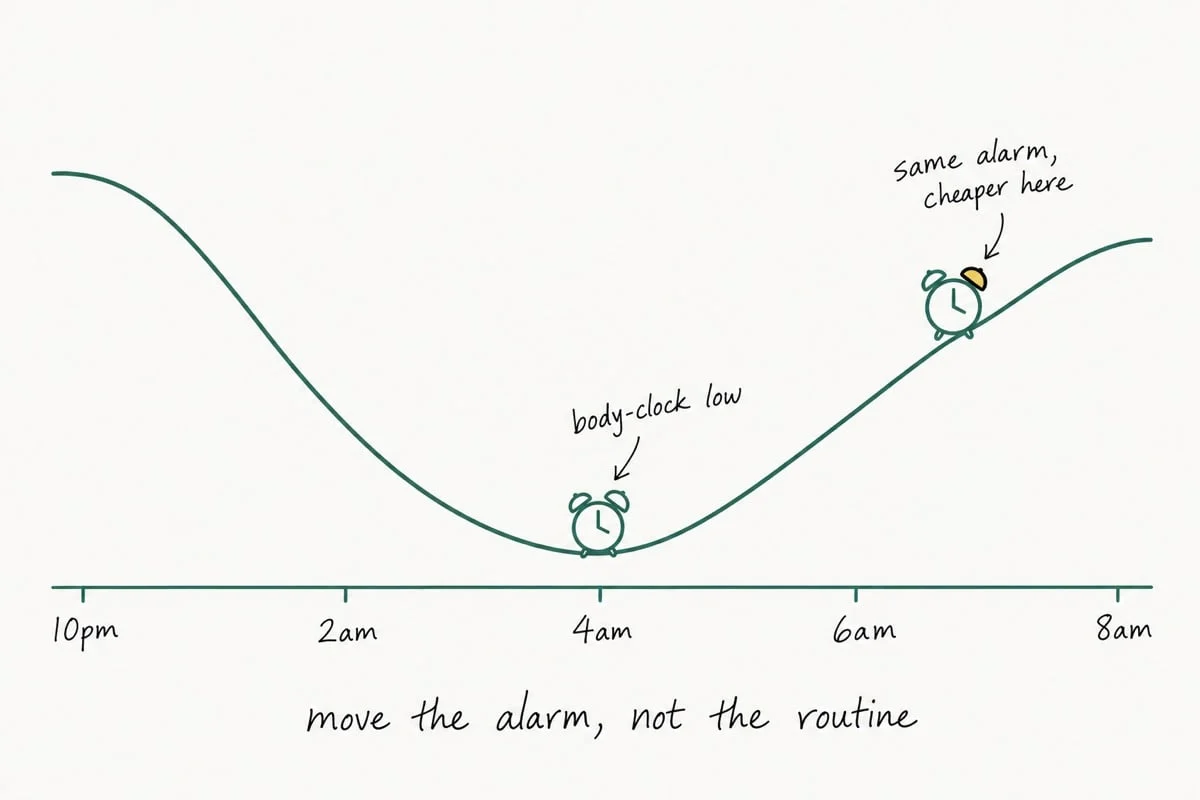
Your body operates on a biological clock, and that clock has a "low point"—a time when your physiological systems are at their most dormant. For an individual on a standard 11:00 p.m. to 7:00 a.m. sleep schedule, the biological trough typically bottoms out between 3:00 a.m. and 5:00 a.m.
However, these numbers are not universal. They shift based on your chronotype (whether you are a "night owl" or "early bird"). The takeaway is simple: waking up during your biological low is exponentially more difficult than waking up even thirty minutes later. If your alarm is set to ring while your body is in its deepest circadian dip, you are essentially asking your system to perform a high-speed reboot during a power outage.

3. The Architecture of Sleep Stages
Waking from deep, slow-wave sleep is associated with significantly stronger inertia than waking from lighter stages. While modern apps often promise to track your sleep cycles and wake you at the "perfect" moment, the evidence is mixed. Because sleep pressure and timing vary so wildly, relying on an app to navigate these stages is often less effective than simply ensuring your total sleep duration is sufficient.
Supporting Data and Evidence-Based Mitigation
When we rank interventions by their scientific efficacy, the hierarchy is clear: the most effective tools are those that occur before you wake.
Tier 1: The Heavy Lifters
- Protecting Sleep Opportunity: The most effective remedy is the most boring one. Consistently increasing the amount of time you spend in bed—and ensuring the quality of that sleep—is the only way to fundamentally alter the intensity of your morning fog.
- Aligning the Alarm: If you feel consistently unable to wake, you may have a "timing conflict." Moving your alarm even twenty or thirty minutes later can align your wake-up time with your natural circadian climb, significantly reducing the "heaviness" of the transition.
Tier 2: Supportive Tools (With Caveats)
- Caffeine: Caffeine can mitigate sleep inertia, but the timing is often misunderstood. Whether you use caffeinated gum or a traditional beverage, the drug takes approximately 30 to 40 minutes to reach peak blood concentration. Do not expect the first sip to act as a light switch; treat it as the beginning of a 20-minute waiting period.
- Light Exposure: Artificial dawn simulations or light-emitting glasses can make the morning feel better by improving self-reported alertness. However, studies show this may not always correlate with actual improvements in psychomotor performance. You might feel brighter, but you are not necessarily faster.
Tier 3: The "Weak" Remedies
Common advice—such as cold showers, vigorous exercise, or chugging water—falls into the lowest tier of evidence. While these habits are healthy in their own right, they are not, in the clinical sense, cures for sleep inertia. They may provide a sensory jolt, but they do not clear the neural cobwebs of sleep inertia.
Implications for Your Daily Routine
If the fog is inevitable, the solution is not to fight it—it is to design around it.
Moving the Decisions
Stop trying to perform high-level cognitive tasks during the first twenty minutes of your day. If you struggle to recite your phone number at 6:12 a.m., do not schedule your most complex work tasks or emotional conversations for 6:15 a.m. Move your "thinking work" to later in the day, or to a time when you are firmly into your wakefulness phase.
The "Dumb" Morning
Treat your morning self like someone who is slightly impaired. Lay out your clothes, pack your bags, and prepare your coffee setup the night before. By automating the "execution" phase of your morning, you eliminate the need for the brain to make complex decisions while it is still in a state of inertia. This isn’t just a productivity tip; it is a way to stop viewing your mornings as a series of failures.
When to Consult a Clinician
For most people, morning grogginess is a scheduling issue. However, if your difficulty waking is prolonged, severe, or accompanied by symptoms like unrefreshing sleep despite long hours in bed, it may move into the clinical domain. Conditions such as idiopathic hypersomnia or obstructive sleep apnea can manifest as extreme sleep inertia. If you find that you are consistently "unusable" for hours after waking, it is time to document these patterns and present them to a medical professional.
Conclusion: Stop Auditioning Hacks
The desire to find a "trick" to bypass sleep inertia is human, but it is ultimately a distraction. The evidence is clear: stop auditioning new morning rituals and start adjusting your evening habits.
Protecting your sleep opportunity is the single most powerful act of self-care you can perform for your morning. If that is impossible, adjusting your wake-up time to align with your body clock is the next best move. By accepting the first twenty minutes of the day for what they are—a period of transition rather than a period of output—you can stop the cycle of self-criticism. Let the fog be. It will clear on its own, and you will be far better equipped to handle the day once it does.