In an era where digital privacy has become a luxury, the intersection of artificial intelligence and personal reflection presents a complex challenge. Today, the developers behind Day One, the industry-leading digital journaling platform, announced a significant milestone: the integration of Apple Intelligence. By leveraging Apple’s advanced on-device Foundation Models, Day One is introducing a suite of AI-powered tools designed to enhance user introspection while maintaining the ironclad privacy standards that have defined the application for over a decade.
This development marks a pivot in how personal data-heavy applications approach generative AI. Rather than relying on cloud-based processing—a model that often raises red flags for users concerned about data harvesting—Day One has opted for a strictly local, on-device architecture. This ensures that the most intimate thoughts of millions of users remain tethered to their hardware, unreachable by third-party servers or corporate data-mining algorithms.
The Core Transformation: AI as a Creative Companion
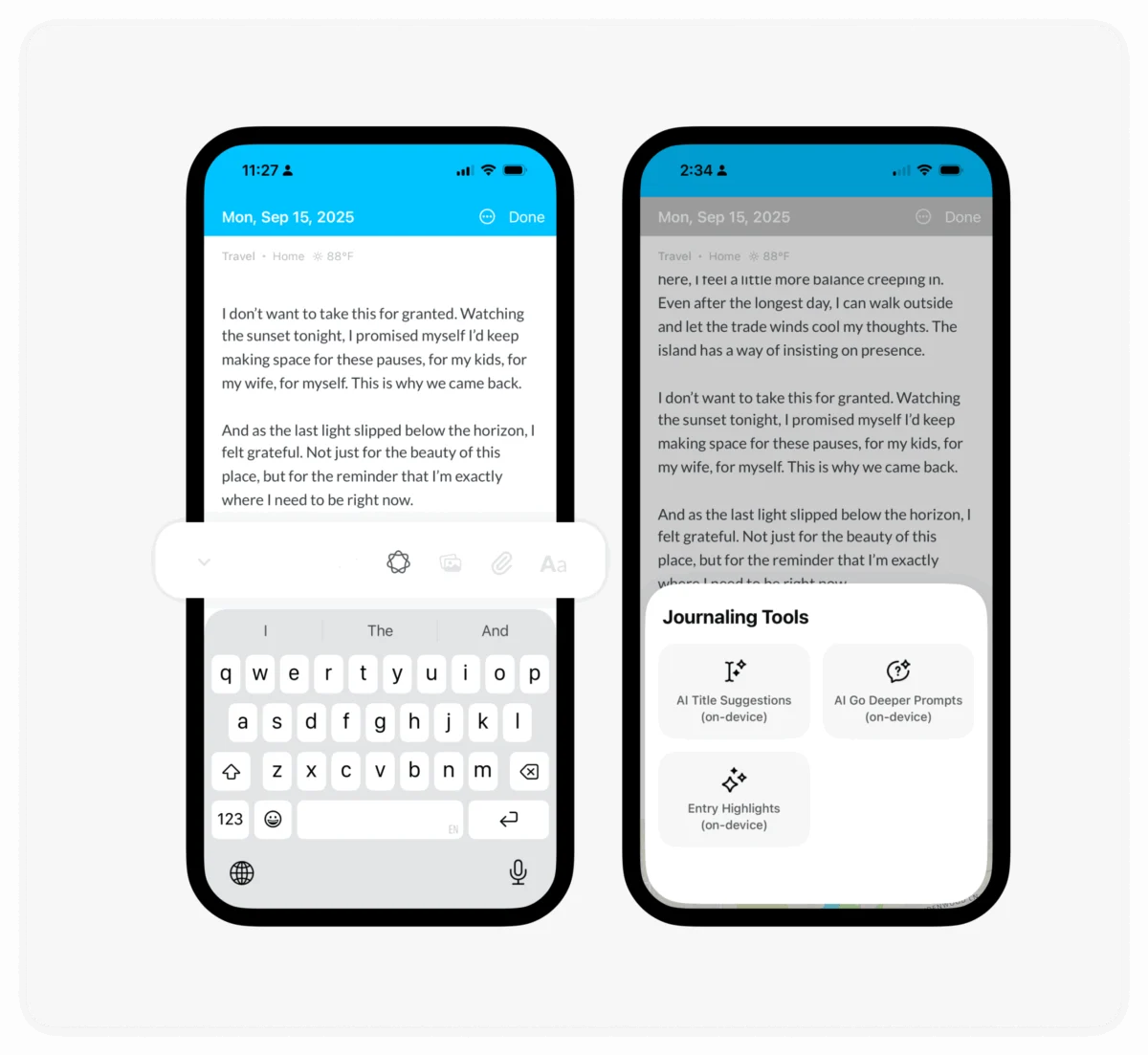
The integration of Apple Intelligence into version 2025.19 of Day One is not merely a technical update; it is an attempt to redefine the digital diary. The update introduces three primary features: Go Deeper Prompts, Entry Title Suggestions, and Entry Highlights. These tools are engineered to assist users in overcoming "blank page syndrome" and discovering new facets of their own histories.

1. Go Deeper Prompts
Journaling is frequently hampered by the difficulty of articulating complex emotions. The "Go Deeper" feature acts as a cognitive nudge, offering contextual suggestions that encourage the user to explore the nuance of their entries. By analyzing the existing text, the model suggests thought-provoking questions, helping the user expand on their day-to-day experiences with greater clarity and depth.
2. Entry Title Suggestions
For many, the most tedious part of journaling is cataloging. AI-generated title suggestions aim to streamline this by scanning the content of an entry and distilling its essence into a concise, meaningful header. This facilitates better organization and retrieval, turning a static list of entries into a navigable archive of life events.
3. Entry Highlights
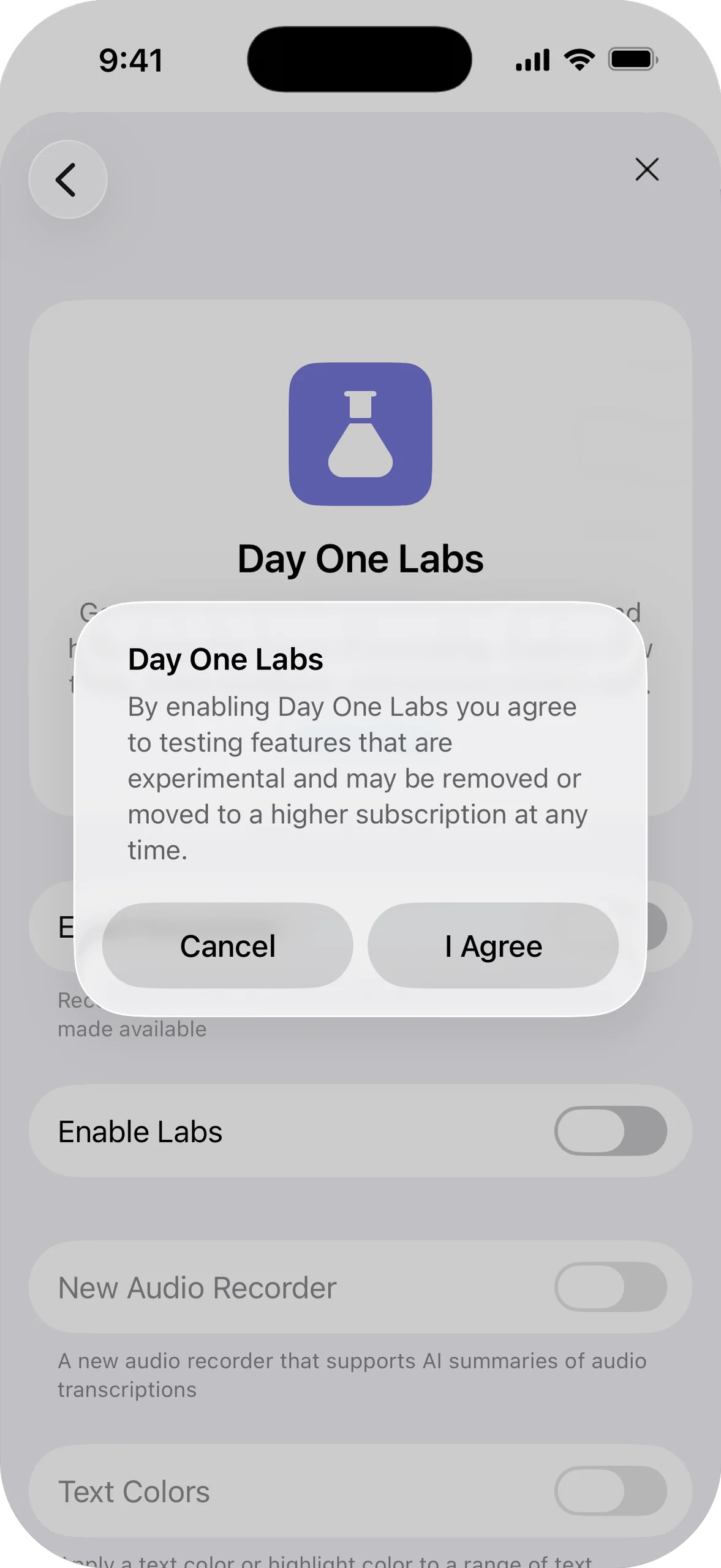
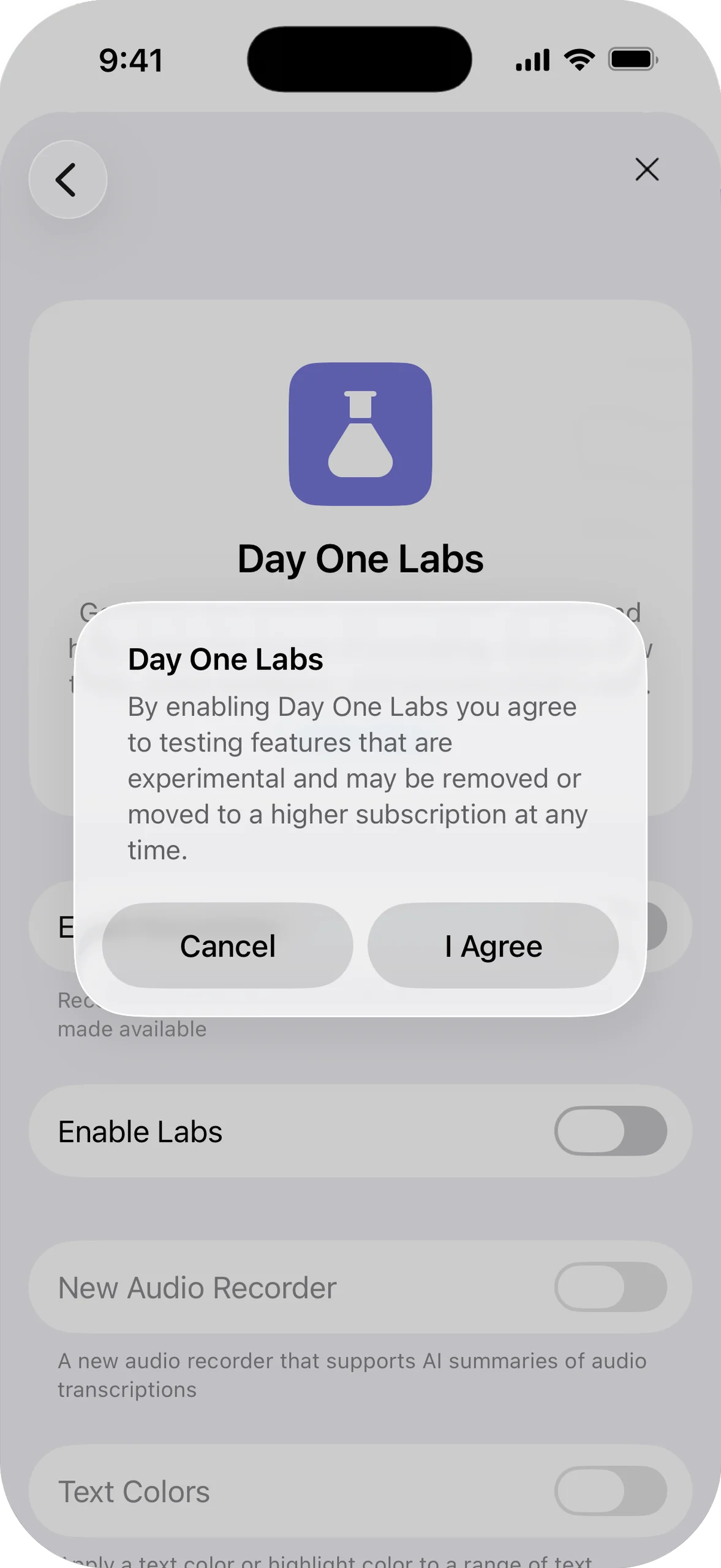
Replacing the experimental "Entry Summary" previously found in Day One Labs, "Entry Highlights" provides a structured, bulleted overview of an entry. By utilizing a new system prompt, it extracts the most significant moments from a narrative, allowing users to quickly recap their experiences without needing to reread lengthy passages.

A Chronology of Innovation: From Labs to Mainstream Integration
The path to this release was paved by a long-standing commitment to experimental development. For years, Day One has utilized its "Labs" program—a sandbox environment where power users could test nascent features.
- Early 2024: Day One began testing AI-driven summaries within its Labs feature set, gauging user appetite for automated reflection tools.
- Mid-2024: The company identified a growing tension: users wanted the convenience of AI, but were fundamentally wary of the privacy implications associated with sending sensitive journals to cloud servers.
- Late 2024: With the announcement of Apple Intelligence and the Foundation Models framework, the engineering team at Day One recognized a path forward that aligned with their "Privacy First" manifesto.
- September 2025: The official rollout of version 2025.19, integrating Apple Intelligence directly into the core editor for all compatible iPhone and iPad devices.
The Architecture of Trust: Privacy Above All
The technical implementation of these features is perhaps the most critical aspect of this release. By utilizing Apple’s Foundation Models framework, the entire generative process occurs within the "secure enclave" of the user’s device.
The "No-Cloud" Guarantee
The technical specifications provided by Day One confirm that the data never leaves the device. This provides three distinct benefits:

- Zero-Latency Performance: Since the data is processed by the device’s own Neural Engine, there is no need for a round-trip to a server, ensuring the app feels snappy and responsive.
- Offline Functionality: Whether a user is in a remote location or an airplane, the AI features remain fully functional. The lack of an internet requirement is the ultimate proof that the data is not being exfiltrated.
- Third-Party Immunity: Because the data is not transmitted, there is no risk of interception or unauthorized access by third-party intermediaries.
For the security-conscious user, this is a revolutionary approach to AI. While many competitors are building massive LLM (Large Language Model) clusters to power their apps, Day One is betting that the future of personal software lies in "local intelligence."
Official Perspectives: Balancing AI and Human Authenticity
In a series of statements accompanying the release, the Day One development team emphasized that these tools are intended to augment, not replace, the human voice.
"We see AI as a creative companion," a company spokesperson stated. "It is not here to write your journal for you; it is here to ask the right questions so you can write your own story better. The goal is to make the act of reflection more intuitive and rewarding, without ever compromising the sanctity of your private data."

The company has taken great pains to ensure these features are entirely optional. Understanding that some users prefer a "pure" writing experience, the tools are toggled off by default. Users must proactively visit Settings > Apple Intelligence to enable them. This "opt-in" architecture is a clear response to the broader industry trend of forcing AI features onto users, a move that often triggers backlash and mistrust.
The Broader Implications for Personal Productivity
The move by Day One carries significant weight for the broader productivity and health-tech markets.
Setting a New Industry Standard
By proving that sophisticated generative AI can operate entirely on-device, Day One has effectively raised the bar for competitors like Notion, Obsidian, and Evernote. The implication is clear: in the future, if a software provider asks to upload your personal notes to a server for "AI optimization," users will be justified in asking why the company hasn’t followed the local-processing model.

The Psychological Benefit of Reflection
From a behavioral science perspective, the integration of AI into journaling could lead to higher user retention. By helping users overcome the initial friction of writing, the app encourages a more consistent habit. Research consistently shows that consistent journaling is linked to improved mental health, reduced stress, and better emotional regulation. If AI-generated prompts can help users maintain this habit, the technology serves a tangible, human-centric purpose.
Challenges and Future Evolution
The developers are candid about the fact that this is "version 1.0" of the integration. They acknowledge that the AI, like all current models, may occasionally struggle with tone or context. They have explicitly asked for user feedback to refine the system prompts, demonstrating a commitment to iterative improvement.
How to Get Started
For users eager to engage with these new tools, the requirements are specific:

- Hardware: A device compatible with Apple Intelligence (as outlined by Apple’s latest technical requirements).
- Software: An update to iOS 26 or later.
- Application: An update to Day One version 2025.19.
Once these prerequisites are met, users can navigate to the Settings menu within the app to activate the features. The interface is designed to be unobtrusive, appearing in the editor toolbar only when the user has provided enough text for the model to work with.
Conclusion: A New Era for the Digital Diary
The marriage of the digital journal and on-device AI represents a significant evolution in personal technology. It addresses the fundamental human need for reflection while acknowledging the necessity of modern, automated support.
As we move forward, the success of Day One’s initiative will likely serve as a blueprint for other applications that handle sensitive, private data. By placing control firmly back in the hands of the user, Day One has managed to embrace the power of the future without sacrificing the principles of the past. The next chapter of journaling is not just about recording what happened; it is about using the latest technology to understand why it matters, all while keeping your secrets exactly where they belong: in your pocket, on your device, and under your total control.