In the landscape of modern interpersonal dynamics, few phrases are as frequently weaponized—or as misunderstood—as the defense, "I’m just being myself." Often used as a shield against criticism or a justification for overstepping social boundaries, this declaration masks a more complex psychological reality. Recent reflections by behavioral health experts suggest that the insistence on radical, unfiltered authenticity can inadvertently lead to the emotional exhaustion of those around us.
As society becomes increasingly atomized, the tension between self-expression and social consideration has reached a fever pitch. At the heart of this conflict is a simple, yet often ignored truth: while authenticity is a virtue, it does not grant an individual a license to command another person’s attention, energy, or headspace indefinitely.
The Anatomy of Over-Communication
For many, being "talkative" is not merely a personality trait; it is a way of navigating the world. It is a process of externalizing thought, building rapport through storytelling, and—frequently—seeking validation through the act of helping. However, when this communication style lacks a "governor," it can transform from a social bridge into an emotional barrier.
Kelly Blakey, a writer and former social worker with thirty years of experience in behavioral health, identifies this phenomenon as a common trap for well-intentioned individuals. "I am a talkative person," Blakey notes. "I can answer a question, take three side roads, remember something from 1987, and still believe I gave you the short version."
This behavior, while often rooted in a genuine desire to assist or connect, frequently ignores the recipient’s capacity to process information. When a speaker prioritizes their own need to express over the listener’s ability to absorb, the interaction shifts from a dialogue to a performance—one where the listener is a captive audience rather than an active participant.
Chronology of a Communication Breakdown
The realization that "being oneself" has limits often arrives through a painful, iterative process. The following trajectory is common in high-intensity relationships:
- The Over-Investment Phase: The speaker engages with high enthusiasm, convinced that their detailed explanations, backstories, and analogies are inherently helpful or entertaining.
- The Friction Point: The listener, reaching a threshold of mental saturation, offers feedback—often in the form of a request for brevity or a physical cue of withdrawal.
- The Defensive Reaction: The speaker experiences a "defensive spiral." This often involves moving from confusion ("But I’m being helpful!") to shame, and eventually to a victim narrative ("Maybe I should just never speak again").
- The Detachment Phase: If the speaker cannot integrate the feedback, they may withdraw entirely, framing their silence as a result of the other person’s inability to appreciate their "authentic" self.
- The Integration Phase: A moment of clarity occurs when the speaker realizes that the listener’s request for space is not a rejection of their identity, but a boundary necessary for the listener’s own mental equilibrium.
The "Charging Station" Fallacy
A significant portion of modern social friction stems from what psychologists term the "Charging Station" dynamic. In this scenario, one party uses the other as a conduit for their own emotional regulation.
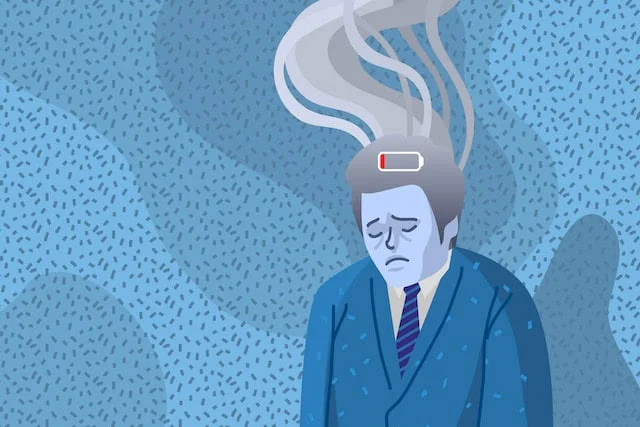
"Sometimes we treat another person as a charging station," says Blakey. "We come away from a long conversation feeling wonderful—we told the story, got the laugh, and processed the problem. Meanwhile, the other person may have been running on fourteen percent the whole time."
When the "listener" finally sets a boundary, the "speaker" often perceives this as an attack. This creates a double burden for the listener: they must first manage their own mental fatigue, and then they are tasked with managing the speaker’s bruised ego. This dynamic is not only unsustainable; it is inherently inequitable, as it requires one person to sacrifice their internal resources to maintain the comfort of the other.
Data and Psychological Implications
While precise quantitative data on "conversational overstepping" remains a nascent field in behavioral psychology, observational studies in social work suggest that the inability to read social cues—often referred to as "conversational narcissism"—is a primary driver of marital and workplace friction.
Research in the field of active listening emphasizes the concept of "Reciprocal Stewardship." This model suggests that in any conversation, both parties are stewards of the other’s time and energy. When one person occupies 80% of the conversational bandwidth, they are effectively declaring that their time is more valuable than their partner’s.

Clinical psychologists note that when individuals are asked to adjust their communication style, the resistance often stems from a fear of "erasure." They conflate editing their communication with changing their identity. However, experts argue that the ability to adapt one’s communication to the needs of the room is not a loss of self—it is the hallmark of high emotional intelligence (EQ).
Redefining "Too Much"
One of the most damaging narratives in personal development is the idea that if someone finds you "too much," they are incapable of appreciating your true self. This binary thinking—"Either you accept all of me in this moment, or you don’t accept me at all"—is a logical fallacy.
Instead, the concept of "contextual appropriateness" should be applied. To be "too much" is not a moral failing or a personality flaw; it is a data point.
- Too much for whom? (The listener’s capacity)
- Too much when? (The timing, such as early morning or during a workout)
- Too much for what? (The purpose of the interaction)
Recognizing these variables allows for a more nuanced understanding of relationships. It suggests that a person can be a cherished friend in the right context, yet an exhausting presence in the wrong one. Embracing this truth allows for more sustainable connections, as it removes the burden of constant, high-octane performance from both sides.
Implications for Future Interaction
The path forward requires a radical shift in how we approach discourse. It involves moving away from the "all-or-nothing" approach to personality and toward a more conscious, elective style of communication.
The "Short Version" Protocol
The most effective tool in the speaker’s arsenal is simple: the question. Asking, "Do you want the short version or the long version?" shifts the agency back to the listener. It acknowledges their autonomy and demonstrates respect for their current mental state.
Honoring Silence
Often, the most profound form of connection is not found in the sharing of information, but in the sharing of silence. For the "talkative" individual, learning to be comfortable in the quiet is a developmental milestone. It signifies that the relationship is secure enough to exist without the constant scaffolding of words.
Conclusion: The Balance of Being
To "be yourself" is a life-long project, but it is not a project that happens in a vacuum. True authenticity includes the ability to recognize when the environment is not suited for the full volume of your personality.
When we turn the volume down—not to silence, but to a level that invites the other person into the space—we are not losing ourselves. Rather, we are making room for the other person to exist in their own truth as well. As Blakey concludes, "I don’t need to turn myself off. I can turn the volume down. The quieter person gets to be themselves, and I still get to be me."
In a world that prizes constant noise, the most revolutionary act of personality may simply be the choice to listen—and to wait until the listener is truly ready to hear.