For millions of professionals reaching the age of 50, the job market feels like a gated community where they have lost the key. After decades of professional contributions—whether in management, trade, or domestic administration—the experience of searching for a new role often results in a wall of silence.
The central frustration is not a lack of capability; it is a mismatch of terminology. The professional record of a 50-year-old is vast, yet it is often filed under categories that the modern, algorithm-driven job market no longer prioritizes. The solution for this demographic is not to "find more experience"—a logistical impossibility in a single calendar year—but to fundamentally alter the strategy of target selection based on verifiable, objective entry requirements.
Main Facts: The Anatomy of the Hiring Barrier
When a 50-year-old scrolls through job boards at 9:00 p.m., they are often looking at a landscape that is fundamentally rigged against them. The terminology used in job postings—"entry level," "no experience necessary," or "junior"—frequently functions as a coded proxy for age. "Entry level" postings often demand two years of specific industry experience; "no experience" roles often demand a level of physical stamina or schedule flexibility that ignores the reality of mid-life responsibilities.
The most significant barrier is the reliance on the "informal read" of a resume. In a hiring environment dominated by digital filtering, a recruiter’s subconscious—or explicit—bias regarding age often dictates the sorting process. Research by Neumark, Burn, and Button, which analyzed over 40,000 job applications, confirmed systemic hiring discrimination against older workers, with the effect being most pronounced for older women.
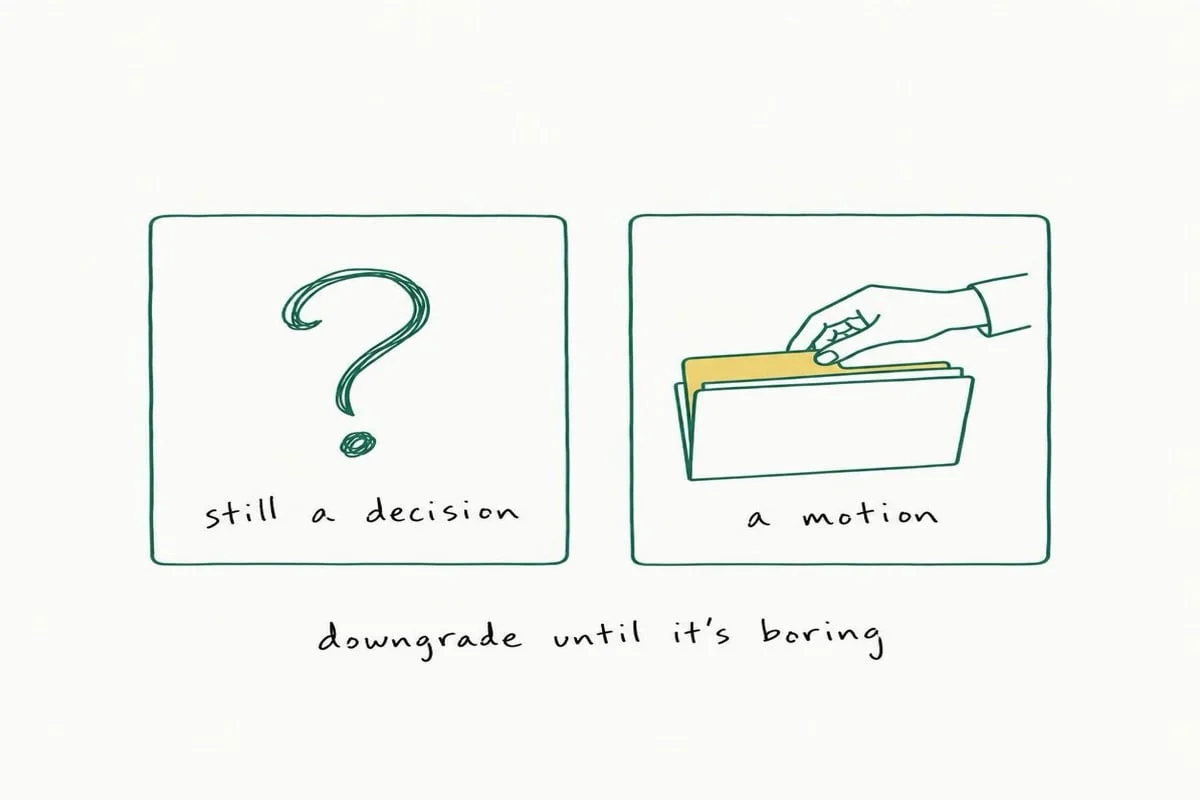
To overcome this, candidates must shift their strategy. Instead of applying to roles that rely on a recruiter’s subjective interpretation of their background, job seekers should pursue roles defined by objective, standardized credentials. When a role requires a state-issued license or a specific certificate, the hiring decision is shifted from an opinion to a requirement: either the candidate holds the document, or they do not.
Chronology of a Career Pivot
The process of starting over at 50 is not a spontaneous act but a methodical, phased progression.
- The Audit Phase: Before applying to a single job, a candidate must conduct a "life audit." This involves determining what the individual actually needs from their next decade of work—financial stability, purpose, or schedule flexibility—and identifying what constraints, if any, exist beyond the job itself.
- The Testing Phase: Before investing time or money into certification, prospective career-changers should test their interest through informational interviews or small-scale, real-world projects. If a candidate thinks they want to work in bookkeeping, they should attempt to reconcile books for a local non-profit or small business first.
- The Credentialing Phase: Once a direction is validated, the candidate identifies the specific requirement—the license or certification—needed for entry. This is the stage where the focus shifts from "what have I done?" to "what can I earn?"
- The Execution Phase: By focusing on roles where the entry barrier is a published, objective hurdle, the applicant bypasses the age-based bias of initial resume screening.
Supporting Data and Market Trends
The labor market for those over 50 is more robust than common narratives suggest. According to data from July 2026, 66.4% of Americans aged 55 to 64 are active in the labor force. This statistic is critical: it proves that the mid-career pivot is not an anomaly but a standard feature of the modern economy.
Key Occupations and Requirements
The following occupations, documented by O*NET, serve as examples of roles where requirements are objective:
- Heavy and Tractor-Trailer Truck Driver: With a 2025 median wage of approximately $58,640, this role requires a Commercial Driver’s License (CDL). Since February 2022, federal law mandates specific entry-level training. The barrier is high, but it is clear, quantifiable, and non-negotiable.
- Medical Assistant: Boasting a projected growth rate "much faster than average," this field requires post-secondary training. While requirements vary by state, the path is clearly marked by certification bodies like the AAMA.
- Phlebotomist: With 18,400 projected openings, this role offers a stable entry point. The barrier here is often a state-specific license, which effectively removes the recruiter’s personal bias from the equation.
- Computer User Support Specialist: While employment is projected to decline, this role remains popular. However, it lacks a formal licensing structure, meaning it falls into the "demonstrable work" category, where competition is fierce and age-bias is more likely to resurface.
The Power of Apprenticeships
Registered apprenticeships remain the most underutilized resource for workers over 50. Federal regulations for these programs set no maximum age limit. With 91% of participants securing employment upon completion and average starting wages often exceeding $60,000, these programs offer a rare opportunity to be paid while qualifying.

Official Responses and Strategic Resources
While many companies have historically made public pledges to hire older workers—such as the AARP Employer Pledge Program—these are best viewed as historical research leads rather than active job boards. The most effective "official" resource for a 50-year-old is the Department of Labor’s CareerOneStop and the Apprenticeship Finder.
When seeking training, candidates must be wary of "certification" traps. If a training provider sells a badge that is not recognized by a state licensing board or local employers, it is a product, not a requirement. Candidates should always cross-reference the name of the credential with their state’s Department of Labor or Health before enrolling in any course.
Implications for the Future of Work
The implication of this data is clear: the era of the "career ladder" has been replaced by the "career lattice." A 50-year-old moving into a new field is not "starting over" in a vacuum; they are bringing 22 years of warehouse supervision or household management to a new, specific task.
The transition is successful only when the candidate stops treating the job search as a sales pitch for their personality and starts treating it as a technical problem to be solved. By identifying the exact requirement—the "cost of the door"—and checking it against local demand, the candidate moves from the frustration of an ignored applicant to the precision of a qualified professional.
Frequently Asked Questions
What is the best career to start at age 50 with no experience?
The "best" career is the one with an entry requirement you can meet locally. If you seek stability, healthcare-related certifications (Medical Assistant, Phlebotomy) offer growth. If you seek immediate entry and higher wages, look toward the logistics sector, specifically through registered apprenticeships.
What companies like to hire older workers?
Rather than relying on lists, look for organizations that prioritize competency-based hiring. Utilize the history of the AARP Employer Pledge as a starting point to identify companies that value age diversity, but always verify current, specific job openings within those companies’ local branches.
What jobs pay $4,000 a week without a degree?
There is no reliable evidence of entry-level positions that pay $208,000 annually without a degree or years of specialized trade experience. Be skeptical of any training program or job listing promising such figures; they often represent the gross revenue of independent contractors before expenses, not take-home pay.
What is the easiest job to get with no experience?
The easiest jobs are typically hourly roles with high turnover. However, these should be viewed as "bridge" roles—short-term solutions to maintain cash flow while you fulfill the requirements for a more permanent career path. If you do not have a plan for what comes after the "bridge," the bridge will become your permanent destination.