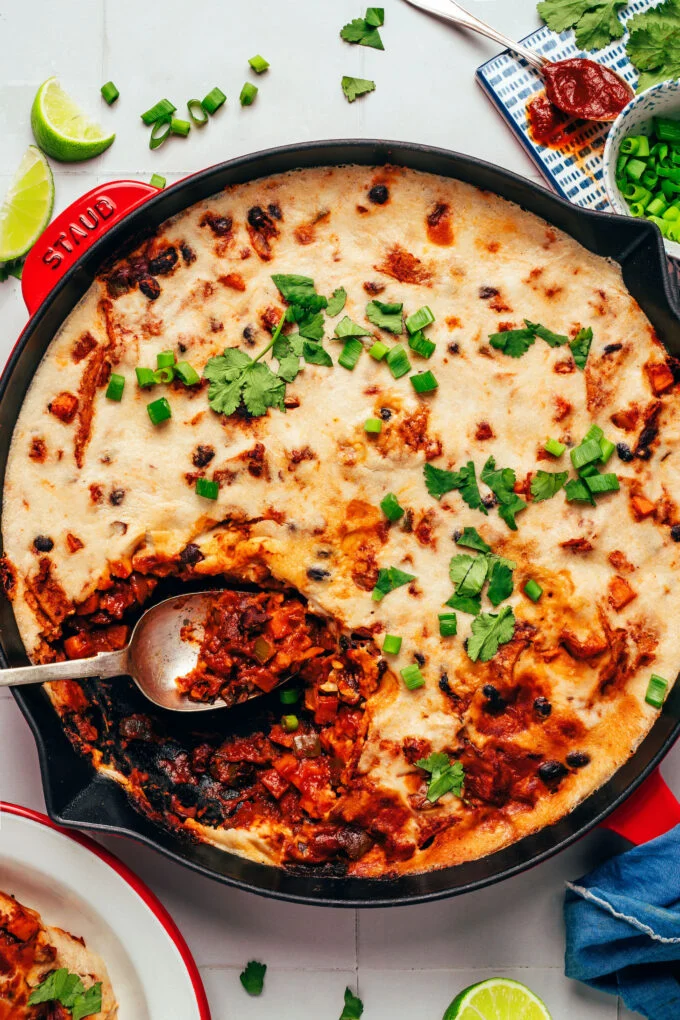
In the modern culinary landscape, where the demand for efficiency often clashes with the desire for nutrient-dense, flavorful home cooking, a new trend has emerged that bridges the gap between convenience and gourmet quality. The "Cheesy Vegan Enchilada Skillet," a concept recently popularized by the culinary team at Minimalist Baker, represents a significant shift in how home cooks approach traditional Mexican-inspired cuisine. By stripping away the labor-intensive assembly of traditional enchiladas—namely the rolling and stuffing of individual tortillas—this one-pan wonder has become a benchmark for efficient plant-based meal preparation.
This article explores the mechanics, cultural context, and practical implications of this 30-minute culinary innovation, examining why a simple shift in technique has resonated so deeply with busy households globally.
Main Facts: The Anatomy of a Modern Skillet Meal
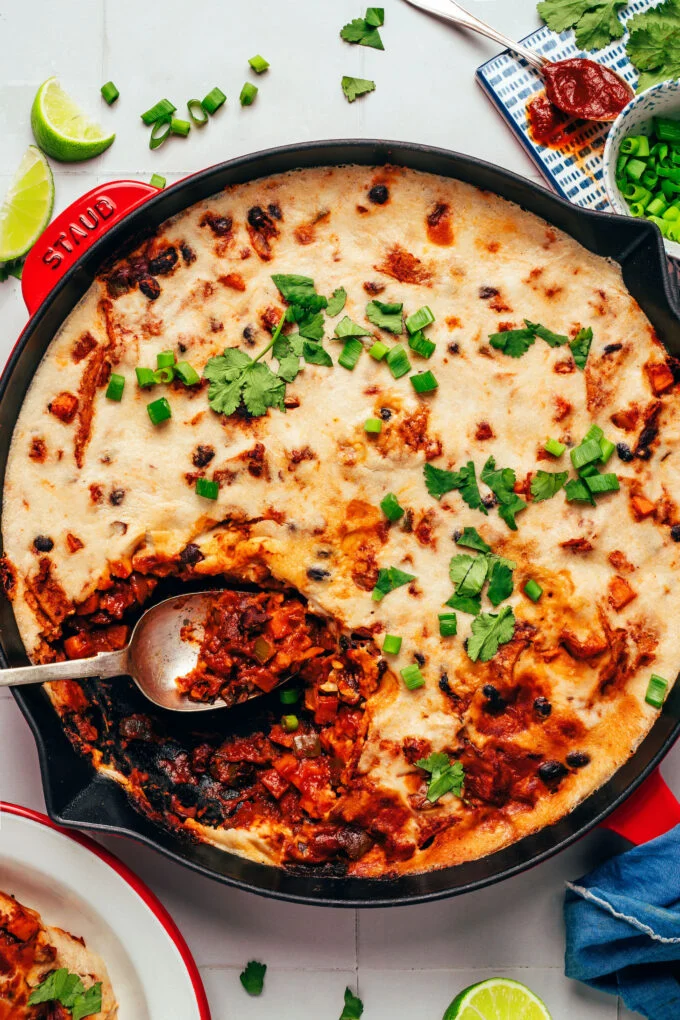
The Cheesy Vegan Enchilada Skillet is built on a foundation of simplicity and high-impact flavors. Designed for the time-strapped individual, the dish promises a complete, hearty, and nutritionally balanced meal in just 30 minutes of total time.
Key Components
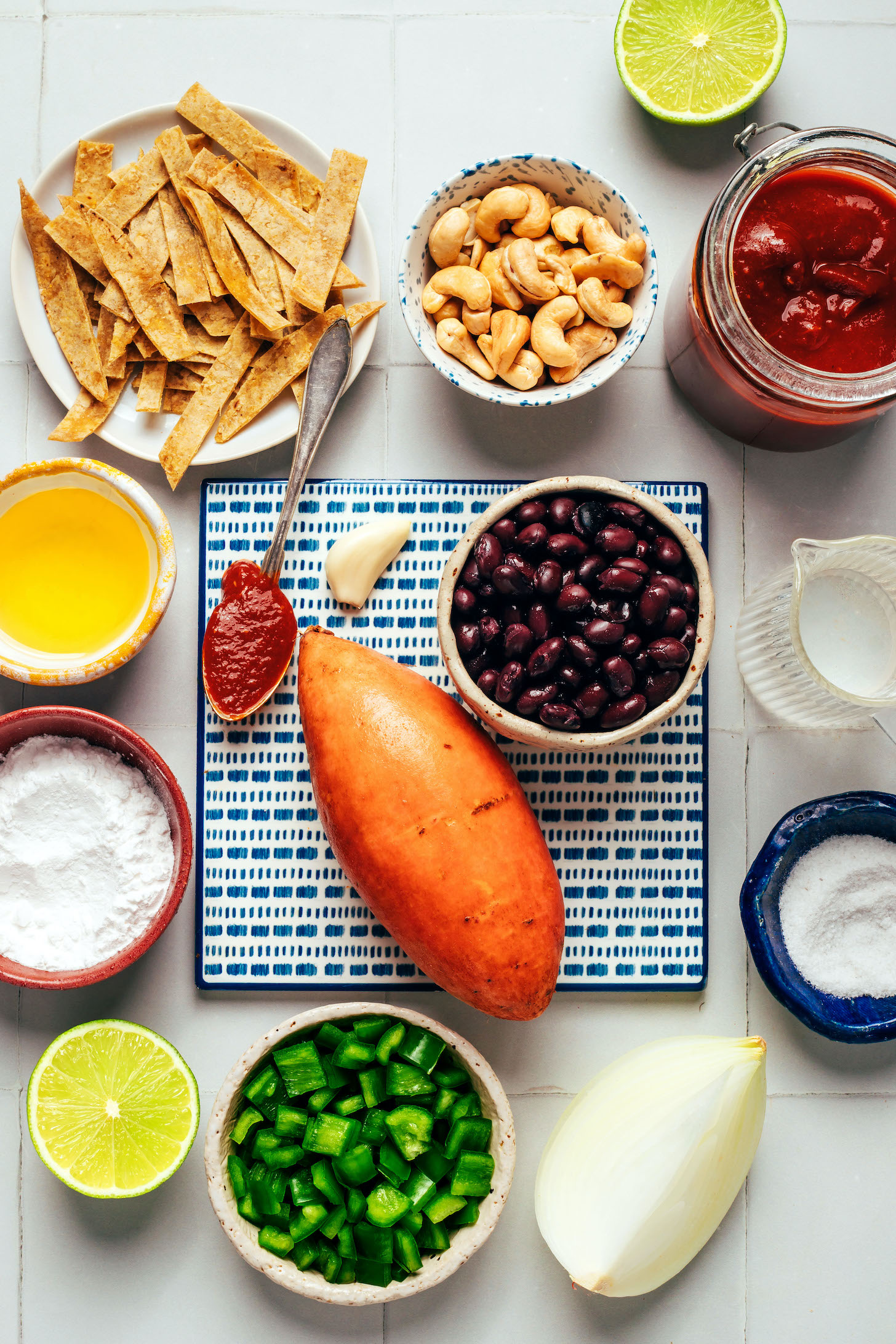
The dish relies on a specific hierarchy of ingredients that interact to create a cohesive flavor profile:
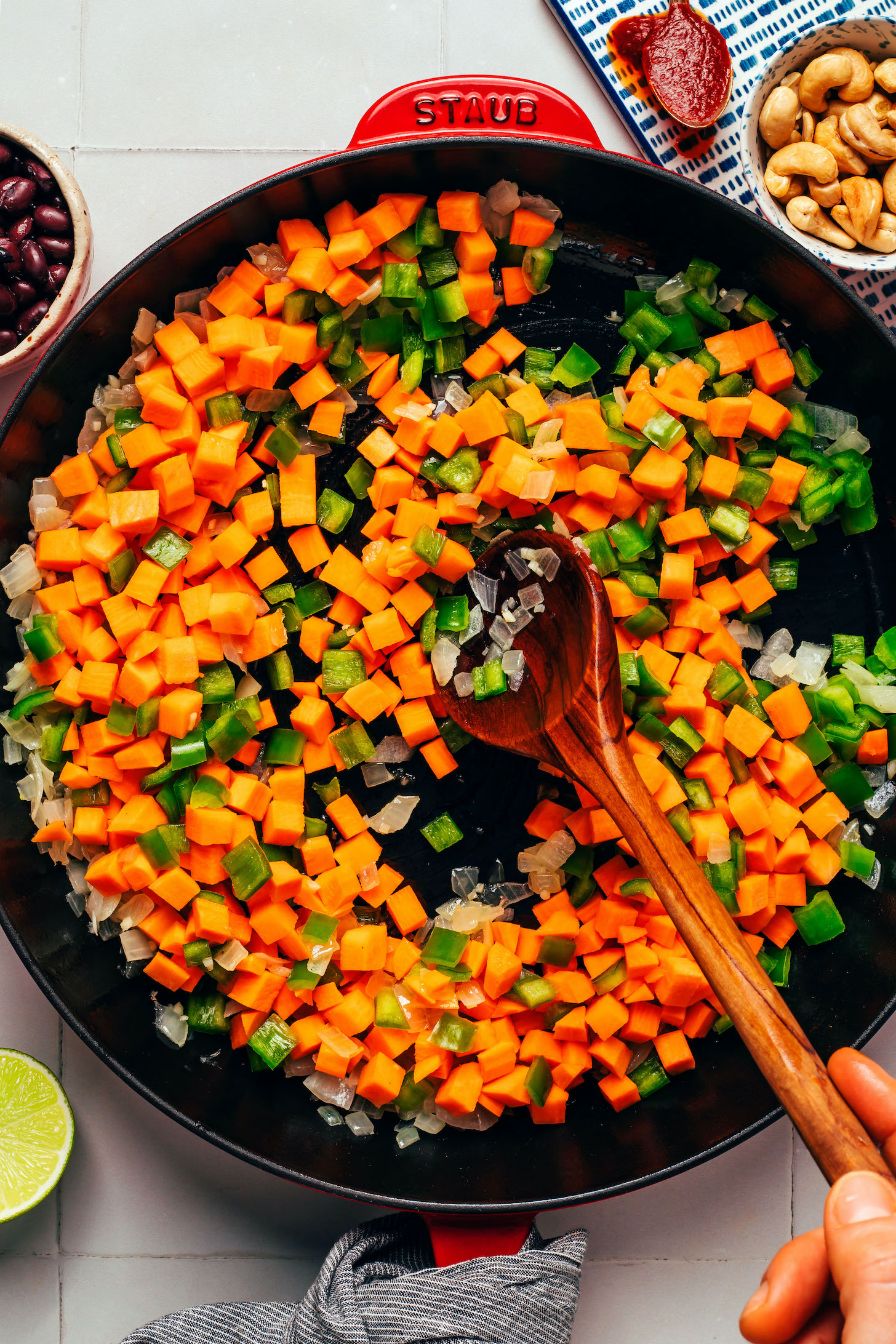
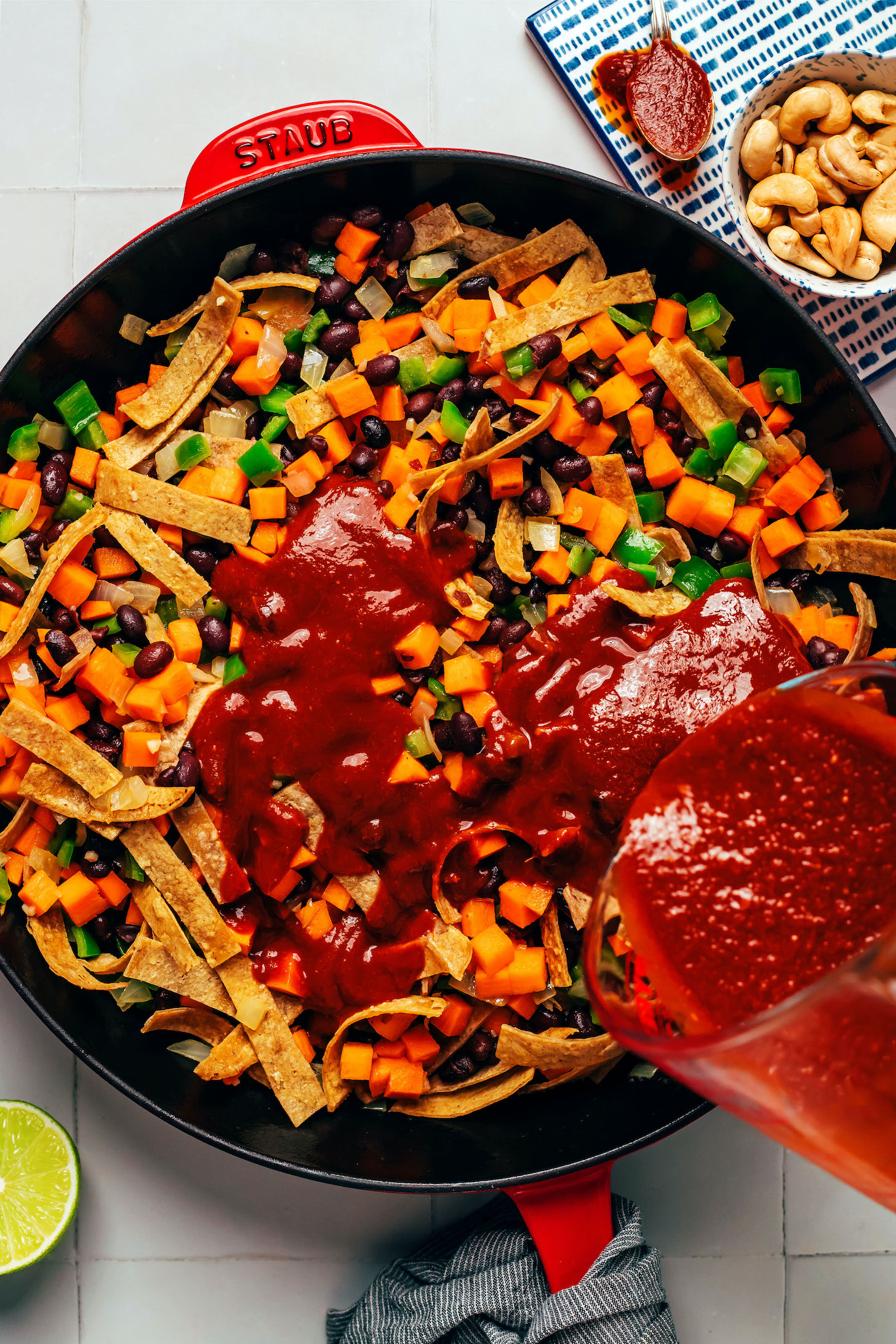
- The Base: A mirepoix-style base of onions, garlic, and poblano peppers provides the aromatic backbone.
- The Substance: Cubed sweet potatoes or winter squash provide complex carbohydrates and a satisfying texture, while black beans contribute a robust protein and fiber profile.
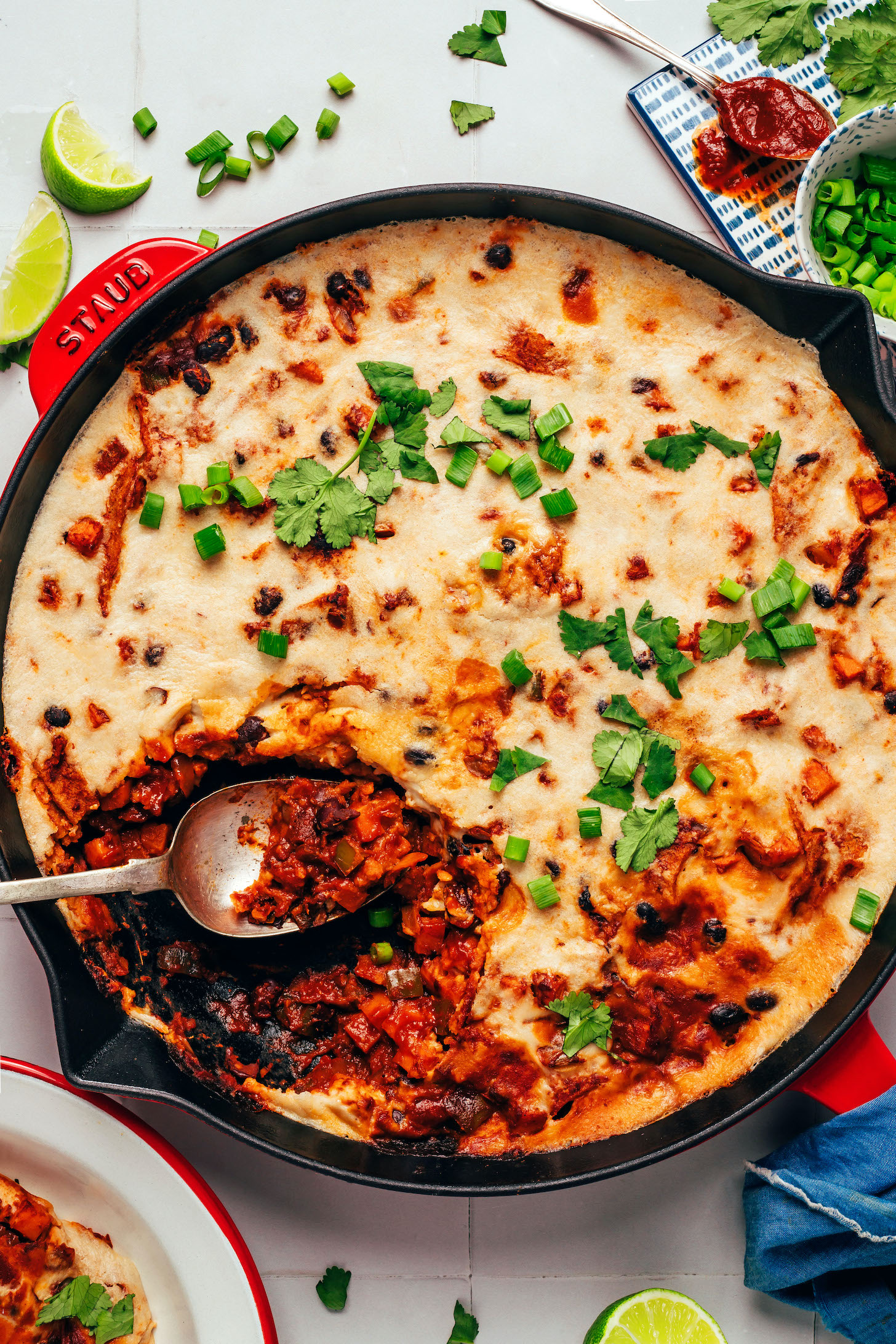
- The Binding Agent: Unlike traditional enchiladas that use whole tortillas, this version utilizes sliced corn tortillas, which are simmered directly in red enchilada sauce. This process allows the tortillas to soften and absorb the sauce, creating a dumpling-like texture that is both comforting and authentic.
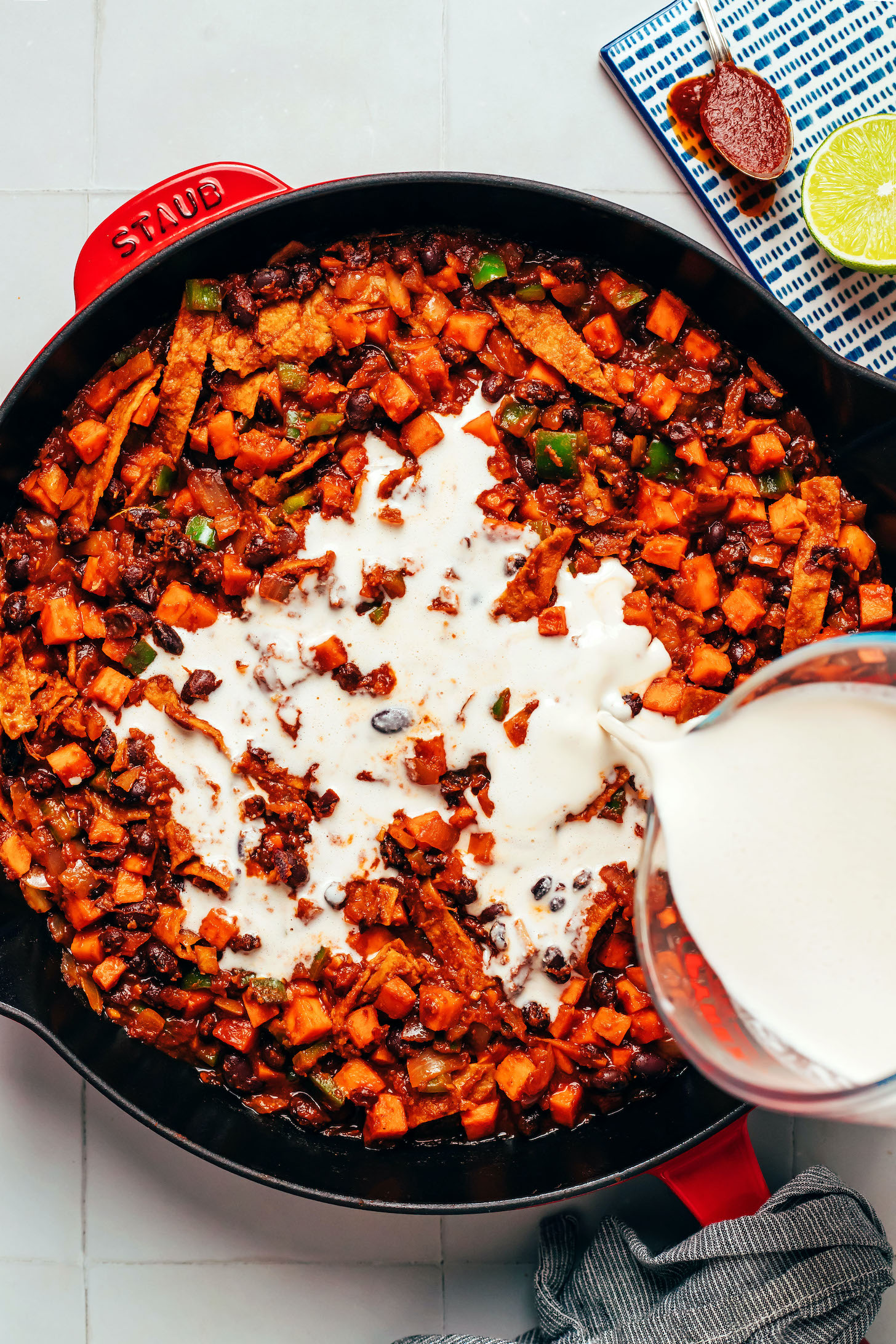
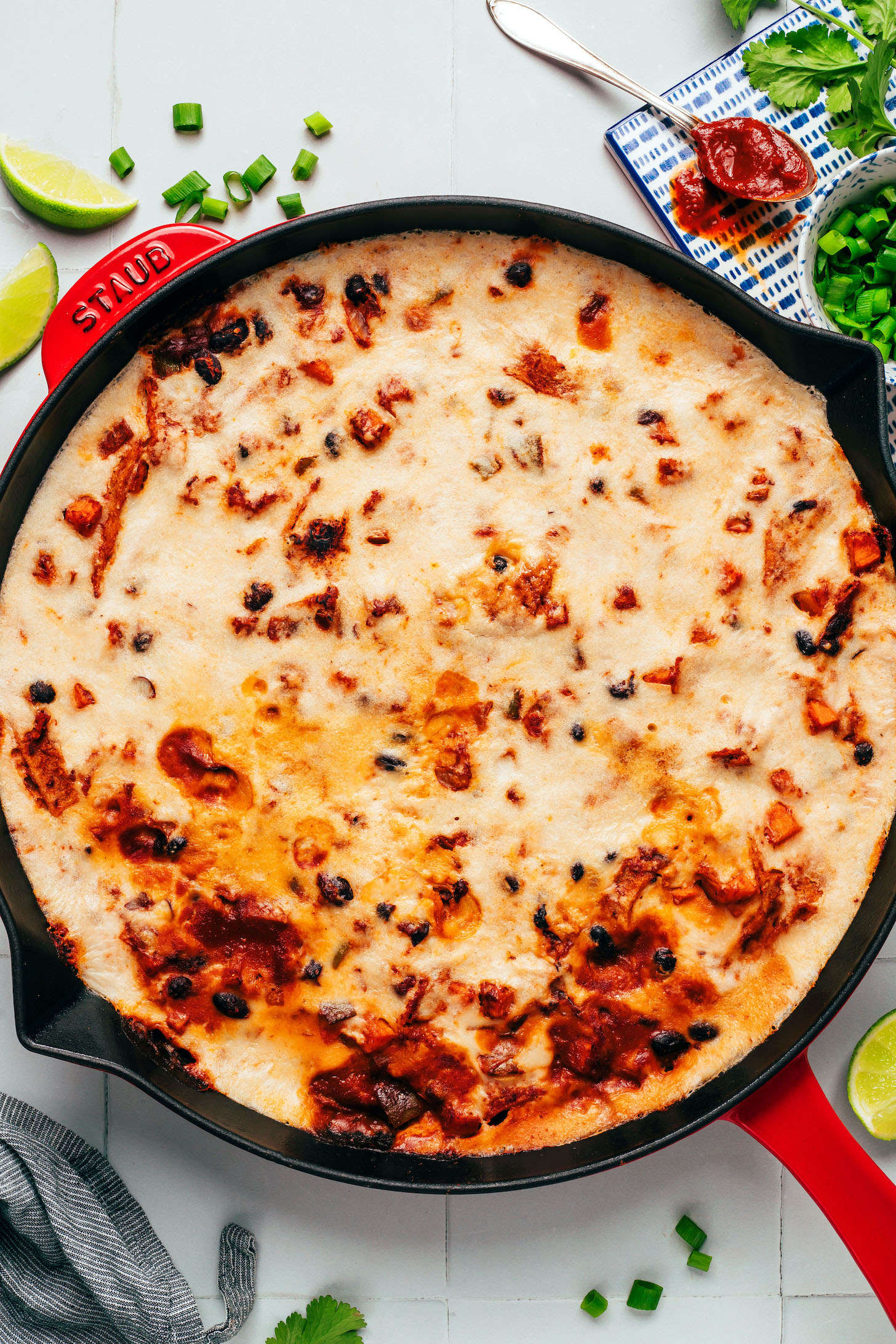
- The "Cheese" Innovation: The defining feature of this skillet is a cashew-based sauce. By blending raw cashews, lime juice, garlic, and tapioca starch, the recipe achieves a creamy, melty, and "stretchy" consistency that mimics dairy cheese without the need for processed alternatives or animal products.
Chronology: From Mayan Origins to the Modern Kitchen
To understand the innovation of the skillet method, one must first look at the history of the dish. The enchilada is not a static creation but one that has evolved over centuries.
Historical Roots
The origins of the enchilada trace back to the pre-Columbian era. Historians often point to the Mayan dish papadzules—tortillas dipped in a pumpkin seed sauce and stuffed with hard-boiled eggs—as a conceptual ancestor. The term "enchilada" itself simply means "to season with chili."
The first recorded written recipe for the dish appeared in the 1831 Mexican cookbook El Cocinero mexicano. At that time, the dish was a rustic staple, utilizing whatever ingredients were available: beans, potatoes, or meats.
The Modern Adaptation
The 21st-century "skillet" iteration represents the latest stage of this evolution. As home cooking styles shifted toward "one-pot" meals in the late 2010s, the concept of the enchilada was deconstructed. The Minimalist Baker approach, specifically, mirrors the transition from traditional, labor-intensive preparation to a "dump-and-simmer" philosophy. By eliminating the rolling step, the recipe addresses the primary barrier to entry for many home cooks: the time and dexterity required to manage individual tortillas.
Supporting Data: Nutritional and Economic Efficiency
The popularity of this skillet is not merely aesthetic; it is backed by impressive nutritional and logistical data.
Nutritional Profile
According to the provided nutritional estimates, a single serving of this dish contains approximately 416 calories, 13.6 grams of protein, and a robust 14.3 grams of fiber. This balance is critical for maintaining satiety throughout the day. The use of black beans and cashews provides a complete profile of essential amino acids, while the sweet potato ensures a steady release of glucose into the bloodstream, avoiding the "sugar crash" associated with refined carbohydrates.
Operational Efficiency
- Prep Time: 10 minutes.
- Cook Time: 20 minutes.
- Cleanup: Minimalist. Because the entire meal is prepared in a single vessel, the physical footprint of the cleanup process is reduced by approximately 70% compared to traditional oven-baked enchiladas.
The data suggests that for a family of four, this recipe represents a significant reduction in both time-on-task and resource utilization, making it an ideal candidate for "batch cooking" or meal prepping for the work week.
Expert Insights and Culinary Versatility
While the recipe is structured, its strength lies in its modularity. Professional chefs and home-cooking advocates note that the "skillet" format is a highly forgiving medium for culinary experimentation.
Adaptability
The recipe allows for significant "veggie-swapping." When poblano peppers are out of season, bell peppers serve as an effective substitute. For those looking for seasonal variety, replacing sweet potatoes with kabocha or butternut squash adjusts the flavor profile from bright and earthy to deep and nutty.
The Cashew Sauce Technique
The use of tapioca starch in the cashew sauce is a sophisticated culinary technique. Tapioca acts as a thickening and gelling agent when exposed to heat, which is what gives the "cheese" its signature stretch. This is a departure from older vegan cheese recipes that relied solely on nutritional yeast for flavor without the physical properties of melting.
Implications: The Future of Plant-Based Convenience
The rise of the Enchilada Skillet indicates a broader cultural shift in how society views plant-based nutrition. Historically, vegan cooking was often viewed as either overly restrictive or unnecessarily complicated. This recipe challenges both notions.
Accessibility
By utilizing pantry staples like canned black beans and readily available corn tortillas, the recipe democratizes high-quality, plant-based nutrition. It removes the "prestige barrier," showing that one does not need rare, expensive ingredients to create a meal that is both satisfying and ethically aligned with plant-based values.
Sustainability
The implications for home-based sustainability are clear. By reducing the reliance on dairy and processed meats, and by utilizing single-pan cooking methods that require less energy to heat, this recipe serves as a blueprint for lower-impact daily living.
Economic Impact
In an era of rising grocery prices, the skillet approach is notably budget-friendly. The cost per serving is significantly lower than that of meat-based alternatives, as the proteins are derived from plant sources (beans and nuts) that have a longer shelf life and lower cost-per-ounce than animal proteins.
Conclusion: A New Standard for Weeknight Dining
The Cheesy Vegan Enchilada Skillet is more than just a quick dinner recipe; it is a synthesis of history, nutrition, and convenience. By honoring the traditional flavors of Mexican-inspired cuisine while embracing the technological advantages of modern cooking techniques, it provides a solution to one of the most pressing questions in modern domestic life: How can we eat well, feel good, and live sustainably without spending hours in the kitchen?
As more home cooks adopt these "one-pan" methodologies, we can expect to see further innovations in this space. Whether it is through the use of new starch-based binders for vegan cheese or the integration of different global flavor profiles into the skillet format, the future of the weeknight meal is undeniably bright, efficient, and increasingly plant-forward. For those looking to reclaim their evenings while maintaining a high standard of culinary enjoyment, this dish serves as an essential, foundational entry in the modern recipe rotation.