PARIS — For decades, the global fashion industry has worn its ecological sins on its sleeve—quite literally. While consumers often focus on the carbon footprint of shipping garments across oceans or the immense agricultural demands of growing cotton, a far more resource-intensive and environmentally damaging crisis has been quietly unfolding behind closed doors in the world’s dyehouses.
The process of coloring textiles accounts for a staggering 50% of the entire sector’s greenhouse gas emissions. Furthermore, traditional dyeing methods are responsible for roughly 20% of global industrial water pollution. It is a deeply entrenched, highly polluting cornerstone of the modern economy that has stubbornly resisted reform.
Enter EverDye, an innovative French startup that is challenging the status quo. By harnessing the principles of static electricity and utilizing sustainable mineral and biowaste-based pigments, the company has engineered a revolutionary dyeing process. It requires no thermal energy, slashes water consumption, completely eliminates toxic chemical fixatives, and matches the legendary durability of traditional petrochemical dyes.
Following a successful $17.5 million Series A funding round in the summer of 2025, EverDye is poised to scale its technology from a promising laboratory breakthrough to an industry-wide revolution, offering a glimmer of hope to one of the hardest-to-abate sectors in global manufacturing.
Main Facts: The Anatomy of an Environmental Paradox
To understand the magnitude of EverDye’s innovation, one must first examine the inherent flaws of conventional textile coloring. Historically, dyeing fabric has been a brute-force industrial endeavor.
Conventional methods rely heavily on synthetic dyes derived from petrochemicals. To make these pigments permanently bond with textile fibers, factories must submerge fabrics in massive vats of water heated to boiling temperatures for extended periods. This thermal requirement demands immense amounts of energy, typically generated by fossil fuels.
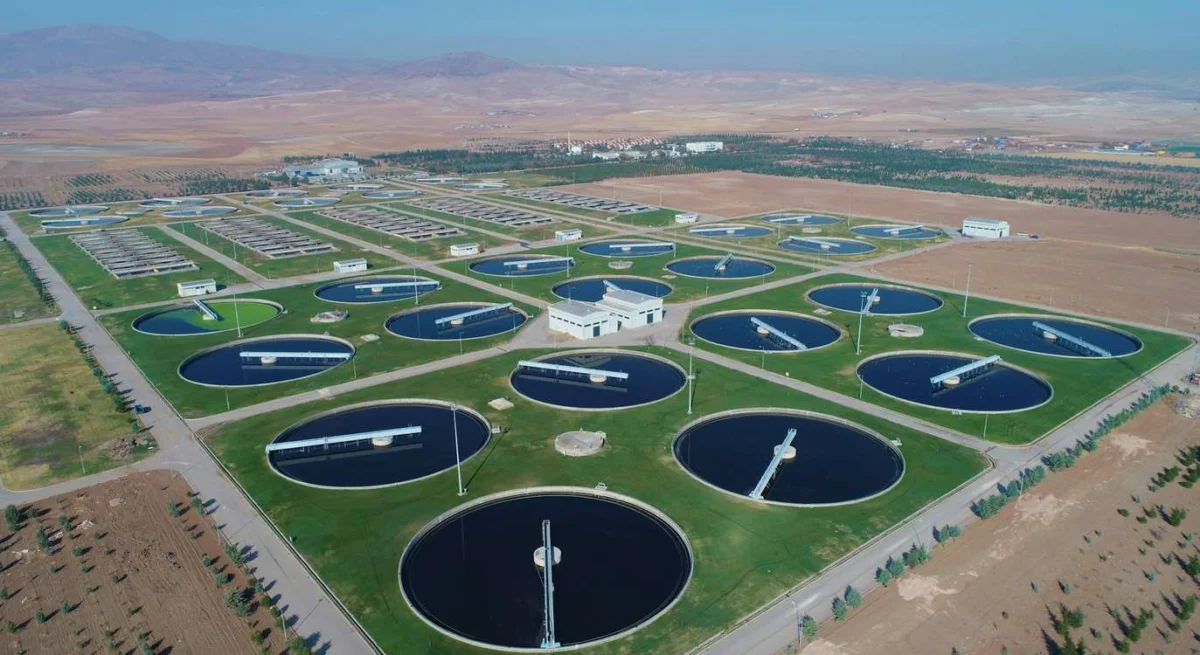
Compounding the energy problem is the reliance on chemical auxiliaries—toxic fixatives and mordants—which are necessary to help the dye adhere to the fabric. Once the process is complete, these chemical cocktails frequently end up discharged into local waterways, wreaking havoc on aquatic ecosystems in manufacturing hubs across the developing world.
EverDye upends this paradigm entirely by shifting the mechanism of adhesion from thermal energy to electromagnetism.
Developed by a team of forward-thinking scientists and engineers, EverDye’s pigments are crafted from biowaste and mineral-based sources. These pigments are engineered to carry a permanent positive electrical charge. Meanwhile, the textiles slated for coloring undergo a simple, low-impact pre-treatment that imparts a negative charge to the fibers.
When the positively charged pigments meet the negatively charged textiles at room temperature, physics takes over. The opposite charges attract instantly through static electricity, causing the dye to lock onto the fabric securely without the need for heat or chemical binding agents.
"Textile dyeing is a tough problem because it’s deeply resource-intensive and historically very entrenched," explains EverDye CEO Philippe Berlan. "Traditional processes need high temperatures to make dyes stick to fibers, and they consume huge amounts of water. On top of that, many dyes are made from petrochemicals and require toxic auxiliaries, which makes it very hard to decarbonise while keeping performance high."
By bypassing the heating phase entirely, EverDye’s room-neutral electrostatic method slashes production energy costs by a remarkable 800%. At the same time, the process cuts water usage by approximately 40%, dramatically shrinking the environmental footprint of each yard of fabric processed.
Chronology: From Concept to Commercial Scaling
The journey to reinventing textile chemistry did not happen overnight. It is the culmination of years of targeted research, material testing, and strategic business development designed to address the realities of modern manufacturing supply chains.
Phase One: The R&D Breakthrough
In its earliest stages, the founding team at EverDye recognized that any sustainable alternative to traditional dyeing had to overcome two massive hurdles: cost and compatibility. Environmental solutions often fail in the commercial market because they are either too expensive for mass adoption or require factories to completely overhaul their expensive, pre-existing machinery.
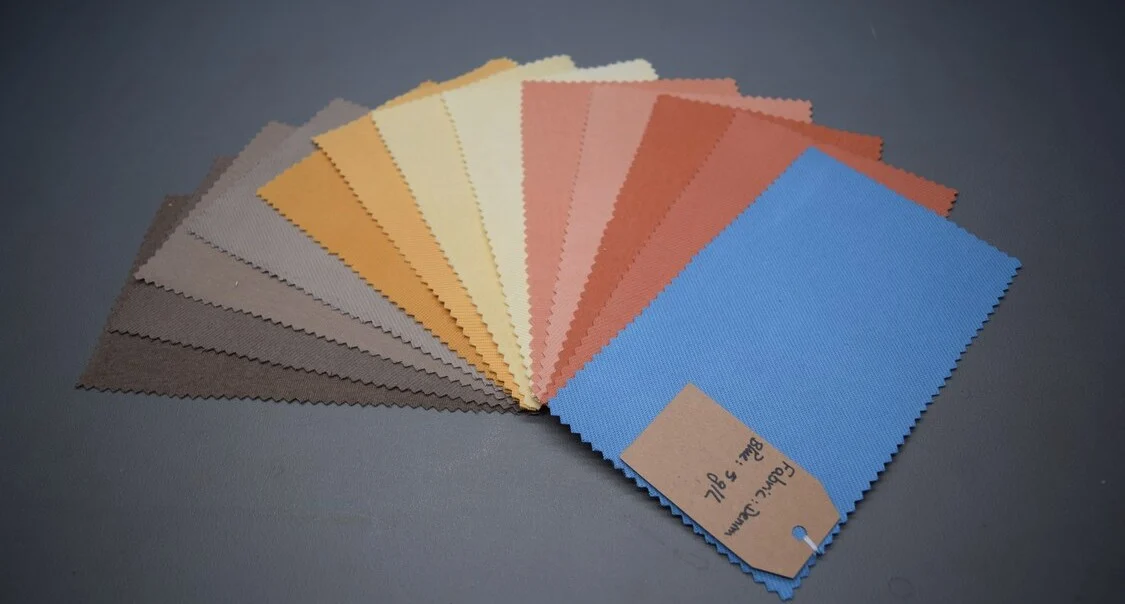
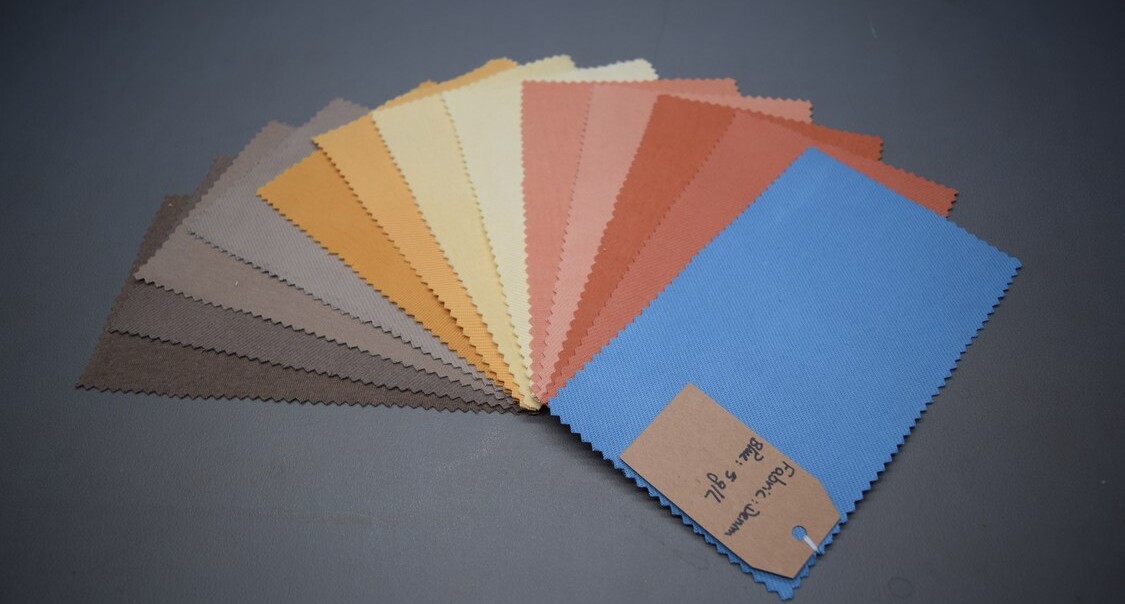
The team focused its efforts on electrostatics, realizing that static charges could bypass the energy-intensive boiling phase. By experimenting with mineral-based materials and biowaste derivatives, the researchers formulated a palette of vibrant pigments that naturally held the requisite positive charge.
Phase Two: Proving the Concept with Industry Partners
As the technology matured, EverDye moved out of the laboratory and onto the factory floor to prove its commercial viability. The company initiated high-profile collaborations with forward-thinking apparel brands eager to burnish their sustainability credentials without sacrificing product quality.
Among these early partners was intimate apparel brand AdoreMe. These pilot programs put EverDye’s pigments through rigorous stress testing, measuring them against strict industry standards for colorfastness, washing resilience, and daily wear and tear. The results were definitive: the electrostatic pigments matched the performance metrics of conventional petrochemical dyes pound-for-pound.
Phase Three: The Series A Infusion (Summer 2025)
Armed with empirical data proving both environmental savings and commercial durability, EverDye entered the investment sphere. In the summer of 2025, the startup successfully closed a $17.5 million Series A funding round, drawing significant interest from venture capitalists and climate-tech funds.
This capital injection was earmarked for a singular, ambitious goal: scaling the technology. Rather than building standalone, proprietary dyehouses, EverDye designed its business model around integration, preparing the infrastructure needed to supply its revolutionary pigments to existing textile supply chains globally.
Supporting Data: Crunching the Numbers on Sustainability
In the world of sustainable fashion, greenwashing is an ever-present risk, making verifiable data essential. EverDye’s value proposition is built entirely on measurable, quantifiable metrics that address the triple bottom line: environmental impact, consumer performance, and manufacturing economics.
- 50%: The estimated share of total textile industry greenhouse gas emissions directly tied to the dyeing and finishing process. EverDye’s room-temperature application eliminates the heating phase, drastically reducing this figure.
- 20%: The proportion of global industrial water pollution attributed specifically to the textile dyeing sector. EverDye’s water-efficient, non-toxic formulation significantly lowers this pollution burden.
- 40%: The reduction in water consumption achieved during the EverDye application process compared to conventional immersion dyeing techniques.
- 800%: The reduction in energy-related production costs realized by eliminating the need to heat large vats of water to boiling temperatures.
- 100%: The elimination of toxic chemical fixatives and petrochemical auxiliaries, ensuring that wastewater discharge remains clean and non-hazardous.
Overcoming the Unit-Cost Hurdle
One of the most profound insights of EverDye’s entrepreneurial strategy lies in how it approaches economics. Historically, sustainable alternatives fail because their raw unit costs are higher than legacy materials, pricing them out of budget-conscious markets.
Berlan and his team realized that evaluating pigments solely on a per-unit purchase price is a flawed metric. When factoring in the life-cycle costs—including the massive energy bills required for heating water, the escalating costs of water acquisition and treatment, and the purchasing of expensive chemical additives—EverDye’s financial profile shifts dramatically.
Even for low-cost dyehouses operating on razor-thin margins, the cumulative savings on energy and water make EverDye an economically sensible choice.
Official Responses and Industry Validation
The reception from the fashion and textile manufacturing sectors has been overwhelmingly positive, driven largely by the startup’s pragmatic approach to integration.
In many sustainability transitions, manufacturing plants are forced to purchase entirely new fleets of heavy machinery, creating a capital expenditure barrier that slows adoption to a crawl. EverDye avoided this trap by designing its pigments to work within existing industrial frameworks.
According to CEO Philippe Berlan, any textile operation wishing to incorporate EverDye pigments into its production lines needs to change virtually none of its physical hardware. The existing vats, rollers, and washing systems remain untouched. The only operational shift required is a brief training program for factory employees to familiarize them with the pre-treatment and application protocols.
"Collaborations with brands like AdoreMe have demonstrated that our approach doesn’t compromise on quality," Berlan emphasized in an interview with Move the Needle News. "Our pigments achieve vibrant, durable colors that meet the same industry standards for washing and wear as conventional dyes."
Industry analysts have noted that this "plug-and-play" compatibility is precisely what makes EverDye a game-changer. By removing the friction of hardware replacement, the company has lowered the barrier to entry for widespread decarbonization.
Implications: A Blueprint for the Future of Fashion
As EverDye uses its $17.5 million Series A funding to scale operations, the broader implications for the global textile industry are profound.
Regulatory Pressures and Corporate Responsibility
Governments around the world—particularly in the European Union—are tightening environmental regulations on the fashion industry. Extended Producer Responsibility (EPR) laws, stringent wastewater directives, and crackdowns on greenwashing mean that fashion brands can no longer afford to ignore their supply chain emissions. Technologies like EverDye provide a turnkey solution for brands striving to meet binding corporate climate targets, such as net-zero carbon commitments by 2030 or 2050.
Transforming the Global Supply Chain
Because EverDye’s pigments can be integrated into existing dyehouses with minimal friction, the potential for rapid, global adoption is immense. If manufacturing hubs in nations like Bangladesh, India, Vietnam, and China adopt electrostatic dyeing en masse, the cumulative drop in global industrial water pollution and carbon emissions would be historic. It proves that heavy industry does not necessarily have to choose between profitability and ecological preservation.
Redefining Consumer Expectations
Ultimately, the end consumer rarely thinks about the chemistry of a garment’s color; they care about vibrancy, softness, and longevity. By proving that sustainable manufacturing does not require sacrificing quality or durability—that a shirt colored with static electricity and biowaste can endure just as many washes as one stained with petrochemicals—EverDye is helping shift the cultural narrative around eco-friendly fashion.
The green revolution in textiles is no longer just about organic cotton or recycled polyester. Thanks to innovators like EverDye, the very way we bring color into our world is undergoing a brilliant, sustainable transformation.