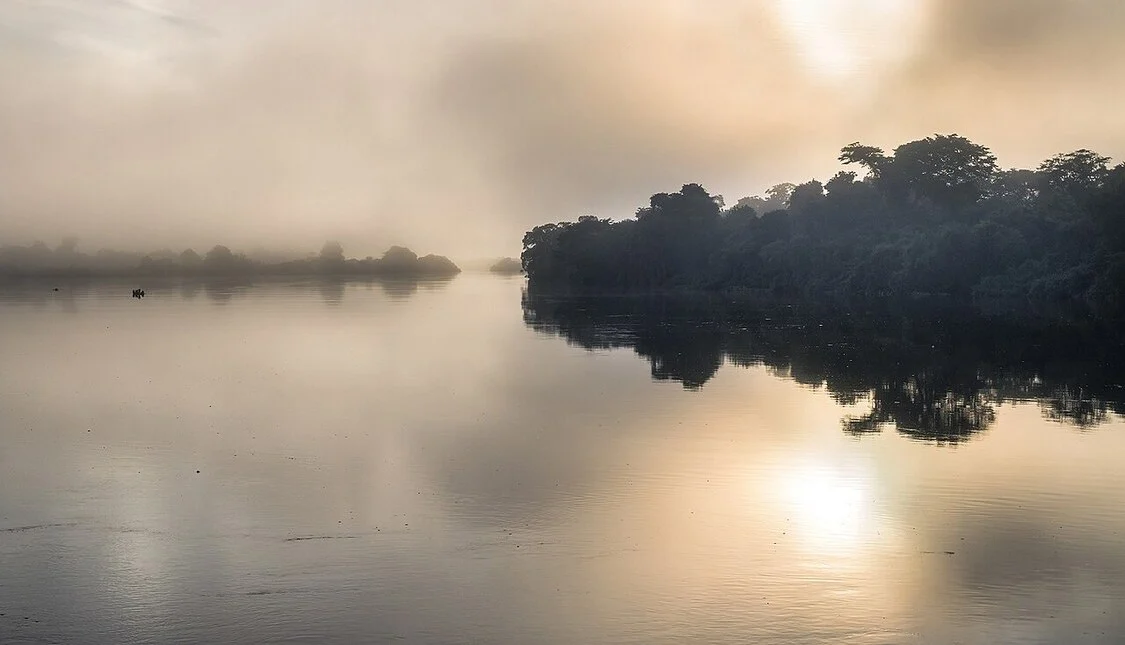
BOLIVIA — In a major triumph for global biodiversity, a coalition of conservation organizations has successfully established a sprawling 715,000-acre wildlife reserve along the banks of the Iténez River in northeastern Bolivia. Dubbed the Agua Dulce Municipal Wildlife Reserve, this newly minted sanctuary bridges a critical ecological divide between South America’s most vital rainforest habitats, offering robust legal protections for an astonishing array of imperiled wildlife.
The initiative, spearheaded by the Bolivian non-governmental organization Faunagua with pivotal financial and technical backing from the U.S.-based Rainforest Trust, arrives at a critical juncture for the Amazon basin. Scientists and conservationists have long championed the Iténez River—known as the Guaporé River in Brazilian Portuguese—as a premier "link of life," a 780-mile-long watery artery that largely delineates the international border between Bolivia and Brazil.
With this new municipal decree, local lawmakers and environmental advocates have woven a stronger safety net for an irreplaceable transboundary corridor that migratory species, apex predators, and rare aquatic life desperately rely upon for survival.
Main Facts: Safeguarding a Biodiversity Hotspot
The newly designated Agua Dulce Municipal Wildlife Reserve spans an impressive 715,000 acres of pristine, highly biodiverse terrain. According to Faunagua, the landscape encompasses a rich mosaic of Amazonian rainforests, sweeping seasonal floodplains, expansive pampas, and intricate riparian ecosystems.
This mosaic serves as a stronghold for some of South America’s most charismatic and threatened fauna. The riverine corridor and its surrounding forests are home to:
Apex Predators & Mammals: Jaguars, lowland tapirs, and giant otters.
Aquatic Life: Amazon River dolphins, black caimans, and an astonishing 260 species of fish—25 of which are completely endemic to the region and found nowhere else on Earth.
The reserve does not exist in a vacuum; rather, it acts as a keystone piece in a much larger conservation puzzle. It unites a massive network of pre-existing protected areas across two nations. In Bolivia, it links with the world-renowned Noel Kempff Mercado National Park, the Iténez Departmental Park, and the Bajo Paraguá Municipal Protected Area. Across the border in Brazil, it connects seamlessly with the Corumbiara State Park, the Pedras Negras Extractive Reserve, and the Ilha das Flores State Park.
By tying these fragmented sanctuaries together, Agua Dulce ensures that wide-ranging species can migrate, hunt, and adapt to shifting environmental pressures without running headfirst into human development or unchecked industrial expansion.
Chronology: From Grassroots Consensus to Legal Designation
The birth of the Agua Dulce Municipal Wildlife Reserve was not an overnight occurrence, but rather the result of meticulous planning, community engagement, and persistent advocacy.
Phase 1: Identifying the Need. Conservation biologists recognized that while the upper and lower stretches of the greater Amazon basin enjoyed various degrees of protection, the specific middle basin surrounding the Iténez River suffered from vulnerability. Habitat fragmentation threatened the migratory pathways of aquatic and terrestrial species alike.
Phase 2: Coalition Building. Faunagua took the lead on the ground, mobilizing local communities, municipal leaders, and regional stakeholders. Recognizing the scale of the challenge, Faunagua partnered with the Rainforest Trust to secure the necessary financial backing and technical frameworks required to drive the project forward.
Phase 3: Crafting the Management Plan. Eschewing top-down mandates, Faunagua collaborated closely with the local communities who live in and around the proposed reserve. Together, they designed a sustainable management plan aimed at balancing ecological preservation with community livelihoods.
Phase 4: Legislative Enactment. Through sustained local and municipal consensus, the initiative culminated in formal legislative action. The Baures municipal government officially declared the territory the Agua Dulce Municipal Wildlife Reserve, codifying environmental protections into local law and securing a monumental win for Amazonian conservation.
Supporting Data: Riding a Wave of Conservation Momentum
The creation of the Agua Dulce reserve coincides with a broader, highly encouraging trend across the Amazon basin. Just weeks prior to the announcement, Brazilian authorities released comprehensive data indicating that deforestation rates in the world’s largest rainforest have plummeted by 42%, hitting the lowest rate ever recorded. This dramatic drop has been attributed to a renewed, stricter governmental approach to tackling the primary drivers of illegal tree-felling and land-grabbing.
For the Rainforest Trust, the establishment of the Agua Dulce reserve marks a staggering organizational milestone. The U.S. NGO officially surpassed a monumental threshold: its cumulative efforts have now directly supported the protection of 70 million acres of rainforest worldwide—an area roughly equivalent to the entire size of the U.S. state of Nevada.
Even more remarkably, the organization revealed an unprecedented acceleration in its conservation velocity, having added 10 million protected acres in just eight months. This rapid scaling demonstrates a potent model of international philanthropy meeting local, boots-on-the-ground dedication.
Official Responses: Voices from the Frontlines of Conservation
The milestone achievement has drawn widespread acclaim from conservation leaders, who emphasize that protecting the Amazon requires a blend of local empowerment and global ambition.
Rosmery Ayala Lozada, Executive Director of Faunagua, highlighted the indispensable role of international partnership in realizing the vision for Agua Dulce. In an official statement, Lozada noted:
"Rainforest Trust provided crucial technical and financial support to foster local and municipal consensus, secure the formal legal designation of the protected area, and develop its key management instruments."
James Deutsch, Chief Executive Officer of the Rainforest Trust, underscored the urgency and broader significance of the achievement within the framework of global environmental targets:
"Protecting 10 million additional acres in just eight months shows what is possible when we match the urgency of the biodiversity crisis with ambition and strong local partnerships. As 2030 approaches, the world has pledged to protect 30% of the planet. At Rainforest Trust, our focus is on helping protect the most imperiled 30%, specifically, the places where conservation can make the greatest difference for species, ecosystems, and people. Seventy million acres is a remarkable milestone, but it makes us more determined to go further and faster."
Implications: Balancing Ecosystem Services, Wildlife, and Local Economies
Unlike strictly closed nature reserves that bar human presence, Agua Dulce has been designated as a Municipal Wildlife Reserve, a classification that relies on a balanced, three-pillar model of landscape conservation:
Wildlife Protection: Ensuring that endangered species—from jaguars to endemic fish—have safe, unfragmented habitats to thrive and reproduce.
Ecosystem Services: Maintaining the ecological integrity of the Amazonian floodplains and forests, which play a vital role in regional hydrological cycles, carbon sequestration, and climate regulation.
Sustainable Livelihoods: Promoting sustainable extraction and economic opportunities for the local human populations who depend on the region’s natural resources.
By integrating the communities who call the Iténez basin home into the management framework, Faunagua and its partners have ensured that the reserve is not viewed as an imposition, but as a shared asset. The management plan safeguards traditional ways of life while preventing the types of destructive industrial exploitation that have plagued other regions of the Amazon.
As the international community races toward the critical 2030 target of protecting 30% of the Earth’s lands and oceans, the Agua Dulce Municipal Wildlife Reserve stands as a shining blueprint. It proves that when grassroots organizations, local municipalities, and global NGOs unite with a shared vision, the tide can truly be turned in favor of a greener, wilder, and more resilient planet.