By Ross Johnson
November 4, 2026
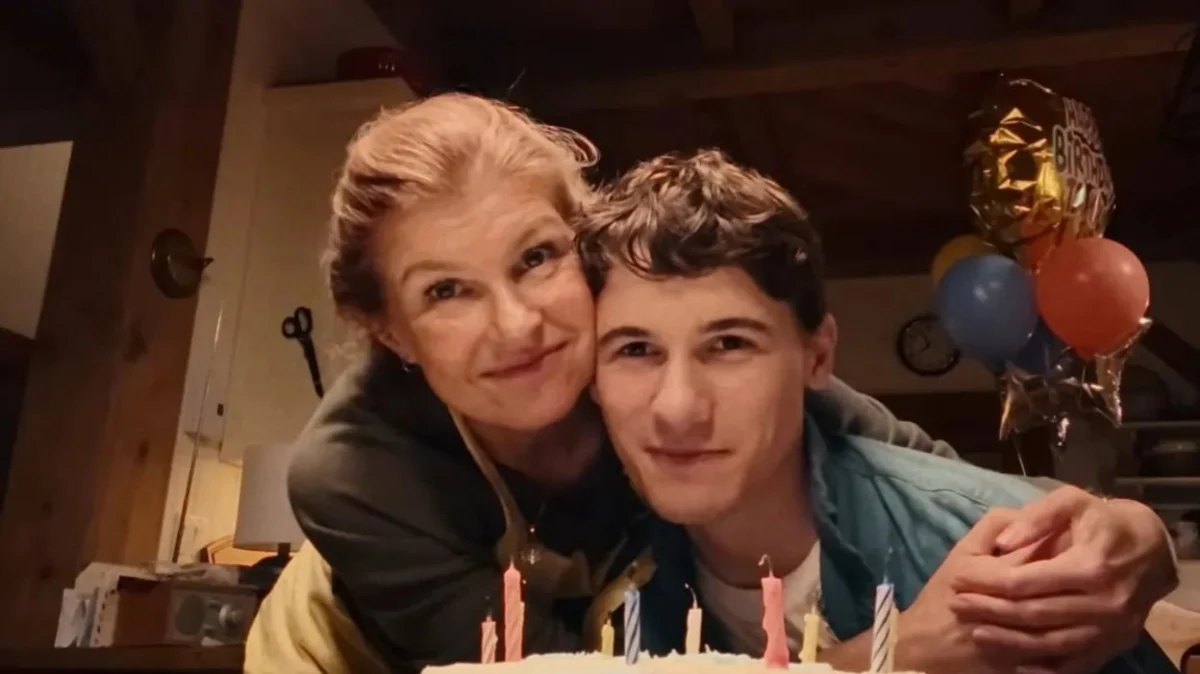
In the landscape of modern prestige television, the concept of the "unreliable reality" has become the defining genre of the mid-2020s. At the center of this cultural shift is Hulu’s latest breakout, Phony, a series that weaponizes the primal fear of familial estrangement. The premise is deceptively simple: after a harrowing car accident, a teenager awakens to a life that feels fundamentally wrong, concluding that the woman he calls "Mother"—played with chilling, multi-layered precision by Connie Britton—is an imposter.
Phony is not merely a thriller; it is a clinical examination of gaslighting, memory, and the fragility of the domestic sphere. As the protagonist struggles to convince those around him of his reality, the audience is forced to grapple with a central, uncomfortable question: Is he a victim of a sinister conspiracy, or is he suffering from the neurological aftershocks of trauma? This ambiguity has resonated with audiences, sparking a renewed appetite for narratives where identity is a malleable construct.
The Anatomy of the "Identity Thriller"
The success of Phony serves as a catalyst for a broader trend in streaming content. The "Identity Thriller" typically follows a specific narrative arc: an established baseline of normalcy is shattered by a singular event, followed by a period of systematic isolation where the protagonist’s credibility is dismantled by those in power.
From a psychological perspective, these shows tap into the "Capgras Delusion"—the clinical belief that a friend, spouse, or parent has been replaced by an identical imposter. By externalizing this internal psychological state, shows like Phony allow creators to explore complex themes of alienation, the performative nature of parenthood, and the inherent distrust between generations.

Chronology of the Trend: From Social Media to Screen
The current obsession with identity-based mysteries did not emerge in a vacuum. Its evolution can be traced through the past decade of digital and televised storytelling:
- 2016–2022 (The Digital Foundation): Search Party pioneered the dark, millennial-centric mystery, shifting the focus from "who did it" to "why are we pretending to be someone else?" Its influence on Phony is palpable, particularly through the involvement of writer/producer Anthony King.
- 2021–2023 (The Era of the Influencer Con): Shows like Cruel Summer and Mask Girl began utilizing nonlinear timelines to dissect how public perception clashes with private reality. These series highlighted the "curated self," suggesting that if we can fake our lives on social media, we can certainly fake our identities in the physical world.
- 2024–2025 (The Mainstream Pivot): With Fool Me Once and Apple Cider Vinegar, the genre moved into the political and commercial sphere. Identity theft was no longer just about personal secrets; it became a tool for corporate fraud and political maneuvering.
- 2026 (The Current Zenith): We are now seeing a saturation point where the genre is becoming more experimental. New releases like The Art of Sarah and How to Get to Heaven From Belfast demonstrate that the industry is leaning heavily into surrealism and high-stakes drama to keep viewers engaged.
Supporting Data: Why Viewers Are Hooked
Market analysis suggests that "suspense" and "psychological mystery" are the most resilient genres in the current streaming economy. According to industry metrics, engagement with "identity-focused" content spikes when social trust metrics in the real world are perceived to be low. When audiences feel they cannot rely on news or digital information, they gravitate toward fictional narratives that validate their paranoia.
Furthermore, the rise of the "Streamalikes" phenomenon—where platforms curate recommendations based on the specific emotional "vibe" of a show rather than just genre—has allowed niche, twist-heavy dramas to find massive, dedicated audiences. Phony, for instance, is currently benefiting from a "crossover effect" where viewers of both grounded political dramas and supernatural mysteries are converging on the same title.
Official Industry Stance and Production Context
Industry insiders note that the shift toward these high-concept thrillers is a direct response to the cost of production. Unlike massive high-fantasy epics that require nine-figure budgets for CGI, an identity thriller relies on "the power of the performance." By casting veteran actors like Connie Britton, Robin Wright, or Keke Palmer, studios can create "prestige" television that relies on sharp dialogue, claustrophobic cinematography, and tight scripts.
"The goal is to minimize the spectacle and maximize the anxiety," says one anonymous production lead. "When you put a character in a room and tell them they aren’t who they say they are, you don’t need a hundred million dollars in special effects. You just need a great actor and a script that keeps the audience guessing until the final frame."

Implications for Future Storytelling
As we look toward the remainder of 2026 and into 2027, the implications of this trend are clear:
- The Death of the Reliable Narrator: Television is moving toward a post-truth narrative structure. Expect fewer shows that provide clear "good vs. evil" dynamics and more that leave the viewer questioning the perspective of the protagonist until the very end.
- The "Domestic Gothic" Revival: The home, once a symbol of safety, is being repurposed as a site of horror. We are seeing a resurgence of stories set in seemingly perfect cul-de-sacs or high-society enclaves where the danger is not an external monster, but a neighbor or spouse.
- Cross-Genre Integration: As seen in How to Get to Heaven From Belfast, the future lies in blending tones. The dark comedy of Search Party is merging with the existential dread of Phony, resulting in a viewing experience that is as likely to make you laugh as it is to make you check your door locks.
Curated Recommendations: Further Viewing
If you find yourself captivated by the "imposter syndrome" and twisted mysteries of Phony, the following titles are essential viewing for the modern connoisseur of suspense:
- The ‘Burbs (2026): A masterclass in suburban gaslighting. Keke Palmer and Jack Whitehall deliver stellar performances in a story that proves even the most mundane neighborhoods hide the darkest secrets.
- The Girlfriend (2025): A brilliant study of a mother’s intuition versus the paranoia of an aging elite. Robin Wright is exceptional as she navigates the uncertainty of whether her son’s partner is a victim or a predator.
- Fake Profile (2023–2026): For those who prefer their mysteries with a side of soap-opera intensity. This series explores the consequences of modern digital dating and the catastrophic results of a "white lie" spiraling out of control.
- The Art of Sarah (2026): A more somber, serious look at identity construction. It serves as a perfect companion piece to Phony for those who want to see how the genre handles the intersection of high finance and deep-seated deception.
In conclusion, the popularity of Phony and its peers is a reflection of a collective cultural mood. We are living in an era where the lines between truth and performance are increasingly blurred. Television is simply holding up a mirror to that reality—even if, as the protagonist of Phony would argue, that mirror might be showing us a reflection that isn’t quite our own.
Ross Johnson is a freelance writer covering the intersection of television, film, and modern culture. He is the producer of the Swan Songs film podcast and host of The Sound of Tomorrow.