We have all been there. You clear your schedule, brew a pot of tea, and sit down with a blank notebook, determined to finally articulate your "life purpose." You answer a list of soul-searching questions—What is your passion? What would you do if money were no object? What do you want your eulogy to say?—and an hour later, you have a page full of earnest, flowery sentences. Yet, by the following Thursday, the notebook is collecting dust, and your life remains stubbornly unchanged.
This cycle of introspection is common, but it is fundamentally flawed. Most purpose-discovery frameworks fail because they rely on two notoriously unreliable human faculties: our ability to explain our own hidden motives and our ability to accurately predict how an imagined future will feel.
The truth is that your "purpose" is not a mystical secret waiting to be uncovered in the depths of your personality. It is not an abstract feeling you can summon on demand. Instead, your purpose is a visible, historical pattern of where you have already spent your most precious resources: your time, your money, and your attention.
The Evidence-Based Approach: Why Verification Matters
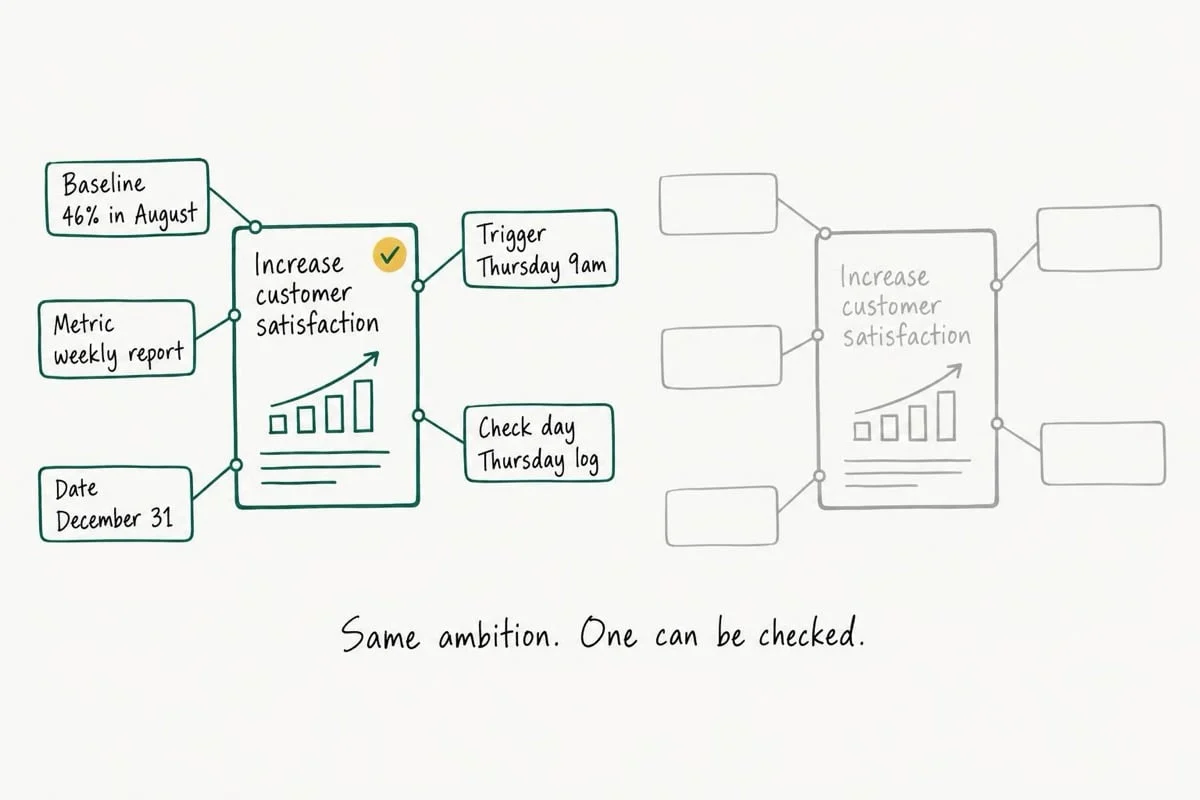
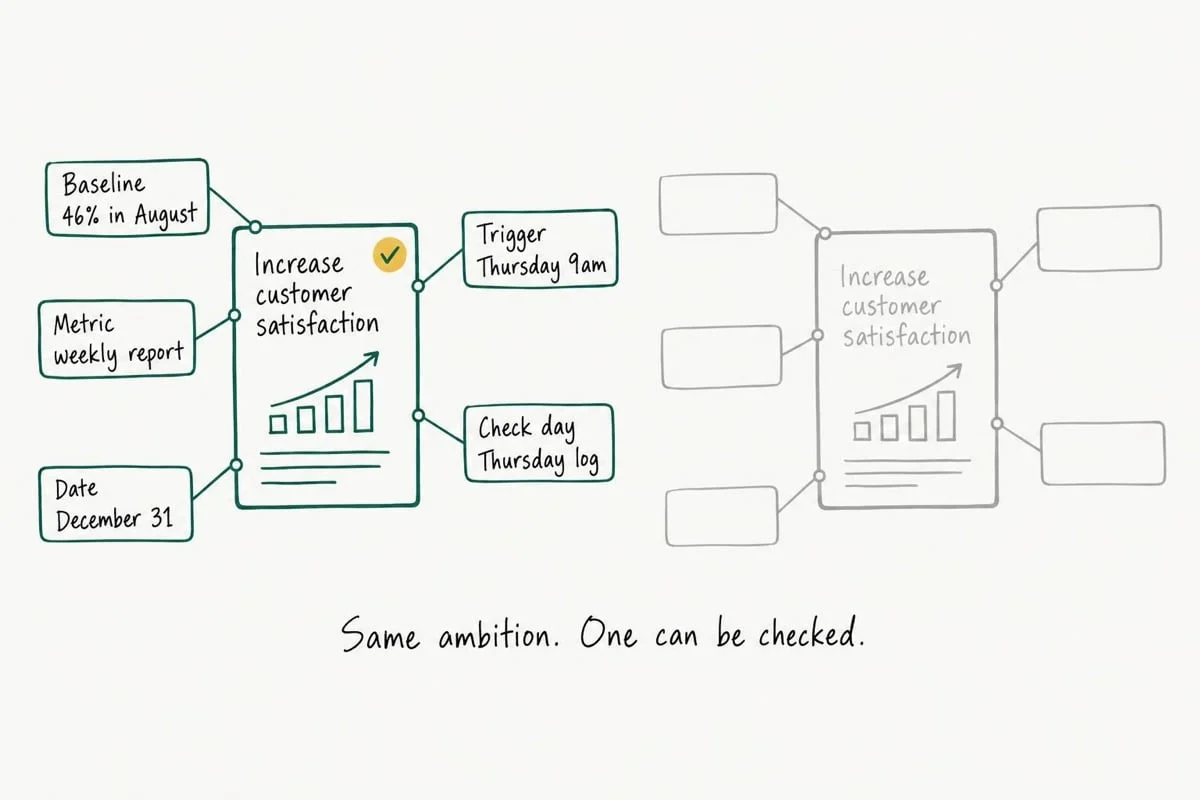
The fundamental shift required to discover your actual direction is simple: move from imagination to evidence. A purpose question is only useful if its answer can be independently verified by a third party.
"I value creativity" is a vague, unverifiable sentiment that carries little weight. Conversely, "I spent eleven Saturdays last year building a shed, and I taught my nephew to use a router" is an objective, checkable fact. It contains names, dates, and tangible outcomes. Your own life record—your calendar, your bank statements, your sent text messages—is the only body of evidence you never had to invent.
When you look for a sense of purpose, you are looking for a pattern in your historical data. One good Saturday is merely an anecdote; the same kind of Saturday repeated eleven times is a trajectory. By focusing on verifiable evidence, you move away from "nice writing" and toward actionable data that can inform your next steps.
Chronology of a Failed Search: Why Traditional Reflection Falls Short
The history of self-help is littered with the corpses of "What is your why?" exercises. While these prompts feel profound, they often lead to cognitive dissonance.
The Problem with "Why"
Research, such as that published in Frontiers in Psychology by Kathryn Bollich, Paul Johannet, and Simine Vazire, suggests that humans are often poor judges of their own motives. In many cases, the act of over-analyzing feelings can actually decrease the accuracy of one’s self-assessment.
The "What" vs. "Why" Distinction
Organizational psychologist Tasha Eurich, writing for the Harvard Business Review, analyzed nearly 5,000 participants and found that individuals who exhibited high levels of self-awareness were significantly more likely to ask themselves "what" questions rather than "why" questions. "Why am I doing this?" is an invitation to justify or ruminate. "What did I actually do last Tuesday?" is an invitation to observe reality.
The Failure of Imagination
Perhaps most damaging are the "future-self" questions. Psychologists Daniel Gilbert and Timothy Wilson have documented that humans possess a systematic bias when predicting how future events will make them feel. We consistently overestimate the intensity and duration of our reactions. When you are asked to imagine your life in ten years, you are building your identity on the most unreliable material possible: a fantasy.
Supporting Data: The 15 Questions of Trace Evidence
To break this cycle, you must categorize your life into three distinct evidentiary sets: the hours you spent, the costs you absorbed, and the people who were better off.
Rules for Engagement
Before starting, adhere to these four constraints to ensure data integrity:

- Three sentences maximum per answer: The fourth sentence is where you begin to justify or spin your story.
- Use concrete nouns, dates, and names: If you cannot point to a specific moment, write "no instance." A blank space is data; it reveals where your life has stopped moving.
- No adjectives: Do not describe yourself; describe the event.
- Analog over digital: Use paper. It is significantly harder to edit your past when you are forced to write it in ink.
Set 1: The Hours You Spent
Focus on the physical reality of your time usage.
- What is an activity you did for free that someone else might have paid you for?
- Which Saturday last month did you spend entirely on a project you started yourself?
- What is a recurring task you performed for at least three months without being asked?
- What activity did you continue to perform even during your "worst" month of the last year?
- Where did you spend your lunch hour or commute for the last two weeks?
Set 2: The Costs You Absorbed
Focus on your financial and emotional investments.
- What is a recurring expense on your bank statement that has no relation to your career?
- What object did you buy or repair in the last year that you still use weekly?
- When did you spend money to help someone else without them asking for it?
- What is a "useless" hobby you have consistently funded for more than two years?
- What is a service or product you recommended to others at least three times this year?
Set 3: The People Who Were Better Off
Focus on the tangible impact you have had on others.
- Who asked you for help with a specific skill, and what was that skill?
- What feedback have you received from a peer or family member that was not about your work performance?
- When did you step in to solve a problem that was technically "not your job"?
- Who have you mentored or taught in the last six months?
- Based on this evidence, what is the first small action you could take this week to test this pattern?
Implications: Turning Data Into Action
Once you have completed the list, you must move into the "integration phase." This is where most people stop, but where you will begin.
Circle the Repeats
Read through all fifteen answers and mark anything that appears at least twice—the same verb, the same person, the same problem, or the same setting. Do not pick your favorite answer; pick the one that occurs most frequently.
Name the Subject
"Woodworking" is an activity; "Teaching someone younger how to build things" is a subject. Activities are ephemeral; subjects are sturdy. If your shoulder gives out, you can no longer do woodworking, but you can still teach. Define your purpose as a subject, not a task.
The Two-Week Test
Construct one sentence using your findings: "I am the person who [verb] for [target], mostly about [subject]."
Now, design a two-week test. This is not a life overhaul or a career change. It is a commitment of no more than two hours per week. If you suspect your purpose is mentoring, do not sign up for a certification course. Instead, offer two 45-minute sessions to a junior colleague.
Crucially, include a stop rule. Define exactly what would constitute a "dead end" before you begin. If you reach that point, you have successfully ruled out a path, which is as valuable as discovering a new one.
Conclusion: The Truth of the Calendar
The search for "purpose" is often treated as a philosophical crisis, but it is more accurately a data-management problem. We feel "lost" when our internal narrative is disconnected from our actual behavior.
If you find that your list is empty or that your patterns are non-existent, you haven’t failed. You have simply discovered that your current life is in "maintenance mode"—likely a result of the immense weight of professional responsibilities, aging parents, or raising children. In that case, the purpose of your next two weeks is not to "find your calling," but to reclaim one hour of your own time.
Your life, as recorded in your calendar and your expenses, is already telling you who you are. Stop trying to invent a "why" from thin air. Look at what you have actually done, test the pattern with a small commitment, and let the evidence lead you to the next step. You don’t need a grand epiphany; you need a two-week experiment.