By Investigative & Culture Desk
Published in Partnership with JoyDrops
Main Facts: The Triumph and Erasure of Pat Palinkas
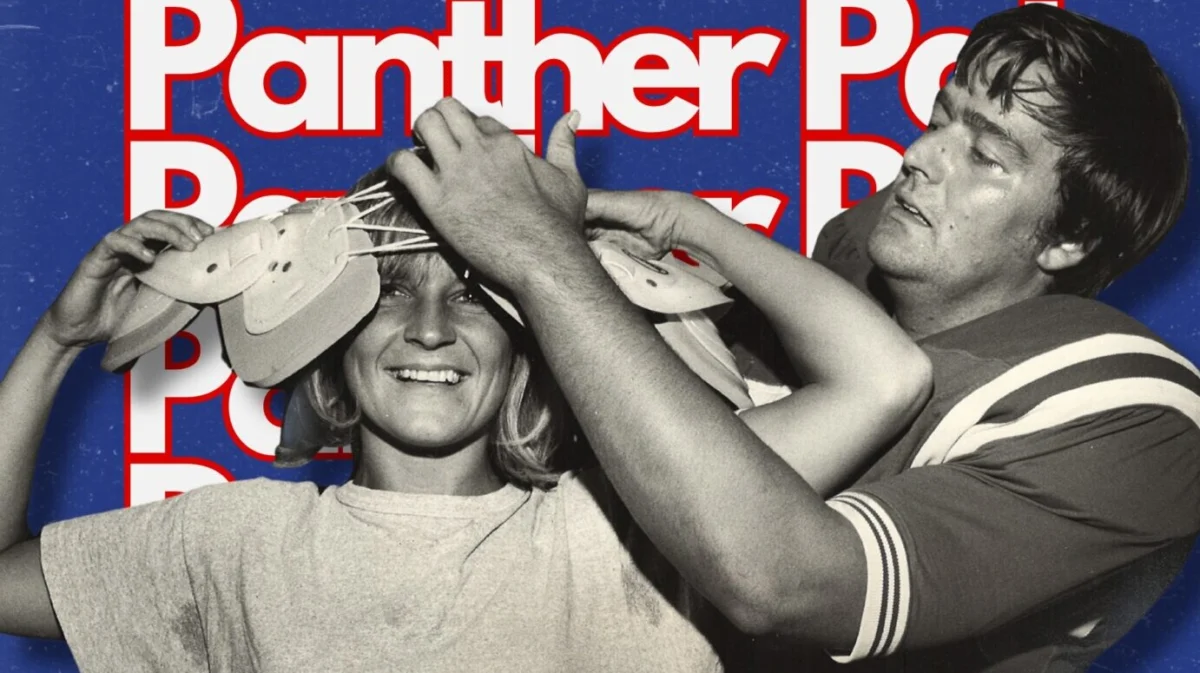
In the autumn of 1970, a modest elementary school teacher named Pat Palinkas strapped on her helmet, stepped onto the gridiron for the Orlando Panthers, and permanently altered the landscape of American sports history. By kicking for the professional minor-league football team, Palinkas officially broke the ultimate glass ceiling of the sport, becoming the first woman to ever play professional football. Her historic debut was not a quiet affair; it sparked an immediate wildfire of national headlines, capturing the attention of mainstream media, sports analysts, and curious onlookers alike.
Yet, as fast as she arrived on the professional sports scene, she was swallowed by the relentless churn of history. For over five decades, her monumental achievement was relegated to a dusty footnote—a passing sentence in regional sports books and an obscure piece of trivia known only to ardent football historians.
Today, that silence has been broken. Panther Pat, a critically acclaimed 12-minute documentary short directed by filmmaker and Quinnipiac University professor Ashley Brandon, rescues Palinkas from historical obscurity. Utilizing an innovative blend of archival footage, heartfelt audio interviews, and stop-motion animation starring Barbie dolls and childhood toys, the film has taken the festival circuit by storm. It captured the Grand Jury Prize for Documentary Short at the 2026 Slamdance Film Festival, earned official selection at Tribeca, and is officially Oscar-qualified. High-profile sports and media figures Eli Manning and Robin Roberts have since joined the project as executive producers, elevating the film’s platform and ensuring that Palinkas’s extraordinary narrative finally reaches the mass audience it has always deserved.
Chronology: From a Footnote in History to an Oscar-Contending Masterpiece
The journey of Panther Pat spans decades of historical oversight and years of painstaking cinematic craftsmanship.
- September 1970: Pat Palinkas takes the field for the Orlando Panthers in a game against the semi-pro Bridgeport Jets, making history as the first woman to play professional football. National media outlets cover the milestone, but the cultural momentum fails to institutionalize her legacy.
- The Decades of Erasure (1971–2020): Palinkas returns to her life as an educator, and her groundbreaking moment fades from the public consciousness, treated as a historical anomaly rather than a foundational milestone for women in sports.
- 2021: Ashley Brandon, a lifelong football devotee and professor of film, television, and media arts, relocates to Connecticut. While reading a used book on the state’s football history, she stumbles upon a single sentence detailing Palinkas’s historic game against the Bridgeport Jets. Intrigued by the glaring lack of detail, Brandon launches an independent investigation.
- Late 2021: Opting for a personal touch, Brandon and her production team bypass modern digital outreach and write a physical letter to Palinkas, who is then living in Clearwater, Florida. Palinkas responds warmly, and the creative collaboration begins.
- The Production Phase (2022–2025): Realizing early on that historical archives regarding Palinkas’s tenure are remarkably sparse, Brandon pivots. Drawing inspiration from Palinkas’s childhood memories of being told that "girls play with dolls" instead of footballs, the production team decides to stage key narrative moments using stop-motion animation with dolls and toys.
- Summer 2025: Pat Palinkas passes away at the age of 83, just months before the documentary’s completion. Though she did not live to see the final cut, her family takes immense comfort in knowing her story has finally been immortalized.
- 2026: Panther Pat premieres to widespread critical acclaim, winning the Grand Jury Prize for Documentary Short at the Slamdance Film Festival, securing a screening at Tribeca, and gaining the backing of heavyweights Eli Manning and Robin Roberts as executive producers.
Supporting Data & Production Insights: When the Archive Fails, Bring Out the Barbies
Documentary filmmaking relies heavily on the strength of its archival assets—photographs, newsreels, and audio recordings that validate the narrative. When Brandon and her team began crafting Panther Pat, they hit a formidable roadblock: outside of a few newspaper clippings and fleeting photographs, the visual record of Palinkas’s professional football career was thin.
"This was my first film that incorporates archival [footage], and it’s really important before you start an archival movie that you make sure there’s an archive," Brandon notes wryly.
Faced with a budget that could not support hiring human actors to recreate 1970s stadium environments or period-accurate crowds, the production team turned a logistical constraint into an artistic triumph. The inspiration stemmed directly from Palinkas’s own recollections of her youth—specifically, the rigid gender roles and societal expectations thrown at her when she expressed a desire to play a "boy’s game." Told repeatedly that girls should play with dolls, Palinkas defied the trope entirely.
"We don’t really have the budget to hire actors and make it look like the ’70s and fill a stadium," Brandon explains. "Pero I think we have it in the budget to buy some Barbies and dolls."
This whimsical, DIY approach became the structural and emotional core of the film. Through meticulous stop-motion animation, plastic dolls stand in for players, coaches, and referees, mirroring the real-life trials Palinkas faced. The aesthetic choice bridges generational divides, capturing the imagination of cinephiles and casual sports fans alike. Ironically, Brandon confesses that the process turned her into a late-in-life enthusiast of the very toys she once bypassed. "I was never the doll girl," she laughs. "I finally got into it in my 30s."
Official Responses: Family Gratitude and Industry Acclaim
The resonance of Panther Pat extends far beyond film festival accolades, deeply touching the family of the late trailblazer and drawing praise from sports royalty.
Palinkas’s relatives have expressed profound gratitude to Brandon and her crew. For years, her children and loved ones wrestled with the societal amnesia surrounding her achievements, baffled as to how such a barrier-breaking feat could be so easily forgotten by the culture at large. The medium of the film—utilizing toys and stop-motion—felt uniquely appropriate for a woman who dedicated her professional life to teaching elementary school students.
"She was painting a picture in front of you," Brandon says of Palinkas’s natural gift for storytelling. By employing dolls, the film honors her pedagogical spirit, ensuring her legacy communicates effectively with young audiences. Throughout the documentary, a tiny doll sits attentively watching television as women populate the screen as players, coaches, referees, and fans.
"Ultimately, the goal is to see themselves represented," Brandon emphasizes. "You can do it. Pat did it, so of course you can do it too."
The project’s cultural weight has also attracted major figures from the professional sports world. NFL legend Eli Manning and veteran broadcaster Robin Roberts stepped forward to serve as executive producers, injecting mainstream visibility into the independent short and validating its historical importance on a national scale.
Implications: Redefining the "Short Sad" and the Radical Nature of Joy
Panther Pat occupies a vital space within contemporary documentary cinema as part of the JoyDrops slate—a curated collection of documentary shorts designed to challenge an unwritten Hollywood rule: that serious, awards-contending documentaries must inherently be stories of deep tragedy.
During the Oscar race conversations, late-night host Conan O’Brien famously joked about the heavy, often depressing nature of the documentary short category, where audiences expect an emotional bludgeoning. While Brandon is quick to defend the necessity of heavy, issue-driven films, she argues that stories of resilience, triumph, and unadulterated joy are equally indispensable to the human experience.
"We love those stories that are sad and super serious. They’re very important," Brandon acknowledges. "Pero it’s also really important to make sure that we’re telling stories of joy as well, because that makes the world a better place. And even in the hardest of times, there are still very joyful things to celebrate."
By choosing to frame Pat Palinkas’s life not through a lens of perpetual struggle, but through celebration, resilience, and playful creativity, Brandon has positioned short-form documentaries as a radical artistic space. Unburdened by the rigid commercial formulas of feature-length studio films, short docs allow creators to take bold structural risks.
Reflecting on her creative ethos, Brandon admits that her love for the unexpected drives her work. "I’ve always really gotten a lot of joy from surprising people," she says. "If I wasn’t working in documentaries, I wanted to design roller coasters."
Through Panther Pat, Ashley Brandon has successfully built a cinematic roller coaster—one that takes viewers on a thrilling, nostalgic, and deeply moving ride through the past, ensuring that Pat Palinkas will never again be just a forgotten footnote in the history of American sports.