By Pradershika Sharma
October 30, 2026
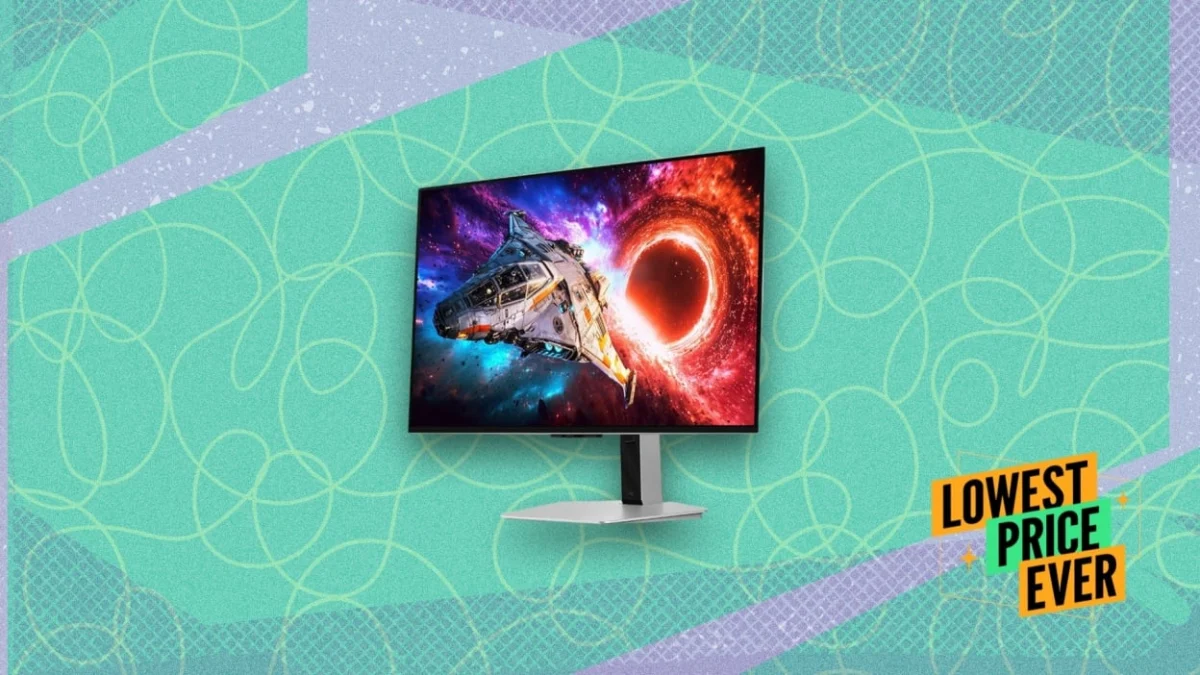
For PC enthusiasts, the quest for the "perfect" monitor often feels like a balancing act between visual fidelity and raw speed. For years, users had to choose between the cinematic depth of OLED panels and the high-refresh-rate reliability of traditional LED-backlit displays. However, with the latest price adjustment at Amazon, that choice has become significantly easier. The 32-inch Samsung Odyssey OLED G8 (G80SH) has dropped to $999.99—a historic low from its standard $1,299.99 MSRP—marking a pivotal moment for high-end desktop gaming.
Main Facts: The New Standard for Desktop Displays
The Samsung Odyssey OLED G8 (G80SH) represents the pinnacle of current display technology, bridging the gap between professional-grade color accuracy and enthusiast-level gaming performance. Unlike its sibling, the G80HS (a 6K IPS variant), the G80SH utilizes a cutting-edge 4K QD-OLED panel.
This monitor is designed for the user who demands a single-monitor solution. It is compact enough for standard desk setups, yet powerful enough to compete with dedicated high-end displays. With a 240Hz refresh rate and a 4K resolution, it offers a level of motion clarity and pixel density that was, until recently, considered the "holy grail" of display engineering.
Chronology: The Evolution of the Odyssey Line
The Odyssey line has been a cornerstone of Samsung’s display strategy since its inception, consistently pushing the boundaries of curve radii and panel technology.
- Early 2024: Samsung begins teasing the G80SH, emphasizing the move toward 4K OLED at high refresh rates, signaling a shift away from the ultrawide-only focus of previous years.
- Mid-2024: Official launch of the G80SH. The monitor is lauded for its sleek design and industry-leading response times, though the launch price remains a barrier for many casual consumers.
- Late 2025: As competitors like Alienware and LG saturate the market with similar OLED offerings, the competition drives early, incremental discounts.
- October 2026: The current $999.99 price point marks the first time this specific model has breached the sub-$1,000 threshold, representing a 23% discount from the launch MSRP.
Supporting Data: Why 4K at 240Hz Matters
To understand why the G80SH is generating such excitement, one must look at the synergy between its technical specifications and current hardware capabilities.
Technical Specifications
- Panel Type: QD-OLED (Quantum Dot OLED)
- Resolution: 3840 x 2160 (4K)
- Refresh Rate: 240Hz
- Connectivity: DisplayPort 2.1 and HDMI 2.1
- Power Delivery: 98W via USB-C
The inclusion of DisplayPort 2.1 is a critical future-proofing feature. As graphics cards continue to evolve, the bandwidth required to push 4K resolution at 240Hz is substantial. By adopting the latest standards, Samsung ensures that this monitor will remain relevant for the next generation of GPU releases.
Furthermore, the 98W USB-C power delivery transforms the monitor into a functional docking station. For professionals who use a high-end laptop for work and a desktop for gaming, this cable consolidation reduces desk clutter significantly—a practical "lifehacker" upgrade that goes beyond mere specs.
The OLED Advantage
The primary draw remains the QD-OLED technology. Unlike traditional IPS or VA panels that rely on backlighting, each pixel on the G80SH emits its own light. This results in "infinite" contrast ratios, where blacks are truly black, and bright, HDR-highlighted objects pop against dark backgrounds without the "blooming" or "halo" effects common in local-dimming LED monitors.
Official Responses and Industry Context
While Samsung has maintained a standard stance on the performance of the G80SH, the broader industry has been vocal about the challenges inherent in this technology.

Samsung emphasizes its commitment to longevity, citing active cooling systems and proprietary screen-protection algorithms designed to mitigate the risks of image retention and burn-in. The company has explicitly stated that burn-in resulting from standard, daily use is covered under their warranty, a policy intended to provide peace of mind to buyers hesitant about OLED technology.
Industry analysts note that the current price drop is not merely a holiday promotion, but a reflection of the "maturation phase" of QD-OLED production. As manufacturing yields for 32-inch 4K panels improve, the cost of production has dropped, allowing companies like Samsung to pass those savings on to consumers.
Implications: The Future of the Desktop Experience
The arrival of a sub-$1,000 4K OLED gaming monitor has several long-term implications for the market and the consumer.
The End of the "Ultrawide" Hegemony
For years, the best gaming experiences were relegated to massive 49-inch ultrawide monitors. The success of the 32-inch G80SH suggests that a significant segment of the market prefers the traditional 16:9 aspect ratio. It fits better in standard office environments and offers better compatibility with console gaming, making it a more versatile choice for multi-platform households.
The "Burn-in" Anxiety
Despite the improvements in protective software, the industry remains divided on the long-term viability of OLED as a primary "work" monitor. Users who spend 10+ hours a day with static desktop elements (like taskbars and browser windows) should still approach OLED with caution. While the G80SH features sophisticated pixel-shifting and heat-dissipation techniques, the physical limitations of organic compounds remain. The current price drop may be the catalyst that encourages more mainstream users to adopt the technology, which will provide the "real-world data" needed to settle the burn-in debate once and for all.
Hardware Requirements
It is important to note the hidden cost of a monitor like this: the PC build. To truly utilize a 4K 240Hz panel, one needs a top-tier GPU (such as an NVIDIA RTX 50-series or equivalent). The G80SH is not a "budget" purchase; it is a high-performance peripheral that requires an equally high-performance ecosystem to shine. For those running mid-range hardware, the benefits of 240Hz may be less noticeable, potentially making a 1440p high-refresh monitor a more logical, budget-friendly alternative.
Final Verdict: Is It Right for You?
The Samsung Odyssey OLED G8 (G80SH) at $999.99 is arguably the most compelling value proposition in the premium monitor space today. It provides a visual experience that is objectively superior to almost anything else on the market, provided your hardware can keep up.
If you are a competitive gamer who also values cinematic quality for single-player titles, or a professional who needs color-accurate, high-density screen real estate, this deal is difficult to overlook. While you must remain mindful of the nuances of OLED maintenance—such as avoiding static elements for extended periods—the technological leap from standard IPS panels is immense.
As we look toward the remainder of 2026, the G80SH sets a high bar. It proves that the future of desktop computing is not just about raw power, but about the quality of the window through which we view our digital worlds. Whether this price point holds or triggers a broader market-wide reduction remains to be seen, but for now, the G80SH stands as the new benchmark for excellence in the enthusiast monitor category.
Disclaimer: Deal pricing and availability are subject to change. Lifehacker may earn a commission from affiliate links included in this article. Please verify all technical specifications and warranty terms directly with the retailer or manufacturer before making a purchase.