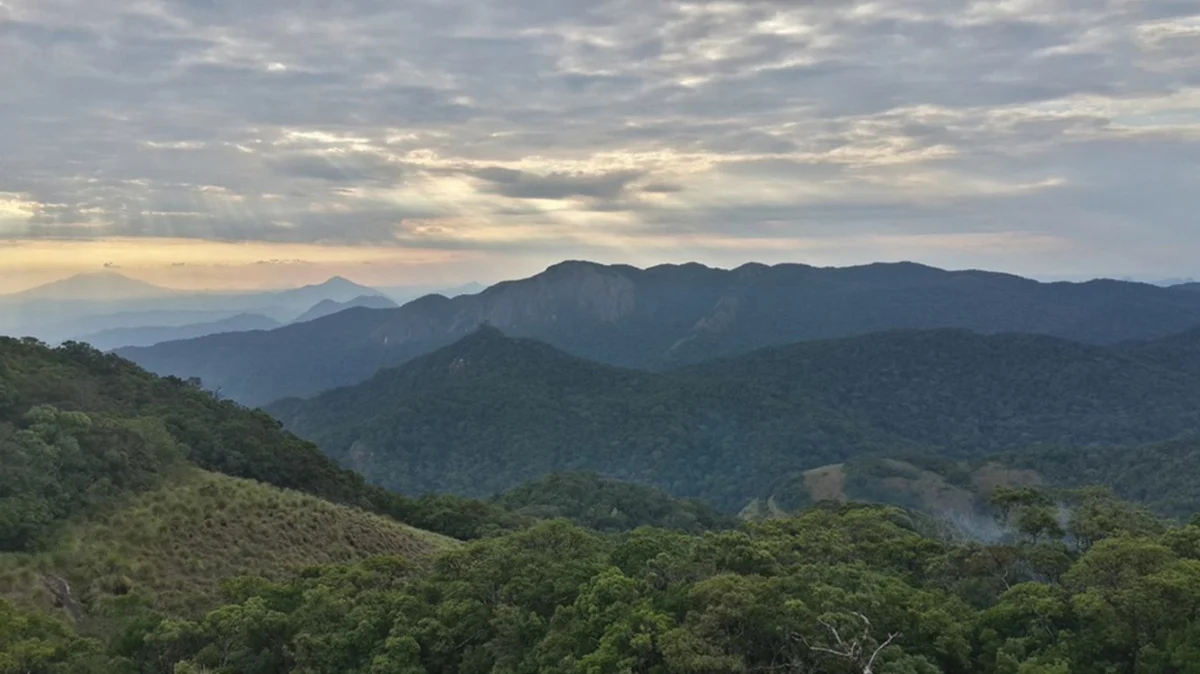
MAPUTO, Mozambique — In a landmark environmental victory for southern Africa, the Mozambican government has officially established the Mount Mabu Community Conservation Area, setting aside 23,000 acres of one of the region’s most ecologically precious and biodiverse landscapes.
Promulgated via a government decree on August 24, the designation shields a mist-shrouded, mid-altitude tropical rainforest that has long captivated scientists, conservationists, and nature documentarians alike. Famously dubbed the "butterfly forest" by legendary broadcaster Sir David Attenborough during a 2013 BBC feature, Mount Mabu is now shielded from unchecked exploitation. The newly minted reserve ensures the enduring protection of more than 200 distinct butterfly species, an extraordinarily high rate of endemic wildlife found nowhere else on Earth, and a massive carbon sink that has quietly thrived in isolation for millennia.
The decision represents more than just a win for local biodiversity; it underscores a broader national renaissance in Mozambique. Having emerged from the shadows of a protracted post-colonial civil war that historically devastated its wildlife populations, the nation is carving out a progressive identity as a conservation leader in Africa, now protecting roughly 25% of its total landmass.
Main Facts: The Ecological Significance of Mount Mabu
Rising dramatically from the surrounding landscape, Mount Mabu and its isolated mountain chain slopes form the largest continuous block of medium-altitude rainforest in southern Africa. Because these montane forests have remained isolated from neighboring ecosystems by vast expanses of lower-lying savanna and scrubland, they have acted as evolutionary crucibles.
- The "Butterfly Forest": Mount Mabu and its neighboring sister peak, Mount Namuli, host an astonishing array of lepidopteran life. At least 200 species of butterflies flutter through the misty canopies, including several rare and newly discovered species.
- High Endemism: The term endemic refers to species that are native to a specific, restricted geographical area. Mount Mabu boasts remarkably high rates of endemism. Aside from its iconic butterflies, decades of scientific exploration have uncovered a treasure trove of flora and fauna found nowhere else on the planet.
- The Mount Mabu Forest Viper: Among the most notable discoveries made by researchers is the Mount Mabu forest viper (Atheris mabuensis), a cryptically colored, arboreal snake species perfectly adapted to the dense foliage of the mist forest.
- A Crucial Watershed: Beyond its rich biodiversity, the dense canopy of Mount Mabu acts as a vital hydrological regulator. As one of the wettest microclimates in southern Africa, the forest captures and filters moisture from Indian Ocean weather systems, feeding life-sustaining river networks that flow into the surrounding lowlands.
Chronology: From Satellite Discovery to Legal Protection
The journey to securing official protection for Mount Mabu spans nearly two decades, characterized by serendipitous satellite discoveries, grueling scientific expeditions, and grassroots community stewardship.
2005–2008: The Google Earth Discovery
The modern scientific story of Mount Mabu began in an unlikely place: a computer screen in the United Kingdom. In the mid-2000s, Dr. Julian Bayliss, a conservation scientist, was examining satellite imagery on Google Earth in search of uncharted forest patches in southern Africa. He spotted an anomalous dark green patch in northern Mozambique—a dense, high-altitude forest that appeared entirely unmapped in scientific literature.
Recognizing its potential significance, Bayliss and an international team of scientists launched an exploratory expedition to the site in 2008. What they found exceeded their wildest expectations: a pristine, towering rainforest that had escaped commercial logging and large-scale human interference largely due to its rugged topography and the historical disruptions of Mozambique’s civil conflicts.
2013: Global Limelight and Attenborough’s Blessing
The ecological riches of the mountain entered the global consciousness in 2013 when a BBC film crew, accompanied by scientists, documented the unique ecosystem. Sir David Attenborough presented the findings, labeling the vibrant, insect-rich ecosystem the "butterfly forest." The moniker stuck, elevating the mountain from an obscure academic interest to an international conservation icon.
2014: Defining the Region’s Largest Forest Block
In 2014, Julian Bayliss published comprehensive research detailing the biodiversity and conservation imperatives of Mabu. He classified the site as "possibly the largest continuous block of medium-altitude forest type in southern Africa," urging regional authorities to find a viable framework to protect its natural wealth before it succumbed to shifting agricultural pressures or timber harvesting.
August 2024: The Government Decree
After years of lobbying, ecological assessments, and community engagement, the Ministry of Agriculture, Environment, and Fisheries finalized the legal framework. On August 24, the government decree formally established the 23,000-acre Mount Mabu Community Conservation Area, cementing a new chapter for the landscape. News of the decree was brought to wider international attention via environmental journalism outlet Mongabay, highlighting the tireless efforts of the researchers who spent decades sounding the alarm for the forest.
Supporting Data: Mozambique’s Conservation Renaissance
To fully appreciate the weight of the Mount Mabu designation, one must examine the challenging historical context of conservation in Mozambique.
Following its independence in 1975, Mozambique endured a brutal 15-year civil war that lasted until 1992. The conflict severely impacted the nation’s infrastructure and institutions. In the vacuum of governance, unchecked poaching, illegal logging, and unregulated slash-and-burn agriculture stripped many of the country’s once-abundant national parks and wild spaces of their native wildlife.
However, in the decades since peace was established, the Mozambican government—working alongside international non-governmental organizations and local communities—has embarked on a massive ecological rehabilitation effort. The transformation has been striking:
- The Rhino Restorations: Mozambique has executed herculean repopulation efforts, including complex multi-national translocation initiatives that successfully returned critically endangered rhinoceroses to the nation’s wild habitats (such as Zinave National Park).
- Quarter of the Country Protected: According to ANAC (the National Administration for Conservation Areas), Mozambique’s official conservation authority, an impressive 25% of the nation’s total territory is now preserved under various tiers of protection. These range from strict, total-preservation wilderness zones to sustainable-use community conservation areas.
- Proactive vs. Reactive Conservation: While much of Mozambique’s early post-war conservation work focused on rebuilding depleted animal populations (such as lions, elephants, and rhinos), the protection of Mount Mabu represents a proactive triumph. By securing the butterfly forest before catastrophic degradation could occur, authorities have shielded an intact, functioning ecosystem from ever needing a painful rehabilitation process.
Official Responses and Community Stewardship
The newly established conservation area is not a top-down, fortress-style wildlife park that excludes human populations. Instead, it relies on a modern, inclusive paradigm of conservation: community-based natural resource management.
The official decree issued by the Ministry of Agriculture, Environment, and Fisheries explicitly describes the reserve as "dedicated to the protection, conservation and sustainable use of natural resources by local communities."
Cultural Reverence Meets Modern Policy
A vital reason why conservationists and government officials are optimistic about the future of Mount Mabu is the profound cultural relationship the local population shares with the landscape. For generations, the indigenous communities living in the shadow of the mountain have treated the slopes as sacred sites. Traditional beliefs, ancestral taboos, and local customs have historically restricted destructive behaviors within the forest, offering a layer of informal protection long before legal decrees existed.
The Community Management Plan
Currently, a comprehensive community management plan is being finalized. This framework is designed to empower local residents to act as the primary stewards and beneficiaries of the conservation area. By integrating sustainable ecotourism, responsible non-timber forest harvesting, and scientific research tourism, the plan aims to prove that protecting biodiversity can directly improve the livelihoods of the people living closest to the resource.
As Mongabay and other environmental observers have noted, aligning statutory government protection with indigenous cultural respect creates a resilient shield around the ecosystem—one that far outlasts temporary political shifts.
Implications: A Blueprint for Tropical Montane Conservation
The formal protection of Mount Mabu carries profound implications that extend well beyond the borders of Zambezia Province and the nation of Mozambique.
- A Safe Haven for Undiscovered Species: Because much of the mountain remains rugged and difficult to traverse, scientists believe that many species—particularly among the invertebrates, fungi, and lower flora—have yet to be formally described by science. Protecting the 23,000-acre block ensures these evolutionary laboratories remain intact while researchers continue their cataloging work.
- Mitigating Climate Change: Tropical mid-altitude forests are dense accumulators of above-ground and below-ground carbon. Protecting Mount Mabu safeguards an important regional carbon sink, helping to stabilize local microclimates and contributing to global climate mitigation goals.
- A Regional Precedent: The success of the Mount Mabu initiative offers a working template for other forgotten or data-deficient ecosystems across Central and Southern Africa. It proves that utilizing satellite technology to locate hidden biological hot-spots, paired with rigorous field science and respectful community engagement, can successfully compel governments to draw protective legal boundaries around irreplaceable natural heritage.
As the ink dries on the August 24 decree, the mist continues to roll over the soaring canopies of Mount Mabu. Down below, local communities look toward a future where their ancestral sacred forests are legally recognized, safe, and flourishing. For the 200-plus species of butterflies, the elusive forest vipers, and the countless untold organisms thriving in the damp undergrowth, the "butterfly forest" has finally found its permanent sanctuary.