BRIGHTON, England — For most motorists, a roadside directional marker or a warning sign is a mundane fixture of the daily commute, largely ignored until visibility drops or an unfamiliar turn approaches. But for newlyweds Paul and Ruth Richmond-Watson, these metal plaques represent an unrecognized canvas of community neglect—and an opportunity to make a tangible, sparkling difference.
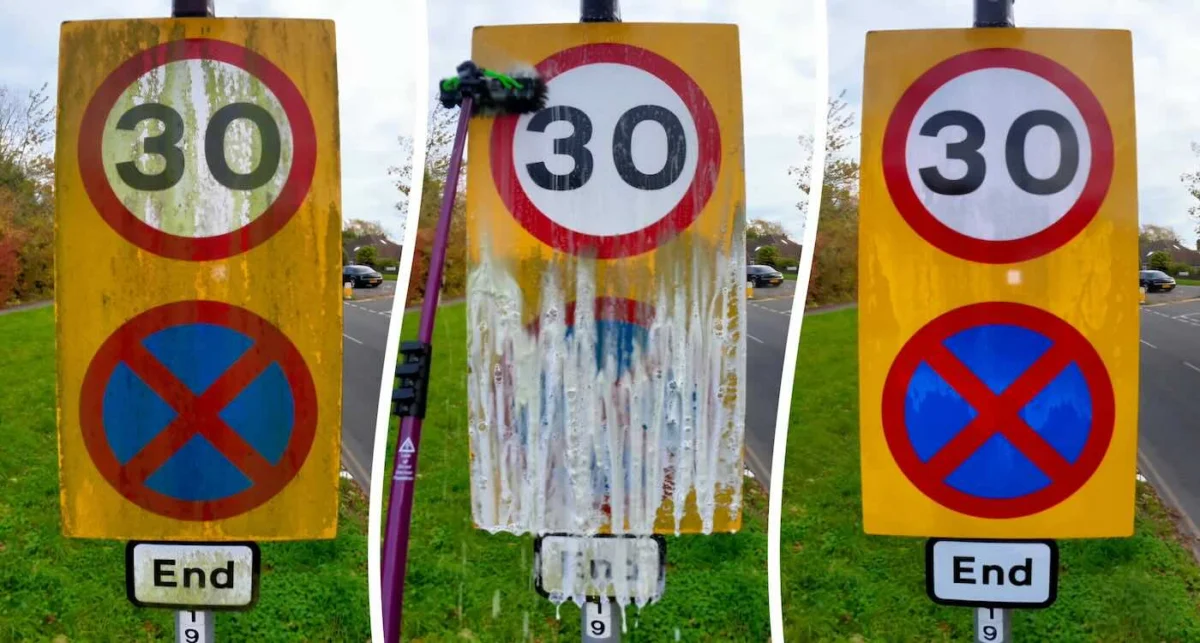
Armed with a backpack water pump, eco-friendly foam, and a specialized long-handled brush, the Brighton-based couple has embarked on a deeply satisfying mission: scrubbing away years of grime, organic buildup, and traffic film from dirty street signs across East Sussex. What began as a spontaneous search for a shared outdoor hobby has rapidly blossomed into a viral sensation, a mental health lifeline, and the genesis of an ambitious dream to scour road signs from one end of the United Kingdom to the other.
Main Facts: The Mission and the Mechanics
The operation is equal parts community service and specialized craftsmanship. Operating primarily out of their home base in Brighton, the Richmond-Watsons commit to cleaning at least one neglected traffic sign every single day, documenting their before-and-after transformations for a growing audience on social media under the handle @Filthy_signs.
The technical process is swift yet meticulous. On average, a single sign requires roughly 20 to 25 minutes of dedicated labor. The couple’s mobile toolkit is entirely self-contained, featuring:
- A portable backpack water pump connected to a hose.
- A snow foam gun loaded with biodegradable, environmentally safe cleaning agents.
- An extendable, long-handled brush designed to reach high-mounted municipal signage without the need for scaffolding or obstructing traffic.
While the aesthetics of a gleaming sign are immediately apparent, the practical implications run much deeper. Over time, British roadway markers accumulate thick layers of carbon emissions, mud, mold, and algae. This accumulation significantly diminishes retroreflectivity, rendering many signs virtually unreadable to drivers navigating rural or poorly lit roads after dark. By restoring these markers to their original factory-finish clarity, the couple is actively enhancing local road safety.
Chronology: From a Casual Observation to a Full-Time Passion
The genesis of the project dates back to September, born out of a quest for a collaborative activity that could accommodate both partners’ neurodivergent traits and desire for purposeful movement.
"We are both autistic with ADHD, so we are quite creative and a bit weird," explains 47-year-old Paul, a New Zealand native with a professional background as a window washer. "We just thought we could really make this work."
The couple’s hyper-fixation on street cleanliness began with everyday observations. As they drove through East Sussex, they frequently found themselves critiquing the state of local infrastructure. "A lot of dirty signs are hard to read, especially at night," notes 25-year-old Ruth. "We notice patterns, so we were always commenting on it when we were driving around."
The catalyst arrived when they noticed independent window washers occasionally cleaning public signage as a form of guerilla marketing. Inspired, the Richmond-Watsons decided to try their hand at the craft purely for public benefit. Their maiden voyage—scrubbing a heavily stained directional sign near their home—proved to be a pivotal turning point.
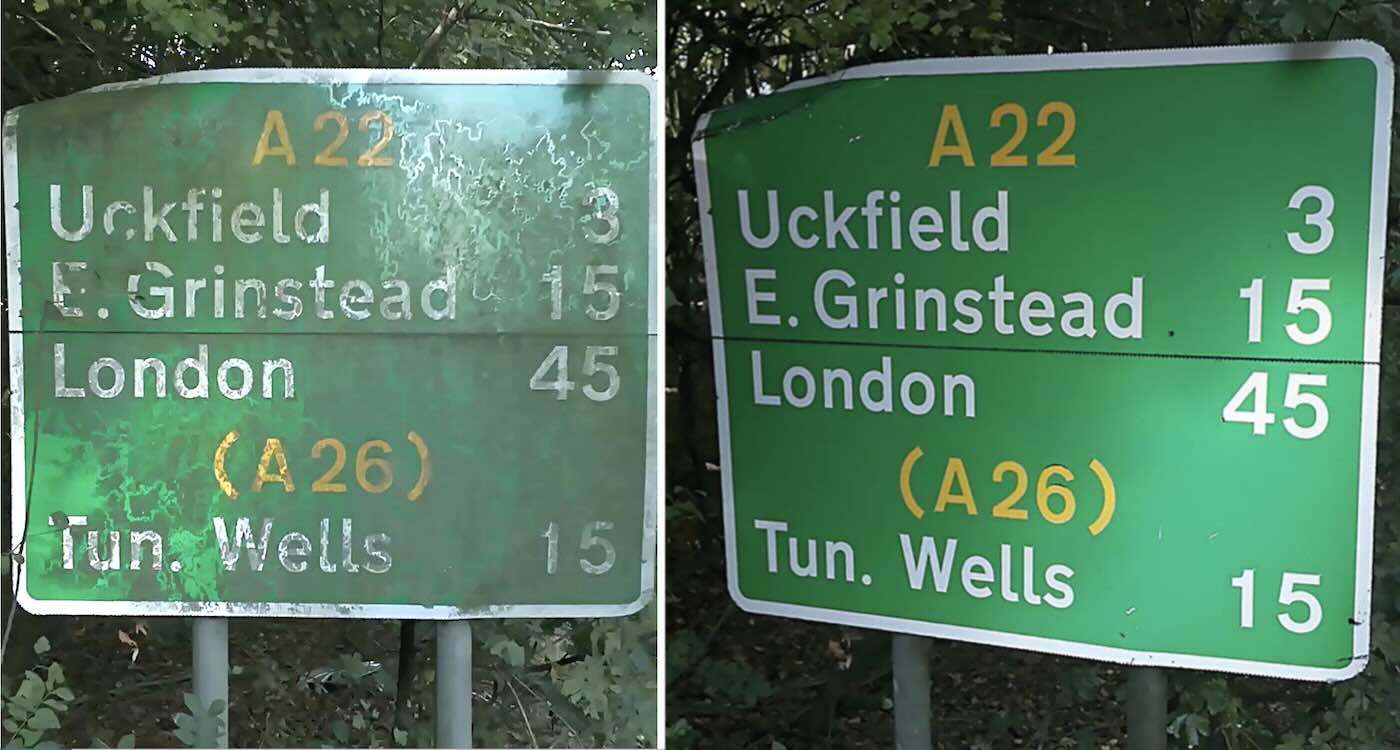
"The first one that we did, it was a bit of a learning curve, but it was so satisfying and fun," Ruth recalls. "It is quite a bonding experience for us."
What started as an occasional weekend distraction quickly escalated. Captivated by the instantaneous visual gratification and the therapeutic rhythm of the work, the couple soon adopted sign-scrubbing as a full-time pursuit, funding their endeavors out of pocket while gradually securing minor sponsorships from industry supply companies impressed by their dedication.
Supporting Data and Sociological Context: The State of British Signage
The Richmond-Watsons’ crusade highlights a broader, rarely discussed facet of municipal maintenance in the United Kingdom. While local authorities are formally tasked with the upkeep of highway infrastructure, stretched local government budgets and constrained public works departments often prioritize structural repairs, pothole remediation, and major arterial maintenance over cosmetic cleaning.
Consequently, secondary roads and suburban streets accumulate years of environmental grime unchecked. According to Paul, who has lived across multiple countries, the visual degradation of roadside assets is particularly pronounced in the UK.
"Britain is quite unique in having filthy road signs," Paul observes bluntly. "It is a bit of a state really, and we are just trying to smarten it up."
From an economic and environmental standpoint, the couple’s methodology relies on low-impact intervention. By utilizing biodegradable snow foam and portable water systems, they avoid the chemical runoff issues associated with heavy industrial cleaning, protecting local flora while stripping away stubborn lichen and pollution residue.
Furthermore, the initiative operates on a micro-budget. Without formal government grants or municipal contracts, the pair demonstrates how grassroots civic engagement can achieve rapid results where bureaucratic channels often stall.
Official Responses and Public Reception: Going Viral
While the Richmond-Watsons have thus far operated as an independent, self-funded duo rather than an officially contracted municipal partner, their work has struck a profound chord with the public and local authorities alike.
Initially launching their digital footprint with little expectation, the couple has been taken aback by the overwhelming online response. Their Instagram and TikTok accounts documenting the transformation videos have accumulated thousands of views, drawing supportive commentary from motorists, urban planners, and everyday citizens across the globe. Neighbors in East Sussex have begun recognizing the pair on the streets, stopping to express gratitude or offer words of encouragement.

"Driving past it a few weeks later and seeing it still sparkle is amazing," Paul says, reflecting on the enduring impact of their labor. "You feel quite proud of yourself. Everyone is really behind us. It has been incredible. It is overwhelming in a good way. We didn’t expect it to blow up like this, and are just literally having fun."
Beyond the public adulation, the project has served as a powerful community bridge. The couple notes that modern suburban life often suffers from a deficit of organic neighborly interaction—a cultural gap they are actively attempting to bridge one scrub at a time.
Implications: Mental Health, Community Connection, and Future Horizons
The implications of Paul and Ruth’s work extend far beyond clean aluminum panels and legible typography. At its core, the project is a testament to the therapeutic power of purposeful outdoor activity and alternative lifestyle design.
For both partners, managing ADHD and autism requires environments that offer stimulation, creative expression, and immediate feedback loops. Cleaning street signs provides all three: the before-and-after contrast delivers instant visual reward, the physical labor burns restless energy, and the outdoor setting ensures a constant change of scenery.
"It was for our mental health as well, to get out-and-about and have a reason to leave the house," Paul explains, emphasizing the isolation that can often accompany modern neurodivergent experiences.
Moreover, the initiative directly addresses a modern social malaise. "Neighbors just don’t ‘neighbor’ anymore, and we wanted to do something that would help out," Paul notes, echoing a sentiment familiar to urban sociologists who study the decline of localized civic pride.
Looking ahead, the couple’s horizons are expanding rapidly. While their current operations are tightly focused on the towns and rural lanes of East Sussex, their long-term vision is decidedly national. Propelled by the momentum of their social media following and the deep personal fulfillment the hobby provides, the Richmond-Watsons are actively planning a grand road trip. Their ultimate goal? To pack their gear, hit the open road, and traverse the length and breadth of the United Kingdom, ensuring that no street sign is left obscured by the shadows of neglect.
In an era where digital noise often disconnects communities from their physical environments, Paul and Ruth Richmond-Watson are offering a refreshing reminder: sometimes, the most profound way to change your world is to pick up a brush, step outside, and look a little closer at the signs guiding your way home.